## Restocking Fee Policy Examples For Different Product Types
Ecommerce returns aren’t all the same. A t-shirt that comes back unworn is different from a smartphone returned with scratches and missing parts. That’s where restocking fee policy examples help: they show how to tailor rules to product risks and operational costs. Use them as templates, not commandments.
### Why Use Restocking Fees At All
Returns cost money. Not just the refund. There’s inspection, repackaging, restocking, and sometimes refurbishment. A small percentage fee can cover those costs and discourage casual returns that eat margin. You don’t want to punish customers unnecessarily, but you do need a fair, transparent policy that reflects reality.
#### A Quick Practical Rule
Charge a restocking fee when the return causes extra handling or unrecoverable value loss. For simple returns in perfect condition, waive it.
## Concrete Restocking Fee Policy Examples
Below are several tested examples you can adapt. Each one explains the logic, the percentage range, and a suggested wording you can paste into your returns page.
### Electronics: 10–30%
Electronics are high value and often damaged in transit or by user testing. You can justify a larger fee for opened or used units.
Suggested Wording:
– “Opened electronics returned within 30 days are subject to a 20% restocking fee to cover testing and refurbishment. Unopened items are eligible for full refund.”
Variant: For premium items or those with activated subscriptions, use 25–30% for opened returns.
Use Case Note: If your product requires activation or contains license keys that can’t be reused, apply the higher end.
(Restocking fee policy examples for electronics often sit at 15–25% in the market. Use that as a baseline.)
### Apparel And Accessories: 5–15%
Clothing is low-tech but condition-sensitive. A returned item with scent, makeup, or signs of wear can’t be resold as new.
Suggested Wording:
– “Clothing must be returned unworn, with tags attached and in original packaging. Returns that fail inspection may incur a 10% restocking fee.”
Variant: For seasonal items after the season ends, consider a 15% fee to cover markdowns.
### Consumables And Personal Care: No Returns Or 20–50% If Opened
Once a consumable is opened it’s usually not resellable. Most merchants either exclude returns entirely or refund only unopened packages.
Suggested Wording:
– “Unopened consumables are eligible for return within 14 days. Opened or partially used items are not refundable.”
If you accept opened items for store credit, apply 30–50% restocking to cover disposal or discounting.
### Custom And Made-To-Order: Non-Refundable Or Minimal Exceptions
Custom goods are inherently non-returnable, except in the case of defects. State that clearly.
Suggested Wording:
– “Custom or personalized items cannot be returned unless defective. Please review custom details carefully before ordering.”
You might allow returns only if the error is yours, in which case there is no fee.
### Large Or Bulky Items: 15–40% Plus Return Shipping
Furniture and large appliances cost a lot to ship and handle. Add a restocking fee plus charge return shipping.
Suggested Wording:
– “Large items returned within 30 days are subject to a 25% restocking fee and the customer is responsible for return shipping.”
Operational Tip: If you can resell an item as open-box locally, use a lower fee. If you must dispose of it, charge more.
### Open-Box Or Used Resale: Variable Based On Condition
If you accept returns into a refurbished inventory, calculate the fee based on refurb cost plus lost resale margin.
Suggested Wording:
– “Used or opened items will be assessed a restocking fee based on condition and refurbishment needs. Typical fees range from 10–30%.”
A simple tiered approach works: pristine (10%), light wear (20%), heavy wear (30%).
## How To Phrase A Restocking Fee Policy (Examples Of Clear Language)
Customers get angry when the policy reads like legalese. Clear, direct sentences build trust. Here are phrasing examples that actually reduce disputes.
### Simple, Customer-Friendly Option
“We’ll issue a full refund for returns received in original condition within 30 days. Items returned opened or damaged may incur a restocking fee equal to 10–25% of the purchase price.”
### Precise, Operational Option
“Returns must be postmarked within 30 days. Items must be unused, in original packaging, with all accessories. Non-compliant returns will be inspected and may be subject to a restocking fee (10%–30%) based on condition and inspection findings.”
Pick the tone that matches your brand. The goal is clarity, not legal intimidation.
## Calculating Restocking Fees: Examples With Numbers
People understand numbers better than percentages. Show an example on your returns page.
– Order: $200 speaker. Customer returns opened item; inspection finds minor wear. Restocking fee 20% = $40. Refund = $160 minus original shipping if not refundable.
– Order: $50 t-shirt. Returned with makeup stain. Restocking fee 15% = $7.50. Refund = $42.50.
These examples set expectations and cut disputes.
## Legal And Compliance Considerations
Rules vary by state and country. Some jurisdictions limit the maximum restocking fee or require advance disclosure. Others consider certain fees deceptive if not clearly disclosed at point of sale.
– Disclose fees at checkout and on the product page.
– Avoid hidden fees that appear only after return initiation.
– For augmented fees like return shipping plus restocking, show the total potential cost.
If you sell internationally, check local consumer protection laws. Compliance is practical: the last thing you want is a refund reversal and a fine.
## Communicating Fees During The Customer Journey
Transparency matters more than the fee size. People hate surprises. Put key points in three places: product page, checkout, and confirmation email. Use short bullets and one concise sentence on the product page.
Example product-page blurb:
“30-day returns. Opened electronics: 20% restocking fee.”
Also mention exceptions: free returns for defective items, or free return window for VIP customers.
### Handling Customer Disputes
When a customer disputes a restocking fee, follow this sequence:
1. Explain with evidence: inspection photos, checklist.
2. Offer reduced fee or store credit for first-time offenders.
3. Escalate only if communication stalls.
A small goodwill concession often saves time and reputation.
## Operational Steps To Implement A Restocking Fee Policy
Policies are words until your operations support them. Here’s how to make them work.
#### Inspection Checklist
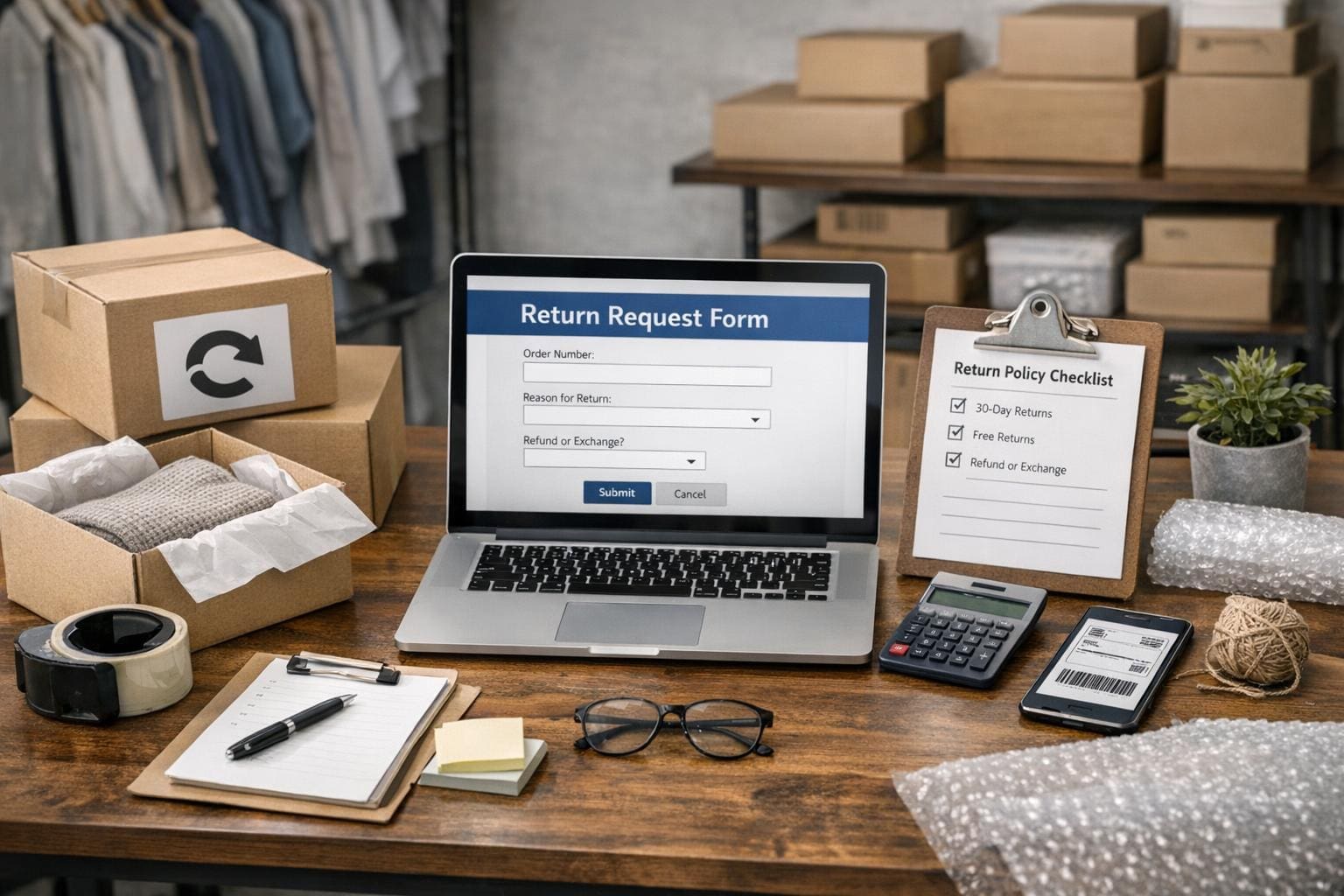
Create a short checklist for returns inspectors: original packaging, tags, accessory presence, signs of wear, activation/serial note. Record photos for documentation.
#### Refund Workflow
Automate calculations: system deducts restocking fee and refunds remainder. Flag exceptions for manual review.
#### Inventory Flow
Decide where returned items go: restock as new, refurb, clearance, or disposal. Each path needs its own recording and fee logic.
#### Reporting
Track three KPIs: return rate, average restocking fee collected, and net recovery on returns. Use those to refine fee levels.
## Examples Of How Different Brands Apply Restocking Fees
Seeing real-world examples helps you pick a sensible approach.
– Electronics retailer: 15–25% on opened items; free return within 15 days unopened.
– Subscription box company: No returns for consumables; exchange only for defective products.
– Direct-to-consumer furniture brand: 25% restocking fee, customer pays return freight.
– Fashion marketplace: 10% fee for returns outside the promised trial period.
These are restocking fee policy examples you can adapt to your margins and customer expectations.
## Exceptions And Promotions
Don’t apply the fee across the board. Use exceptions strategically.
– VIP customers get one free return per year.
– Seasonal sales may offer free returns to boost conversion, accepting higher overall return costs.
– If product defects are frequent, waive restocking fees and focus on fixing quality issues.
A flexible policy can be a competitive tool, not just a defensive cost recovery.
## Testing And Iteration
Set a baseline fee and test. Raise or lower the fee in small increments and watch conversion, average order value, and return rate. Restocking fees influence behavior: too high and conversion drops; too low and returns spike.
A/B test fee messaging too. Sometimes clearer wording reduces returns more than raising a fee does.
## Sample Policy Snippets You Can Adapt
Short snippets work best on product pages and checkout.
– “Free returns within 30 days for new, unopened items. Opened items may incur a restocking fee of up to 20%.”
– “Custom items are non-returnable unless defective.”
– “Return shipping is the responsibility of the customer unless the item is defective or shipped in error.”
Place one of these snippets on each product page and link to the full returns policy.
## Pricing Psychology And Customer Perception
A 10% fee feels reasonable. A 30% fee feels punitive. Consider the optics. If your product already carries a strong warranty or service promise, a restocking fee can seem stingy. Balance financial reality with brand positioning.
If you offer free returns, communicate that loudly. It can be a conversion booster. If you must charge, frame it as covering actual costs rather than as a penalty.
## International And Marketplace Considerations
If you sell on Amazon, Etsy, or other marketplaces, check their return rules. They may require you to offer certain return terms or reimbursements. Your own restocking fee policy may need to be adjusted for those channels.
For cross-border sales, remember import restrictions and return shipping complexity. Sometimes it’s cheaper to offer a partial refund and let the customer keep the item.
## Common Mistakes Merchants Make
– Hiding the fee until after purchase. This sparks complaints.
– Applying the same fee to all products. That ignores different handling needs.
– Not documenting inspections. Without records, disputes blow up.
– Confusing return shipping responsibility. Make it clear who pays and when.
Avoid these and you’ll save time and trust.
## Example Template For Full Returns Page
Here’s a practical full-policy layout to drop into your site. Keep it short and scannable with a few examples and an FAQs section addressing “when will I recieve my refund?” and “how is the fee calculated?”
Include a contact link and a promise to show inspection photos if a fee is charged. That transparency cuts disputes.
When you write your policy, use specifics: days, percentages, and examples. Vague phrases create suspicion. Use the restocking fee policy examples above to match the tone and level of detail you need.
End with a short FAQ that answers the most common customer questions and points them to how to initiate a return. Remember: a well-worded policy and smooth operational follow-through reduce headaches for everyone.