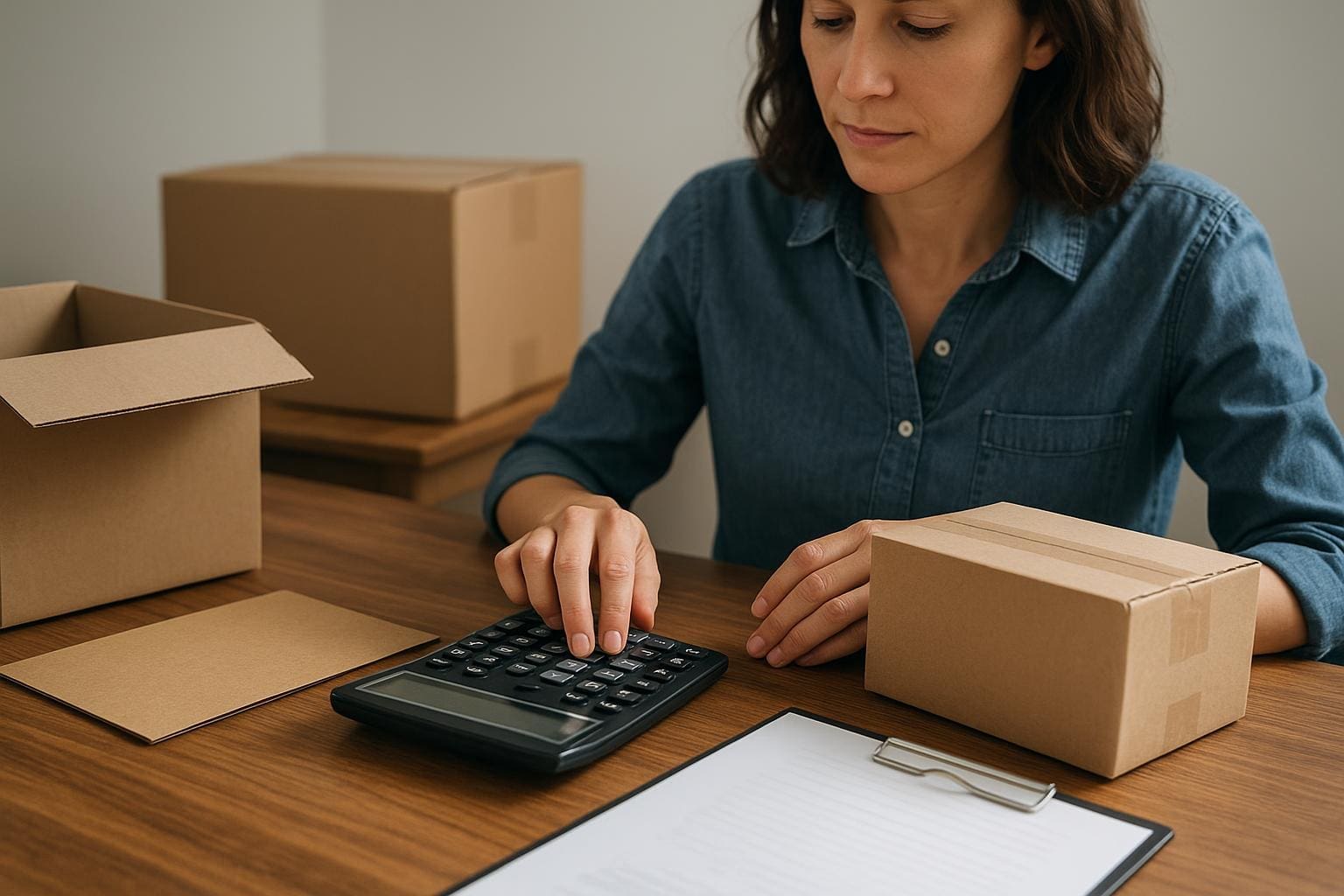
Small businesses often treat boxes and tape like background noise. That’s a mistake. Packaging eats profit quietly, one order at a time. If you don’t know how much you spend to package a single sale, you’re flying blind.
## How To Calculate Packaging-Cost-Per-Order
Start simple: packaging-cost-per-order is the average amount your business spends on packing materials and related labor divided by the number of orders in a set period. The math itself isn’t complex, but getting accurate inputs takes work.
First, define what you include. For most small sellers that will be: boxes, mailers, bubble wrap, tape, labels, packing slips, and any inserts like thank-you notes. Add labor for packing, protective materials for fragile items, and the amortized cost of equipment such as a label printer or tape dispenser.
Basic formula:
Total Packaging Expenses / Number Of Orders = Packaging-Cost-Per-Order
If you tracked packaging costs for a month and spent $1,200 on materials and $800 on packing labor, and shipped 2,000 orders that month, your packaging-cost-per-order is ($1,200 + $800) / 2,000 = $1.00.
### Gather Your Packaging Costs
Don’t guess. Pull invoices, receipts and purchase orders for a clear picture. Look for recurring subscriptions — like branded boxes you get monthly — and one-offs, such as seasonal mailers. Include small consumables; a roll of tape looks cheap until you realize you go through three a month during a promotional push.
Be precise with the unit cost of items. If you buy a box of 200 bubble mailers for $120, the per-mailer cost is $0.60. If you can’t break down supplier invoices, track purchases for at least one sales cycle and calculate per-unit costs afterward.
### Track Labor And Overhead
Labor is often overlooked. Time technicians spend packing per order adds up. Measure a few samples: time a quick SKU takes, then time for a mixed-order pack. Multiply packing time by the hourly wage plus payroll taxes and benefits. That gives you a realistic labor component to add to packaging-cost-per-order.
Include a slice of overhead where relevant: warehouse utilities if packing is done there, or the floor space cost for storage of packing materials. For an automated station, amortize the equipment cost over its useful life and add the per-order share.
#### Example: Labor Calculation
If packing a single small order takes 3 minutes and the fully loaded labor rate is $18/hour, that order carries $0.90 in labor (3/60 * $18). For bulkier items the time might be 6–8 minutes, shifting that piece to $1.80–$2.40.
### Account For Damage And Returns
Packaging failures show up as returns, replacements, or negative reviews. Track the cost of items lost to damage and the packaging adjustments you make afterward. If you had 10 damaged orders in a month, costing $50 each to replace, and you shipped 2,000 orders, add $500 / 2,000 = $0.25 to the packaging-cost-per-order to cover that risk. It’s a conservative step that saves money over time.
## Common Pitfalls That Inflate Cost Per Order
Small shops make the same mistakes. Recognizing them quickly brings down the cost per order and improves margins.
### Buying The Wrong Quantities
Buying single units for a new SKU can feel safe, but unit costs will be higher. Conversely, buying too much of a single box size ties up cash and leads to wasted storage space. Track sales patterns for a quarter, then buy in multiples that match your velocity. Packaging costs drop with smarter buy quantities.
### Overpacking To Avoid Claims
It’s tempting to over-protect every order. Some items need it. Many don’t. Use data to decide protection levels. A thin phone case doesn’t need a double-box treatment. Revisit the packaging for every top-selling SKU. Adjust based on size, fragility, and shipping route.
### Mixing Packaging Types Randomly
If you use ten different box sizes across a handful of SKUs, you’re paying more in storage and buying multiples less cheaply. Standardize sizes where possible. That cut reduces both packaging costs and picking complexity.
### Ignoring Weight-Based Effects
Carrier rates are determined by weight and dimensions. A heavy internal filler can move an order into a higher rate band. Reevaluate fillers like newspaper or extra cardboard and replace them with lighter alternatives like honeycomb paper or molded pulp where suitable.
## Practical Ways To Reduce Packaging Costs
You don’t need a warehouse robot to save money. Small changes compound.
### Right-Size Packaging
Analyze parcel dimensions versus product dimensions. Use a sizing chart and move toward a handful of optimized box sizes that fit most items snugly. Less empty space equals lower dimensional weight charges and less filler material.
### Negotiate With Suppliers
Talk to your packagin suppliers. Bigger, predictable orders can get you lower per-unit costs. Ask for tiered pricing and free samples when testing new materials. If you’re buying 5,000 mailers a year, that’s negotiation fodder.
### Reuse And Recycle Strategically
Reusing boxes from supplier shipments can save money, but be consistent and professional. Inspect reused boxes for integrity and remove competitor branding. Recycling initiatives also lower waste disposal costs; some carriers offer rebates or pickups that reduce expense.
### Simplify Inserts And Marketing Pieces
Branded tissue paper and elaborate inserts look nice but raise packaging costs. Test customer response by removing or changing inserts for a month. Keep what converts. Remove what doesn’t.
### Automate Where It Pays
Small automation — like a handheld label printer or a table-top tape dispenser — can shave seconds off each order. Multiply those seconds across hundreds of orders and labor savings become material. Don’t buy big gear unless you’ve confirmed volume justifies it.
## How Packaging-Cost-Per-Order Affects Pricing And Forecasting
Once you know your packaging-cost-per-order with confidence, use it.
### Price Products To Protect Margin
Add the packaging-cost-per-order directly into gross margin calculations. For a $20 product with a target gross margin of 40%, you need to cover COGS, shipping, and packaging. If your packaging-cost-per-order is $1.25, factor that in before setting promotional prices. Otherwise a sale that looks profitable on paper can actually lose money.
### Test Bundles And Shipping Options
Bundling items often reduces the packaging-cost-per-order because you ship one parcel instead of two. Offer shipping discounts intelligently. If free shipping at $50 reduces average order count but increases average order size enough to lower packaging-cost-per-order and shipping spend, it can be a win.
### Forecast Materials And Cash Flow
Packaging inventory is cash tied up on shelves. Use packaging-cost-per-order and projected order volume to predict material needs and spending. If you expect 10,000 orders next quarter and your packaging-cost-per-order is $1.10, plan for $11,000 in packaging spend plus a buffer for spikes.
#### Scenario Planning
Run different scenarios: holiday surge, one-off promotion, or product launch. Calculate how packaging spend scales and whether supplier lead times will cause stockouts. That prevents last-minute rush buying at premium prices.
### Monitor Performance Over Time
Track packaging-cost-per-order monthly. Look for trends: rising material prices, increased returns, or changing order profiles. A small change in average order weight can signal the need to revisit packaging choices before costs balloon.
## Tools And Metrics To Keep Useful
You don’t need expensive software to get useful numbers, but organize data.
– Use a simple spreadsheet tracking purchase invoices, material inventory, per-unit costs, and monthly labor.
– Add a column for returns and damages linked back to packaging types.
– Connect sales numbers to packaging spend to calculate cost per order regularly.
If you can afford a basic inventory or shipping platform, many show packaging spend per SKU and help automate labeling and packing slips. Those insights remove manual guesswork and expose specific items that drive up packaging costs.
### KPIs To Watch
Track a few specific metrics alongside packaging-cost-per-order:
– Average packaging material spend per SKU
– Packaging labor minutes per order
– Return rate attributable to packaging failures
– Percentage of orders hitting dimensional weight thresholds
These KPIs tell you where to act first.
## When Higher Packaging Costs Make Sense
Cheap isn’t always better. A premium brand might use custom boxes with tissue and inserts because the unboxing experience drives loyalty and higher lifetime value. If a higher packaging-cost-per-order correlates with lower returns, higher repeat purchase rates, or greater average order value, it’s justified.
Measure the business outcomes. If customers who receive premium packaging spend 20% more over six months, the extra $0.75 per order could be a smart investment.
## Quick Audit Checklist For One Afternoon
If you can only spare a few hours, do this:
– Pull last month’s supplier invoices and map per-unit costs.
– Time packers for five typical orders to estimate labor.
– Check three best-selling SKUs for their current packaging process.
– Calculate packaging-cost-per-order for that sample and compare to your last known number.
– Identify one immediate change you can make, such as right-sizing a box or switching a filler.
That rapid audit will often reveal low-hanging fruit.
Don’t forget to log a reciept or two when testing changes. Small experiments need evidence to scale.