USPS Box Sizes Explained: Jaw-Dropping Flat Rate Secrets

usps box sizes explained

Prepare to have your shipping world upended — usps box sizes explained in a way that makes accountants weep and bargain hunters roar. If you thought a box was just a box, buckle up. This sensational reveal peels back the curtain on the USPS universe and uncovers jaw-dropping flat rate secrets that save time, money, and sanity.

## USPS Box Sizes Explained: The Shocking Truth About Flat Rate Boxes
You’ve been lied to by pricing tables and confusing size charts. When you hear the phrase usps box sizes explained, most people imagine a tidy list of small, medium, large. But the moment you master how USPS defines volume, weight limits, and the strategic use of flat rate boxes, you unlock shipping hacks that border on scandalous brilliance.

### Why Size Definitions Make Or Break Shipping Costs
USPS doesn’t just sell boxes — it sells rules. A seemingly tiny increase in dimensions can move your parcel from a “free” flat rate box to a costly zone-based fee. Understanding usps box sizes explained means recognizing that dimensions, weight, and service type (Priority, Priority Express, Retail Ground) interact like a complicated machine. Use the wrong combination and you pay. Use the right one and you exploit predictable, highly favorable pricing.

### The Anatomy Of Flat Rate Boxes And Their Hidden Levers
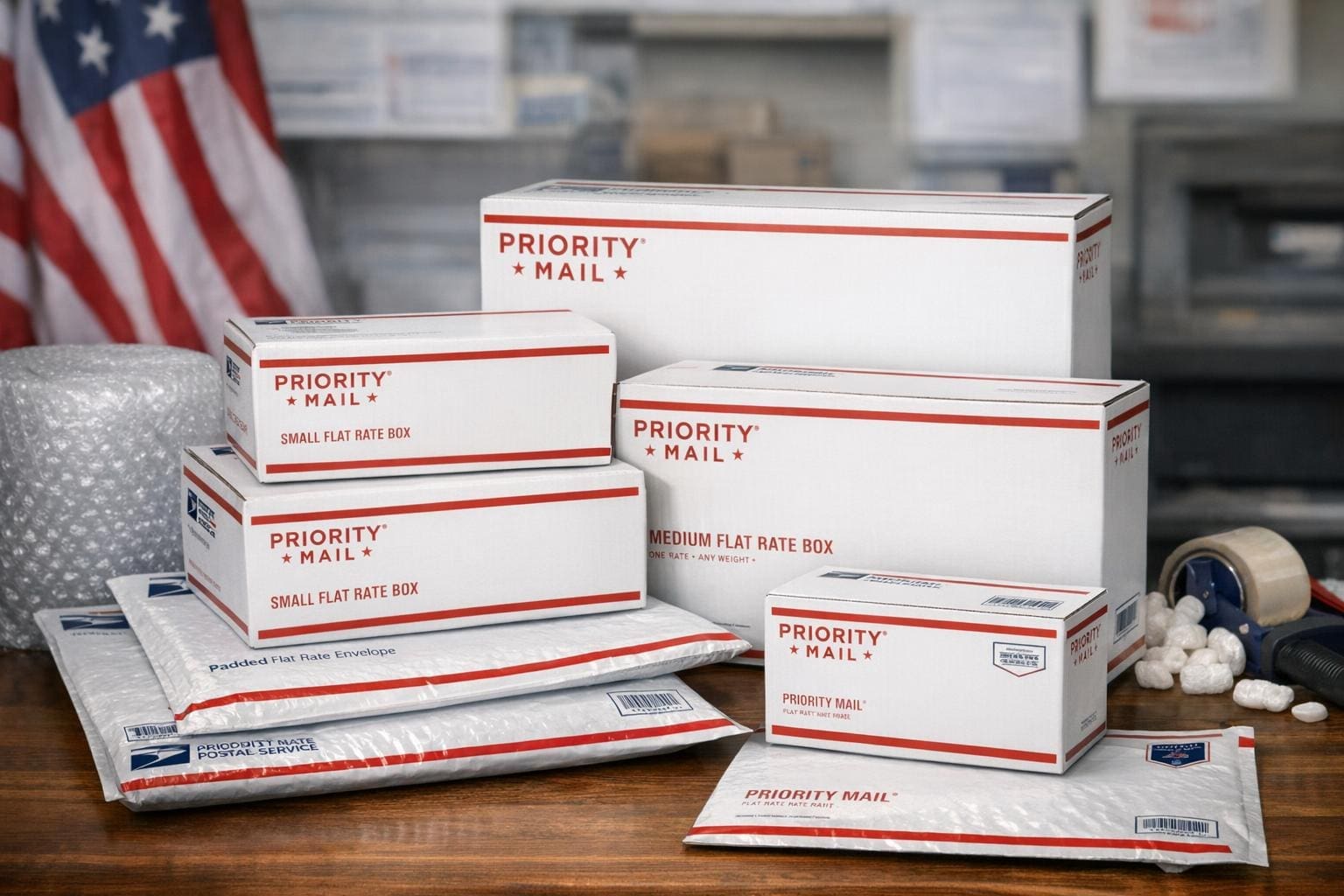
Flat rate boxes are a merchant’s jackpot because they decouple weight from price (up to 70 lbs in most cases). But not all flat rate boxes are equal. USPS offers a suite of options: small, medium (two styles), large, and more specialized envelopes. Learning which product to use for which content is the real art—this is where “usps box sizes explained” becomes a superpower, not trivia.

## How The USPS Size System Actually Works (And What They Don’t Tell You)
The USPS broadly divides packaging into carrier-provided boxes (including flat rate boxes), regional rate boxes, and customer-supplied boxes subject to dimensional weight. The bloodless explanation: carrier boxes often have pricing perks; customer boxes pay by weight and zone unless dimensions trigger dimensional-weight pricing. Sensationally, a single mismeasured inch can cost you double.

### Common Box Types You’ll Encounter
#### Flat Rate Boxes: Small, Medium, Large
Flat rate boxes come in clear-cut shapes. Use small flat rate boxes for dense, heavy items under the box’s interior capacity. Medium flat rate boxes are shockingly versatile: one style is shallower (better for compact electronics), the other is taller (great for bundled pet supplies). Large flat rate boxes swallow bulky but light items that would otherwise trigger size-based surcharges.

#### Regional And Priority Mail Boxes
Regional rate boxes apply when you ship shorter distances; they can outperform flat rate boxes for heavy-but-short-range shipments. Priority Mail retail boxes and customer-supplied boxes compete on different axes: weight for the former, dimensional weight for the latter.

## 2 Remedies For Shipping Pet Essentials Safely And Economically
In my work I test countless DIY packing remedies for pet supplies and meds. Below are two formal, practical remedies for protecting pet essentials when using USPS packaging. These remedies include required materials and step-by-step creation and application instructions so you can execute without drama.

### Remedy 1: Padded Liner For Fragile Pet Supplies In Flat Rate Boxes
#### Ingredients / Required Materials
– Small or medium flat rate boxes (choose based on item footprint)
– 1 roll of bubble wrap (medium bubble)
– 2–3 sheets of corrugated cardboard (to create internal dividers)
– 1 roll of packing tape
– Scissors or box cutter
– Optional: packing peanuts or crumpled kraft paper for void fill

#### Step-by-Step Creation And Application
1. Select the Correct Box: Choose a flat rate box that accommodates the largest single item without forcing deformation. Confirm interior dimensions.
2. Prepare Cardboard Dividers: Cut cardboard to create a base layer and vertical dividers that prevent internal shifting. Fit them snugly into the box bottom.
3. Wrap Items Securely: Wrap each fragile item (med bottles, glass pet supplements, breakable toys) in at least two layers of bubble wrap. Tape the bubble wrap to secure.
4. Arrange Items On Base Layer: Place heavier items on the box bottom, lighter and fragile items on top, using dividers to separate. Keep items from touching the walls directly.
5. Fill Voids: Use packing peanuts or crumpled kraft paper to completely fill any remaining voids. This prevents movement during transit.
6. Final Insulation Layer: Add a top cardboard layer if you’ve used two-sheet dividers; this disperses pressure. Close and tape the box with H-taping across all seams.
7. Label And Insure If Needed: Clearly mark contents as fragile if the service allows, and purchase insurance for high-value items.

This remedy is precise: follow the steps to reduce breakage and make the most of flat rate boxes’ weight-independent pricing.

### Remedy 2: Emergency Pet First Aid Kit Packaged For Priority Mail Safety
#### Ingredients / Required Materials
– Small flat rate box or Priority Mail box (depending on kit size)
– Sealable plastic bags (various sizes)
– Small roll of medical tape and gauze
– Digital thermometer (pet-safe)
– Activated charcoal tablets (for ingestion emergencies) — vet-approved use only
– Tweezers, alcohol wipes, disposable gloves
– Small flashlight and extra batteries
– Instructions card laminated or sealed in plastic
– Packing tape and a single-sheet protective foam

#### Step-by-Step Creation And Application
1. Choose The Right Box: For a compact first aid kit, a small flat rate box can be ideal; it’s cheap, compact, and standardized.
2. Organize Supplies Into Bags: Sort items into purpose-specific sealed bags (wound care, ingestion, tools). This prevents spills and keeps the kit usable after partial use.
3. Protect Liquids And Breakables: Place any vials or fragile items in the center, cushioned by foam and surrounded by the sealed bags.
4. Add Instruction Card: Include a laminated instruction card with step-by-step emergency actions and vet contact information. Seal the card in a plastic bag to keep it dry.
5. Seal And Label: Place the kit in the box, add minimal void fill to prevent jostling, close the box, and apply H-taping. Label as “Pet First Aid Kit — Handle With Care” if you prefer.
6. Choose Shipping Service: If time-sensitive, select Priority Mail with tracking and insurance options. Flat rate boxes may offer predictable pricing, but check transit times to ensure the kit arrives when needed.

These remedies are designed for real-world application and provide clear, formal steps for preparation and safe shipping.

## Insider Tricks To Maximize Savings With USPS Box Sizes
### How To Choose Between Flat Rate Boxes And Other Options
The secret is comparison. For long-distance heavy shipments, flat rate boxes often win. For heavy but short-distance deliveries, regional rates can slice prices drastically. Always compare: weigh your parcel fully, note dimensions, then run a quick online comparison between flat rate boxes and zone-based pricing. This simple habit leverages the very principle behind usps box sizes explained: price is not a single variable game.

### Free Boxes, Stacking Strategies, And The Weight Trap
USPS provides free flat rate boxes—use them. But beware: stuffing a box inefficiently turns weight into wasted money. Sensational tip: stacking smaller items smartly can often let you use a smaller flat rate box and still fit more volume than a misused larger box.

## Common Mistakes That Make People Overpay (And How To Fix Them)
### Measuring Errors And Dimensional Weight
A rookie mistake is underestimating dimensional weight. If your package is large but light and you use your own box, dimensional weight can override actual weight and skyrocket costs. The fix: when in doubt, use a flat rate box that protects you from dimensional surprises. This is the central revelation when usps box sizes explained becomes less an explanation and more a strategy.

### Ignoring Service Restrictions
Certain items require specific packaging and labeling. Shipping pet medications or supplements can involve legal and service restrictions. Always verify permitted contents before shipping—and when in doubt, consult USPS guidelines or call customer support to avoid returns and fines.

## Mind-Blowing Hacks That Shipping Veterans Use
### Consolidate To Save
Combine multiple small pet items into a single well-padded medium flat rate box instead of multiple small shipments. Consolidation reduces per-item handling fees and often drops your total spend.

### Time Your Shipping For Promotions
USPS occasionally runs promotions or partners with platforms that provide discounted labels. Pair these promotions with strategic box choices to amplify savings—this is where the most jaw-dropping flat rate secrets live.

## Final Practical Checklist Before You Drop Off
– Measure internal box dimensions to ensure a snug fit.
– Weigh your package and simulate cost using both flat rate boxes and zone-based pricing.
– Double-wrap breakables, and use void fill to prevent moving.
– Choose the most appropriate USPS service and purchase insurance if necessary.
– Print clear return addresses and validate recipient details; nothing wastes a day like delivery errors.

Hitch your strategy to the facts: usps box sizes explained isn’t just an article title — it’s the key to turning monstrous shipping fees into predictable routine savings.

When Is Flat-Rate Shipping Worth It: A Quick Cost Guide

when is flat-rate shipping worth it

Shipping cost can surprise small businesses and individual sellers alike. Choosing between carrier-calculated pricing and a flat fee option takes more than instinct: it requires quick math, an understanding of weight and dimensional pricing, and a sense of how often you ship. This guide shows the practical calculations and decision steps so you can answer clearly: when is flat-rate shipping worth it.

## When Is Flat-Rate Shipping Worth It: A Quick Cost Guide
Flat-rate options are attractive because they simplify pricing: one fee for a box or envelope up to the carrier’s stated limits. But flat-rate choices aren’t automatically the cheapest. Understanding carrier rules, package dimensions, and your typical shipment profile determines the flat-rate value for you. Below are patterns, calculations, and decision steps that help clarify when flat-rate shipping is worth it.

### How Flat-Rate Shipping Works And Why It Appeals
Carriers that offer flat-rate pricing set fixed fees for particular boxes, envelopes, or service tiers. The primary value proposition is predictability: you know the cost before you pack. That predictability is the flat-rate value in practical terms—reliable budgeting, easier listing prices, and reduced time handling individual rate quotes. For many sellers, these conveniences can translate into flat rate savings on operations even if per-package postage isn’t always minimum.

Key trade-offs:
– Weight Limits: Flat-rate prices usually apply up to a generous weight cap, so heavy-but-compact items benefit most.
– Size Constraints: If an item doesn’t fit the carrier’s flat-rate container, the option is not available.
– Distance and Zone Pricing: Some carriers’ zone-based pricing makes flat rates more attractive for long-distance shipments.

### When Flat-Rate Shipping Typically Wins
Flat-rate shipping is usually worth it in these scenarios:
– You ship dense, heavy items that fit standard flat-rate boxes. Heavy goods under the carrier’s weight cap often cost less to ship via flat rate than by weight-based charges.
– Your shipments travel far across zones where variable rates would be higher. For long-distance and cross-country shipments, flat-rate pricing often represents strong flat rate savings.
– You need predictable costs for pricing bundles, promotions, or free-shipping offers. The flat-rate value for customer transparency and accounting can be significant.

### When Flat-Rate Shipping Usually Loses
Avoid flat-rate if:
– Items are light but voluminous; dimensional (DIM) pricing favors calculated rates for low density packages.
– You consistently ship light, small items that fall well below the flat-rate fee. The flat-rate value disappears when calculated postage would be lower.
– You need specialized packaging or oversized shipping that doesn’t match flat-rate containers.

### How To Calculate Real Costs: A Formal Step-By-Step Method
To determine whether flat-rate shipping is worth it for a specific shipment, follow this formal decision procedure.

1. Gather Package Data
– Measure the item and any packing materials to get final dimensions.
– Weigh the packaged item on a reliable scale.
– Determine whether the item fits in the carrier’s flat-rate container.

2. Check Flat-Rate Pricing
– Identify the relevant flat-rate product (envelope, small box, medium box, large box).
– Record the flat-rate fee for your service level (ground vs. expedited).

3. Calculate Carrier-Calculated Price
– Use carrier tools or your account to calculate postage based on weight, dimensions (DIM), and zonal distance.
– Include any fuel surcharges, residential delivery fees, and insurance costs you normally purchase.

4. Compare Totals
– Subtract the calculated price from the flat-rate fee. If the flat-rate fee is lower, flat-rate shipping is directly cheaper.
– Consider indirect savings: time saved in quoting, simpler packaging workflows, and fewer shipping errors. Add an estimated hourly labor cost saved to your comparison to reflect flat rate savings accurately.

5. Make The Decision
– If flat-rate is cheaper or the time/labor savings offset the difference, then flat-rate shipping is worth it for this shipment.
– Track outcomes to inform future threshold settings (e.g., always use flat rate for items over X lb and under Y dimensions).

### Example Comparison To Illustrate Flat-Rate Value
Imagine a 10 lb item that fits a medium flat-rate box. Calculated postage for its weight and zone might be $20. The medium flat-rate fee is $15. That $5 direct saving is the flat-rate value. Also factor labor: if using flat-rate reduces 5 minutes of order processing per package, multiply the hourly rate of your labor to include operational flat rate savings. When repeated weekly, those savings compound and can change the break-even point for many sellers.

### Three Practical Rules Of Thumb
1. Use Flat Rate For Dense Items Under The Weight Cap
– Items with high weight-to-size ratios get the most direct flat-rate value.
2. Bypass Flat Rate For Bulky, Lightweight Items
– Calculated rates and DIM pricing reward low-density items.
3. Consider Frequency And Distance
– High-volume sellers and long-distance shippers should model monthly totals to see flat rate savings beyond single-package comparisons.

#### Tip: Account For Insurance And Add-Ons
Flat-rate often includes limited insurance; if you add insurance or signature confirmation, include those fees in both scenarios. Doing so prevents overstating the flat-rate value.

### How To Build A Simple Decision Matrix
Create a one-page spreadsheet with columns: Item ID, Weight, Fits Flat-Rate Container (Yes/No), Flat-Rate Fee, Calculated Fee, Labor Time Saved (min), Labor Cost Saved, Net Savings. Populate with typical SKUs and run a pivot by weight bands and dimensions. This matrix will reveal thresholds where flat-rate shipping is worth it repeatedly.

### Optimizing For Flat Rate Savings In Your Workflow
Operational changes can increase flat rate savings:
– Standardize packing to maximize use of flat-rate containers.
– Bundle multiple small items into one flat-rate box when possible.
– Train staff to quickly assess whether an item fits a flat-rate container to avoid second-guessing.

### When To Re-Evaluate Your Strategy
Revisit your flat-rate assessment when:
– Carrier rates or flat-rate fees change.
– Your product mix shifts toward lighter or bulkier items.
– You reach new volume tiers that unlock negotiated rates or discounts.

### Common Mistakes That Erode Flat-Rate Value
– Assuming flat-rate is always cheaper without calculation.
– Ignoring DIM pricing rules and surcharges.
– Failing to account for labor and administrative time when comparing options.

### Tools And Data Sources To Help Decide
– Carrier rate calculators (use official carrier tools to get accurate calculated fees).
– E-commerce platform shipping reports to analyze historical shipment dimensions, weights, and zones.
– Simple spreadsheets or shipping calculators that let you batch-compare many SKUs at once.

### Final Practical Checklist For Each Shipment
– Measure and weigh the packed item.
– Confirm fit in flat-rate container.
– Get the calculated postage for the same package if shipped by weight/DIM pricing.
– Add optional service fees to both scenarios.
– Compare total costs and include estimated labor savings.
– Choose the lower total cost path or the option with better operational benefits.

When you use this structured approach, you’ll answer “when is flat-rate shipping worth it” with data rather than guesswork, ensuring that your selected method maximizes both direct postage savings and the operational flat-rate value that keeps fulfillment efficient and predictable.

Flat Rate Vs Your Own Box USPS: A Savvy Shipping Guide

flat rate vs your own box usps

A parcel sits on the threshold like a small, impatient animal — eager, valuable, and forever asking: how will you get it there affordably? The choice between a predictable flat-fee shelter and the flexible but calculating world of bespoke boxes is a little like choosing between a trusty leash and free-roaming time at the park. Understanding flat rate vs your own box usps isn’t just arithmetic; it’s strategy.

## The Shipping Dilemma: Flat Rate Vs Your Own Box USPS
Choosing between flat rate vs your own box usps often comes down to a few core realities: weight, dimensions, fragility, and predictability. The USPS flat rate option promises a set price regardless of weight (within box limits), while your own box invites measurement, weighing, and a bit of shipping math. For small businesses, artisans, and anyone who ships regularly, this decision can shave months off postage budgets or add hundreds in unexpected costs.

### How USPS Flat Rate Works
The usps flat rate system is simple in principle. You select a USPS-branded flat rate box or envelope, pack up to the allowed capacity, and pay the published flat fee. Size categories (small, medium, large, legal flat rate, padded envelope, etc.) determine the price. Distance doesn’t change the cost for Priority Mail Flat Rate items, which makes this a compelling option when shipping heavy but compact goods.

### When Your Own Box Makes Sense
Using your own box becomes advantageous when items are light but bulky, or when exact dimensions push the shipment outside of flat rate size/value parity. If a customized box allows you to avoid paying for unused volume or to use a lighter package material, your per-shipment savings can add up quickly. Assessing when to use your own box requires precise measurement, a reliable scale, and an eye for negotiation between dimensional weight and actual weight.

### Cost Factors To Consider
Not every shipment is created equal. Consider these cost drivers before deciding:
– Actual Weight Versus Dimensional Weight: Dimensional pricing can turn a seemingly light package into a costly one.
– Zone And Distance: Outside flat rate, zone-based pricing scales with distance.
– Frequency: High-volume shippers can leverage discounts and carrier relationships; single shipments might favor flat predictability.
– Insurance And Tracking Needs: Flat rate typically includes basic tracking; higher declared values require additional fees.
Evaluating flat rate alternatives alongside these factors helps reveal the true bottom-line choice.

## 2 Remedies: How To Decide And Execute (Flat Rate Vs Your Own Box USPS)
When the shipping question becomes pressing, apply one of two remedies below. Each remedy lists required materials and steps to implement the solution with clarity and compliance. These remedies are written in a formal, practical tone to guide accurate execution.

### Remedy 1: Use USPS Flat Rate Boxes
Use this remedy when your item is dense, heavy relative to size, or when you prioritize predictable shipping costs.

#### Materials
– USPS Flat Rate Box/Envelope (appropriate size)
– Packing materials (bubble wrap, paper, void-fill)
– Permanent tape and a tape dispenser
– Shipping label (printed or printed at post office)
– Scale (for internal verification)
– Marker for labeling (if necessary)

#### Steps
1. Select The Correct Flat Rate Product: Choose the flat rate box or envelope that suits the item’s dimensions and fragility.
2. Inspect And Pack: Cushion the item with adequate packing materials to prevent movement. Ensure weight is distributed evenly inside the flat rate container.
3. Verify Fit And Seal: Confirm the item fits without forcing the box closed. Seal securely with tape, covering all seams.
4. Weigh Internally (Optional): Although flat rate ignores weight within limits, weighing verifies compliance with box integrity and prepares you for exceptions if the box is replaced at the counter.
5. Print Or Obtain Label: Purchase postage online for slightly reduced rates or bring the boxed item to a USPS location for drop-off and labeling.
6. Retain Documentation: Save receipts and tracking numbers; flat rate shipments have predictable claims and refund procedures if needed.

This remedy minimizes decision fatigue and is often the right choice for merchants sending jewelry, canned goods, small electronics, or dense books.

### Remedy 2: Ship In Your Own Box With Smart Pricing
Choose this remedy when items are voluminous but light, oddly shaped, or when tailored packaging reduces wasted material.

#### Materials
– Appropriate self-supplied box or mailer
– Accurate postal scale
– Tape and reinforcement materials
– Measuring tape or ruler
– Packing materials (e.g., paper, foam, air pillows)
– Access to USPS online price calculators or a retail counter for rate quotes

#### Steps
1. Measure Precisely: Measure length, width, and height of the packed box. Dimensional weight may apply; use the larger of actual weight and dimensional weight to estimate postage.
2. Weigh Accurately: Place the package on a postal scale and record the exact weight to the nearest ounce or decimal pound.
3. Calculate Rates: Use the USPS online calculator or a third-party rate tool to compare Priority Mail, Retail Ground, and any other services. Consider flat rate alternatives and regional carriers if they provide lower costs for your size/weight.
4. Choose Service Based On Value: Factor in expected transit time, insurance, and tracking. If speed and insurance are priorities, Priority services may be worth the cost; otherwise, lower-cost alternatives can be more economical.
5. Purchase Postage: Buy postage online to access lower commercial prices or obtain it at a retail counter. Affix the label securely, ensuring barcodes are flat and unobstructed.
6. Maintain Records: Keep a log of shipping costs, package dimensions, and destinations to inform future decisions and to spot patterns where flat rate might beat or lose to your own box.

Using your own box requires diligence but often unlocks savings for large, lightweight shipments where flat rate pricing would overcharge for unused volume.

### When To Reevaluate And Use Flat Rate Alternatives
Shipping ecosystems shift with fuels, policies, and seasonal surcharges. Regular reassessment of flat rate vs your own box usps is essential. Track a sampling of shipments monthly, compare actual spend against theoretical flat rate pricing, and explore flat rate alternatives such as regional carriers, USPS Retail Ground, or negotiated commercial rates if volume justifies it. Automated tools can streamline comparisons and flag when one method consistently outperforms the other.

### Practical Tips To Optimize Either Choice
– Consolidate items where possible to use one flat rate box rather than multiple shipments.
– Standardize packaging sizes to reduce costly dimension variability.
– Use protective inserts to reduce damage and insurance claims, which indirectly lower overall shipping costs.
– Keep an eye on promotional or seasonal flat rate pricing; periodic changes can temporarily tip the balance.
– For small businesses, consider a shipping audit every quarter to reassess whether flat rate alternatives or your own-box strategy yields better margins.

Shipping is part logistics, part psychology. Flat rate vs your own box usps will remain a repeated decision on your to-do list; with measurement, record keeping, and the right remedy applied to the right package, you can ship smart and confidently without losing sleep over postage.

Padded Flat Rate Envelope Vs Box: Which Is Cheaper

padded flat rate envelope vs box

Comparing the cost of shipping small items can feel deceptively simple — but when you add fragile pet supplies, weight limits and retailer expectations, the choice between a padded envelope and a box affects both your wallet and the safety of the item. This article walks through the economics and practicalities so you can decide when a padded flat rate envelope vs box makes the most sense.

## Padded Flat Rate Envelope Vs Box: Which Is Cheaper

The simple answer: it depends on size, weight and the item’s fragility. A padded flat rate envelope often undercuts the price of boxes for lightweight, non-bulky items because flat rate shipping sets a single price per container regardless of weight (up to the service limit). But a box can become cheaper or necessary when items are bulky, require rigid protection, or push the weight limit. When weighing padded flat rate envelope vs box, consider both the flat fee and the risk of damage that can lead to replacement costs.

### How Flat Rate Pricing Works And Why It Matters

Flat rate shipping allows the shipper to pay one fixed rate based on the container type rather than weight or distance. That means a heavy item inside a properly sized flat rate box or envelope costs the same to ship as a light one — up to USPS weight restrictions. A flat rate envelope is typically cheaper than the larger flat rate boxes, but envelopes limit what you can safely send.

### Cost Scenarios: When Envelope Beats Box

– Small pet supplies such as non-glass pill bottles, small bags of supplements, folded fabric items, or soft toys often fit the padded flat rate envelope and benefit from the lower envelope price.
– If your package is dense and heavy but small, flat rate shipping in an envelope can be a clear win because the price ignores weight.
– If you ship frequently and your products consistently fit the envelope dimensions, the envelope reduces per-package variability in cost.

### Cost Scenarios: When Box Is Cheaper Or Necessary

– Bulky items or awkward shapes that can’t be compressed into an envelope will force you to use a box; standard or regional rates may be cheaper than forcing a large or awkward object into a flat rate envelope.
– Fragile pet supplies (glass feeders, ceramic bowls, breakable thermometers) often need rigid protection — a box with internal cushioning is safer and avoids replacement or return costs.
– If items exceed the allowed weight for a flat rate envelope service, a box or a different shipping option is required.

### Rules And Limitations To Watch

USPS size and weight rules can change. A flat rate envelope has fixed outer dimensions and a weight limit tied to the service; always verify current dimensions before choosing flat rate shipping. Some flat rate items have stricter item restrictions (hazardous materials, batteries, live animals). For pet supplies, check rules on liquids, aerosols or battery-powered devices.

#### Practical Packing Guidelines For Pet Products

– For soft, non-breakable pet items, use a padded flat rate envelope to minimize cost and protect against abrasion.
– For breakables, use a box with at least 1–2 inches of cushioning on all sides.
– Use void-fill to prevent movement — movement causes most in-transit damage.

### 1. Remedy: DIY Cushioning To Safely Use A Padded Flat Rate Envelope (Formal Instructions)

When you want to take advantage of lower envelope rates for a fragile, small pet item (for example: a ceramic salt lick, small glass medicine vial, or a delicate grooming tool), use this formal remedy to create sufficient protection so the package fits the padded flat rate envelope yet preserves the item.

Materials Required:
– Padded flat rate envelope (official or equivalent)
– Bubble wrap (small-bubble preferred)
– Corrugated cardboard piece or stiff paperboard
– Packing tape (strong, weather-resistant)
– Scissors
– Soft tissue or thin foam sheets
– Optional: small desiccant packet if shipping moisture-sensitive items

Step-by-Step Creation And Application:
1. Inspect Item: Confirm dimensions and fragility. Measure the item to ensure it fits comfortably within the envelope’s interior dimensions with at least 1/2 inch clearance for protective layers.
2. Base Layer: Cut a piece of corrugated cardboard to match the largest flat face of the item. This creates a rigid barrier and helps distribute pressure.
3. Wrap Item: Wrap the item in a layer of tissue or thin foam. This prevents direct contact with bubble wrap and reduces abrasion.
4. Bubble Wrap: Wrap the protected item in at least two full layers of bubble wrap, with bubbles facing outward. Secure with tape so the wrap cannot unravel.
5. Sandwich Assembly: Tape the bubble-wrapped item to the center of the cardboard base. If the item is particularly fragile, add a second cardboard layer on top, forming a cardboard sandwich.
6. Test Fit: Slide the sandwich assembly into the padded flat rate envelope. There should be snug fit without forcing; if it slides too freely, add a thin foam spacer or extra tissue to fill voids.
7. Seal And Reinforce: Seal the padded envelope per manufacturer instructions. Reinforce the closure with packing tape along the seam to protect against accidental opening.
8. Label And Markings: Clearly affix shipping label. If the item is fragile, add a “Fragile” sticker or write “Fragile” on the envelope where visible — while not a guarantee, handlers often exercise extra care.
9. Optional Desiccant: For moisture-sensitive items (e.g., certain supplements), include a small desiccant packet within the bubble wrap, ensuring it won’t contact the product directly if that’s a concern.

Adhering to these steps formalizes the remedy: it minimizes risk while preserving the cost advantages of a padded flat rate envelope. Do not attempt this remedy for items that are too large, too heavy, or inherently risky to ship in an envelope.

### Comparing Real-World Examples

– Example A: A 1.2 lb bag of premium soft treats (foldable) — Fits in a padded flat rate envelope. Padded envelope fee beats a small box in most cases due to flat rate pricing and low dimensional footprint.
– Example B: A 4 lb ceramic bowl — Requires a small box. Even if it could be squeezed into an envelope, the risk of breakage and potential replacement costs make the box the wiser, often cheaper choice when you factor in loss risk.
– Example C: Dense small items (metal grooming clippers) — If weight approaches service limits and dimensions fit, flat rate shipping via envelope may save money; however, include sufficient internal protection as outlined.

### Tips To Maximize Savings With Flat Rate Options

– Match container to product: Choose the smallest container that offers adequate protection.
– Consolidate shipments: Ship multiple small items in one appropriately sized flat rate box when possible.
– Track product dimensions: Maintain a quick reference of your most-sold items’ dimensions and weights so you can quickly choose between flat rate envelope vs box.
– Know carrier promotions: Carriers occasionally run promotional flat rate fees; staying informed can tip the balance.

#### Avoiding Common Mistakes

– Do not overstuff an envelope to save on cost. Overstuffing can cause seam failure or damage to the product.
– Don’t assume flat rate always saves money; oversized yet light packages may be cheaper via regional or zoned rates in a box.
– Never ship prohibited items in flat rate services; penalties and returns add cost.

### When To Use Flat Rate Shipping Versus Variable Pricing

Use flat rate shipping when your items consistently fit a flat rate container and when weight would otherwise increase cost dramatically. Use variable or zoned rates when items are large but light, or when a custom-sized box reduces unused space and thus overall cost.

Throughout the decision process—whether you compare padded flat rate envelope vs box, choose flat rate envelope or opt for another form of flat rate shipping—consider both the apparent postage cost and the hidden costs of damage, returns and customer dissatisfaction. Planning and simple DIY remedies like the one above let you legitimately leverage envelope pricing without elevating risk.