## Small Business Shipping Supplies Checklist: What To Stock
If you run a shop that ships anything, a sloppy back room will cost you customers and money. This small business shipping supplies checklist is a practical road map — not an exhaustive whitepaper. It focuses on things you actually use every day, with examples you can act on this week.
### Why The Right Supplies Matter
Wrong box size, the tape that fails, or a smudge on an address label — each is a tiny problem that adds up. Right supplies protect your product, cut handling time, and reduce returns. They also change how your brand is perceived on arrival. That matters.
### Core Items Every Small Shop Needs
Below are the essentials. I’ll call out sizes and types that make a difference, not vague categories.
#### Boxes And Mailers
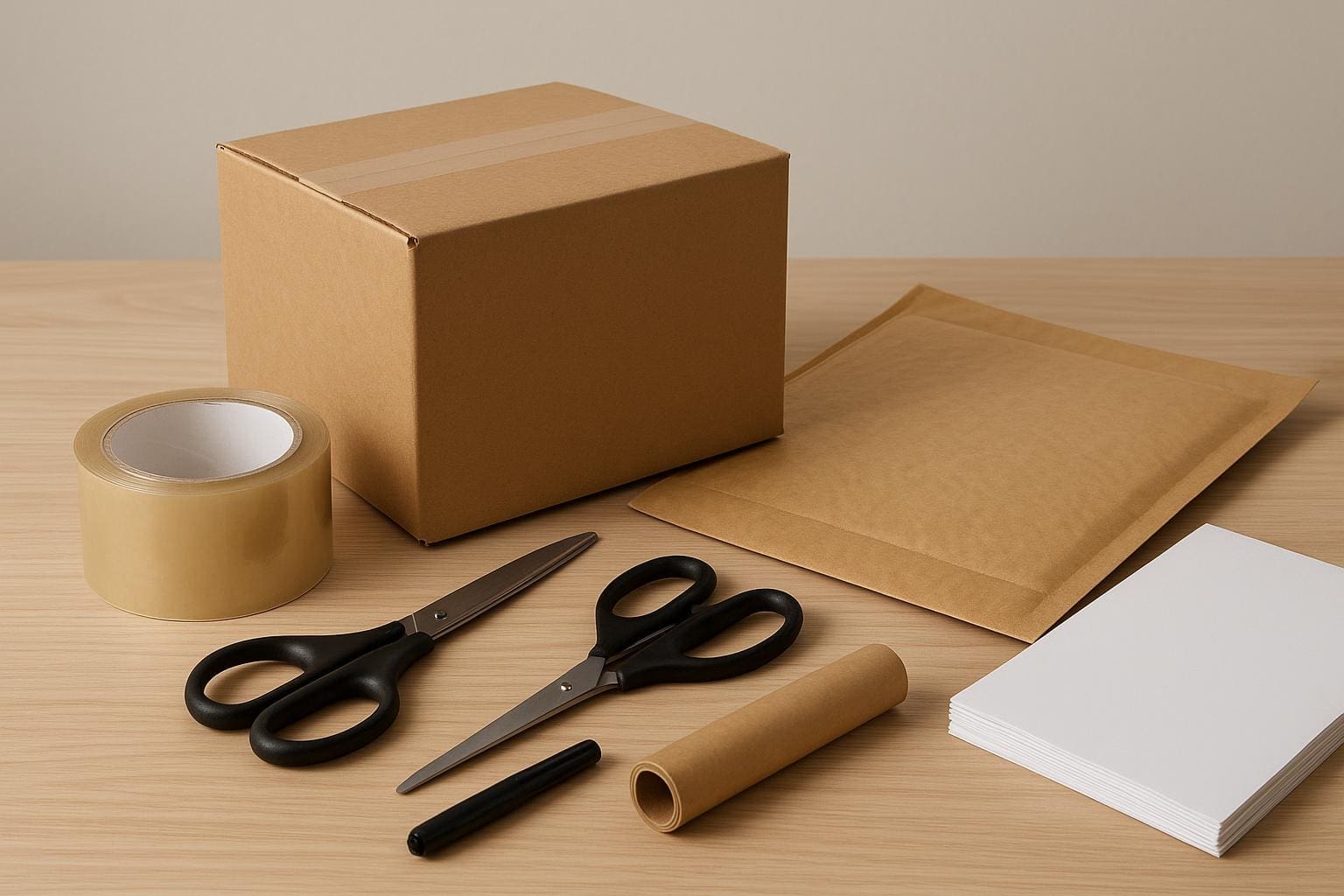
Have a small range of box sizes: small (6x6x2 to 9x6x4), medium (10x8x4 to 12x9x6), and large (16x12x8 and up). Use corrugate with the appropriate ECT rating for heavier goods — 32ECT handles most consumer packages. For soft items, consider padded mailers (poly bubble) in sizes 6×9, 8.5×11, and 10×13. Keep a few flat-rate options for USPS when dimensional weight cheats are a factor.
#### Tape And Dispensers
Get two kinds of tape: a pressure-sensitive polypropylene tape for general use and a water-activated tape for heavy or awkward loads. A handheld tape dispenser speeds packing. For bigger volumes, a table-mounted dispenser is worth the few hundred dollars.
#### Cushioning Materials
Have at least two types: void fill (paper or air pillows) and shock-absorbing wrap (bubble or foam). Paper is cheap and recyclable; air pillows save storage space but be cautious if you lack a dispenser. Keep corner protectors for fragile frames and stacked items.
#### Labels And Printing Supplies
A thermal label printer (4×6 labels) pays for itself quickly. Thermal labels resist smudges and peel easily. Use matte white labels for addresses and glossy for branding stickers. Also stock extra self-adhesive return labels and a few sheet protectors for packing slips to avoid moisture damage.
#### Weighing And Measuring Tools
A digital scale that reads to the ounce is non-negotiable. Keep a tape measure and a box-sizing template — you can avoid dimensional weight surprises by measuring length, width, and height before you ship.
#### Sealing And Security
Tamper-evident tape or security stickers are cheap insurance. For higher-value items, consider destructible tape. Also stock straps or bands for pallets and a heat sealer if you ship loose items in poly bags frequently.
### Extras That Save Money And Time
These aren’t essential at day one but pay back quickly once you’re hitting steady order volume.
– A small thermal label printer and spare cores so you don’t stop when one fails.
– Reusable packing kits: pre-made bundles of box, tape, and filler for your bestselling SKUs.
– Packing list envelopes and pre-printed return labels to speed returns.
Those three changes alone can shave minutes off every package. Minutes add up.
### How To Use This Packaging Checklist Day-To-Day
Turn this small business shipping supplies checklist into routine. Start by creating three things: a minimum stock level for each item, a reorder point, and a preferred supplier for backup. Keep a simple spreadsheet with quantities and order lead times. When inventory dips to the reorder point, place an order. Don’t wait until you’re out. That’s how rush shipping costs sneak in.
Train one person to be the shipping owner. They should do a weekly count and replace consumables. Make obvious storage labels on shelves so anyone can find a 6×9 padded mailer or a roll of 2-inch tape without asking.
### Sourcing And Cost Tips
Buy boxes and tape in bulk from a national distributor if you have steady volume. For variable needs, use local packaging stores or online marketplaces. Compare price-per-unit, not just the case price. Sometimes smaller case sizes cost more per box. Ask about sample packs. Testing actual boxes with your product prevents costly returns.
Don’t auto-buy the cheapest option. A few cents saved on a flimsy box can cost you many dollars in returns and reputational damage. Track damage claims for three months after switching supplies to evaluate.
### Sustainability And Branding Considerations
Customers care about packaging. Use recycled boxes where it makes sense, but make sure they’re sturdy. Include a simple branded sticker and a compostable packing slip sleeve if you want an eco-friendly touch. For fragile items, add a small card explaining how to recycle the materials — useful and low cost.
If the box becomes part of your product experience, standardize it. Custom printed boxes look nice but require larger minimums. An alternative: plain boxes + consistent stickers and tissue paper.
### Common Mistakes To Avoid
Packing the product upside-down in a box to make it “fit.” Underfilling boxes and hoping for the best. Using the cheapest tape you can find. These choices create returns and hurt your margins. Instead, follow the packaging checklist: right-size the box, fill voids, seal properly, and label clearly.
Measure and weigh every new SKU the first ten times you pack it. That gives you real-world data on the best box and cushioning to use long-term.
### Quick Packing Workflow Example
This is a practical packing flow for a one-person operation: pick, inspect, wrap, box, cushion, seal, label, weigh, and finally scan. Keep like-items grouped so you can assemble three or four identical orders at once. That reduces context switching and errors.
Use a simple packing station layout: tape dispenser on the right, scale in the center, label printer on the left. Put commonly used sizes of boxes within arm’s reach. Small layout choices like this speed up packing and lower damage rates.
### When To Scale Your Supplies
If daily orders regularly exceed 30–50 packages, rethink your supplies. Invest in a larger printer, faster scales, and bulk-buy agreements. You’ll reduce per-unit costs and speed throughput. Also consider adding an extra packing line or cross-training staff so packing doesn’t bottleneck fulfillment.
If returns are creeping up, audit the checklist items related to cushioning and box strength. Often the fix is selecting a slightly heavier corrugate or adding one more layer of protection.
Keep “recieve” and review cycles short. If something breaks — tape, label stock, printer ribbon — replace it fast. Small delays compound.
#### Small Notes On Compliance And Labels
Don’t cover barcodes with tape that creates glare. Use matte label stock. Include customs forms for international packages and double-check prohibited items. A mistake here can mean lost shipments or fines. Use the thermal printer to print clear, high-contrast labels to reduce scan errors at carriers.
Keep the small business shipping supplies checklist visible at the packing station. A laminated sheet with box sizes, tape types, and cushioning choices works better than a buried doc.
#### Practical Example: Shipping a Glass Candle
Wrap the candle in kraft paper, bubble-wrap the body twice, place in a snug inner box, use crushed paper as void fill, then choose a protective outer box one size up. Seal with water-activated tape if it’s heavy. Add a tamper sticker. Print a 4×6 label and include a packing slip in a plastic sleeve. Weigh and note the dimensional size. This sequence prevents the majority of breakage claims and illustrates the checklist in action.