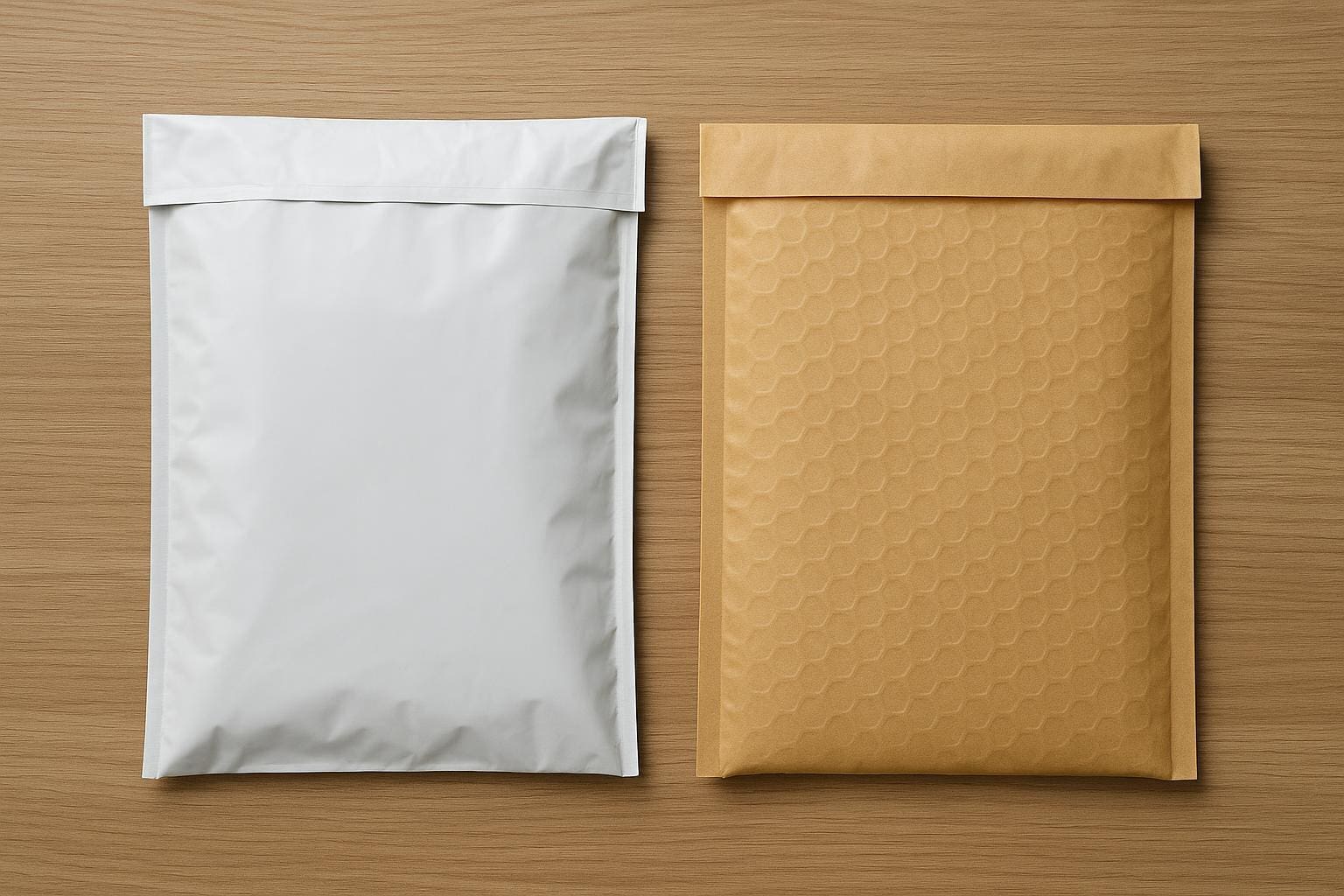
## Poly Mailer Vs Bubble Mailer: Which Is Best For Shipping?
Pick the wrong envelope and you’ll spend more on replacements, refunds, and customer emails than you saved on packaging. The decision between a poly mailer and a bubble mailer is less about which is objectively better and more about what you’re trying to ship. “poly mailer vs bubble mailer: which is best for shipping” isn’t a trick question — it’s a matching problem.
## What Poly Mailers Do Well
Poly mailer packs are thin, lightweight, and cheap. If you ship soft goods — think T-shirts, leggings, or knit hats — a poly mailer will usually do the job. The material sheds water and resists tearing when handled properly. For online sellers who batched hundreds of lightweight orders, the math is simple: lighter package, lower postage.
### Benefits For Low-Risk Items
– Low weight means lower postage.
– Slim profile reduces dimensional weight charges for many carriers.
– Plenty of sizes and colors for branding.
– Tamper-evident adhesive flaps keep returns straightforward.
Poly mailer shows its value when the item inside has no rigid parts and minimal risk of crushing. They aren’t just about cost. The low profile also stacks tidy in a fulfillment station, making packing fast.
### Limitations To Keep In Mind
Poly mailer won’t stop a corner from getting bent or a rigid item from puncturing through. If your item has a zipper, a button, or a folded cardboard backing, expect to need extra reinforcement. Also, basic poly mailers provide almost no cushioning. If you’re selling fragile goods, this isn’t the end of the story.
## Why You’d Pick A Bubble Mailer
Bubble mailers add protection. A layer of bubble lining gives flex and shock absorption. They weigh more, but they prevent the kinds of dents and scratches that lead to unhappy customers and returns. For small electronics, jewelry with delicate pieces, or anything with corners, the added cost often pays for itself.
### Protection Versus Price
Bubble mailers usually run a bit higher per unit and push the package into a heavier postage bracket. But look at the cost of a damaged item: replacement product, return shipping, customer goodwill. For many sellers, that math flips in favor of bubble-lined mailers.
### When Bubble Mailers Fall Short
Bulky items still need a box. Bubble mailers can add thickness and therefore dimensional billing if the package is large-ish. And while they cushion, they don’t prevent crushing for heavier items. You’ll still need to consider internal supports or a box for anything fragile at scale.
## How To Choose: The Simple Checklist
Think about three things: fragility, weight, and presentation. Answer those and the choice becomes straightforward.
### Fragility
– Fragile: bubble mailer.
– Flexible textile: poly mailer.
– Somewhere in between: add cardboard or use a small box.
### Weight And Cost
– Under a certain weight threshold, a poly mailer usually saves money.
– For heavier small items, bubble mailers may shift you into a higher postage tier but lower damage risk.
### Brand And Unboxing
– If your brand relies on a neat unbox experience, poly mailers can be printed or colored for visual impact.
– Bubble mailers feel more premium for delicate items and can still be branded.
## Shipping Mailers And Returns: The Real-World Tradeoffs
Shipping is a series of repeated interactions. One damaged package creates extra customer service time and a little erosion of trust. Shipping mailers that reduce returns free up resources. If you sell seasonally or face spikes, a slightly more expensive mailer that reduces problems can be the better long-term move.
### Handling And Fulfillment
Fulfillment speed matters. Poly mailers are quicker to stuff and seal. Bubble mailers can slow throughput a bit because of bulkier shapes, but they cut down on rework from damaged shipments.
## Sustainability Considerations
Neither option is perfect environmentally, but choices matter. Some poly mailers are recyclable where film recycling exists, and some brands offer compostable variants. Bubble mailers are often a mix of plastic and bubble wrap that’s harder to recycle.
If you’re promoting greener shipping mailers, look for mailers made from post-consumer recycled content or ones that accept reuse. Encourage customers to reuse packaging when possible. Also, consider offering a refund on return shipping only when returns arrive undamaged — a gentle incentive to encourage careful handling from both sides.
## Cost Examples That Illustrate The Point
A typical poly mailer might cost $0.12 per unit at scale. A bubble mailer of similar size could be $0.35. Postage adds another layer: if the bubble mailer pushes you into the next postage bracket, you could be spending $0.75–$1.00 more per order. But if damage rate drops from 3% to 0.5% with a bubble mailer, that saved replacement cost could more than cover the extra packaging spend.
Run the numbers for your average order value. If a damaged product costs you $25 in replacement and handling, even a small reduction in damage rate is worth a higher mailer cost.
## Packaging Hacks That Blend Both Worlds
You don’t have to treat the decision like an either-or. Use a thin cardboard insert inside a poly mailer for shirts with stiff tags. Wrap delicate items in a thin bubble bag and then place them in a poly mailer. These hybrid approaches keep postage low while protecting the product.
### H4: Small Changes, Big Impact
– Fold stiff items with a lightweight cardboard sleeve.
– Use stickers or void-fill tape to secure items inside.
– Offer optional upgraded packaging at checkout for fragile items.
## Returns And Customer Experience
Shipping mailers that protect the product reduce returns and increase repeat business. If your customer base values presentation, spend a bit more. If they’re price-sensitive, focus on keeping costs down while avoiding common causes of damage. Advertise the packaging option in product pages so customers can choose. That transparency prevents surprised buyers and reduces chargebacks.
## Practical Advice For Different Businesses
If you’re selling apparel only: lean toward poly mailer. If you sell a mix including fragile items: standardize on bubble mailers for those SKUs and use poly for the rest. If you run a marketplace with many different products, build packaging rules into your fulfillment process so the right mailer gets used every time. Remember to document the decision reasons so packers know when to upgrade.
When you ask “poly mailer vs bubble mailer: which is best for shipping” think less about absolutes and more about which risks you’re willing to accept. Test both for a month, measure damage rates and postage changes, and adjust. Small, measurable tweaks beat gut feelings.
Recieve samples from suppliers and stress-test them yourself before you commit to a large order. Shipping is full of small costs that add up — the right mailer prevents a lot of wasted time and money — and keeps customers coming back.