Customs Clearance Explained for International Packages

customs clearance explained for international packages

## How Customs Clearance Explained For International Packages Works

Getting a package through border control is mostly paperwork and process, not magic. If you ship something overseas or wait on a parcel coming in, knowing how customs clearance explained for international packages actually functions saves time and money. I’ll walk through the parts that trip people up and the small choices that make a difference.

### What Customs Officials Look For

When a parcel arrives they want to know three things: what’s inside, where it came from, and what it’s worth. That’s it. Declare the contents honestly. Use specific descriptions. “Clothing” is okay, but “men’s cotton shirts, 6 units” is better. If paperwork says “samples” but the box is full of retail items, expect delays. Proper invoices, accurate HS codes, and clear country-of-origin marks cut through friction.

### Documents You Need To Move Fast

You don’t need a mountain of forms. The essentials are a commercial invoice, a packing list, and a bill of lading or airway bill. For gifts there’s often a lower paperwork bar, but customs still wants value and content detail. If your goods are regulated — think food, cosmetics, electronics — add permits or certificates. Don’t forget signatures. In many places a missing signature is the whole reason a shipment stops.

#### Example: Electronics From A Small Supplier

A small electronics seller sent ten portable chargers. The invoice listed “gifts” with no value. Customs flagged it. The buyer had to provide a corrected invoice and proof of payment. Result: a week lost in transit and extra handling fees. Clear, truthful invoices avoid that.

### Fees And Charges To Expect

Customs clearance involves admin fees and sometimes storage charges if the parcel sits. The headline cost, though, is import duties and taxes. Import duties are set by the destination country and often depend on the HS code and declared value. Free trade agreements can lower or remove those duties, but you’ll need the right paperwork to prove eligibility. Brokerage fees from the courier or customs broker are separate. They charge for doing the form-filling and liaison work.

### How Import Duties Are Calculated

Import duties are not a random penalty. They’re usually a percentage of the declared invoice value, sometimes combined with insurance and freight (CIF). For example, a country might charge 5% duty on electronics plus a 12% VAT on the sum of value plus duty. That math adds up, so check the destination’s tariff schedule. If you’re a buyer, ask the seller whether prices are DDP (Delivered Duty Paid) or DAP (Delivered At Place). DDP means the seller covers import duties; DAP means you pay them on arrival.

### Timing: How Long Clearance Takes

Three things control time: accuracy of paperwork, workload at the port, and whether your shipment is inspected. If paperwork is complete and the route is calm, clearance can be same-day. If random inspection or discrepancies occur, plan for days or weeks. Holidays and strikes stretch timelines. If speed matters, pay a premium for express courier handling or hire a customs broker who knows the local quirks.

### Choosing Between Courier And Broker

Couriers like FedEx, DHL, and UPS offer integrated customs services. They’re convenient but often charge higher brokerage fees. Independent customs brokers can be cheaper and more flexible, especially for complex or high-value imports. If you’re importing regularly, a broker becomes an asset — they’ll pre-clear shipments, advise on tariff classification, and push back on overcharges. For one-off purchases, a courier is usually simpler.

### Common Problems And How To Avoid Them

Mislabeled contents. Under-declaring values. Missing certificates. Those are the top failures. Another frequent issue: a sender marks merchandise as “sample” with zero value to dodge import duties. Customs treats that as suspicious and holds the parcel. The correct move is to state a realistic value and, if needed, request duty relief with proper documentation. Vendors often forget to include HS codes; when that happens customs assigns the code and it might not favor your product.

#### Small Tip: Photograph Packaging

Before shipping, take photos of the item and packaging and keep sale receipts. If customs questions the value or description, quick proof speeds resolution. I keep a brief folder for every international sale; it’s saved me three times already.

### Red Flags That Trigger Inspection

Large shipments of restricted goods, offers to under-declare values, and inconsistent documentation are obvious flags. But so are mismatches: weight on the airway bill not matching the actual box, or a commercial invoice in one currency and a bank transfer in another. Smart shippers avoid those inconsistencies. They also confirm the recipient’s details in advance to prevent identity checks and delays.

### What To Do When Things Go Wrong

Stay calm. Ask for a reason in writing. If customs says you owe import duties, ask for the calculation. If paperwork is missing, supply it immediately and request an itemized release. Use a broker if the language or process is unfamiliar. Couriers are usually responsive on the phone. Persistence helps; sometimes a polite escalation will move a stuck parcel faster than a heated complaint.

### Practical Steps For Buyers And Sellers

Sellers should include clear invoices, HS codes, and country-of-origin data on every shipment. State whether prices are DDP or DAP. Buyers should anticipate import duties and check local tariff rates before purchase. In both roles, a quick pre-check of restricted or prohibited items prevents nasty surprises. When in doubt, ask the carrier or a broker. They deal with customs clearance daily and can point out pitfalls specific to your route.

customs clearance explained for international packages is not as mystical as it seems. It’s documentation, classification, and payment. Knowing where the tight spots are — like accurate invoices and import duties calculations — keeps your parcels moving. Mistakes cost time or money. That’s reality. But small, practical steps cut most of the delay.

Remember to keep records, be honest about values, and line up a broker or reliable courier if your shipments are regular. Do that and customs will be just another checkpoint. recieve paperwork right, and your package will clear much faster.

Global Shipment Transit Times And Tracking Overview

global shipment transit times and tracking

Delays aren’t a mystery. They come from choices made weeks or months before a crate leaves the warehouse. If you want predictable deliveries, you have to read where time is lost and how tracking actually helps—or doesn’t.

## Global Shipment Transit Times And Tracking: What To Expect
When someone asks about global shipment transit times and tracking, they usually mean: how long until a parcel moves from Point A to Point B, and where can I see that progress? The first part is deceptively simple. The second part involves data handoffs between carriers, customs authorities, and local couriers. Expect variability. Expect gaps in visibility, too. You can reduce both, but not eliminate them.

### Factors That Affect Transit Times
Transit times are the result of decisions and conditions. Here are the main drivers.

– Mode Of Transport: Ocean freight moves thousands of containers cheaply, but it takes weeks. Air freight is fast and costly. Road and rail fill the middle ground. Choosing the mode shapes your schedule.
– Origin And Destination Infrastructure: A major port with daily sailings is different from a secondary port visited once a week. Airports and inland rail hubs matter as much as the carrier.
– Routing And Consolidation: Consolidated shipments save cost but add handling steps and wait time for full loads, which lengthens transit times.
– Customs And Documentation: Incorrect papers or sudden regulatory checks can hold cargo for days. This is the single most common cause of unexpected delays on international routes.
– Seasonality And Congestion: Peak shopping seasons, harvest times, or a festival at a port can dramatically extend international transit times.
– Geopolitical Events And Weather: Strikes, sanctions, hurricanes—these are outside your control and can change schedules overnight.

None of this is theoretical. I once tracked a shipment from Shenzhen that stalled in a secondary port because a trucker strike reduced inland pickup capacity. The container sat four extra days while the paperwork showed “in transit.”

#### How Carriers Estimate Transit Times
Carriers publish schedules and transit promises, but those are averages. They assume normal port calls and no unexpected inspections. Look at the published door-to-door transit times as baseline, not guarantee. Ask for historical on-time arrival rates for the specific lane you use. That tells you more than the headline number.

### Typical Transit Times By Mode
Companies live and die by the granularity of their logistics data. Here are ballpark ranges you can expect, understanding there’s variation based on lane and service level.

#### Ocean Freight
Ocean is the backbone for long-haul, heavy or bulky goods. Standard container services between Asia and North America typically run 18 to 30 days port-to-port. Europe-Asia lanes are often 20 to 35 days. Add inland pickup and customs clearance, and your door-to-door numbers could be weeks longer.

#### Air Freight
Air moves freight fast. Express services can go door-to-door within 1 to 3 days for most international lanes. Consolidated air services are cheaper but slower, often 3 to 7 days. For urgent inventory replenishment, air is the obvious choice, but cost per kilo jumps significantly.

#### Road And Rail
Cross-border road shipments in contiguous regions—think EU or parts of North America—can be 1 to 5 days depending on distance and border checks. Rail, especially between China and Europe, offers a middle-ground option with transit times of roughly 12 to 18 days, sometimes faster for dedicated services.

### Measuring International Transit Times
There’s a difference between advertised transit times and actual experience. To measure yours:

– Track sample shipments across the same lanes over months.
– Record date stamps from carrier scans: pickup, port arrival, export clearance, vessel departure, import clearance, and final delivery.
– Compare planned vs. actual days at each leg.

Do this for at least a dozen shipments per lane to see patterns. One rogue delay shouldn’t change your planning, but repeated slowdowns should.

## How Tracking Works Across Borders
Tracking sounds straightforward: a scan here, a scan there. In practice, it’s messy. Systems don’t always share information, and scans can be missed.

### Core Tracking Elements
The key pieces of data you want to see:

– Pickup Confirmation: When the carrier physically takes custody.
– Port/Airport Event: Arrival and departure records.
– Customs Status: Export and import clearance, holds, inspections.
– In-Transit Transfers: Handovers between carriers or gateways.
– Final Delivery: Proof of delivery, recipient name, and time.

Some providers will show all of that in one portal. Others force you to chase updates through multiple websites.

#### Why Scans Go Missing
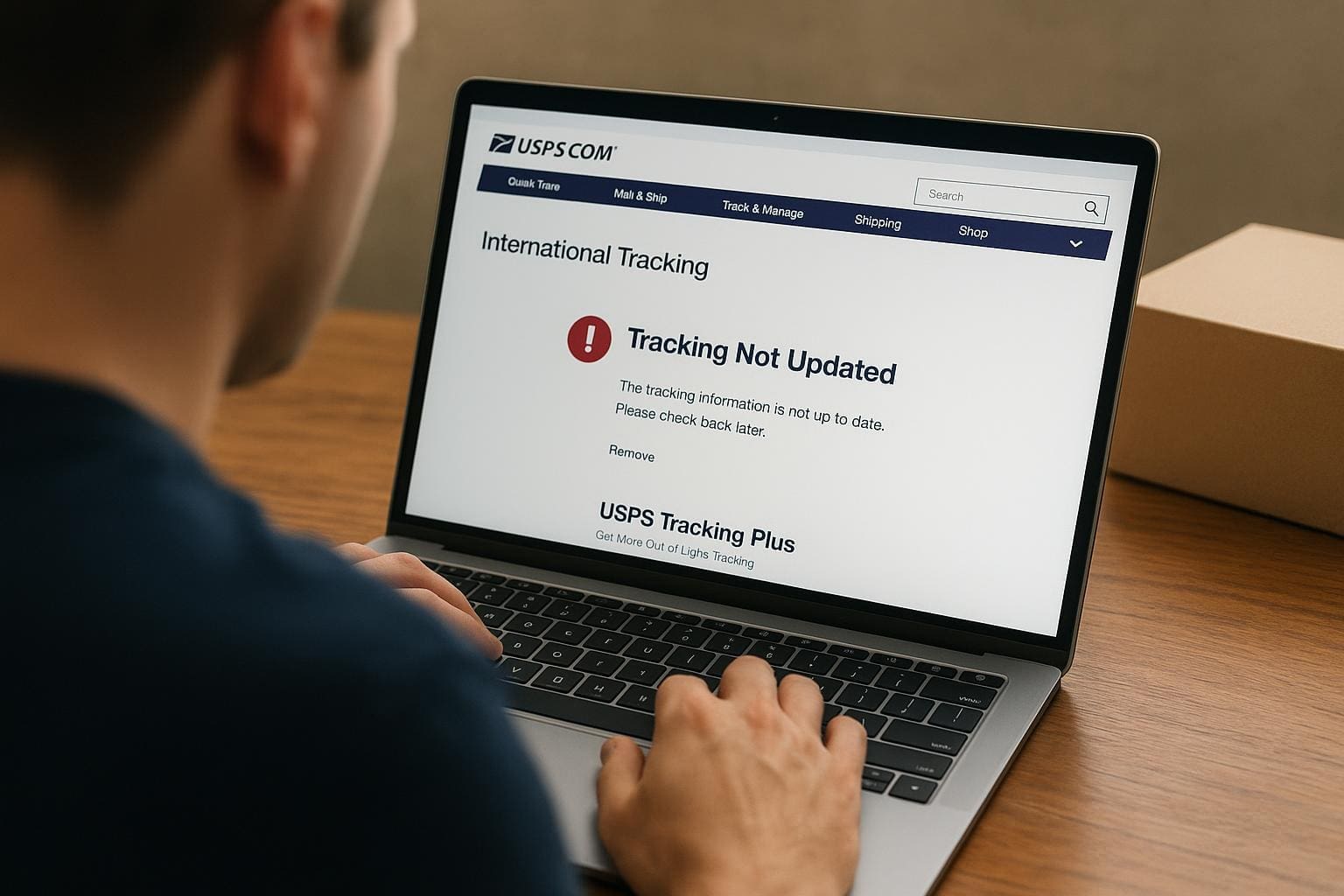
Workers in yards and warehouses are busy. Scans require devices, battery life, and training. A missed scan doesn’t mean the cargo isn’t moving. It means you’ll lack visibility until the next checkpoint. Long stretches with no updates are where anxiety spikes. Good carriers will explain why there’s a gap instead of leaving you guessing.

### Technologies That Improve Visibility
GPS-enabled trucks, IoT sensors in containers, and electronic data interchange help. A GPS ping from a container on a truck offers realtime location, while sensors report temperature and shock for sensitive cargo. EDI automates paperwork with customs authorities, speeding clearance. Not every lane or provider supports these options, so you have to ask.

## Choosing The Right Tracking Strategy
Not every shipment needs full live tracking. Match your tracking to the risk and value.

### Low-Risk, Low-Value Shipments
For inexpensive goods, basic milestone tracking (pickup, port departure, delivery) typically suffices. Over-investing in visibility here costs more than the problem it solves.

### High-Value Or Time-Sensitive Loads
For critical parts or seasonal inventory, push for live visibility, temperature monitoring, and proactive alerts. If a container deviates from its route or stops longer than expected, you want a real person calling you, not just an automated email.

#### Working With Partners
Make tracking a requirement in service-level agreements. Specify the events you need to see and the response times for exceptions. If your carrier won’t provide data at the frequency you need, consider a third-party visibility platform that aggregates scans and telematics across multiple providers.

## Interpreting Transit Times In Contracts And Quotes
Quotes will show transit times. Contracts will not always enforce them. Don’t confuse transit times with delivery guarantees.

### Ask About Liability And Remedies
If a quoted transit time is a core part of your business promise, secure compensation clauses for failures. Many carriers will accept liability only for damage or loss, not for late arrival. Negotiate if timing matters.

### Build Buffer Into Your Planning
Use historical data to set internal cutoffs. If average transit times are 18 days with a standard deviation of 5 days, plan for the 95th percentile when customer promises are strict. That’s not being pessimistic. It’s aligning operations with reality.

## Common Mistakes Companies Make
Some errors repeat across industries. Avoid these.

– Overreliance On A Single Carrier Without Backup: If that one carrier has a strike, you’re stuck.
– Ignoring Documentation Complexity: Missing licenses or incorrect HS codes create avoidable holds.
– Treating Tracking As A Nice-To-Have: Visibility is a tool for decision-making. Without it, you can’t reroute or expedite intelligently.
– Not Testing New Lanes: First shipments into a new origin or destination are experiments. Expect unexpected transit times.

### A Practical Example
One retailer set reorder points based on published ocean transit times and consistently missed seasonal windows. After tracking actual shipments, they found a hidden three-day handling lag at origin and two additional days for port congestion. Adjusting reorder points by five days eliminated stockouts while raising only modest inventory levels.

## Pricing Vs. Predictability
The cheapest option is rarely the most predictable. If you reduce price by choosing consolidation or slower services, you increase risk of variability. Sometimes the right choice is paying a bit more to reduce lead-time variability. That tradeoff is strategic, not just financial.

### Negotiating For Better Transit Times And Tracking
You can often get improved terms by aggregating volume or offering longer contract commitments. Ask carriers for access to their dashboard, not just periodic reports. Also consider third-party platforms that buy data feeds from multiple carriers and normalize them in one interface.

## Small Tactics That Make A Big Difference
A few practical steps improve outcomes immediately.

– Standardize Documentation: One error-prone field causes many customs delays.
– Use Incoterms Intentionally: Who handles export clearance matters for timing.
– Revisit Routing Quarterly: Ports and services change; a lane that was quick six months ago may no longer be.
– Run Regular Scorecards: Track on-time performance by lane and carrier, and act on trends.

You won’t fix every delay. But you can stop being surprised by them. The work is in measuring, negotiating, and matching tracking to the criticality of the load. Recieve the data, then use it to make shipping behavior predictable and useful.