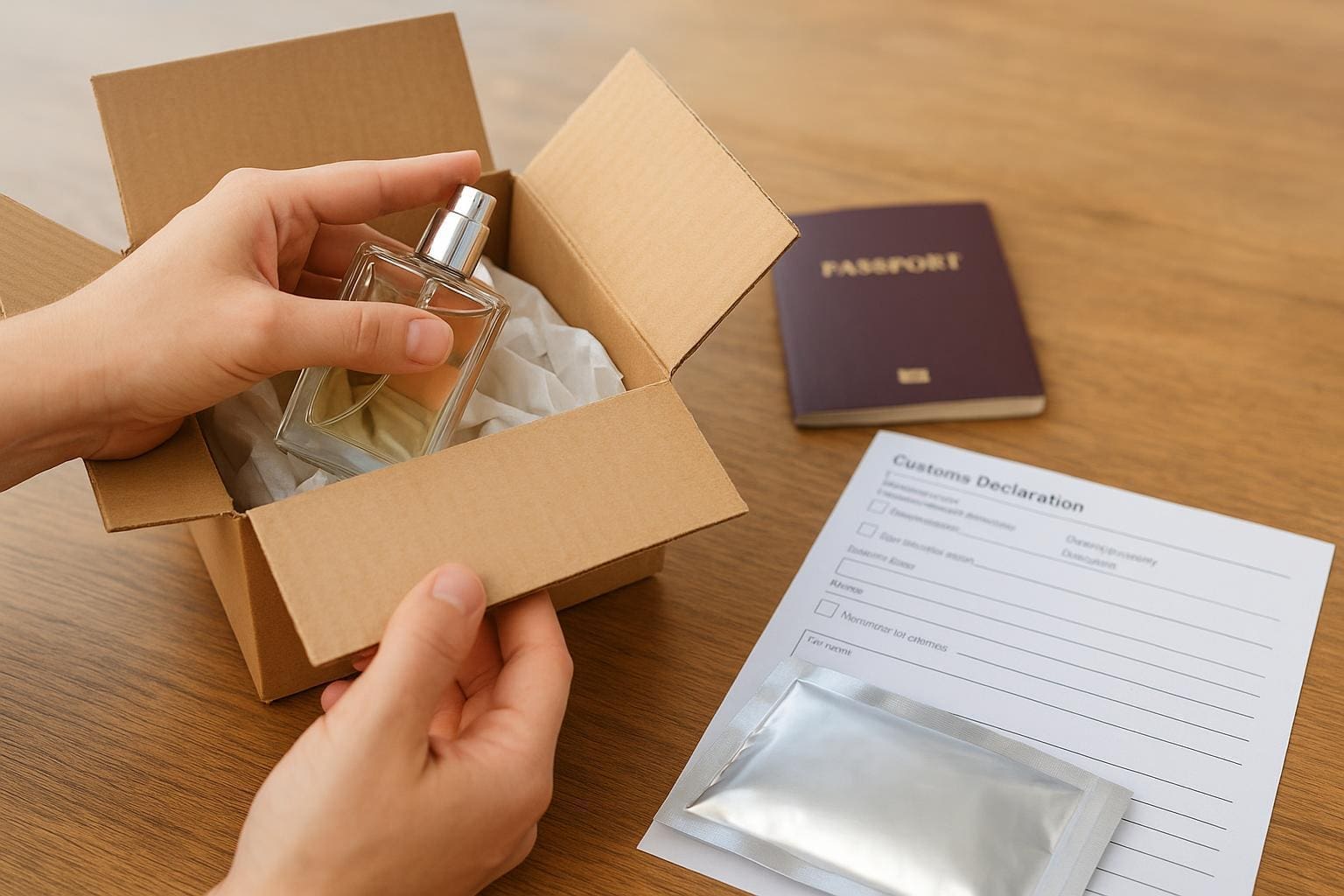
## Can You Ship Perfume Internationally And What To Know
Yes, but not without doing homework. Perfume is basically a flammable liquid in a pretty bottle, and that combination triggers rules from airlines, couriers, and customs agents. If you skip steps you’ll get a returned parcel, a fine, or a courier refusing to accept the package. Get the basics right and most shipments clear fine.
### Why Perfume Is Treated Differently
Perfume uses alcohol as a solvent. That makes bottles hazardous from a transport point of view because alcohol is flammable. Regulators classify many fragrances under dangerous goods rules. That doesn’t mean you can’t send them, but it does mean special handling, packaging, and paperwork for many routes — especially if transport involves air.
### Can You Ship Perfume Internationally? Short Practical Answer
Yes: can you ship perfume internationally if you follow carrier rules, label it correctly, and respect destination laws. No: can you ship perfume internationally if you try to send multiple liters in one package and expect it to fly without documentation. The difference is compliance.
## How Carriers Handle Perfume
Carriers vary. Some handle flammable liquids routinely under “limited quantity” or “dangerous goods” protocols. Others forbid air carriage and only accept parcels by surface or ground. Major express carriers accept perfume in small commercial quantities, but they require DG paperwork or the shipper to mark the parcel with limited quantity labels. National postal services sometimes have stricter rules, especially for international airmail.
### What To Check Before Booking A Shipment
1. Check the carrier’s dangerous goods policy.
2. Confirm whether the route includes air transport.
3. Verify the destination country’s import rules for alcohol-based products.
4. Decide whether you’ll ship insured and with signature on delivery.
Don’t assume ground-only is safe. International routes often combine air and ground. If a carrier needs to move a parcel by air, and your package isn’t eligible, the carrier will either reject it at pickup or divert it.
### Basic Packaging And Labeling Rules
Packaging is twofold: protect the bottle and satisfy safety rules for flammable liquids. Use an inner sealed bag, absorbent padding, and an outer rigid box. Put the bottle upright and secure it so it can’t shift. Many carriers expect limited quantity markings or DG labels if the alcohol content crosses a threshold.
For e-commerce sellers, include a clear commercial invoice that describes the contents honestly: “Eau de Parfum, 50 ml.” That helps customs. If the shipment meets limited-quantity rules, you’ll need to mark it as such. If it doesn’t, the carrier will usually require a full DG declaration and certified packaging.
## Perfume Restrictions You Need To Know
Perfume restrictions fall into a few camps:
– Transport restrictions because it’s flammable.
– Import restrictions because of alcohol content or local laws banning certain scents or ingredients.
– Seller-focused restrictions, like quotas or licensing in specific markets.
Countries with strict alcohol controls may limit or prohibit perfume imports. Religious or cultural laws in some regions restrict the import of alcohol-containing products, and customs officials may seize undeclared items. Always check the destination’s official customs site for current rules.
### Examples Of Country-Level Concerns
– Some Gulf and Middle Eastern countries screen more closely for alcohol content.
– Certain countries enforce bans on ingredients considered endangered or controlled (natural extracts like some oud varieties can be restricted).
– Post-Brexit, the UK and EU have different documentation and VAT processes that can trip up sellers unaware of new customs entries.
Don’t rely on guesswork. If you’re shipping to a tricky jurisdiction, call the carrier’s local office and confirm.
## Documentation Customs Want To See
Customs agents need a clear, truthful paper trail. Typical documents include:
– Commercial invoice with product description, HS code, and value.
– Air Waybill or tracking number.
– Any required import permits or certificates for ingredients.
– Dangerous goods documentation if applicable.
HS codes for perfumes usually fall under the “perfumes and toilet waters” category, but classification can vary with concentration and ingredients. Wrong HS codes or undervaluing goods is a common reason parcels get held for inspection.
### Declarations And Values
Declare the correct value. Lowballing a parcel to avoid duties is risky: customs can seize items for misdeclaration, issue fines, and delay clearance. If you ship as a gift, mark the item as such only if it genuinely is a gift — customs agencies audit this frequently.
## How To Choose The Right Shipping Method
Air freight is fast but most strictly regulated for flammable liquids. Express couriers can ship small quantities quickly if you follow limited-quantity rules. Surface/sea freight handles larger quantities better but takes longer and still needs correct maritime DG packaging.
If you’re a seller, also think about returns. Returns with perfume lead to extra customs interactions. Offer prepaid return labels only after you’ve checked that returns to your base country are possible for used or opened fragrances.
### When To Use A Specialist Freight Forwarder
If you’re moving bulk inventory or expensive niche perfumes, a forwarder specializing in chemicals or fragrances will handle DG classification, packing, and customs brokerage. It costs more, but it keeps you out of trouble and can be worth it for higher-value shipments.
## Practical Packing Steps That Work
– Wrap the bottle in bubble wrap and seal it in a leak-proof bag.
– Place absorbent material between the inner bag and outer box.
– Use a sturdy outer box and cushion all sides so the bottle stays centered.
– Clearly mark the package with any required limited-quantity labels or DG marks.
– Add “Liquid – Flammable” if required by the carrier.
This is straightforward but frequently botched when sellers try to minimize weight or skip absorbent materials. A leaked perfume destroys customer trust faster than delayed delivery.
## Dealing With Customs Inspections
If customs opens a parcel for inspection, have digital records ready: invoices, purchase receipts, and MSDS (Material Safety Data Sheet) for the fragrance if available. Some customs authorities request MSDS to verify that the declared item matches what’s inside. If they suspect banned ingredients, expect longer hold times.
### What Triggers A Hold
– Inconsistent description between the invoice and the physical packaging.
– High declared value without a matching audit trail.
– Country-specific ingredient concerns or alcohol percentage.
– Improper or missing DG labels for air shipments.
If your parcel is held, cooperate. Provide the documents promptly and answer questions honestly. Aggressive or evasive behavior just makes clearance slower.
## Selling Perfume Internationally: Policy Tips
If you run an online store, make shipping policies explicit. Don’t leave buyers guessing whether a fragrance can be shipped to their country. List countries you won’t ship to and explain returns, duties, and taxes.
Also set expectations about delays related to customs inspections. Some customers get upset when a supposedly two-day shipment spends a week in customs, even if it was unavoidable. Clear communication reduces disputes.
### Insurance And Liability
Buy insurance for high-value shipments. If a parcel is lost or damaged, you’ll want coverage for the retail value, and insurance claims often require proof of proper packaging and accurate documentation. If you knowingly misdeclare a parcel and something goes wrong, insurers may refuse the claim.
## Perfume Shipping For Individuals: Tips For Gifts And Personal Use
If you’re sending a perfume gift to a friend abroad, check both the carrier’s rules and the destination’s import laws. Smaller, single-bottle gifts usually clear so long as the carrier accepts the item and you declare it truthfully. If your shipment is refused, the item may be destroyed or returned at your expense.
### Senders Should Remember
– Use a carrier that provides tracking and signature on delivery.
– Pack as if the bottle is fragile and flammable — because it is.
– Include the recipient’s phone number for customs brokers to contact them if needed.
If the perfume contains restricted animal-derived extracts or alcohol levels that violate local laws, it might not pass customs even if the carrier accepts the parcel.
## How Retailers Can Prevent Problems
Start with proper SKUs that include HS codes and alcohol percentage in your product data. Train staff who pack orders to follow the packaging checklist. Make sure your e-commerce platform flags restricted destinations at checkout so customers can’t place orders you can’t ship.
Also, work with carriers that offer customs brokerage as part of their express services. That reduces the friction for customers and reduces manual handling on your side.
### Tools That Help
– Automated customs calculators integrated into your checkout.
– Label-printing tools that include DG or limited-quantity markings.
– MSDS database access for your product team.
– A list of banned or restricted countries for perfume imports.
These sound like extra work, but when you’re shipping dozens or hundreds of bottles a month, they save time and reduce losses.
## Real-World Scenarios And What To Do
Scenario: A customer in Country X orders a 100 ml parfum. The courier refuses at pickup because the route involves air transport and the bottle exceeds the carrier’s limited-quantity threshold. What now? Your options: cancel and refund, switch to a ground-only carrier (if available), or break the shipment into smaller individual parcels that fall under the limited-quantity rules. Each option costs time or money, so communicate with the buyer.
Scenario: A parcel gets held for inspection because customs didn’t like the ingredient list. If you have MSDS and ingredient declarations, provide them fast. If you don’t, you may face seizure or destruction.
These examples are common. Plan for them.
## Avoiding Common Pitfalls
The worst mistakes are avoidable: concealment (not declaring alcohol content), incorrect packaging, and ignorance of destination laws. Don’t label the box “Cosmetics” and expect customs to treat it differently. Be specific: “Eau de Parfum, alcohol-based, 50 ml.”
If you work with resellers overseas, train them about perfume restrictions when they re-export inventory. It only takes one misdirected container to create a big compliance headache.
### When To Call Customer Support
If you’re unsure about a particular country or an unusual ingredient, call the carrier’s hazmat team. They handle these questions daily. Also call local customs if the destination customs website is vague. It’s better to ask and document a written reply than to guess.
## Small-Batch And Handmade Perfumes
Handmade or artisanal fragrances present extra paperwork challenges. They may include unusual botanical extracts that draw scrutiny. Also, homemade labels and nonstandard packaging can lead customs to question authenticity or safety. For craft perfumers, consider working with a broker who specializes in cosmetics and fragrances.
## Final Practical Reminder
can you ship perfume internationally? Yes, given the right paperwork, packaging, and route. But it’s not one-size-fits-all. Each shipment needs a moment of thought: carrier rules, destination laws, labeling, and honest documentation. Take that moment, and you’ll avoid most problems — and your parcels will arrive intact and on time.
#### How To Recieve Returns Safely
If you’re accepting returns, instruct the sender to check with their carrier first. Returned perfumes can be considered hazardous, so the route back to you may be different from the route out. Track returns closely, request proof of proper packing, and quarantine any returned goods until you confirm they’re intact and safe to restock or resell.