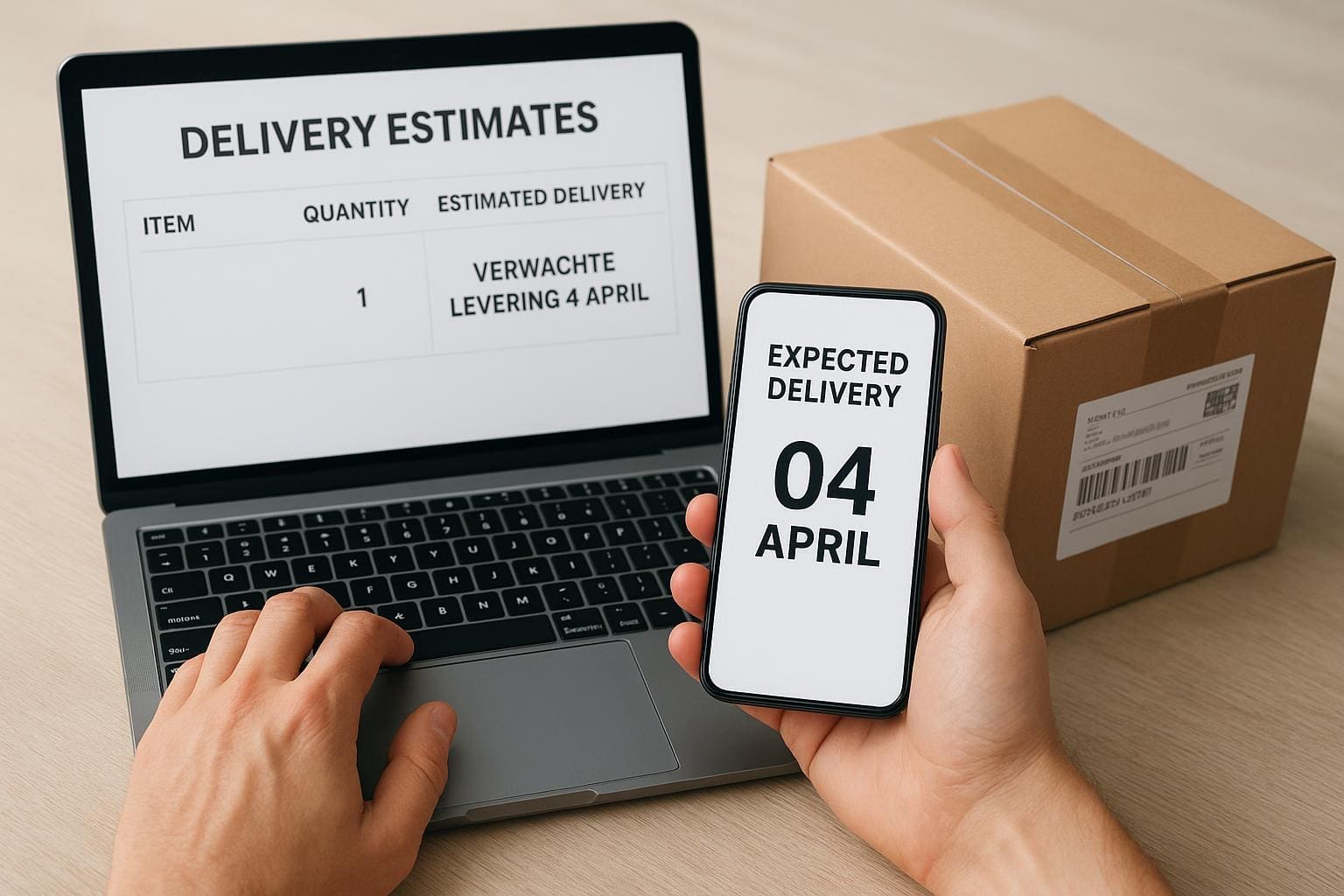
Delivery Estimates for Ecommerce Orders Explained Clearly

delivery estimates for ecommerce orders

## How Delivery Estimates For Ecommerce Orders Work
Delivery estimates for ecommerce orders are not a single math problem you solve once and forget. They’re a moving target built from several pieces: the time your warehouse needs to process the order, the carrier’s pickup and transit time, any customs clearance for international shipments, and last-mile variables like weather or local delivery capacity. Put those pieces together and you get a range or a date a retailer can reasonably promise.

At the simplest level, delivery estimates for ecommerce orders fall into a few common formats: a single promised date, a delivery window (for example, 3–5 business days), or a dynamic ETA that updates after the parcel ships. Each format tells the customer slightly different things. A single date looks confident but is only accurate if everything goes right. A range admits uncertainty but can feel vague. A dynamic ETA is the most accurate in practice, but it requires integration with carriers and real-time tracking data.

## The Components That Make Up An Estimate
### Processing Time And Cutoff Policies
Processing time is the minutes-to-days your team needs to pick, pack, and hand the parcel off to a carrier. That time changes with inventory, staffing, and order complexity. If you show a ship date in your cart, be explicit whether that means the order leaves the warehouse that day or the next business day. Cutoff times matter too. Orders placed before a cutoff may ship the same day; those after wait until the next. Be concrete about timezones.

### Carrier Transit Times And Service Levels
Carriers publish transit tables, but those tables assume ideal routing. Two-day service might be two business days from pickup to delivery, but not from when the customer clicks buy. If your carrier has limited departure flights or weekend pickups, transit stretches. Also, international carriers often hand off to local couriers, which adds unpredictability.

### Inventory Location And Multi-Warehouse Logistics
If inventory is spread across fulfillment centers, the chosen fulfillment site affects the estimate. A product in a nearby micro-fulfillment center can deliver in a day. The same SKU held only in a factory-adjacent warehouse might take longer. Smart routing that picks the closest fulfillment source is basic but often mishandled.

### External Factors: Weather, Holidays, And Customs
Storms and peak-season surges are the silent killers of promises. Customs checks for cross-border shipments can add several days unpredictably. Build buffers for major holidays and known weather patterns. Don’t assume carriers will absorb the delay without passing it downstream.

### Returns, Exchanges, And Reverse Logistics
Delivery estimates for ecommerce orders should also consider the reverse trip when you promise “fast exchanges.” If your policy requires items to be returned before a replacement ships, the customer timeline includes that outbound leg. If you pre-ship replacements and accept returns later, the estimate looks shorter but increases your inventory risk.

## How To Calculate Delivery Estimates For Ecommerce Orders
### Start With Clear Data Inputs
A usable estimate needs these data points: current fulfillment center stock levels, average pick-and-pack time per SKU, carrier pickup schedule, published transit times by ZIP or zone, and the customer’s address type (residential vs. commercial). Put that data into a basic model first, then refine.

### Use A Layered Buffer System
Don’t rely on single-point buffers. Use three layers: operational buffer (warehouse variability), carrier buffer (transit variability), and external buffer (holidays, weather). For instance, if your best-case calculation gives two business days, you might communicate a 3–5 business day window after adding layered buffers.

### Account For Peak Variability
Run scenario simulations for peak conditions. Peak season doubles processing times in many operations. Model what happens if your processing time increases by 50 percent, or if a carrier delays pickups by one day. Those scenarios reveal when a promised date becomes risky.

### Combine Static And Dynamic Elements
Static elements are things you know before shipment, like warehouse processing. Dynamic elements arrive after pickup, such as carrier scans and route optimization. The best approach is a hybrid: show an initial, honest estimate at purchase, then update the customer with a dynamic ETA after the first carrier scan.

### Use Historical Performance, Not Just Published Times
Published transit times are a starting point. Your store’s actual performance against those times is more valuable. Track historical on-time rates by carrier and region and weight your estimate toward reality. If Carrier A hits two-day service 70 percent of the time to a given zone and Carrier B hits it 90 percent of the time, let that inform which service you offer.

## Ecommerce Delivery Estimates: Presentation That Builds Trust
### Be Specific With Language
Customers respond to specifics. “Arrives by Friday, April 9” is stronger than “arrives in 3–5 days.” If you must use a window, explain what determines the lower and upper bounds. For example, “3–5 business days (orders placed before 2pm ET ship same day).” That last clause anchors the range.

### Offer A Choice Between Speed And Cost
Don’t pretend a single option fits all. Show the fastest option up front and a lower-cost slower option. When shoppers can choose, even if they pick the slower option, they feel informed and are less likely to be upset when the package arrives later than the fastest date would have promised.

### Use Real-Time Tracking Where Possible
A dynamic ETA that updates from carrier scans reduces uncertainty. After the parcel ships, show a countdown or an estimated delivery day that adjusts when delays occur. This transparency lowers inbound support requests and calms customers when things change.

### Display Service Limitations Upfront
If certain ZIP codes or remote regions routinely take longer, flag those during checkout. It’s better to warn than to surprise. If an item ships from overseas and requires customs clearance, add a note explaining typical customs times and the possibility of extra days.

### Be Cautious With Guarantees
Guarantees reduce complaint costs but increase financial exposure. If you guarantee delivery by a date, back it with compensation rules that are fair and sustainable. Alternatively, offer a “delivery on time or we’ll cover the shipping” style promise but define the limits clearly.

## Writing Copy That Doesn’t Overpromise
### Use Plain Sentences
Avoid marketing fluff. Say: “Standard delivery: 4–6 business days” and then add a clarifying sentence: “This estimate assumes the item is in stock and orders ship from our U.S. warehouses.” Short, factual lines work better than flowery promises.

### Explain Trade-Offs Briefly
When customers choose express shipping, confirm what that actually changes: “Express shaves one day in transit and ships the same day if ordered before 1pm local time.” The customer then understands the trade-off between cost and time.

### Keep Refund/Return Statements Short And Visible
If delays trigger refunds or expedited reshipment, state that plainly. Place the policy near checkout and again in the order confirmation email.

## Handling Delays And Exceptions Without Losing Customers
### Communicate Early And Often
When a delay happens, notify customers immediately with a concise explanation and next steps. For example: “Your shipment hit a weather delay. We now expect delivery on Tuesday. We’ll refund expedited shipping if you paid for it.” Early transparency reduces frustration.

### Provide Clear Remedies
Have a simple compensation ladder: partial refund, full refund, discount code, or reshipment. Make the remedy visible in communications so customers know you’re fixing things. Where possible, automate eligibility checks to speed resolutions.

### Train Customer Service On Timing Language
Equip reps with precise language that matches what customers saw at checkout. If you said “3–5 business days,” reps should not tell customers “it should be there tomorrow” unless they can confirm it via tracking. Consistency across touchpoints matters.

### Learn From Exceptions
Log every significant delay and its root cause. Over time you’ll see patterns: a carrier struggling in a certain region, a fulfillment center with intermittent staffing issues, or a specific SKU that always slows orders. Use that data to change routing, carriers, or stocking strategies.

## Metrics To Watch And Tools That Help
### Essential Metrics
– On-Time Delivery Rate: Percentage of orders delivered by the promised date.
– Promise Accuracy: How often your initial estimate matched the actual delivery window.
– Customer Contact Volume: Number of inquiries related to timing.
– Refunds And Credits Issued For Late Deliveries.

Track these by carrier, service level, fulfillment location, and geography. If a carrier shows a low on-time rate in a region, you either change carriers in that zone or adjust the promise.

### Tools That Improve Estimates
Carrier APIs provide real-time tracking and transit time matrices. Shipping platforms and TMS solutions can centralize carrier performance stats and compare cost versus speed. Predictive ETA services use machine learning on historical carrier scan data to give more accurate ETAs than static tables. Use these tools to push dynamic updates to customers after the package ships.

### Small Investments With Big Returns
A small investment in better routing logic or a predictive ETA integration often yields a big drop in customer inquiries. For example, implementing zip-to-zone routing so orders ship from the closest fulfillment point can shave days off many routes with minimal operational change.

## Common Mistakes Companies Make With Delivery Estimates
### Promising What You Don’t Control
Don’t promise same-day delivery if your warehouse lacks reliable same-day pickups. Promises that rely entirely on carriers’ best-case performance tend to break during stressed conditions.

### Hiding Complexity From Customers
Simplifying is good; hiding is not. When a shipping quote excludes customs, duties, or third-party delays, say so. Surprises are the main source of complaints.

### Using A Single Estimate For All SKUs
A blanket “2–4 business days” for everything is easy, but rarely accurate. Heavy items, bulky cartons, or items shipped from a factory will have different realities. Segment estimates by product type or fulfillment location.

### Ignoring Historical Data
If you have a habit of estimating based on carrier brochures rather than your own delivery history, you’re setting yourself up for disappointed customers. Historical performance tells the true story.

## How To Experiment With Your Estimates
### A/B Test Wording And Format
Try showing a specific date versus a window for a subset of traffic and measure conversion and returns. Some customers prefer a single date; others prefer a range. Let data guide the format.

### Test Buffer Sizes
Experiment with different buffer amounts and measure changes in complaints and conversions. Too-large buffers depress conversions; too-small buffers increase service costs and refunds.

### Trial Alternative Fulfillment Strategies
Run pilot programs with local pickup, parcel lockers, or micro-fulfillment centers in dense areas. These often allow tighter delivery promises for a segment of your customers without overhauling the whole operation.

## When To Escalate A Policy Change
Change your public promises when you see sustained slippage in on-time rates or when you add or remove a major carrier or fulfillment site. If average transit increases by a business day in a region for more than a month, update the estimate to reflect reality. Customers forgive companies that adjust transparently more than those that persist with the same broken promise.

## Example Messaging Scenarios
#### Order Confirmation With A Range
“Your order will arrive in 3–5 business days. We’ll ship from the nearest warehouse; orders placed after 2pm ET may ship the next business day.”

#### After Carrier Scan With Updated ETA
“Good news — your order is on its way. Current ETA: Friday, April 16. We’ll update you if anything changes.”

#### Delay Notification
“We hit an unexpected delay due to local weather in the carrier network. New expected delivery: Tuesday, April 20. If you paid for expedited delivery, we’ll refund that charge.”

## Final Practical Tips
Put a clock on your promises. If the customer sees a specific date, confirm that you have the processes and vendor performance to meet it. If you choose ranges, define what affects the endpoints. Automate what you can, but keep a human escalation path when exceptions require judgment. Customers notice honesty. If you consistently under-promise and over-deliver, you build trust faster than with polished but unrealistic promises. Remember: good delivery promises are as much about communication as about logistics. And when in doubt, check the scans before you answer an impatient inbox — the tracking will usually tell the truth even when the system that created the estimate did not. Recieve feedback from front-line reps regularly and adjust the models; they see the patterns first.

Free Shipping That Preserves Margins With Smart Policies

free shipping that preserves margins

## Why Free Shipping That Preserves Margins Is Not A Myth

Free shipping has a reputation: it’s a marketing weapon that eats profits alive. That’s true if you slap it on every order and don’t look at the numbers. It’s not true if you plan policies around the real drivers of cost. Free shipping that preserves margins is a strategy more retailers can run if they stop thinking of shipping as an afterthought and start running it like a product line.

Think about a $50 product with a 40% gross margin and a $6 average ship cost. If you hand out free shipping on that SKU, your margin drops from $20 to $14 — a 30% cut. But if you change mix, increase AOV slightly, and push customers toward cheaper fulfillment options, you can restore that $6 through higher conversion and repeat buys. That’s the arithmetic most teams skip. The trick isn’t to avoid free shipping entirely; it’s to design free shipping that preserves margins.

### The Cost Drivers Sellers Ignore

Most merchants focus on carrier rates as the villain. Rates matter, but three other things usually cost more: inefficient packing, returns, and poor threshold design. Dimensional weight blows up costs for lightweight-but-bulky items. A $4 label can turn into $12 because you used a box six inches bigger than necessary. Returns double the logistics math: outbound plus inbound plus refurbishment. Thresholds that are too low let engaged buyers get free shipping on orders that would never offset the cost.

Margin preserving shipping starts by mapping those drivers. You need to know your average order weight by SKU, the return rate by SKU, and which zip-code zones eat your margin. Once you have that, policy becomes tactical instead of wishful.

#### Small Math: How AOV And Thresholds Move The Needle

If your average order value is $45 and your target free-shipping threshold is $50, you’ll nudge behavior, but maybe not enough. Consider three levers:

– Raise AOV by $5 with a suggested add-on (a $4 warranty or a $6 accessory) and you push more orders above threshold.
– Offer free shipping at $50 for single-item orders but $35 for two-items of qualifying SKUs. That steers bundling.
– Make subscription members eligible for lower thresholds; their lifetime value justifies the short-term margin hit.

Do the math by SKU. A $3 accessory added at checkout that increases the attachment rate by 12% can easily pay for more than the shipping cost on marginal orders. That’s margin preserving shipping in practice.

### Fine-Tune The Fulfillment Mix

Carriers, warehouses, and packing materials create the cost profile of every order. Use carriers strategically rather than relying on a single large carrier for everything. Regional carriers often beat national carriers on last-mile costs for certain zones. Consolidating fulfilment into fewer, strategically located warehouses reduces transit times and zone charges. Negotiate minimum shipping volumes and test zone skipping for bulky items.

Free shipping margins improve when you match the product to the cheapest viable fulfillment path. Light, dense items go by parcel; heavy pallets move by LTL. A mismatched carrier choice can turn a 30% gross margin into a losing SKU.

#### How Packaging Saves Dollars

Small changes compound. Switching to a smaller box that reduces dimensional weight can shave several dollars per shipment. Switching void fill to a lighter alternative may reduce costs while maintaining protection. Invest time in packaging design the same way you invest in product packaging for retail display. It cuts per-order costs and lower costs mean you can afford better free shipping offers without destroying your margins.

### Set Policies That Guide Behavior

Customers are happy to pay for speed but hate surprise fees. Free shipping that preserves margins manipulates two psychological levers: clarity and aspiration. Make the threshold visible, suggest the specific items that bump customers over the line, and create a micro-incentive to add one more item.

Here are practical policy constructs you can deploy:

– Tiered thresholds: $X for standard free shipping, $Y for next-day.
– Product-specific free shipping: certain SKUs carry free shipping because they’re loss leaders or have superb margin after attachment rates.
– Loyalty-based thresholds: lower free shipping requirements for members.

When customers see the exact add-ons that get them free shipping, conversion to that threshold spikes. Don’t hide the mechanics. Communicate plainly at product pages and checkout, and watch margins stabilize.

#### Pricing To Absorb Shipping Without Crushing Demand

Embed a portion of shipping into the price for items where customers care less about sticker shock. Raise the price of a $20 product by $1.50 and advertise it as “free shipping” on that item. For many categories, customers respond better to ‘free’ than to explicit shipping fees. This is where free shipping margins get rescued: a small price bump across many items spreads the shipping burden.

You’ll need to test elasticity by SKU and channel. Some products will lose demand with a $1.50 bump, others won’t. Track conversion and net margin. Properly executed, this approach is subtle and effective.

### Encourage Bundling And Subscriptions

Bundling is the oldest trick in retail, but it’s underused online. Suggest complementary items that are cheap to ship and have healthy margins. Make those recommendations context-specific. A charger next to a phone case is not random; it’s a calculated way to increase AOV and cover shipping.

Subscriptions are even better. Offer lower thresholds for recurring orders or free shipping for the first month if the customer signs up. The predictability of subscription revenue absorbs initial losses. Over time, fewer shipments per unit of revenue (longer intervals) reduce per-order logistics cost and support margin preserving shipping.

### Pricing Experiments That Don’t Kill Your Margins

A/B testing shipping policies isn’t a marketing stunt — it’s required. Try multiple thresholds and price inclusions simultaneously but track the impact on margin, not just conversion. One test might show free shipping at $49 versus $59 increases conversion by 4% but reduces LTV because more low-margin buyers come in. Another might show that free returns paired with a smaller restocking fee reduces RMA rates.

Run tests long enough to capture return behavior. A three-week test that ignores returns will mislead you. Also segment tests by geography; some regions tolerate higher thresholds due to lower shipping cost. This targeted approach supports free shipping that preserves margins without guessing.

#### Practical Experiment Ideas

– Swap a $4 shipping fee into product price for 30% of SKUs and measure changes in average order and margin.
– Offer free shipping on a product only for purchases over $60 and promote it with a site banner for four weeks.
– Test a loyalty program that reduces thresholds by $10 for members and track incremental LTV.

Rotate tests so you’re always learning which policies move the needle on true profit measures.

### Handling Returns Without Sacrificing Profits

Returns are the silent killer of free shipping margins. The right policy minimizes returns and ensures you recover value when they happen. Use this mix: clearer product pages, videos for fit/scale, prepaid returns only on high-AOV items, and a restocking fee where legally and competitively acceptable.

Some retailers offer free return labels only if the exchange is chosen. Other sellers include a small, refundable deposit to discourage frivolous returns. Both tactics change behaviour. Keep the process frictionless for customers who genuinely need returns but add tiny, reasonable friction for people who don’t.

Free shipping margins can flip positive if return rates drop by even a few percentage points. That’s more impactful than a tiny carrier discount.

### Operational Signals To Watch Weekly

Make these KPIs part of your ops dashboard. Monitor them weekly, not quarterly.

– Shipping cost per order by region.
– Percent of orders hitting free shipping thresholds.
– Average order weight and cube.
– Returns rate and cost-to-refurbish.
– Carrier service-level reliability and claims ratio.

If you see a spike in orders qualifying for free shipping but no rise in AOV or repeat rate, you’re giving away margin. If package costs rise in a specific zip code, adjust thresholds for that zone or shift fulfillment. Margin preserving shipping is an operational habit as much as it’s a pricing strategy.

#### Quick Tactics For Immediate Wins

A few practical moves will show results fast. Repack the top 20 SKUs into smaller boxes and benchmark the savings. Negotiate a zone-based discount for your top 10 shipping destinations. Promote bundles on the product page with a one-click “Add to hit free shipping” button. Each small win compounds and buys you more freedom to advertise free shipping.

### Scaling Free Shipping That Preserves Margins Without Guesswork

Scaling this strategy means codifying the rules so they apply automatically as order volume grows. That means rules in your cart engine (e.g., conditional free shipping by weight, SKU, or zip code), shipping logic tied to real-time carrier pricing, and a feedback loop where cost data flows back into marketing offers. It also means training customer service to explain thresholds and quickly suggest add-ons that meet free shipping criteria.

Automation reduces errors and preserves the margin gains from your policy design. Done right, it lets you advertise a compelling free shipping offer without losing control of costs.

Keep adjusting. The carriers change, parcel density shifts, and customer expectations evolve. Free shipping that preserves margins isn’t a one-time project. It’s a set of disciplined practices and a way of seeing cost as a levers you can twist. Address labels, packaging, and offers all matter. But the core is simple: track real costs, design smart thresholds, and guide customers toward choices that make both them and your business better off.

Shipping Policy Writing Guide For Ecommerce Boosts Trust

shipping policy writing guide for ecommerce

## Shipping Policy Writing Guide For Ecommerce That Actually Works

Start with the small truth: your shipping page is usually the last serious check a customer performs before clicking Buy. If that page is unclear, slow, or scary, people bail. Clear shipping rules move carts across the finish line. This shipping policy writing guide for ecommerce walks through what to put on the page, how to phrase it, and where to test.

### Why The Shipping Page Matters More Than You Think

Customers do mental math when they hit checkout. They add shipping cost to product price, then factor in arrival time and risk. One sentence that says “Free shipping” can win a sale, but one vague line about “international fees may apply” can lose it. Your shipping policy is not just legal copy. It’s a conversion asset and a customer expectation engine.

Every ecommerce brand gets the same three customer questions: When will it arrive? How much will it cost? What happens if it’s late or broken? Answer those clearly and you remove friction. Don’t bury answers in paragraphs. Use short, scannable sections and examples that match real orders.

### Core Elements To Include In Your Shipping Policy

You can craft different policies for different businesses, but every good shipping policy needs these elements:

– Processing Time: Be explicit. If you pack orders within 24 hours on business days, say “Orders placed Monday–Friday before 2 PM ship same day; otherwise next business day.” Avoid “typically” or “usually” without backup.
– Shipping Options And Costs: Show actual options a customer will see at checkout. For example: Standard 3–5 business days $4.99; Expedited 1–2 business days $14.99; Free shipping on orders over $50. If you offer flat-rate and calculated rates, explain when each applies.
– Delivery Windows: Give a realistic window, not a single day. “Estimated delivery 5–7 business days” beats “Delivered in 5 business days” when carriers show variance.
– International Rules: State which countries you ship to, who is responsible for duties and taxes, and any prohibited items by destination.
– Tracking And Notifications: Explain how customers get tracking links and typical update cadence. “You’ll receive an email with tracking within 24 hours of shipment.”
– Damages, Loss, And Claims: Tell customers what to do if an item arrives damaged or not at all. Include timelines for reporting and whether you need photos.
– Returns And Exchanges Link: If the return process affects shipping, link to it clearly.
– Contact Methods: List an email, a phone number, and hours. If you use chat, note availability times.

Use real examples from your system. If your carrier scans parcels three times on the route, say so. If you offer weekend fulfillment only during peak season, list those specifics.

### Writing Tone And Voice For Trust

Write like a helpful human. Don’t sound like a lawyer or a corporate flak. Use first- or second-person where appropriate. “We ship from two warehouses in Texas and one in Ontario” sounds better than “Shipping centers are located domestically and internationally.” Small details build trust.

Avoid caveats stacked like a contract. Customers tolerate one or two conditions; too many cause cognitive load. Put complex legal or regulatory items in their own subhead and keep the main policy conversational.

### Examples Of Clear Phrasing

Phrasing matters. Here are practical lines you can adapt:

– Instead of: “Items will be shipped within a reasonable timeframe.” Try: “We process orders Monday–Friday; most orders leave our warehouse within 24 hours.”
– Instead of: “International duties may be due.” Try: “If your country charges duties or taxes, those are your responsibility. We’ll estimate fees at checkout when possible.”
– Instead of: “Refunds on shipping may not be available.” Try: “If we miss our delivery promise, we’ll refund your shipping cost on eligible orders.”

These are sentences you can test. Swap a formal line for a direct line and watch customer support volume or conversion change.

### Visual Layout And Readability

People skim. Break text into short paragraphs and use bold for key bits like cut-off times and shipping costs. Consider a small table or a compact grid for shipping speeds versus costs. Keep paragraphs to two or three sentences each.

Place quick facts at the top in a compact “Need to Know” box: processing time, free shipping threshold, and fastest delivery option. Then expand below with full details for customers who want them.

### Policies For Different Product Types

Not everything ships the same. Heavy items, hazardous materials, perishable goods, and custom-made products need special rules. Treat them separately.

If you sell plants, explain seasonal delays and quarantine rules. If you ship lithium batteries, state carrier restrictions and additional handling times. For custom or made-to-order items, make processing time the dominant metric: “Made to order; please allow 2–3 weeks for production.”

### International Shipping: Avoid Surprises

Most cart abandonment on international orders happens when customers see unexpected fees at checkout. Be blunt. Offer examples: “A $100 order to France typically incurs €20–€30 in duties.” That example sets realistic expectations.

Also be specific about carrier coverage. Will you ship via a local postal service or international courier? Explain the differences in tracking detail and delivery windows. If you provide DDP (Delivered Duty Paid), say it clearly. If you don’t, explain how duties work and which party pays them when a parcel is returned for unpaid duties.

### Handling Delays And Carriers

Delays happen. Weather, strikes, and customs checks are common. Set realistic expectations and a clear remedy. For instance: “If your order is delayed beyond the estimated window, contact us and we’ll either refund shipping or offer a coupon.”

Name your carriers when possible: USPS, UPS, FedEx, DHL, or a specific regional partner. Tell customers which carrier their package will likely use and under what conditions you switch carriers. This reduces uncertainty and the number of “where is my package?” tickets.

### Packaging, Sustainability, And Brand Signals

Packaging isn’t just protection. It conveys brand values. If you use recycled materials, say so and give a sentence explaining why. If you promise minimal waste, describe what that means: single-box shipping, compostable filler, or recyclable tape.

You can also use packaging details to justify costs. Explain if you charge a little more for extra protective packaging on fragile items. Customers understand value when you explain tradeoffs.

### Integration With Checkout And Site Architecture

Where the shipping policy lives on your site matters. Put a short summary in the checkout flow where shoppers can’t miss it. Link to the full shipping policy from the footer, product pages, and the FAQ. Keep a copy in transactional emails like order confirmations.

Make sure live shipping rates are accurate. If your checkout shows free shipping but the policy limits that to “US only,” that mismatch will cause chargebacks and complaints. Test combinations: free shipping with coupon, free shipping with heavy items, and international checkouts.

### What To Test And Measure

Write hypotheses. Don’t guess. Try these experiments:

– Move “Free over $50” from a footer banner to a line under product price. Measure add-to-cart rate.
– Replace “within 3–5 business days” with “delivered in 3–5 business days” and test conversions.
– Show an example duty estimate in international checkout versus hiding it.

Track metrics beyond conversion. Watch customer support tickets, refund rates, delivery complaints, and return reasons. If too many customers complain about “slow delivery,” shorten or clarify your processing times.

### Legal And Compliance Considerations

Shipping policies can have legal implications. Mention any statutory rights customers have in regions where you sell. If certain countries prohibit a product, list them. Don’t make promises you can’t keep; vague guarantees can be used against you.

Work with counsel for complex situations: regulated products, hazardous materials, or extended warranties. Simple consumer goods usually don’t need dense legalese, but check return windows and consumer protections for major markets like the EU and Australia.

### Automation And Support Workflow

You can automate many shipping-related communications. Set triggers for: order confirmation, shipment notice with tracking, out-for-delivery notification, and delivery confirmation. Automations reduce repetitive support volume.

Have a clear triage workflow for exceptions. For example, if tracking shows “delivered” but customer says they didn’t recieve it, standardize next steps: confirm address, check neighbor/porch photos, file a carrier claim if needed. Provide scripts for support staff so answers are consistent.

#### Handling A Missing Or Damaged Package

When customers contact you about missing or damaged shipments, speed matters. Offer a short checklist on the shipping page: check tracking, confirm delivery address, look for carrier photo proof. State your claim handling timeframe: “Report within 7 days for missing packages; within 3 days for visible damage.”

If you reimburse or reship, outline conditions. Are replacements subject to stock availability? Is expedited reshipment covered? Clear rules prevent disagreements and reduce escalations.

### Pricing Strategies That Reduce Cart Abandonment

Free shipping is powerful, but not always affordable. Consider hybrid models:

– Free shipping over a threshold. Set this threshold based on average order value.
– Flat-rate shipping promotes predictability.
– Baked-in shipping: increase product price slightly and label shipping as free.

Be transparent. If you use delivery costs to fund faster services, say which items include the service. For instance: “Fragile items include $3 additional protection fee.”

### Creating Variants Of Your Shipping Policies

You might need multiple shipping policies: one for domestic consumers, one for wholesale clients, and another for international business customers. Keep them accessible and clearly labeled. For B2B clients, include minimum order quantities and pallet shipping terms. For consumers, emphasize speed and ease.

When creating variants, reuse core language to keep tone consistent. Differences should be factual and focused on logistics, not buried in legal text.

### Real-World Phrasing Templates You Can Use

Here are short templates you can adapt. Keep them short and factual.

Processing Time
“We process and pack orders Monday–Friday. Orders placed before 2:00 PM CST usually ship the same business day. Orders placed after that time ship the next business day.”

Shipping Rates
“Standard Shipping (3–5 business days): $4.99. Expedited Shipping (1–2 business days): $14.99. Free standard shipping for orders $50+ to the contiguous US.”

International Shipments
“We ship to most countries. Import duties and taxes are the customer’s responsibility unless DDP is selected at checkout. Delivery times vary; please check the carrier estimate at checkout.”

Damaged Or Missing Items
“If an item arrives damaged, please email photos to support within 3 days. For missing packages, contact us within 7 days of the delivery estimate so we can open a claim.”

These short boxes of text are easy to read and replicate across channels like chatbots and order emails.

### Common Mistakes To Avoid

Don’t use vague timeframes like “soon” or “in transit.” Don’t hide fees in product pages or surprise customers at checkout. Don’t promise a specific carrier unless you can commit to it. Avoid copying competitor policies verbatim; your logistics network and liabilities differ.

Also, communicate when things change. If a carrier increases transit time due to peak season, update your policy and post a banner. Silence breeds suspicion.

### Staff Training And Internal Documentation

Your customer support team needs a one-page cheat sheet pulled from the shipping policy. Include standard responses, cut-off times, how to open carrier claims, and when to approve a reshipment. Empower your team to act within clear guardrails to resolve issues fast.

Updating the policy should be a scheduled duty. Logistics change. Revisit the policy quarterly or after any new fulfillment partnership.

### How To Place The Policy On Your Site For Maximum Effect

Place a clear summary on product pages and a full policy in a footer link. Put a micro-summary in checkout. Consider an FAQ for quick questions like “Can I change my shipping address after ordering?” Use site search analytics to find common queries and add them to both the policy and the FAQ.

Also use transactional emails to reinforce expectations. The shipping confirmation email should repeat delivery windows and include tracking links prominently. Customers check email more than policy pages while waiting.

### Testing Language With Real Customers

Write A/B tests around tiny wording shifts. Change “You may be charged customs” to “You are responsible for customs fees” and compare results. Track not just conversions but also support volume and returns. Sometimes a phrasing that boosts conversions increases post-purchase contacts, so measure both.

If you have a small VIP customer group, run a usability test where participants locate the answer to common questions on the shipping page. Note where they stumble and rewrite the confusing parts.

### When To Hire Legal Or Fulfillment Experts

If you ship regulated items, operate in many countries, or your annual shipping spend grows rapidly, consult experts. A lawyer can spot liability risks. A fulfillment consultant can redesign logistics to reduce costs and delivery times without breaking promises.

A small investment in expertise often pays off by lowering disputes and improving on-time delivery rates.

### Implementing Changes Without Disruption

If you must change your free shipping threshold or switch carriers, communicate the change plainly. Give customers advance notice and grandfather recent purchases if possible. When customers feel informed, they react less negatively.

Testing any new language in a smaller market first can help. Roll out globally only after you confirm it doesn’t spike complaints.

### Measuring Success Beyond Conversions

Look at a basket of metrics: conversion rate, customer satisfaction scores, delivery time variance, support ticket volume, and claim resolution time. Use these to iterate on policy wording, fulfillment processes, or carrier selection.

If customers increasingly ask the same question, rewrite that section. If returns spike because items are arriving damaged, revise packaging standards and the damage policy language.

Keep one small piece of content on the shipping page fresh: a rotating FAQ or a “Last Updated” date. That tells customers you maintain the policy.

A clear shipping policy reduces questions, sets expectations, and protects your brand. This shipping policy writing guide for ecommerce is practical: test phrasing, measure outcomes, and keep language simple. Fix the small ambiguities and you remove a surprising number of purchase barriers. Be direct, be specific, and adjust as your operations change to maintain trust.

Shipping Cutoff Times Explained For Ecommerce Shippers

shipping cutoff times explained

You can lose a day’s worth of orders by misunderstanding one simple number: the hour you stop accepting packages for the day. That hour dictates whether a customer gets their order tomorrow or next week. It affects staffing, carrier choices, and how you promise delivery on the product page.

## Shipping Cutoff Times Explained: What They Actually Mean
Call them cutoff times, cut-off windows, or last-pickup hours. Fundamentally, a cutoff time is the latest moment you can hand an order to a carrier and still have it processed under the carrier’s next available transit slot. When people say “shipping cutoff times explained,” they usually want to know two things: how the carrier defines the deadline, and how your internal operations must align with that deadline.

Carriers set a pickup or drop-off time. Your warehouse sets a processing time. Together they create the effective shipping deadline for an order. Miss one side and customers see delays. Miss both and you spend the afternoon answering angry emails.

### Why Cutoff Times Matter For Ecommerce
Cutoff times control expectations. They are the difference between promising “ships today” and actually shipping today. For a 2 PM cutoff, an order placed at 1:45 PM might still ship the same day; an order at 2:05 PM probably won’t. That small gap drives conversion on time-sensitive items: replacement parts, birthday gifts, or products for a weekend event.

Cutoff times also affect costs. Same-day or next-day options require faster carriers and sometimes higher pickup fees. If you miscalculate how many orders you can process before the cutoff, you’ll either pay premium fees to rush fulfillment or miss the carrier cutoff and force customers into slower transit.

### How Carrier Schedules Work
Carriers maintain a calendar of pickup windows and cutoff times that vary by service level and location. For example:
– Ground carriers may have multiple pickups a day in urban centers but only one in rural areas.
– Express services typically have later cutoff times but cost more.
– International shipments have earlier cutoff times because of customs and airline schedules.

When you ask carriers for their published cutoff times, pay attention to the fine print: some times are for retail counter drop-offs, others are for scheduled pickups at your dock. A 6 PM drop-off window at a retail store does not mean your scheduled truck will collect packages then.

### What Shipping Deadlines Mean To Customers
Customers see a promise: “Order by 3 PM for next-day delivery.” That promise bundles your internal processing lag and the carrier’s last-mile schedule. The phrasing matters. Saying “Order by 3 PM to ship today” implies shipment; “order by 3 PM for next-day delivery” includes transit. Confusing the two creates missed expectations and returns.

## Setting Practical Cutoff Times In Your Operations
There’s a difference between an ideal cutoff time and a sustainable one. Setting a 7 PM cutoff because competitors do it is meaningless if you’re a two-person operation. Pick a cutoff that reflects realistic packing throughput, carrier pickup reliability, and buffer for anomalies.

Start by measuring: how long does it take to pick, pack, and label a typical order during peak? Track how that time changes as order volume rises. Use those metrics to build a cutoff schedule that scales. If packing time per order is 10 minutes and you expect 100 orders during the late afternoon, you’ll need 16+ staff or a later cutoff.

### Staffing And Shift Alignment
Align staff shifts to meet your cutoff. If carriers pick up at 5 PM, having the whole packing team leave at 4:45 PM defeats the point. Staggered shifts work: one team handles morning orders, another handles midday spikes, and a final team closes out the cutoff window. Don’t forget time for QA—rushed packing increases errors and returns, which kills margins.

### Technology That Helps
Use your WMS or order management system to enforce time-based rules. Set an order cutoff field that adjusts in real time as inventory and staffing change. Show the customer a dynamic promise: “Order within 1 hour 20 minutes for same-day shipping.” That level of precision reduces complaints and takes pressure off CS teams.

#### Example: Same-Day Fulfillment Flow
A small brand uses a 3 PM cutoff. Workflow looks like:
– 12:00–2:00 PM: Pick and consolidate morning batch.
– 2:00–2:30 PM: Pack and label for morning batch.
– 2:30–3:00 PM: QA and handoff to carrier.
– 3:00 PM: Last-minute orders are processed only if intake queue is below threshold.

If the queue is too long, the system auto-updates the checkout promise to “ships tomorrow,” preventing disappointment.

## Handling Peak Seasons And Exceptions
Cutoff times are not static. Black Friday, holidays, and supply chain hiccups all demand temporary changes to shipping deadlines. Communicate these updates early and loudly. If you need to move a cutoff earlier for the holiday surge, announce it on product pages, checkout, and email.

Carriers often publish holiday schedules weeks in advance. Factor those into a rolling cutoff calendar and automate calendar alerts for your ops team. If a carrier reduces pickups from five times a day to two, you may need to extend your packing shifts or offer fewer same-day options.

### Communicating Shipping Deadlines To Customers
Be blunt about limits. Replace ambiguous phrases like “order soon” with exact times and time zones: “Order by 2 PM ET for same-day processing.” Include a cart-level countdown for customers within the cutoff window; that simple timer reduces confusion and adds urgency without deception.

Also make exceptions visible. If an item is oversized or requires third-party fulfillment, show a separate promise. Customers prefer clarity over false hope.

## Common Mistakes That Cause Missed Cutoffs
– Counting on a single person to be the bottleneck carrier for all pickups. If they’re out sick, the day falls apart.
– Treating carrier retail counter times as pickup promises.
– Not building a buffer for label printing, scale issues, or carrier manifest rejections.
– Leaving cutoff time changes buried in an internal doc. If CS or product pages don’t reflect the reality, customers will notice first.

### Negotiating With Carriers
If you regularly hit a cutoff ceiling, talk to your carrier rep. You might qualify for later pickups, additional truck stops, or dedicated routes. Sometimes a small monthly fee unlocks a later cutoff that pays for itself in saved expedited fees.

#### When To Add A Secondary Carrier
Relying on a single carrier simplifies operations but creates risk. If your volume justifies it, add a backup carrier for late pickups or specific regions. That redundancy smooths out days when a primary carrier’s schedule changes unexpectedly.

## Measuring And Adjusting Cutoff Times
Metrics tell you whether a cutoff is working. Track metrics like:
– Percentage of orders shipped same day versus promised.
– Pickup miss rate (orders that missed carrier cutoff).
– Customer complaints tied to late shipments.

If the pickup miss rate rises above a preset threshold, tighten the cutoff or add staff. If miss rate is near zero and operational costs are low, consider pushing the cutoff later to win more conversions.

### The Human Factor
Don’t forget human ops. Packages get delayed because someone misreads a label, a printer jams, or a truck shows up early. Build simple SOPs and drills. If a carrier shows up an hour early, your team should have a plan to prioritize urgent shipments. Training and small redundancies reduce late shipments more than fancy software.

## Pricing Strategies Around Shipping Deadlines
You can monetize tighter cutoff service. Offer guaranteed same-day for an upcharge. Or provide free standard shipping for orders that meet the regular cutoff and a premium fast option for late orders. Pricing signals help smooth demand spikes: many customers will pay to meet their schedule, which reduces the pressure to extend your free cutoff.

Remember: whatever you promise, operationalize it. “Ships today” only works if your team and carriers agree with the timetable. Keep the wording tight and the calendar honest. If you do that, cutoff times become a competitive advantage, not a daily headache.

A small note for teams setting expectations: test changes in a single region before rolling them out nationally. Real-world fulfillment is full of edge cases—don’t assume one-size-fits-all. And yes, you will still forget to adjust for that one holiday and scramble. It happens to everyone; just document it so it doesn’t happen twise.