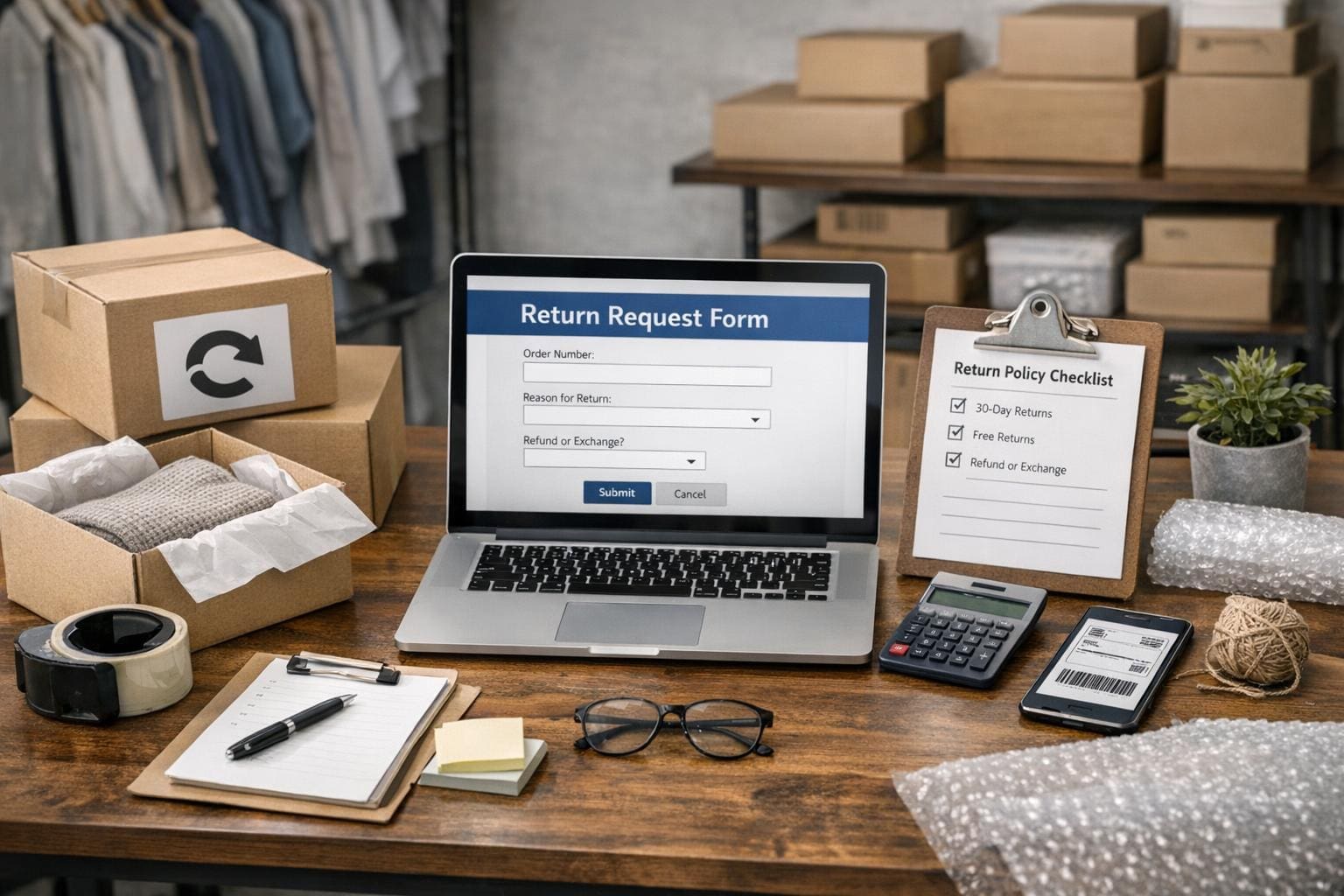
The commerce landscape hums with movement: packages soar, carts float between checkout and regret, and your brand’s reputation rides on a delicate return current. A thoughtfully written return policy steers that current into loyalty, not friction. Below you’ll find a creative yet practical guide on sculpting clarity, reducing friction, and protecting margins.
## How To Create A Return Policy For Ecommerce
When merchants ask how to create a return policy for ecommerce, they usually mean two things: how to make customers comfortable enough to buy, and how to make returns predictable enough to run a healthy business. A clear return policy accomplishes both. It reduces buyer hesitation, minimizes costly disputes, and converts a potential negative touchpoint into an opportunity for repeat business.
### Why A Return Policy Is A Brand Tool
A return policy is more than legal fine print. It’s a customer service manifesto. Brands that use it strategically can signal confidence in product quality, show empathy for buyer mistakes, and communicate operational competence. Think of it as a storefront handshake: firm, transparent, and reassuring.
#### The Business Benefits Of Clear Return Rules
– Lower cart abandonment as customers see safety in buying.
– Faster resolution of disputes and fewer chargebacks.
– Valuable product feedback from returned items.
– Improved customer lifetime value when returns are handled empathetically.
### Core Elements To Include In Your Policy
When you design a return policy, cover these core elements explicitly and simply. For an ecommerce setting, ambiguity breeds calls and complaints.
#### Required Details
– Conditions For Eligibility: Unopened vs. opened items, time window (e.g., 30 days), proof of purchase.
– Refund Type: Refund to original payment method, store credit, or exchange.
– Return Costs: Who pays for shipping, restocking fees, and international return rules.
– Process Steps: How customers initiate returns (portal, email, chat), timeframe for processing refunds.
– Exceptions: Final sale, perishable goods, custom items.
– Contact Points: Email, phone, and hours for support.
### Step-By-Step Framework: How To Create A Return Policy For Ecommerce That Works
To move from principles to a working policy, follow this precise framework. The tone and clarity matter as much as the legal content.
#### 1. Audit Current Operations
List your shipping partners, average delivery times, average return rates by SKU, and common defects. Measure how long refunds currently take and where delays occur.
#### 2. Define Your Business Objectives
Decide whether you aim to reduce returns, improve conversion, or enhance brand loyalty. Your objective influences leniency. A premium brand may restrict returns to preserve margin; a new brand may accept broader returns to build trust.
#### 3. Choose Time Windows And Conditions
Standard windows are 14, 30, or 90 days. Be specific: “Items must be returned within 30 days of delivery in their original packaging, unused, with tags attached.” Ambiguity is the enemy.
#### 4. Determine Refund Mechanisms
Specify whether refunds are issued to the original payment method and how long bank reversals take. State whether shipping costs are refundable and note any restocking fees with percentages and justifications.
#### 5. Create A Return Flow
Map the customer journey: Request → Approval → Shipping Label → Inspection → Refund/Exchange. Assign SLAs for each step. This formal structure makes your processes auditable and trainable.
#### 6. Draft Clear, Plain-Language Copy
Translate legalese into friendly but precise language. Use short sentences and examples. Provide a checklist for customers to follow before sending a product back.
#### 7. Publish Prominently
Display the policy on product pages, checkout, and the FAQ. Consider a condensed “key points” box for quick scanning and a full policy link for detail.
#### 8. Monitor And Iterate
Collect return reasons and use them to improve product descriptions, photography, or sizing charts. Revisit your policy quarterly to align with customer behavior and seasonality.
### Customer Communication Best Practices
When customers interact with your policy, tone can defuse frustration. Use empathy in copy and communication flows. For example, when approving a return, send a message that thanks the customer and explains the next steps clearly.
#### Messaging That Works
– Acknowledge feelings: “We’re sorry this didn’t work out.”
– Explain steps: “Here’s how to return your item in three easy steps.”
– Set expectations: “We’ll process your refund within five business days after receiving the item.”
### Legal And Compliance Considerations
Understanding how to create a return policy for ecommerce also requires compliance with consumer protection laws and payment network rules. This section is formal and prescriptive.
#### Consumer Rights And Regulations
Laws vary by jurisdiction. Many regions mandate certain refund rights for defective goods. Ensure your policy does not contravene local “cooling-off” periods, distance selling rules, or specific product category protections (e.g., electronics, health products).
#### Tax And Accounting Implications
Document returned sales for accurate revenue recognition and tax reporting. Establish procedures for issuing credit memos and reversing sales entries.
#### Payment Processor Rules
Payment processors and marketplaces (e.g., credit card networks, Amazon, Shopify) have return and dispute resolution requirements. Align refund timelines with their chargeback dispute windows to protect against financial liability.
### Handling Complex Scenarios
Not all returns are straightforward. Below are formal remedies for common complications.
#### Damaged On Arrival
Require photos and timestamps. Authorize a prepaid return label or offer an immediate replacement when inventory permits. Document the incident and flag the fulfillment center for inspection.
#### Fraud Or Abuse
Define parameters for suspected abuse (excessive returns, returns without proof of purchase). Implement thresholds and an escalation process including holds, investigations, and potential account restrictions.
#### International Returns
Specify customs implications, who bears duties, and whether you accept returns from certain countries. Consider offering localized return addresses or partial refunds to avoid prohibitive shipping costs.
### Practical Templates And Phrases
Use concrete, tested language blocks to reduce confusion. Here are three brief templates you can adapt.
#### Basic Refund Clause
Items are eligible for a full refund if returned within 30 days of delivery, unused, and in original packaging. Refunds will be issued to the original payment method within 7 business days of receiving the return.
#### Exchange Option Clause
If you prefer a replacement, indicate the desired size/color at the time of return. Exchanges are processed within 5 business days of receipt and shipped with priority to minimize your wait.
#### Final Sale Exception
Certain items, such as perishable goods, personalized items, and clearance merchandise, are final sale and not eligible for return.
### Measuring Success: KPIs For Your Return Policy
Track quantitative and qualitative metrics to gauge whether your policy is working.
– Return Rate By SKU
– Average Time To Refund
– Customer Effort Score For Returns
– Repeat Purchase Rate After A Return
– Cost Per Return (shipping, restocking, labor)
Regular analysis helps you decide whether more lenient terms are improving lifetime value or simply increasing operational costs.
### Frequently Asked Practical Questions
Q: Will a liberal policy increase abuse?
A: Some increase in opportunistic returns may occur, but many studies show a well-communicated, generous return policy increases conversion and net revenue.
Q: Should shipping be free for returns?
A: If your product margins allow, free returns remove a major friction point. Otherwise, consider free returns only for exchanges or purchases above a certain value.
Q: How do I display the policy?
A: Use a short banner on product pages and add the full policy at checkout and in the footer. Make the returns portal easy to locate and mobile-friendly.
As you build and refine policies, remember that the mechanics of how to create a return policy for ecommerce are both art and system engineering. A clear policy reduces customer anxiety, streamlines operations, and turns returns into repeat business opportunities. Consider the policy a living document — one that should be revised as product mixes, shipping partners, and customer expectations evolve — and test small changes to find the optimal balance between customer satisfaction and cost control.
Finally, use the insights from returns to inform product design, photography, and descriptions. When returns are treated as data, you not only solve immediate problems but build a smarter operation that anticipates and reduces future returns. How to create a return policy for ecommerce is not a one-time task; it’s an iterative discipline that pays off in loyalty, clarity, and healthier margins.