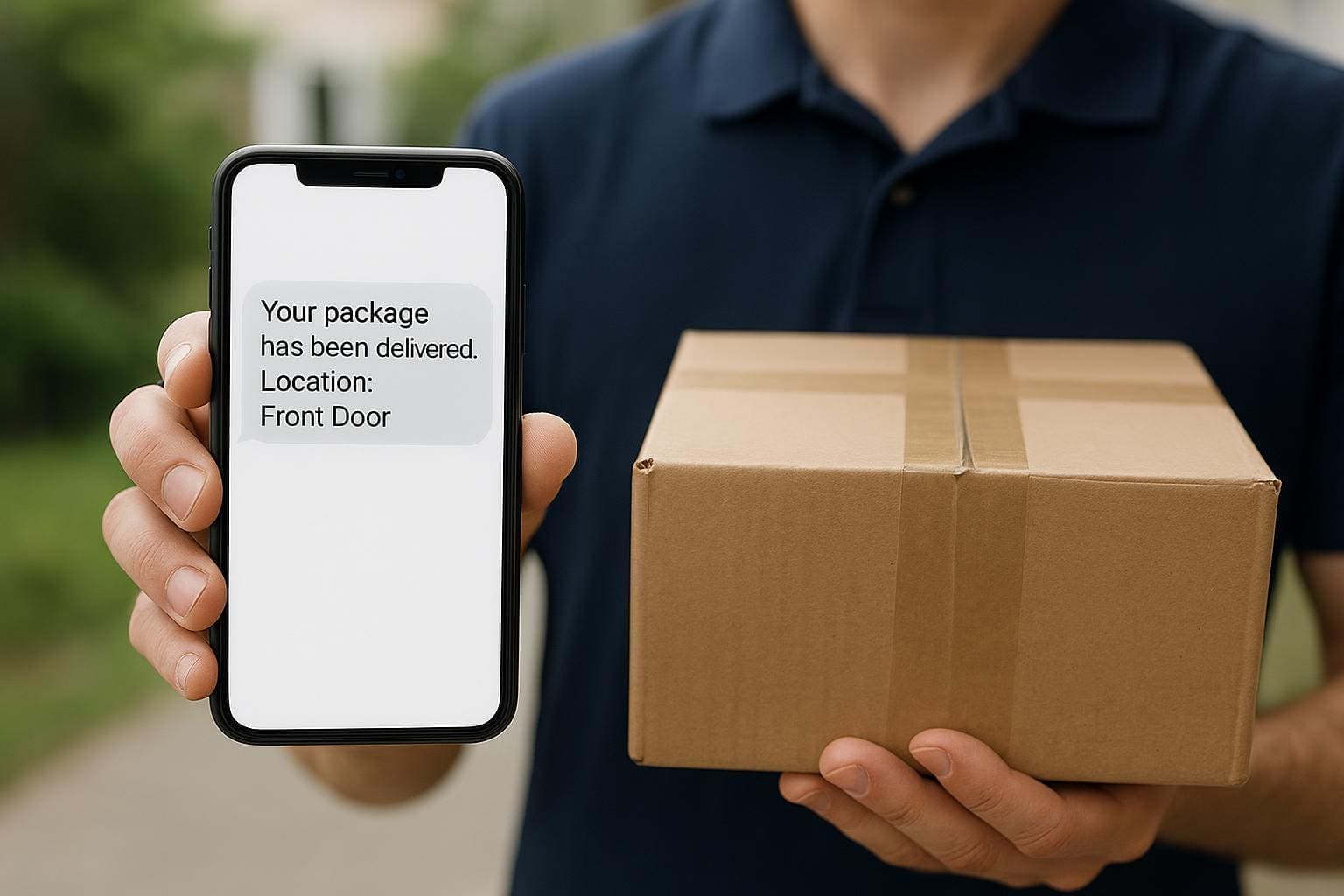
Sms delivery alerts are quietly reshaping what customers expect from shipping. They don’t need flashy apps or extra downloads. A short, timely text can stop confusion, cut no-shows, and make a carrier look competent. That plain fact matters more than marketing fluff.
## How SMS Delivery Alerts Improve Visibility
Carriers used to rely on tracking numbers and web portals. Those work when you have time and patience. Most people don’t. They want a quick yes/no and a window they can plan around. That’s where SMS delivery alerts shine: they land in the one place people check dozens of times a day. A simple message — “Your package is out for delivery, ETA 2–4 PM” — removes uncertainty in a way an email rarely does.
SMS messages also reach people offline. If a delivery van is delayed by traffic, a text can tell the recipient to wait or to instruct the driver where to leave the box. Those micro-adjustments prevent missed deliveries and fewer dropped-off packages at the curb. When a business measures customer satisfaction, those moments add up.
### Why Real-Time Updates Matter
Timing is the most predictable variable in package disappointment. Real-time status changes reduce wasted time for both drivers and customers. When a driver updates a scan, that can trigger a delivery alerts message that tells the recipient the parcel’s exact status. People can make decisions — leave for work later, step outside to meet the driver, or ask a neighbor to recieve the package. That’s practical.
Text notifications are effective because they’re immediate and readable. The open rate for SMS far surpasses email. That doesn’t mean you should spam people. The message should be short, precise, and actionable: where the package is, if a signature is required, and what options the customer has if they’re not home. A one-line instruction beats a page-long tracking detail.
#### Tracking With Precision
Good systems map the delivery route to a live ETA. Combining GPS, route progress, and last-mile scans lets systems offer delivery windows that are narrower than the old “today between 8 AM and 8 PM.” That precision makes sms delivery alerts more useful — people can plan around a two-hour window instead of an entire day.
Some carriers provide a link in the text that shows the driver’s live progress. Others keep it simple: a time and the status. Both approaches work, but the latter reduces friction for recipients who don’t want to click through. Either way, the update needs to be accurate. An incorrect ETA teaches consumers to ignore future delivery alerts. Trust is built on follow-through.
### Reducing Missed Deliveries And Friction
Missed deliveries are expensive. Carriers pay for reattempts, storage, and the customer service work that follows. For customers, there’s the inconvenience and the stress of wondering whether a high-value item is safe. Delivery alerts reduce those costs by letting people make quick adjustments.
Text notifications also change driver behavior. If a driver knows their scan will notify the recipient, they’re more likely to attempt a doorstep delivery before defaulting to a pickup location. For businesses selling high-ticket or time-sensitive goods, that small behavior change can lower return rates and improve net promoter scores.
#### Handling Exceptions Efficiently
Not every delivery goes smoothly. Weather, address issues, and access problems happen. Good sms delivery alerts include clear instructions for exceptions: reschedule options, redelivery fees (if any), or nearby pickup points. The message should also make it easy to reply or tap a quick action to fix the problem.
A helpful exception workflow avoids long phone trees. Imagine receiving a text at 9 AM saying: “Driver needs gate code. Reply ‘GATE ****’ to grant access or reschedule.” That’s less friction than calling support and wastes less time for everyone.
## Operational Steps For Reliable Delivery Messaging
Rolling out a dependable system for texts is more about process than technology. Here’s what operational teams actually need to do.
Start with data hygiene. Messages are pointless if the phone number is wrong. Validate contact details early — at purchase, in account settings, or via an opt-in confirmation. That simple step reduces bounce rates and customer annoyance.
Next, define triggers. What sends a message? Shipment creation, out-for-delivery, failed attempt, delivered, or return initiated. Prioritize the signals that reduce the most uncertainty for your customers. Out-for-delivery and delivered messages are usually non-negotiable.
Integrate driver tools. Drivers should have an easy way to update status that feeds the text system in real time. If the driver’s scan app is clunky, updates will be delayed and the value of sms delivery alerts evaporates.
Measure and iterate. Track delivery success rates, customer replies, and complaint volumes before and after you enable messages. Small changes in wording or timing often produce outsized improvements.
### Balancing Frequency And Value
Text notifications work because they’re useful, not repetitive. Too many messages lead to opt-outs. Think like a human: would you want another update ten minutes after you were told the package was delivered? Probably not. Limit messages to key touchpoints and give recipients control over the types they receive.
Offer preferences: only out-for-delivery plus delivered, or full-step updates for the power users. Let people pause messages for a period. Respecting those choices prevents churn.
#### Timing And Message Content Best Practices
Keep copy short. Include a one-line status, a time, and an action. Use plain language and avoid jargon. For example: “Your package ending in 1234 will arrive Today between 2:00–3:30 PM. Reply ‘HOLD’ to reschedule.” That’s concise and actionable.
Include safety cues. If a signature isn’t required, say so. If the package will be left at a doorstep, suggest secure options: “Leave with neighbor” or “Deliver to secure locker.” These small details reduce complaint calls and lost-item claims.
## Choosing The Right Provider For Messaging
Not all messaging platforms are equal. Some offer high deliverability and carrier-level troubleshooting. Others provide cheap bulk SMS with little support. Make choices based on the reliability your customers expect.
Look for providers that can handle two-way messaging. The ability for recipients to respond — even with short codes — lets you capture reschedule requests or gate codes without manual intervention. Two-way capabilities also let you detect failed deliveries earlier and act faster.
Text notifications should be tracked. Choose a system that logs delivery status, bounce codes, and recipient replies. That traceability helps with dispute resolution and operational improvements.
### API Features To Look For
Robust APIs matter when you want to connect sms delivery alerts to your order management system. Real-time webhooks, templating, and rate management are the basics. Also consider localization: can the provider send messages in the recipient’s language and local time zone? That’s easily overlooked but important for larger operations.
Failover options are valuable. If an SMS provider has outages, what’s the fallback? Some platforms can switch to a secondary carrier or fallback to email with a single API call. That redundancy prevents silence when the system is most needed.
#### Security And Compliance
Messaging touches personal data. Be clear about opt-in rules and local regulations. Maintain logs for consent and allow users to opt out with a single reply. Encrypt message content where appropriate and limit sensitive information in the text itself. For example, avoid full account numbers or detailed address lines in an SMS.
Keep in mind regional rules for SMS frequency and content. Where rules are strict, a light, permissioned approach is safer and more predictable.
## Practical Examples From Real Operations
A regional retailer reduced missed deliveries by 35% after adding an out-for-delivery text with a two-hour window and a one-tap reschedule link. Drivers reported fewer abandoned drops and reties dropped significantly. Customers were quieter — in the good way.
A subscription box service used delivery alerts to solve an identity problem. Boxes required a person to sign. By sending a message the morning of delivery that asked recipients to confirm a pickup location, the company cut its signature failure rate and saw fewer claims for missing packages.
Another carrier experimented with too many notifications and saw opt-outs spike. They trimmed messages to the essentials and introduced preference controls. Opt-out rates dropped, and customer satisfaction ticked upward.
Small changes matter. Even rewording a message to say “Arriving Today 1:00–2:00 PM” instead of “Arrival Window Today” improved click-throughs on action links. People respond to clarity.
### Common Pitfalls To Avoid
Don’t rely on a single channel. SMS is powerful, but it should be part of an omnichannel strategy that includes email and in-app updates for people who prefer those channels. Also, avoid sending messages that can’t be acted upon. If you tell someone the driver is five minutes away but the driver is stuck and can’t respond, you create frustration.
Avoid overly aggressive marketing in transactional messages. Transactional delivery alerts are some of the most trusted messages you’ll send. Don’t dilute that trust with promotions in the same thread.
A subtle human touch in messaging goes a long way. Little empathy phrases — “We’ll do our best” — matter. Make sure messages are useful first, friendly second.
There are lots of smart, inexpensive ways to integrate sms delivery alerts into an operation. The trick is to focus on reducing real points of friction and to measure the outcome. When done right, these texts do more than notify — they let a delivery experience feel competent and predictable.