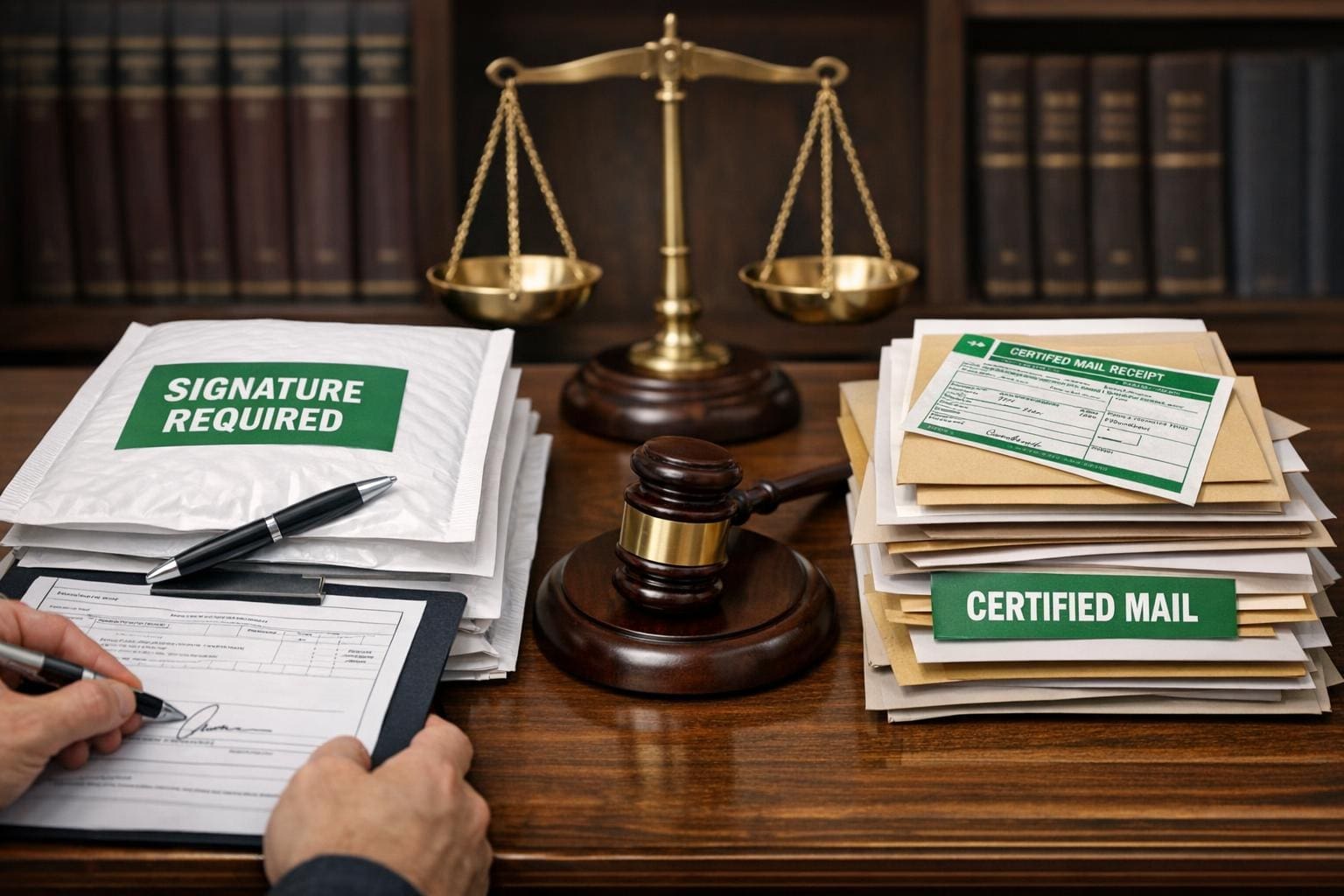
The postal battlefield is heating up, and somewhere between a trembling mailbox and a trembling signature line, destiny hangs in the balance. Are you doomed to postal purgatory or will you clutch the undeniable proof you crave? The clash of the century unfolds: signature confirmation vs certified mail — a duel of accountability, proof, and prestige!
## Signature Confirmation Vs Certified Mail: The Ultimate Showdown
The moment your shipment leaves your hands, the question becomes electrifying: will you choose signature confirmation vs certified mail? Both scream credibility, both promise verification, but they march to different drumbeats. One insists on a scribble at delivery; the other etches your transaction into the annals of postal law. For anyone who’s ever needed proof that a critical document or package arrived, this is not merely trivia — it’s high stakes.
### Dramatic Differences That Could Decide Your Fate
Imagine two envelopes: the first arrives with a signature scrawled across a digital pad. The second comes with a certified record, a stamped timeline, and a return receipt that can be locked in a file cabinet and brandished in legal settings. That is the difference in a nutshell — yet the details explode into consequences.
– Signature confirmation delivers exactly that: proof someone signed for the item. It’s the handshake after delivery.
– Certified mail creates a trail: acceptance by the postal service, a chain-of-custody, and often the option for a return receipt — the signed paper returned to you.
### Tracking, Liability, And Legal Weight
If you need to know where a delivery was and when it was accepted, both services give you tracking, but their legal gravity differs. Certified mail often carries more formal weight in court or official proceedings because it’s structured as a mailing class with documentation at the post office level. Signature confirmation proves a signatory accepted a parcel or letter, but alone it may not satisfy all legal scenarios.
When people argue over signature confirmation vs certified mail, they’re really arguing over nuance: do you need the ceremonial signature, or do you need a legally fortified paper trail?
#### Costs, Speed, And Practicality—What You Pay For
Money and time always enter the ring. Signature confirmation typically costs less than certified mail, but every added service — return receipt, restricted delivery, insurance — adds to the total. Certified mail, on the other hand, bundles status and proof into a more formal package that can be essential when sending legal notices, tax documents, or anything where proof of delivery must survive scrutiny.
Signature confirmation is fast and simple; certified mail is deliberate and heavy-duty. That’s the core of the spectacle.
### Real-World Scenarios: When Each Option Turns From Ordinary To Heroic
Small business owners, landlords, and individuals with legal obligations live or die by these choices. A landlord serving eviction notices may prefer certified mail to ensure a verifiable documented delivery. An online seller sending a high-value parcel might opt for signature confirmation to make sure it’s handed to a human and not left on the porch.
The cinematic difference is clear: signature confirmation vs certified mail is not just a question of postage, it’s a question of narrative. Which story do you need to be able to tell under pressure?
## Anatomy Of Proof: What Each Service Actually Provides
Understanding the mechanics defangs the drama — and gives you the power to choose.
### What Signature Confirmation Gives You
– Evidence that an item was delivered and signed for.
– Digital images of the signature may be available.
– Tracking updates indicating delivery date and location.
– Optional additions (insurance) purchased separately.
Signature confirmation is surgical: it tells you who signed and when, but it doesn’t always provide the full bureaucratic dossier.
### What Certified Mail Gives You
– A mailed record with a unique tracking number.
– A post office-verified chain-of-custody from mailing to acceptance.
– Option for a return receipt (green card) — a signed document returned to the sender.
– Often used for legal notices because the postal service maintains records.
Certified mail is the heavyweight champion for formal proof.
#### When Signature Confirmation Alone Is Not Enough
There are moments when the signature on a screen won’t satisfy a court or regulator. If you’re filing legal papers, responding to statutory notice requirements, or need proof that is acknowledged in formal proceedings, certified mail often wins.
### The Costs Of Being Wrong
Choosing the wrong service can be devastating: missed deadlines, invalidated notices, lost claims. For example, a late mortgage notice due to insufficient proof can cost thousands. The spectacle is real; the stakes are financial and legal.
### Remedy: One Practical Protocol To Ensure Proof Of Delivery
When the city lights dim and the legal clock ticks, you need a reliable protocol — a remedy — to ensure proof of delivery that will hold up. This section presents a formal, step-by-step method to combine the strengths of both options to maximize your protection.
#### Materials Required
– Postage funds to purchase certified mail service and signature confirmation.
– Certified Mail Form (PS Form 3800) available at USPS offices.
– Return Receipt (PS Form 3811) if you want a physical signed card.
– Tracking-enabled shipping label or receipt.
– Clear documentation of what is being mailed (photos/scans of contents).
– A secure file for storing mailing receipts and digital tracking records.
– Optional: insurance for high-value items.
#### Step-By-Step Protocol
1. Determine Legal Requirements
– Verify whether the recipient or governing body requires certified mail for your specific purpose. Consult an attorney if uncertain.
2. Prepare the Package or Document
– Photograph or scan the contents for your records. Label the envelope clearly and include sender and recipient addresses.
3. Purchase Certified Mail With Return Receipt
– At the post office, request certified mail (PS Form 3800) and purchase the return receipt (PS Form 3811). The post office will affix a green card to be returned to you with the recipient’s signature.
4. Add Signature Confirmation
– Add signature confirmation on top of the certified mail. Doing both creates a dual layer: certified mail provides the legal trail, signature confirmation ensures delivery to an individual.
5. Obtain and Store Receipts
– Keep the mailing receipt and postage receipt. Record the tracking number in your secure file and note the date and time of mailing.
6. Monitor Tracking
– Regularly check the tracking number online. When delivery occurs, download and save any signature images or delivery confirmations.
7. Receive and Verify Return Receipt
– When the postal service returns the signed green card, scan it and save it with the other documentation. If you purchased an electronic return receipt, download the digital signature and archival copy.
8. Create a Final Case File
– Compile photographs/scans of contents, tracking records, postal receipts, and the return receipt. If this is for a legal matter, prepare a time-stamped index and consider sending a copy to your attorney.
9. Act Promptly On Delivery Confirmation
– If the tracking indicates refusal or non-delivery, follow up immediately. Use the postal inquiry system or file a claim if necessary.
This protocol formalizes the remedy: combining certified mail with signature confirmation gives you legal substance and human verification, and the step-by-step process ensures your proof is preserved.
### Myths, Misconceptions, And Postal Folklore Exploded!
People whisper that signature confirmation means the recipient cannot deny delivery, or that certified mail is always slower. Both are exaggerations. Signature confirmation can be forged in some contexts; certified mail can be contested but has stronger records. Don’t be seduced by urban legend—choose based on facts and the remedy above.
#### Choosing When Money Is Tight
If budget constraints bite, prioritize based on risk. For time-sensitive but non-legal shipments, signature confirmation may suffice. For anything that could require legal proof, certified mail (with return receipt) is worth the cost. This is where the drama gives way to cold arithmetic: the cost of certainty vs the cost of uncertainty.
### Pick Your Weapon Wisely: Practical Decision Guide
Are you sending a contract, a court notice, or a statutory document? Then certified mail should be your headline act. Are you shipping goods that must be handed to a person to avoid porch theft? Then signature confirmation is your bodyguard. But when you absolutely cannot afford ambiguity, employ both and follow the formal protocol above.
## Final Acts: Evidence You Can Hold Onto
In the end, when the dust settles and the records are laid bare, you’ll look back and see that the choice between signature confirmation vs certified mail was less about drama and more about documentation. Use the proven methods outlined to secure your interests, and let the postal records speak for themselves.