## USPS Letter Size Requirements For Everyday Mail
USPS letter size requirements matter if you want predictable postage and no surprise surcharges. Follow the rules and most business and personal mail will go through automated processing. Break the rules and your mail becomes nonmachinable, or might be bumped up to a flat or parcel rate.
### Minimum And Maximum Dimensions
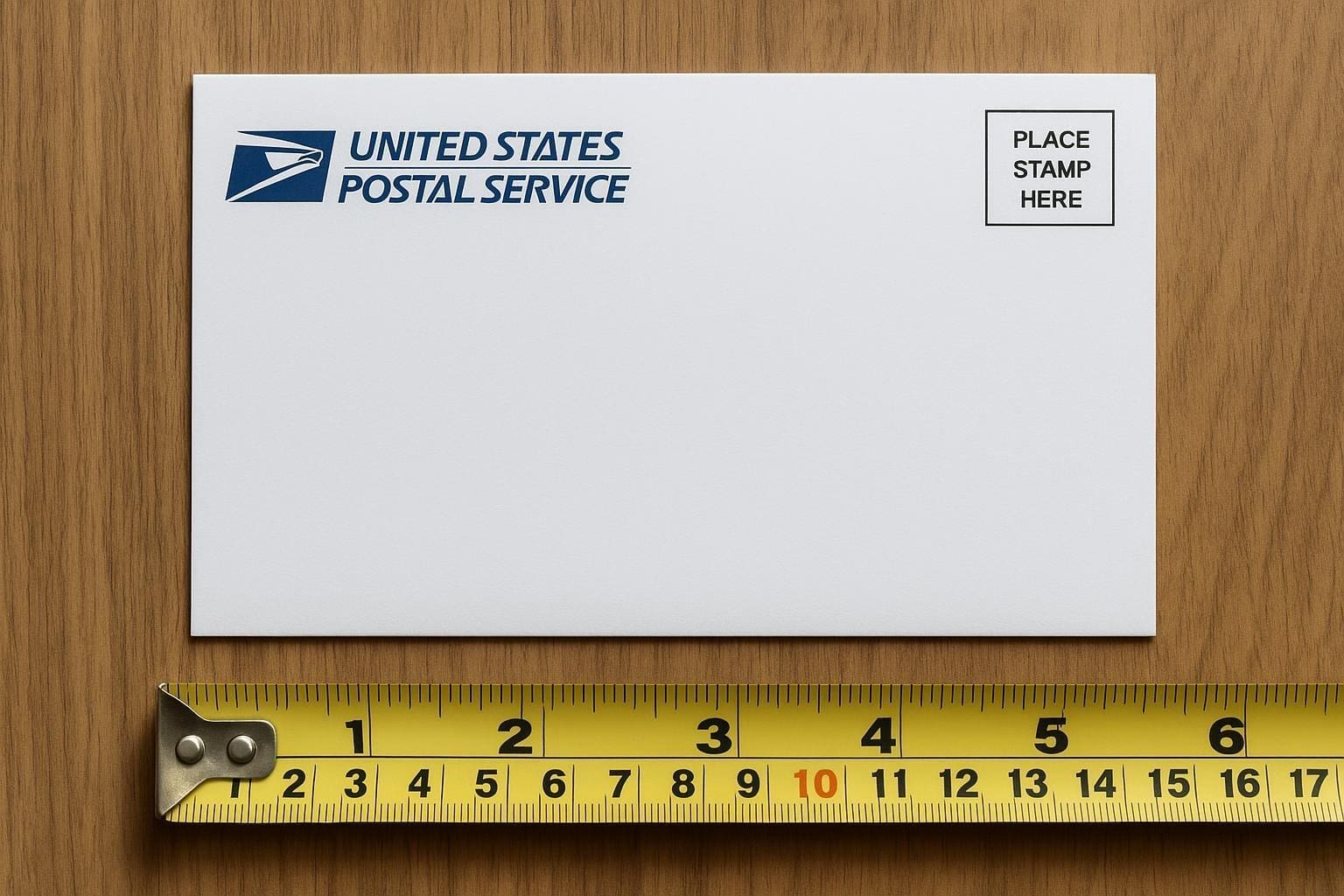
The baseline letter size requirements from USPS are simple numbers you should memorize if you mail often:
– Minimum: 3.5 inches high x 5 inches long x 0.007 inch thick.
– Maximum: 6.125 inches high x 11.5 inches long x 0.25 inch thick.
– Maximum weight for a First-Class letter: 3.5 ounces.
If your piece is smaller than the minimum it’s classified as a nonletter and may require extra postage. If it’s larger than the maximum in any dimension, or thicker than 1/4 inch, it becomes a flat (large envelope) or a parcel and that changes the price.
### How To Measure Correctly
Measure length on the longest side and height on the shorter side. Thickness is the distance between the two largest faces at the thickest point. Don’t average thickness; measure the bulkiest spot. For a folded 8.5 x 11 sheet inside a #10 envelope, length and height are fine, but multiple pages can push you past the 3.5-ounce limit.
#### Why Thickness And Weight Matter
Machinable equipment handles thin, flexible pieces. If an envelope is too thick or stiff, machines will reject it for hand processing. That usually means extra cost. Also, items with clasps, string, metal, or excessive stiffness face a nonmachinable surcharge. If you glue in cardboard inserts or rigid enclosures they can make a mailing suddenly nonmachinable.
### When A Letter Becomes A Flat Or Parcel
Cross one of the size thresholds and you’re into different rules:
– Flats: more than 6.125 inches high, more than 11.5 inches long, more than 1/4 inch thick, or over 3.5 ounces up to 13 ounces. Flats require different handling and higher postage.
– Parcels: when weight or rigidity exceeds flat limits, or if shape is square or rigid, postal parcel rates apply.
Keep an example in mind: three sheets of standard 20-lb paper inside a #10 envelope usually stay under 3.5 ounces. Add a thick brochure or a small cardboard insert and you’ll likely tip over into the flat category.
### Common Nonmachinable Triggers
The letter size rules include both dimensions and physical characteristics. Expect a surcharge if your piece has:
– Rigid or uneven thickness.
– Clasps, strings, buttons, or exposed metal.
– Square corners that prevent smooth machine feeding.
– Enclosures that cause the envelope to be too stiff.
Even a single bowed corner from a rigid card can force hand sorting. If you’re sending invitations with double-sided mountings, test a sample at the post office before committing to bulk postage.
### Addressing And Placement Basics
Address placement affects processing speed. Use the front center for the delivery address and put the return address in the top-left corner. Leave a clear area in the upper-right for postage. Avoid printing barcodes or markings that could be mistaken for USPS tracking codes. Handwritten addresses are fine; just make sure they’re legible and not on a window that obscures the text. If you tuck a folded sheet into the envelope so the address shifts, machines may misread it.
### Practical Tips To Avoid Extra Charges
Measure a sample item before you buy postage. If sending many pieces, run a few through a local post office meter to check class and surcharges. Use softer, bendable inserts when possible. Avoid unusual shapes and keep corners rounded if your content risks catching in machinery. If you consistently mail thicker content, consider designing a flat-sized envelope instead; the rate may be simpler and less prone to variability.
### When To Contact The Post Office
If you’re preparing a business mailing, talk to your local USPS representative about presort discounts and automation-compatible formats. They can review your mailpiece, check machinability, and point out small changes that save money. For one-offs, a quick trip to the counter with a sample will tell you if your item meets the letter size requirements and whether it’s machinable.
### Real-World Examples
A single sheet 8.5 x 11 folded twice into a #10 envelope: usually meets the letter size requirements and stays under 3.5 ounces. A 4-page booklet with a cardstock cover in the same envelope: likely too thick or stiff and could be nonmachinable. A greeting card with a metal charm will trigger a surcharge for the charm alone.
Pay attention to the numbers and to materials. The difference between a cheap mailing and an expensive one is often a small detail like a bracket or a stiff insert. Test, measure, and talk to the post office when in doubt. And remember that reciept stamps or meter marks don’t change machinability, but the physical shape does.