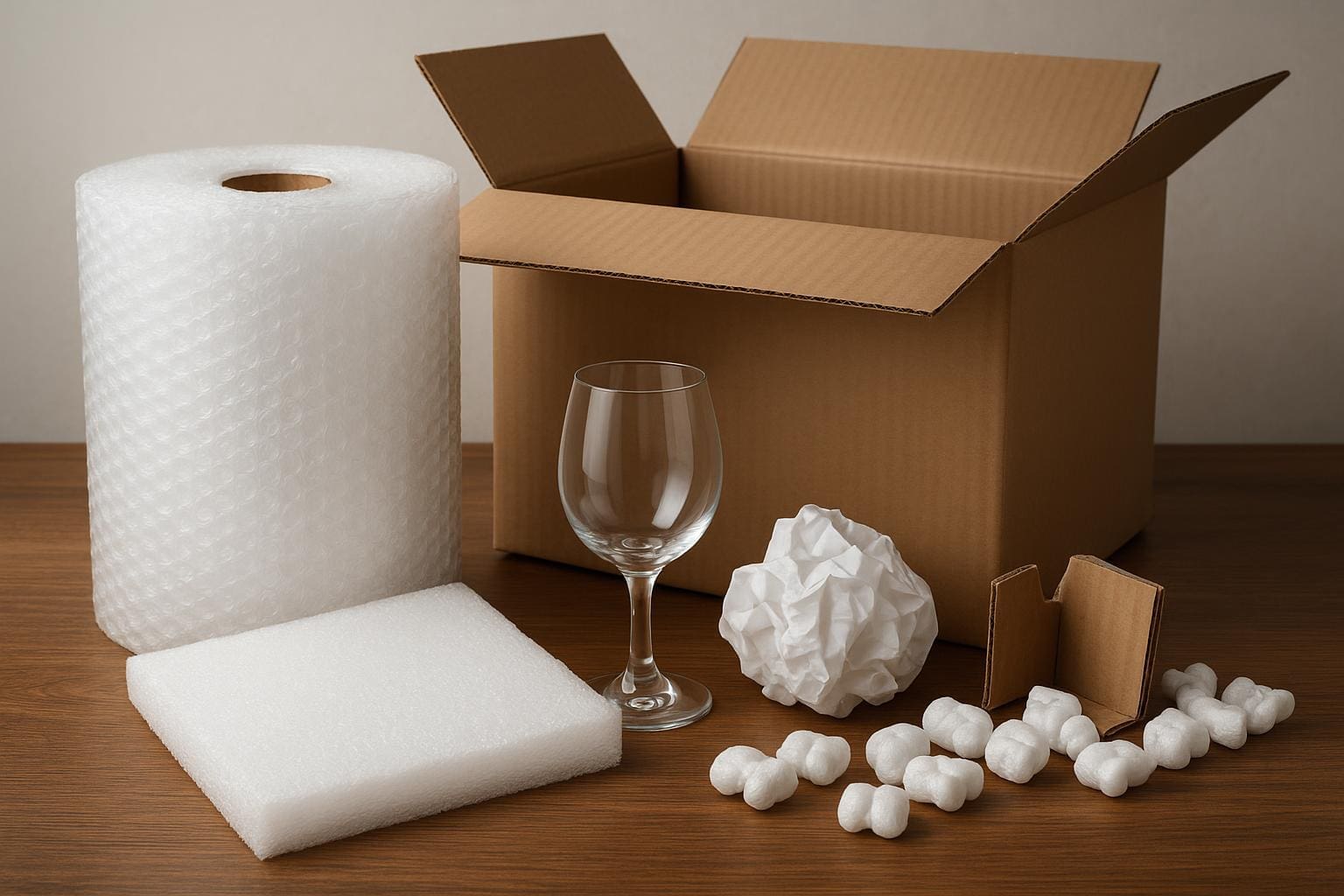
Fragile shipments break when the packing fails, not because the item is inherently weak. Pick the right materials and techniques and most breakage disappears. Use cushioning where impacts happen, stiff support where compression happens, and fit the package so things can’t move.
## Best Packing Materials For Fragile Items That Actually Work
Choosing the best packing materials for fragile items depends on what you’re shipping. Glassware, pottery, electronics, and artwork all need different mixes of protection. But there are consistent winners: sturdy corrugated boxes, layered cushioning, protective corners, and reliable sealing tape. Use those as your baseline, then adapt.
### Core Cushioning Materials And When To Use Them
Bubble wrap, foam, and paper get talked about a lot for a reason. They solve different problems.
– Bubble Wrap: Best for point protection and wrapping irregular shapes. Large bubbles absorb higher-energy impacts; small bubbles pack better around slender objects. Wrap each piece individually with at least two inches of bubble wrap overlap and secure with small pieces of tape.
– Foam Sheets and Rolls: Use foam when you need both cushion and a flat, shock-absorbing layer. Foam peanuts may settle — foam sheets won’t. For electronics, pick anti-static foam.
– Kraft Paper And Newsprint: Cheap, recyclable, and great for filling voids. Crumple it firmly; loose paper compresses and stops protecting. For delicate ceramics, wrap a layer of tissue paper directly on the surface to prevent abrasion, then add kraft paper.
– Molded Pulp: A good, eco choice for bottle-shaped items and electronics. It’s custom-fit, biodegradable, and withstands compression well.
– Air Pillows: Best for void fill in light packages. Don’t rely on them where heavy shifting might compress them flat.
Use fragile packing materials in combinations rather than single items. A wrapped object inside a foam-lined box is better than wrapped-only or foam-only.
### Boxes, Inserts, And Structural Support
All the cushioning in the world won’t help if the box collapses. Pick your box by weight and size.
#### Corrugated Box Strength
Single-wall corrugated is fine for many household items. Use double-wall for dense or heavy ceramics and for long-distance shipments. If you’re unsure, choose the heavier box. Extra stiffness reduces risk of crush during stacked storage.
#### Inserts And Dividers
For sets — glassware, stemware, multiple ceramics — use cardboard dividers or molded trays. They prevent pieces from colliding. Custom foam inserts are worth the cost for high-value items like vintage electronics or specialized instruments.
#### Corner And Edge Protection
Corners take the brunt of drops. Cardboard corner protectors, foam L-profiles, or rigid plastic corners stop edges from chipping. They’re cheap and make a big difference for framed art and mirrors.
### Packing Techniques That Save Items
It’s not just materials; it’s how you use them.
– Three-Point Cushioning: Cushion on the bottom, around the sides, and on top. Don’t leave the top with only a thin sheet of paper.
– No Bare Contact: Never let the item touch the outer box. Use at least 2 inches of protective material around fragile items.
– Secure Movement: If you can shake the box and hear or feel parts moving, add more fill. Movement equals impact.
– Wrap The Way You’d Wrap A Gift: For small round items, wrap snugly in bubble wrap, then place upright in a box with molded pulp or crumpled paper support.
– Layering For Electronics: Anti-static bubble wrap, then foam sheet, then a snug box. Use foam blocks to secure heavier components.
### Tailored Advice For Common Fragile Items
Different items need different priorities.
#### Glass And Stemware
Fragile items packing here must prioritize vibration and side impacts. Wrap each piece individually, stem and bowl separately if possible. Use dividers and keep stems vertical. Cushion the base heavily; many breaks start there.
#### Ceramics And Pottery
Ceramics tolerate some compression but not point impacts. Use foam sheets to spread load and bubble wrap for impact zones. Fill cavities (like vases) with paper to prevent collapse under pressure.
#### Electronics And Sensitive Gear
Electronics need anti-static handling and shock isolation. Use anti-static bubble wrap or foam, and avoid paper that can generate static. For high-value gear, consider instrument cases with custom-cut foam.
#### Artwork And Mirrors
Rigid support comes first. Use double-walled boxes, corner protectors, and plywood or corrugated pads. Wrap glass with tape in an X pattern under a protective layer so shards stay together if it breaks in transit.
### Tape, Labels, And Small Extras
People forget the small stuff until it matters.
– Tape: Use water-activated kraft tape or heavy-duty polypropylene tape with at least a 2-inch width. Tape seams thoroughly.
– Fragile Labels: They help handlers but don’t guarantee gentler treatment. Use them, but rely on packaging strength first.
– Moisture Barriers: For shipments crossing humid climates, use desiccant packs and plastic bags for items sensitive to moisture.
– Strapping And Palletization: For large or heavy fragile shipments, secure boxes on pallets with strapping and corner boards. This prevents sliding and edge damage.
### Eco-Friendly Alternatives That Don’t Sacrifice Protection
You can reduce waste without increasing breakage.
– Recycled Kraft Paper: It’s cheap, crushes into shape, and is compostable.
– Biodegradable Packing Peanuts: They dissolve in water and offer similar void fill to traditional peanuts.
– Molded Pulp: Excellent for bottles and odd shapes; recyclable and sturdy.
– Reusable Foam Inserts: For regular shipments of the same item, reusable inserts pay off fast. They reduce long-term waste and provide consistent protection.
### Testing Your Packing Before Shipping
Don’t guess. Test.
#### Drop Tests And Shake Checks
Drop a boxed package from waist height onto a hard surface in several orientations. If the item shows movement or stress, add more support. Shake the package and listen; if you hear anything moving, fix it.
#### Weigh And Retest
Make adjustments as you increase weight. A padding that worked for a light object might compress under heavier loads.
### Cost vs. Risk: How To Decide
High-value items deserve better materials. For ceramics sold for a few dollars, basic paper and a single-wall box may be fine. For antiques or electronics, spend more on double-wall boxes, custom foam, and insurance. The cost to replace is your guide.
### Common Packing Mistakes To Avoid
People repeat the same errors.
– Overreliance On “Fragile” Labels: Labels don’t protect. Good packing does.
– Underestimating Void Fill Needs: Small empty spaces let items shift and collide.
– Wrapping Multiple Items Together: Wrap each piece separately, then secure them in a divider or molded tray.
– Using Wrong Bubble Size: Large bubbles compress too easily around small, delicate parts. Match bubble size to item fragility.
### Where To Buy Reliable Materials
Buy in bulk from packaging suppliers for the best prices. Local moving companies and some hardware stores carry quality options too. For specialty needs, a packaging engineer or custom foam supplier is worth consulting.
## How To Choose The Best Packing Materials For Fragile Items For Your Business
If you ship regularly, standardize. Create a packing kit for each product type: box size, primary cushioning, secondary fill, and sealing method. Train staff to follow the kit. Track returns and damage rates and tweak materials if patterns emerge.
### Insurance And Documentation
Insure high-value shipments and document condition with photos before packing. If damage occurs, claims go much smoother when you can show the original packing and serial numbers.
#### International Shipping Considerations
Customs, rougher handling, and longer transit times increase risk. Choose moisture barriers, stronger boxes, and allow extra cushioning for international routes. Consider robust outer crates for very fragile or valuable items.
Use these practical choices, and your fragile packing materials will stop being an afterthought. Durable boxes, layered protection, and testing are the pillars of reliable fragile items packing. When you combine the right materials with straightforward techniques, you’ll cut damage claims and keep customers satisfied — often without much added cost.
Be intentional about your packing. A small extra layer of foam or a molded tray can be the difference between a satisfied customer and a refund request because the heirloom dish arrived in pieces. And yes, save labels and tape from returns if you can — reuse where sanitary and safe to reduce waste and cost. Miserhaps one lost bubble or a flimsy corner protector is what causes a claim, so don’t skip the small stuff.