
Price Factors For International Shipping Reveal Hidden Costs

price factors for international shipping

## Price Factors For International Shipping: What Shippers Often Overlook

Most people assume the freight quote they get is the whole story. It isn’t. Freight bills are a tangle of base tariffs, surcharges, taxes, local fees and paperwork charges that pile up quietly. If you want to manage costs, you have to understand the price factors for international shipping that live off the rate card. That phrase matters because carriers, forwarders and brokers will all describe the same charge differently — and if you don’t know the breakdown, you’ll pay for it later.

### How Core Carrier Rates Are Set

Carriers start with a core rate based on weight or volume. For ocean freight it’s often per container; for air it’s per kilogram, adjusted by dimensional weight. That initial number looks authoritative, but it’s only the starting block.

– Volume commitments and contractual discounts lower the core rate.
– Peak seasons and trade lane demand push it up.
– Fuel costs and currency moves get attached after the fact.

This is why two quotes that show similar core numbers can lead to very different final bills. When a rep uses the phrase international rates, they might mean just that core number — or everything that follows. Ask for a breakdown so you can compare apples to apples.

### Dimensional Weight, Density Rules, And Volumetric Surprises

Carriers charge by dimensional weight when a shipment takes up more space than its mass would suggest. A light, bulky package can double or triple the effective price. People who pack products in oversized cartons to “test” packaging later are surprised by the bill.

Practical tip: measure and weigh a few typical parcels and run the math against standard volumetric formulas for both air and courier services. You’ll catch where packaging choices become a hidden cost. One of the common price factors for international shipping is simply ignoring how packing geometry converts to a higher charge.

### Fuel Surcharges And How They Move

Fuel surcharges are not a fixed add-on. They change with market fuel prices and carrier policies. A sudden jump in oil prices can inflate your invoice for weeks before your contract renews.

Contracting strategy: include a clear fuel surcharge index in your agreement or cap it. If you can agree on a banded surcharge that mirrors published indices, you avoid surprise spikes that make international rates fluctuate wildly.

### Customs Duties, Taxes, And Local Levies

Customs duties and import taxes are not “carrier” charges, but they’re essential price factors. Duties depend on product classification, value, and country of origin. Nuts and bolts matter: an incorrect tariff code can mean a 1% duty becomes 12% overnight.

There are also local levies like value-added tax, environmental fees, and even quarantine charges. Customs brokers can estimate these upfront but their estimates are just that: estimates. Build a buffer into pricing for goods with uncertain classification or variable declared values.

### Documentation And Handling Fees You Don’t See

The basic bill often excludes non-routine documentation and handling. Commercial invoices, certificates of origin, phytosanitary certificates, licensing paperwork — obtaining and processing these can carry fees per document. Then there’s manual intervention when a shipment is held for inspection. That results in inspection charges, storage, and additional handling.

Small exporters overlook this. They assume digital paperwork is free. It isn’t. The time a broker spends on a tricky entry shows up on your invoice as a line item called “documentation” or “brokerage fee.” One of the more annoying price factors for international shipping is simply underestimating paperwork.

### Port, Terminal, And Security Fees

Terminal handling charges, port congestion surcharges, and security fees are applied by terminals and governments. These are especially relevant with ocean containers. A congested port might add a per-container fee for every day a box waits to be cleared. Those charges vary by port and change during peak seasons.

If you ship to secondary ports or to inland depots, you’ll see different local charges than major hubs. Don’t assume one port’s tariffs apply everywhere; they don’t.

### Insurance: Cost Versus Risk Profile

Insurance feels optional until something goes wrong. The insurance premium depends on declared value, cargo type, and route risk. High-value electronics will cost more; low-value bulk goods cost less. Theft-prone lanes or shipments moving through politically unstable regions raise premiums sharply.

Insure consciously. Calculate how much loss you can tolerate. Sometimes a higher premium makes sense; other times you self-insure and accept modest risk.

### Currency Fluctuations And Billing Currencies

Invoices can be issued in dollars, euros, or local currency. If your contract is in a currency that moves against your home currency, the effective cost will change even if nominal international rates remain the same. Companies often forget to build exchange rate risk into their freight budgets.

A simple hedge is to negotiate billing in your home currency or to include a currency adjustment clause. Either way, know which currency the invoice will use before you commit.

### Last-Mile, Delivery Area And Remote Location Charges

The final leg — the last mile — can be the most expensive. Couriers have delivery area surcharges for addresses outside major metro areas. Customs release to a local carrier might trigger a second leg with different rates and service levels.

If you send pallets to remote regions, expect additional fees for lift-gate service, appointment windows, and limited-access location surcharges. That’s where quotes based on “door-to-door” promises often reveal many separate charges on the invoice.

### Inspection, Quarantine, And Regulatory Delays

Regulatory intervention can be a big hidden cost. Agricultural inspections, hazardous goods checks, and customs audits cause delays and storage fees. A shipment held for random inspection can incur daily terminal detention fees, deconsolidation charges, and the cost of rework to meet local rules.

Example: a food product that lacks a required certificate can sit in a bonded warehouse for days while the seller secures paperwork. Those days add storage and handling fees and can wreck delivery commitments.

### Consolidation, LCL, And FCL Tradeoffs

Choosing less-than-container load (LCL) versus full-container load (FCL) affects pricing in ways people underestimate. LCL can look cheaper on small loads, but it brings consolidation fees, longer transit times, and multiple handling events where charges accrue.

If you consistently ship a similar volume, it may make sense to consolidate shipments into scheduled departures or move to FCL. The tradeoff is timing versus cost, and the balance shifts with fuel prices, terminal fees, and seasonal demand.

### Packaging, Palletization, And Damage-Related Costs

Poor packaging increases costs twice: once in higher freight by volume, and again if damage requires replacement or rejection. Pallet optimization is not glamourous, but it cuts handling and shrinkage. Standardize pallet sizes to match carrier and terminal expectations.

Also, wood packaging regulations (like ISPM 15) are enforced in many countries. Non-compliant pallets require fumigation or replacement, a concrete extra charge that could have been avoided.

### Negotiation Levers That Work

You can reduce many hidden costs with a few practical moves. Volume commitments get you lower core rates. Consolidated pickups reduce carrier pickup fees. Standardized documentation and a single customs broker reduce brokerage surprises. Use performance data to push for refunds where promised lead times or transit times are missed.

A small list of tactics:
– Lock in contracts for predictable lanes.
– Include fuel index language that mirrors public indices.
– Agree on a billing currency.
– Use a third-party audit tool to check your freight invoices for incorrect surcharges.

### Technology, Visibility, And Audit Tools

Visibility cuts waste. If you can see where delays happen, you can act. Modern TMS (transport management systems) and freight audit services flag incorrect or duplicate charges. They won’t stop port congestion or customs rules, but they will recover overcharges and help renegotiate contracts armed with data.

A lot of companies skip audit because they think it’s expensive, but recovered overcharges often pay for the service in the first two audits.

### When To Use A Freight Forwarder Or 3PL

Forwarders and 3PLs add a markup, but they often save you money on other hidden costs. They bundle paperwork, optimize consolidation, and handle local relationships that avoid detention or rework. The value is operational, not just price. For small-volume exporters, a reliable forwarder can be the difference between a smooth delivery and a payment dispute.

If you use a forwarder, clarify exactly what they will handle versus what remains your responsibility. Those boundaries are a common source of disputes and unexpected expenses.

### Practical Audit Checklist For Every Shipment

Create a short checklist for each lane and shipper. Keep it simple:
– Confirm the billing currency.
– Check the core rate against the contract.
– Verify dimensional weight calculations.
– Request itemized surcharges and terminal fees.
– Have a customs broker estimate duties and taxes.

This checklist helps catch errors early and gives you leverage when a carrier posts a surprise fee. It’s not glamorous, but it works.

### Real-World Example: Electronics Exporter

A mid-size electronics exporter thought they had competitive international rates until they did an audit. The core carrier rate was low, but dimensional weight, repeated manual documentation fees, and a late-season fuel surcharge doubled the effective cost on small parcels. By changing outer packaging, consolidating weekly orders, and switching to a broker who filed electronically, they cut effective freight cost by nearly 25 percent. They also tightened their declared values to reduce unnecessary insurance spend. Small changes had a big impact.

### Start Listening To Your Invoices

Invoices tell a story if you read them. Look for patterns: recurring small fees, unexplained surcharges, or charges that spike in certain months. The carriers are not trying to hide fees maliciously; the system is just complex. Once you know which line items are negotiable or avoidable, you can attack them.

Most companies only look at the big number. That’s a mistake. The true price factors for international shipping live in the margins, in the paperwork, and in the terminals. Find them and you’ll find savings that matter.

One last practical point: train one person to own freight paperwork and audits. Consistency reduces errors and you’ll start to see which routes and services quietly bleed margin. And if you recieve a surprise charge, don’t accept it without asking why.
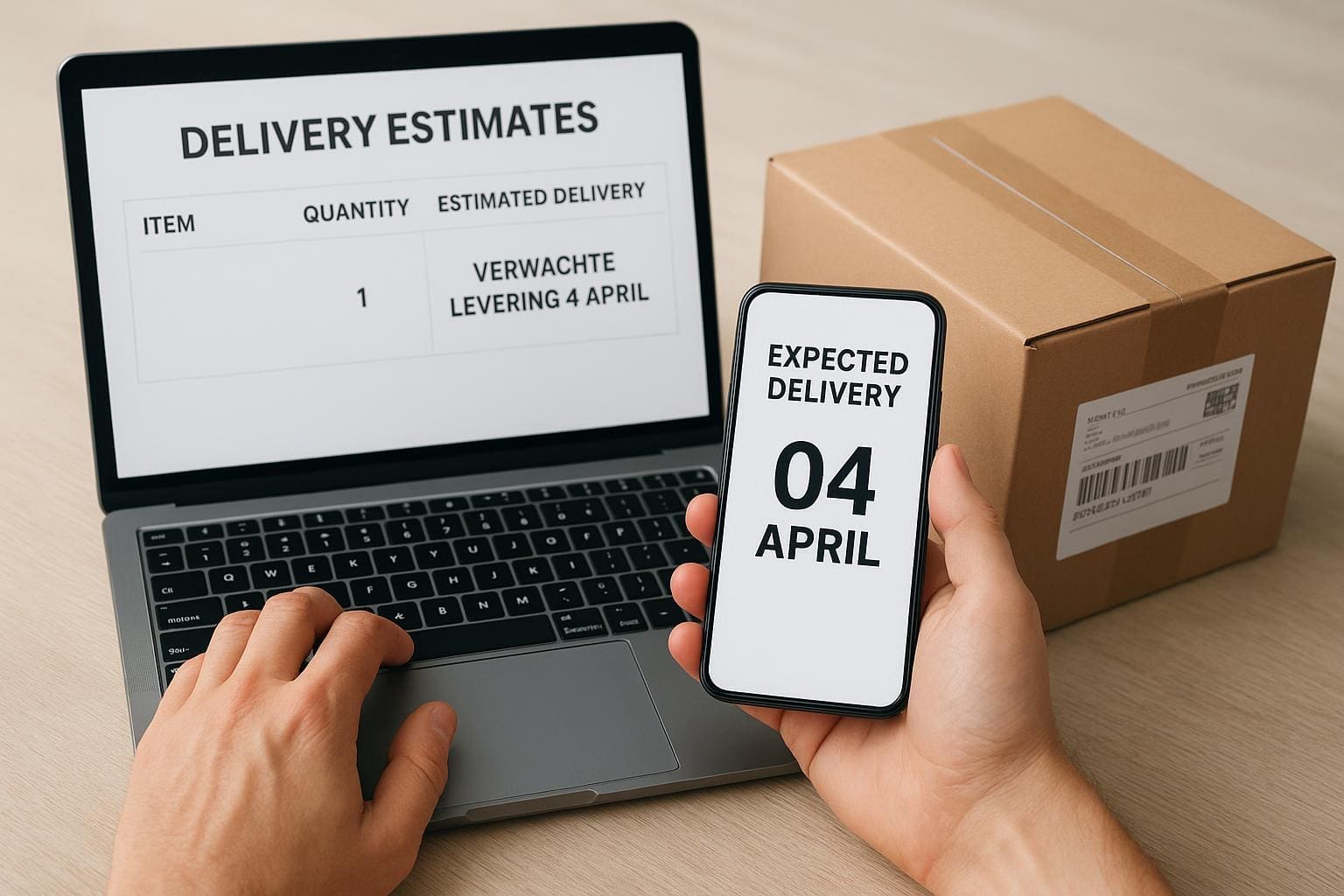

Delivery Estimates for Ecommerce Orders Explained Clearly

delivery estimates for ecommerce orders

## How Delivery Estimates For Ecommerce Orders Work
Delivery estimates for ecommerce orders are not a single math problem you solve once and forget. They’re a moving target built from several pieces: the time your warehouse needs to process the order, the carrier’s pickup and transit time, any customs clearance for international shipments, and last-mile variables like weather or local delivery capacity. Put those pieces together and you get a range or a date a retailer can reasonably promise.

At the simplest level, delivery estimates for ecommerce orders fall into a few common formats: a single promised date, a delivery window (for example, 3–5 business days), or a dynamic ETA that updates after the parcel ships. Each format tells the customer slightly different things. A single date looks confident but is only accurate if everything goes right. A range admits uncertainty but can feel vague. A dynamic ETA is the most accurate in practice, but it requires integration with carriers and real-time tracking data.

## The Components That Make Up An Estimate
### Processing Time And Cutoff Policies
Processing time is the minutes-to-days your team needs to pick, pack, and hand the parcel off to a carrier. That time changes with inventory, staffing, and order complexity. If you show a ship date in your cart, be explicit whether that means the order leaves the warehouse that day or the next business day. Cutoff times matter too. Orders placed before a cutoff may ship the same day; those after wait until the next. Be concrete about timezones.

### Carrier Transit Times And Service Levels
Carriers publish transit tables, but those tables assume ideal routing. Two-day service might be two business days from pickup to delivery, but not from when the customer clicks buy. If your carrier has limited departure flights or weekend pickups, transit stretches. Also, international carriers often hand off to local couriers, which adds unpredictability.

### Inventory Location And Multi-Warehouse Logistics
If inventory is spread across fulfillment centers, the chosen fulfillment site affects the estimate. A product in a nearby micro-fulfillment center can deliver in a day. The same SKU held only in a factory-adjacent warehouse might take longer. Smart routing that picks the closest fulfillment source is basic but often mishandled.

### External Factors: Weather, Holidays, And Customs
Storms and peak-season surges are the silent killers of promises. Customs checks for cross-border shipments can add several days unpredictably. Build buffers for major holidays and known weather patterns. Don’t assume carriers will absorb the delay without passing it downstream.

### Returns, Exchanges, And Reverse Logistics
Delivery estimates for ecommerce orders should also consider the reverse trip when you promise “fast exchanges.” If your policy requires items to be returned before a replacement ships, the customer timeline includes that outbound leg. If you pre-ship replacements and accept returns later, the estimate looks shorter but increases your inventory risk.

## How To Calculate Delivery Estimates For Ecommerce Orders
### Start With Clear Data Inputs
A usable estimate needs these data points: current fulfillment center stock levels, average pick-and-pack time per SKU, carrier pickup schedule, published transit times by ZIP or zone, and the customer’s address type (residential vs. commercial). Put that data into a basic model first, then refine.

### Use A Layered Buffer System
Don’t rely on single-point buffers. Use three layers: operational buffer (warehouse variability), carrier buffer (transit variability), and external buffer (holidays, weather). For instance, if your best-case calculation gives two business days, you might communicate a 3–5 business day window after adding layered buffers.

### Account For Peak Variability
Run scenario simulations for peak conditions. Peak season doubles processing times in many operations. Model what happens if your processing time increases by 50 percent, or if a carrier delays pickups by one day. Those scenarios reveal when a promised date becomes risky.

### Combine Static And Dynamic Elements
Static elements are things you know before shipment, like warehouse processing. Dynamic elements arrive after pickup, such as carrier scans and route optimization. The best approach is a hybrid: show an initial, honest estimate at purchase, then update the customer with a dynamic ETA after the first carrier scan.

### Use Historical Performance, Not Just Published Times
Published transit times are a starting point. Your store’s actual performance against those times is more valuable. Track historical on-time rates by carrier and region and weight your estimate toward reality. If Carrier A hits two-day service 70 percent of the time to a given zone and Carrier B hits it 90 percent of the time, let that inform which service you offer.

## Ecommerce Delivery Estimates: Presentation That Builds Trust
### Be Specific With Language
Customers respond to specifics. “Arrives by Friday, April 9” is stronger than “arrives in 3–5 days.” If you must use a window, explain what determines the lower and upper bounds. For example, “3–5 business days (orders placed before 2pm ET ship same day).” That last clause anchors the range.

### Offer A Choice Between Speed And Cost
Don’t pretend a single option fits all. Show the fastest option up front and a lower-cost slower option. When shoppers can choose, even if they pick the slower option, they feel informed and are less likely to be upset when the package arrives later than the fastest date would have promised.

### Use Real-Time Tracking Where Possible
A dynamic ETA that updates from carrier scans reduces uncertainty. After the parcel ships, show a countdown or an estimated delivery day that adjusts when delays occur. This transparency lowers inbound support requests and calms customers when things change.

### Display Service Limitations Upfront
If certain ZIP codes or remote regions routinely take longer, flag those during checkout. It’s better to warn than to surprise. If an item ships from overseas and requires customs clearance, add a note explaining typical customs times and the possibility of extra days.

### Be Cautious With Guarantees
Guarantees reduce complaint costs but increase financial exposure. If you guarantee delivery by a date, back it with compensation rules that are fair and sustainable. Alternatively, offer a “delivery on time or we’ll cover the shipping” style promise but define the limits clearly.

## Writing Copy That Doesn’t Overpromise
### Use Plain Sentences
Avoid marketing fluff. Say: “Standard delivery: 4–6 business days” and then add a clarifying sentence: “This estimate assumes the item is in stock and orders ship from our U.S. warehouses.” Short, factual lines work better than flowery promises.

### Explain Trade-Offs Briefly
When customers choose express shipping, confirm what that actually changes: “Express shaves one day in transit and ships the same day if ordered before 1pm local time.” The customer then understands the trade-off between cost and time.

### Keep Refund/Return Statements Short And Visible
If delays trigger refunds or expedited reshipment, state that plainly. Place the policy near checkout and again in the order confirmation email.

## Handling Delays And Exceptions Without Losing Customers
### Communicate Early And Often
When a delay happens, notify customers immediately with a concise explanation and next steps. For example: “Your shipment hit a weather delay. We now expect delivery on Tuesday. We’ll refund expedited shipping if you paid for it.” Early transparency reduces frustration.

### Provide Clear Remedies
Have a simple compensation ladder: partial refund, full refund, discount code, or reshipment. Make the remedy visible in communications so customers know you’re fixing things. Where possible, automate eligibility checks to speed resolutions.

### Train Customer Service On Timing Language
Equip reps with precise language that matches what customers saw at checkout. If you said “3–5 business days,” reps should not tell customers “it should be there tomorrow” unless they can confirm it via tracking. Consistency across touchpoints matters.

### Learn From Exceptions
Log every significant delay and its root cause. Over time you’ll see patterns: a carrier struggling in a certain region, a fulfillment center with intermittent staffing issues, or a specific SKU that always slows orders. Use that data to change routing, carriers, or stocking strategies.

## Metrics To Watch And Tools That Help
### Essential Metrics
– On-Time Delivery Rate: Percentage of orders delivered by the promised date.
– Promise Accuracy: How often your initial estimate matched the actual delivery window.
– Customer Contact Volume: Number of inquiries related to timing.
– Refunds And Credits Issued For Late Deliveries.

Track these by carrier, service level, fulfillment location, and geography. If a carrier shows a low on-time rate in a region, you either change carriers in that zone or adjust the promise.

### Tools That Improve Estimates
Carrier APIs provide real-time tracking and transit time matrices. Shipping platforms and TMS solutions can centralize carrier performance stats and compare cost versus speed. Predictive ETA services use machine learning on historical carrier scan data to give more accurate ETAs than static tables. Use these tools to push dynamic updates to customers after the package ships.

### Small Investments With Big Returns
A small investment in better routing logic or a predictive ETA integration often yields a big drop in customer inquiries. For example, implementing zip-to-zone routing so orders ship from the closest fulfillment point can shave days off many routes with minimal operational change.

## Common Mistakes Companies Make With Delivery Estimates
### Promising What You Don’t Control
Don’t promise same-day delivery if your warehouse lacks reliable same-day pickups. Promises that rely entirely on carriers’ best-case performance tend to break during stressed conditions.

### Hiding Complexity From Customers
Simplifying is good; hiding is not. When a shipping quote excludes customs, duties, or third-party delays, say so. Surprises are the main source of complaints.

### Using A Single Estimate For All SKUs
A blanket “2–4 business days” for everything is easy, but rarely accurate. Heavy items, bulky cartons, or items shipped from a factory will have different realities. Segment estimates by product type or fulfillment location.

### Ignoring Historical Data
If you have a habit of estimating based on carrier brochures rather than your own delivery history, you’re setting yourself up for disappointed customers. Historical performance tells the true story.

## How To Experiment With Your Estimates
### A/B Test Wording And Format
Try showing a specific date versus a window for a subset of traffic and measure conversion and returns. Some customers prefer a single date; others prefer a range. Let data guide the format.

### Test Buffer Sizes
Experiment with different buffer amounts and measure changes in complaints and conversions. Too-large buffers depress conversions; too-small buffers increase service costs and refunds.

### Trial Alternative Fulfillment Strategies
Run pilot programs with local pickup, parcel lockers, or micro-fulfillment centers in dense areas. These often allow tighter delivery promises for a segment of your customers without overhauling the whole operation.

## When To Escalate A Policy Change
Change your public promises when you see sustained slippage in on-time rates or when you add or remove a major carrier or fulfillment site. If average transit increases by a business day in a region for more than a month, update the estimate to reflect reality. Customers forgive companies that adjust transparently more than those that persist with the same broken promise.

## Example Messaging Scenarios
#### Order Confirmation With A Range
“Your order will arrive in 3–5 business days. We’ll ship from the nearest warehouse; orders placed after 2pm ET may ship the next business day.”

#### After Carrier Scan With Updated ETA
“Good news — your order is on its way. Current ETA: Friday, April 16. We’ll update you if anything changes.”

#### Delay Notification
“We hit an unexpected delay due to local weather in the carrier network. New expected delivery: Tuesday, April 20. If you paid for expedited delivery, we’ll refund that charge.”

## Final Practical Tips
Put a clock on your promises. If the customer sees a specific date, confirm that you have the processes and vendor performance to meet it. If you choose ranges, define what affects the endpoints. Automate what you can, but keep a human escalation path when exceptions require judgment. Customers notice honesty. If you consistently under-promise and over-deliver, you build trust faster than with polished but unrealistic promises. Remember: good delivery promises are as much about communication as about logistics. And when in doubt, check the scans before you answer an impatient inbox — the tracking will usually tell the truth even when the system that created the estimate did not. Recieve feedback from front-line reps regularly and adjust the models; they see the patterns first.

Poly Mailer Vs Bubble Mailer Which Is Best For Shipping?

poly mailer vs bubble mailer: which is best for shipping

## Poly Mailer Vs Bubble Mailer: Which Is Best For Shipping?

Pick the wrong envelope and you’ll spend more on replacements, refunds, and customer emails than you saved on packaging. The decision between a poly mailer and a bubble mailer is less about which is objectively better and more about what you’re trying to ship. “poly mailer vs bubble mailer: which is best for shipping” isn’t a trick question — it’s a matching problem.

## What Poly Mailers Do Well

Poly mailer packs are thin, lightweight, and cheap. If you ship soft goods — think T-shirts, leggings, or knit hats — a poly mailer will usually do the job. The material sheds water and resists tearing when handled properly. For online sellers who batched hundreds of lightweight orders, the math is simple: lighter package, lower postage.

### Benefits For Low-Risk Items

– Low weight means lower postage.
– Slim profile reduces dimensional weight charges for many carriers.
– Plenty of sizes and colors for branding.
– Tamper-evident adhesive flaps keep returns straightforward.

Poly mailer shows its value when the item inside has no rigid parts and minimal risk of crushing. They aren’t just about cost. The low profile also stacks tidy in a fulfillment station, making packing fast.

### Limitations To Keep In Mind

Poly mailer won’t stop a corner from getting bent or a rigid item from puncturing through. If your item has a zipper, a button, or a folded cardboard backing, expect to need extra reinforcement. Also, basic poly mailers provide almost no cushioning. If you’re selling fragile goods, this isn’t the end of the story.

## Why You’d Pick A Bubble Mailer

Bubble mailers add protection. A layer of bubble lining gives flex and shock absorption. They weigh more, but they prevent the kinds of dents and scratches that lead to unhappy customers and returns. For small electronics, jewelry with delicate pieces, or anything with corners, the added cost often pays for itself.

### Protection Versus Price

Bubble mailers usually run a bit higher per unit and push the package into a heavier postage bracket. But look at the cost of a damaged item: replacement product, return shipping, customer goodwill. For many sellers, that math flips in favor of bubble-lined mailers.

### When Bubble Mailers Fall Short

Bulky items still need a box. Bubble mailers can add thickness and therefore dimensional billing if the package is large-ish. And while they cushion, they don’t prevent crushing for heavier items. You’ll still need to consider internal supports or a box for anything fragile at scale.

## How To Choose: The Simple Checklist

Think about three things: fragility, weight, and presentation. Answer those and the choice becomes straightforward.

### Fragility
– Fragile: bubble mailer.
– Flexible textile: poly mailer.
– Somewhere in between: add cardboard or use a small box.

### Weight And Cost
– Under a certain weight threshold, a poly mailer usually saves money.
– For heavier small items, bubble mailers may shift you into a higher postage tier but lower damage risk.

### Brand And Unboxing
– If your brand relies on a neat unbox experience, poly mailers can be printed or colored for visual impact.
– Bubble mailers feel more premium for delicate items and can still be branded.

## Shipping Mailers And Returns: The Real-World Tradeoffs

Shipping is a series of repeated interactions. One damaged package creates extra customer service time and a little erosion of trust. Shipping mailers that reduce returns free up resources. If you sell seasonally or face spikes, a slightly more expensive mailer that reduces problems can be the better long-term move.

### Handling And Fulfillment
Fulfillment speed matters. Poly mailers are quicker to stuff and seal. Bubble mailers can slow throughput a bit because of bulkier shapes, but they cut down on rework from damaged shipments.

## Sustainability Considerations

Neither option is perfect environmentally, but choices matter. Some poly mailers are recyclable where film recycling exists, and some brands offer compostable variants. Bubble mailers are often a mix of plastic and bubble wrap that’s harder to recycle.

If you’re promoting greener shipping mailers, look for mailers made from post-consumer recycled content or ones that accept reuse. Encourage customers to reuse packaging when possible. Also, consider offering a refund on return shipping only when returns arrive undamaged — a gentle incentive to encourage careful handling from both sides.

## Cost Examples That Illustrate The Point

A typical poly mailer might cost $0.12 per unit at scale. A bubble mailer of similar size could be $0.35. Postage adds another layer: if the bubble mailer pushes you into the next postage bracket, you could be spending $0.75–$1.00 more per order. But if damage rate drops from 3% to 0.5% with a bubble mailer, that saved replacement cost could more than cover the extra packaging spend.

Run the numbers for your average order value. If a damaged product costs you $25 in replacement and handling, even a small reduction in damage rate is worth a higher mailer cost.

## Packaging Hacks That Blend Both Worlds

You don’t have to treat the decision like an either-or. Use a thin cardboard insert inside a poly mailer for shirts with stiff tags. Wrap delicate items in a thin bubble bag and then place them in a poly mailer. These hybrid approaches keep postage low while protecting the product.

### H4: Small Changes, Big Impact
– Fold stiff items with a lightweight cardboard sleeve.
– Use stickers or void-fill tape to secure items inside.
– Offer optional upgraded packaging at checkout for fragile items.

## Returns And Customer Experience

Shipping mailers that protect the product reduce returns and increase repeat business. If your customer base values presentation, spend a bit more. If they’re price-sensitive, focus on keeping costs down while avoiding common causes of damage. Advertise the packaging option in product pages so customers can choose. That transparency prevents surprised buyers and reduces chargebacks.

## Practical Advice For Different Businesses

If you’re selling apparel only: lean toward poly mailer. If you sell a mix including fragile items: standardize on bubble mailers for those SKUs and use poly for the rest. If you run a marketplace with many different products, build packaging rules into your fulfillment process so the right mailer gets used every time. Remember to document the decision reasons so packers know when to upgrade.

When you ask “poly mailer vs bubble mailer: which is best for shipping” think less about absolutes and more about which risks you’re willing to accept. Test both for a month, measure damage rates and postage changes, and adjust. Small, measurable tweaks beat gut feelings.

Recieve samples from suppliers and stress-test them yourself before you commit to a large order. Shipping is full of small costs that add up — the right mailer prevents a lot of wasted time and money — and keeps customers coming back.

Understanding Packaging-Cost-Per-Order For Small Business Shipping

packaging-cost-per-order

Small businesses often treat boxes and tape like background noise. That’s a mistake. Packaging eats profit quietly, one order at a time. If you don’t know how much you spend to package a single sale, you’re flying blind.

## How To Calculate Packaging-Cost-Per-Order
Start simple: packaging-cost-per-order is the average amount your business spends on packing materials and related labor divided by the number of orders in a set period. The math itself isn’t complex, but getting accurate inputs takes work.

First, define what you include. For most small sellers that will be: boxes, mailers, bubble wrap, tape, labels, packing slips, and any inserts like thank-you notes. Add labor for packing, protective materials for fragile items, and the amortized cost of equipment such as a label printer or tape dispenser.

Basic formula:
Total Packaging Expenses / Number Of Orders = Packaging-Cost-Per-Order

If you tracked packaging costs for a month and spent $1,200 on materials and $800 on packing labor, and shipped 2,000 orders that month, your packaging-cost-per-order is ($1,200 + $800) / 2,000 = $1.00.

### Gather Your Packaging Costs
Don’t guess. Pull invoices, receipts and purchase orders for a clear picture. Look for recurring subscriptions — like branded boxes you get monthly — and one-offs, such as seasonal mailers. Include small consumables; a roll of tape looks cheap until you realize you go through three a month during a promotional push.

Be precise with the unit cost of items. If you buy a box of 200 bubble mailers for $120, the per-mailer cost is $0.60. If you can’t break down supplier invoices, track purchases for at least one sales cycle and calculate per-unit costs afterward.

### Track Labor And Overhead
Labor is often overlooked. Time technicians spend packing per order adds up. Measure a few samples: time a quick SKU takes, then time for a mixed-order pack. Multiply packing time by the hourly wage plus payroll taxes and benefits. That gives you a realistic labor component to add to packaging-cost-per-order.

Include a slice of overhead where relevant: warehouse utilities if packing is done there, or the floor space cost for storage of packing materials. For an automated station, amortize the equipment cost over its useful life and add the per-order share.

#### Example: Labor Calculation
If packing a single small order takes 3 minutes and the fully loaded labor rate is $18/hour, that order carries $0.90 in labor (3/60 * $18). For bulkier items the time might be 6–8 minutes, shifting that piece to $1.80–$2.40.

### Account For Damage And Returns
Packaging failures show up as returns, replacements, or negative reviews. Track the cost of items lost to damage and the packaging adjustments you make afterward. If you had 10 damaged orders in a month, costing $50 each to replace, and you shipped 2,000 orders, add $500 / 2,000 = $0.25 to the packaging-cost-per-order to cover that risk. It’s a conservative step that saves money over time.

## Common Pitfalls That Inflate Cost Per Order
Small shops make the same mistakes. Recognizing them quickly brings down the cost per order and improves margins.

### Buying The Wrong Quantities
Buying single units for a new SKU can feel safe, but unit costs will be higher. Conversely, buying too much of a single box size ties up cash and leads to wasted storage space. Track sales patterns for a quarter, then buy in multiples that match your velocity. Packaging costs drop with smarter buy quantities.

### Overpacking To Avoid Claims
It’s tempting to over-protect every order. Some items need it. Many don’t. Use data to decide protection levels. A thin phone case doesn’t need a double-box treatment. Revisit the packaging for every top-selling SKU. Adjust based on size, fragility, and shipping route.

### Mixing Packaging Types Randomly
If you use ten different box sizes across a handful of SKUs, you’re paying more in storage and buying multiples less cheaply. Standardize sizes where possible. That cut reduces both packaging costs and picking complexity.

### Ignoring Weight-Based Effects
Carrier rates are determined by weight and dimensions. A heavy internal filler can move an order into a higher rate band. Reevaluate fillers like newspaper or extra cardboard and replace them with lighter alternatives like honeycomb paper or molded pulp where suitable.

## Practical Ways To Reduce Packaging Costs
You don’t need a warehouse robot to save money. Small changes compound.

### Right-Size Packaging
Analyze parcel dimensions versus product dimensions. Use a sizing chart and move toward a handful of optimized box sizes that fit most items snugly. Less empty space equals lower dimensional weight charges and less filler material.

### Negotiate With Suppliers
Talk to your packagin suppliers. Bigger, predictable orders can get you lower per-unit costs. Ask for tiered pricing and free samples when testing new materials. If you’re buying 5,000 mailers a year, that’s negotiation fodder.

### Reuse And Recycle Strategically
Reusing boxes from supplier shipments can save money, but be consistent and professional. Inspect reused boxes for integrity and remove competitor branding. Recycling initiatives also lower waste disposal costs; some carriers offer rebates or pickups that reduce expense.

### Simplify Inserts And Marketing Pieces
Branded tissue paper and elaborate inserts look nice but raise packaging costs. Test customer response by removing or changing inserts for a month. Keep what converts. Remove what doesn’t.

### Automate Where It Pays
Small automation — like a handheld label printer or a table-top tape dispenser — can shave seconds off each order. Multiply those seconds across hundreds of orders and labor savings become material. Don’t buy big gear unless you’ve confirmed volume justifies it.

## How Packaging-Cost-Per-Order Affects Pricing And Forecasting
Once you know your packaging-cost-per-order with confidence, use it.

### Price Products To Protect Margin
Add the packaging-cost-per-order directly into gross margin calculations. For a $20 product with a target gross margin of 40%, you need to cover COGS, shipping, and packaging. If your packaging-cost-per-order is $1.25, factor that in before setting promotional prices. Otherwise a sale that looks profitable on paper can actually lose money.

### Test Bundles And Shipping Options
Bundling items often reduces the packaging-cost-per-order because you ship one parcel instead of two. Offer shipping discounts intelligently. If free shipping at $50 reduces average order count but increases average order size enough to lower packaging-cost-per-order and shipping spend, it can be a win.

### Forecast Materials And Cash Flow
Packaging inventory is cash tied up on shelves. Use packaging-cost-per-order and projected order volume to predict material needs and spending. If you expect 10,000 orders next quarter and your packaging-cost-per-order is $1.10, plan for $11,000 in packaging spend plus a buffer for spikes.

#### Scenario Planning
Run different scenarios: holiday surge, one-off promotion, or product launch. Calculate how packaging spend scales and whether supplier lead times will cause stockouts. That prevents last-minute rush buying at premium prices.

### Monitor Performance Over Time
Track packaging-cost-per-order monthly. Look for trends: rising material prices, increased returns, or changing order profiles. A small change in average order weight can signal the need to revisit packaging choices before costs balloon.

## Tools And Metrics To Keep Useful
You don’t need expensive software to get useful numbers, but organize data.

– Use a simple spreadsheet tracking purchase invoices, material inventory, per-unit costs, and monthly labor.
– Add a column for returns and damages linked back to packaging types.
– Connect sales numbers to packaging spend to calculate cost per order regularly.

If you can afford a basic inventory or shipping platform, many show packaging spend per SKU and help automate labeling and packing slips. Those insights remove manual guesswork and expose specific items that drive up packaging costs.

### KPIs To Watch
Track a few specific metrics alongside packaging-cost-per-order:
– Average packaging material spend per SKU
– Packaging labor minutes per order
– Return rate attributable to packaging failures
– Percentage of orders hitting dimensional weight thresholds

These KPIs tell you where to act first.

## When Higher Packaging Costs Make Sense
Cheap isn’t always better. A premium brand might use custom boxes with tissue and inserts because the unboxing experience drives loyalty and higher lifetime value. If a higher packaging-cost-per-order correlates with lower returns, higher repeat purchase rates, or greater average order value, it’s justified.

Measure the business outcomes. If customers who receive premium packaging spend 20% more over six months, the extra $0.75 per order could be a smart investment.

## Quick Audit Checklist For One Afternoon
If you can only spare a few hours, do this:
– Pull last month’s supplier invoices and map per-unit costs.
– Time packers for five typical orders to estimate labor.
– Check three best-selling SKUs for their current packaging process.
– Calculate packaging-cost-per-order for that sample and compare to your last known number.
– Identify one immediate change you can make, such as right-sizing a box or switching a filler.

That rapid audit will often reveal low-hanging fruit.

Don’t forget to log a reciept or two when testing changes. Small experiments need evidence to scale.

How To File A Missing Mail Search Quickly And Safely

how to file a missing mail search

If a piece of mail goes missing, the worst thing you can do is wait and hope. Move quickly, document everything, and pick the right channel to report it. That increases the odds you’ll get answers, or at least be able to escalate properly.

## How To File A Missing Mail Search With The USPS

Start here if the package or letter was sent through the United States Postal Service. The USPS has a specific process for a mail search and it’s where most successful recoveries begin. If you’re wondering how to file a missing mail search with them, these are the fast, practical steps people who actually get results take.

### Confirm The Timeline First

Check the tracking number. A lot of so-called missing mail is simply delayed. If tracking shows “out for delivery” but nothing arrived, confirm:

– The delivery date on tracking.
– Any “delivered” scans that show an alternate location.
– Whether the item went through a sorting facility and left your city.

If the window is short — a day or two past the expected delivery — call or use the online tool. For insured packages or Priority Mail Express, the search and claims process is different and faster. Don’t skip the tracking review; it saves time.

### Gather The Exact Details You’ll Need

You will be asked for specifics. Have them ready before starting a mail search:

– Tracking number and service type (First-Class, Priority, etc.)
– Sender and recipient names and addresses
– Date shipped and expected delivery date
– Description of contents and value
– Any proof of posting or purchase (reciept, order confirmation, invoice)

Write these down on paper and keep digital copies. A quick packet of info makes phone calls short and online forms smooth.

### Use The USPS Online Missing Mail Search First

The fastest initial route is the USPS Missing Mail Search page. It’s available 24/7 and can automatically route your request to the local post office and regional networks.

– Fill out the online form with the details above.
– Attach photos of the item and receipts if asked.
– Note whether the item contained sensitive or perishable goods.

Online submission creates a record. It’s dated and time-stamped, which helps later if you need to file a claim.

### When You Should Call Your Local Post Office

If the online form feels slow or the item is urgent, call your local post office. Ask to speak to the manager or supervisor. Keep your tone firm but polite. Provide the tracking number and the details on your list.

Phone calls are better for items that require immediate human attention — for example, a mis-delivered medication or important legal documents.

### File A Missing Mail Search Early For High-Value Items

If the contents were valuable, don’t wait the usual 7–10 business days. Initiate the search right away and flag the item as valuable when you submit the report. For insured packages, you’ll need this initial filing to support a claim later.

## What To Do If Your Package Was Sent By Another Carrier

Not everything moves through USPS. FedEx, UPS, DHL, and regional carriers have their own procedures. The overall approach is the same but use the carrier’s web form first.

### Differences Between Carriers

FedEx and UPS have similar online claim and trace systems. DHL handles international routes differently and may route searches through customs. If the sender is a retailer, they often have a separate claims team that can speed things up.

### Escalation Steps For Private Carriers

– Use the carrier’s online trace tool.
– Call the local customer service number and reference the tracking number.
– Ask the sender to open a claim from their business account if available.

Retailers sometimes re-ship before the carrier completes a search. That’s a good short-term fix for you, and it can save time compared to waiting for the carrier’s outcome.

## How To Handle Missing Mail For PO Boxes And Multiunit Addresses

PO boxes and apartment buildings are common trouble spots. Misdelivery, swapped mail, and poorly labeled boxes cause many incidents.

### PO Boxes

If you have a PO box, confirm the mail arrived at the box lobby. Look for notices or the carrier’s slip. If you’re the sender, check whether you used the correct box number and post office address.

### Apartment Buildings And Complexes

For apartments, talk to the building manager and front-desk staff. Sometimes mail gets held at the leasing office or placed in an incorrect mailbox. If you suspect theft from a cluster box, report it to your local postmaster and your building management.

## Proof, Pictures, And Paperwork That Matter

Don’t underestimate photos. A clear image of the package label, the damaged box, or the missing item’s packaging helps. Proof of value matters if you plan to file a claim.

### Exact Items That Help A Mail Search

– Photo of the shipping label and tracking code.
– Order confirmation emails and invoices.
– Bank statements showing purchase or payment.
– Photos of the item’s packaging and condition before shipping.

Keep copies safe. If you have to escalate to a claim or to law enforcement, that documentation will be crucial.

### File A Police Report Only When Necessary

If theft is likely, file a police report. This is especially important for high-value items and identity-sensitive material. For stolen packages, carriers often require a police report for certain types of claims.

## What To Expect After You File A Mail Search

Expect a few steps and some waiting. The carrier will check facility scans, interview carriers, and search local delivery routes.

### Typical Timeline

– Initial acknowledgment: within 24–48 hours (online form or phone).
– Local investigation: 3–7 business days.
– Regional or national escalations: could take weeks.

If the item is high-value, the process is prioritized. But even then, complete resolution may take time. Keep following up and document every interaction.

### When The Carrier Finds The Item

They will either deliver, hold for pickup, or contact you for pickup instructions. Sometimes an item is held at a local post office without a delivery notice. Check your online tracking for a change of status.

## Filing An Insurance Claim After A Missing Mail Search

A search and a claim are different procedures. A mail search looks for the item. A claim seeks reimbursement.

### When To File A Claim

– If the item is insured and declared lost.
– If the search has been open beyond the carrier’s timeframe.
– If carrier confirmation indicates loss or misdelivery.

Read the carrier’s claim rules. For USPS, you typically need to file a claim for insured mail within specific time windows after the mailing date. The search documentation supports your claim.

### Evidence Needed For A Claim

Claims need proof of value and proof of mailing. That could be an original sales invoice and mailing reciept. Keep the originals and submit clear copies.

## Working With The Sender: Don’t Assume It’s All On You

If you’re the recipient, pull the sender into the process. Retailers and senders often have internal protections and will pursue carriers on your behalf. Sometimes they will simply send a replacement to keep the customer satisfied.

### Scripts For Contacting The Sender

Be precise. Tell them:

– The order number and tracking number.
– The date it was shipped and the expected arrival date.
– That you’ve started a mail search and what steps you’ve already taken.

Ask for a replacement or refund boundary — for example, “I’d like a replacement shipped within 48 hours unless the carrier confirms delivery.”

## When To Escalate Beyond The Carrier

If repeated attempts to locate the package fail, escalate to higher levels. For USPS, contact the Postmaster or file a complaint with the Postal Regulatory Commission. For private carriers, ask for a supervisor and then corporate claim review.

### Using Social Media Carefully

Public posts to a company’s Twitter or Facebook can speed attention. Keep the post factual and include only the order number or tracking number, not personal details. A firm but brief public message often gets a faster reply.

## International Missing Mail: Customs And Longer Timelines

International shipments add complications. Customs holds, international transit, and foreign carriers introduce delays.

### Steps For International Mail Issues

– Track the item through every carrier listed.
– Contact the last known carrier before U.S. customs or the destination country’s postal service.
– Check customs forms and VAT or duty hold notices.
– Ask the sender to confirm the customs declaration accuracy.

International mail searches can take much longer. Patience is necessary, but so is persistent follow-up.

## Identity Theft And Sensitive Documents In Missing Mail

If the missing mail includes checks, tax documents, or identity documents, act fast. Identity-related mail requires immediate steps.

### Immediate Actions For Sensitive Missing Mail

– Contact your bank and credit card companies to flag unusual activity.
– Place a fraud alert or credit freeze if necessary.
– Report to the carrier that the missing mail contains identity documents; they may triage the case.

File a police report when identity documents are lost or stolen. The police report is often required for credit bureaus and carriers.

## Practical Tips To Prevent Missing Mail In The Future

Few things prevent all problems, but these reduce risk dramatically:

– Require signature on delivery for high-value items.
– Use tracked and insured shipping when sending valuable goods.
– If you’re a frequent recipient, add delivery instructions or an access letter at your post office.
– If you’re not home often, have items held for pickup rather than delivered.
– For business sends, use address verification and double-check apartment/unit numbers.

These steps add a bit of friction up front and save a lot of headache later.

### Package Photos On Delivery

If you accept packages from a carrier frequently, take a photo of each label and the delivered package. It’s a fast habit that helps with disputes.

## How To Keep The Process Moving Without Burning Time

Log every call, every form submission, and the name of the person you spoke with. This log is your leverage.

### Use Short, Useful Records

– Date/time of contact.
– Channel used (phone, online).
– Name and title of the person you spoke with.
– Short note on what they promised and when.

If something goes wrong later, you’ll be able to point to exact commitments and timelines.

## Sample Verbiage For A Phone Call To Start A Mail Search

Say this calmly and directly: “Hi, my name is [Name]. Tracking number [number]. The item was expected on [date] and is now overdue. I’ve submitted an online search but would like this escalated because it contains [brief content description]. Can you open a local search and confirm the expected next step and timeframe?” Keep it short. Ask for a case or reference number to close the loop.

## What Not To Do

– Don’t let emotions drive calls or messages. Angry shouting rarely speeds resolution.
– Don’t give sensitive personal information over public or insecure channels.
– Don’t accept a refund or replacement without getting the carrier’s written closure if you plan to pursue a claim.

These mistakes slow things down and can harm your ability to get paid if you ultimately need to file a claim.

## Follow-Up Scheduling And When To Push Harder

If you haven’t heard back after the carrier’s stated window, follow up immediately. Use your log to reference the prior contact. Ask for a supervisor when necessary.

### When To Call The Sender To Escalate

If you’re hitting dead ends with the carrier, loop the sender back in. A retail account manager can sometimes get a different queue for investigations. They may also offer immediate re-shipment.

## How Long To Wait Before A Claim Or Refund

Different carriers have rules but commonly:

– For USPS domestic parcels, allow 7–15 business days before concluding lost.
– For international, wait longer — often 30 days or more.
– For FedEx/UPS, the window may be shorter for certain expedited services.

Do not wait too long to file a claim if you have insured shipment. Missing the claim window is a common reason people don’t get paid.

## Keeping Records For Future Disputes

Store copies of everything in a dedicated folder or cloud drive. The next time something goes missing, you’ll be faster and better organized.

### What To Keep Indefinitely

– Original purchase invoices.
– Shipping receipts and tracking confirmations.
– Photos and email correspondence with the carrier and sender.
– Police reports if applicable.

These documents make it far easier to reopen a case months later if needed.

## When Legal Action Is The Only Option

Legal action is a last resort. For high-value loss where the carrier or sender won’t cooperate, talk to an attorney familiar with shipping law and small-claims procedures. Often a demand letter from a lawyer gets faster action than prolonged negotiations.

## Making The Process Less Stressful

Treat it like a project. Break it into steps, assign deadlines, and keep records. You’ll feel more in control and get better outcomes.

If you want, I can draft a short email template you can send to sellers or carriers when you first open a mail search.