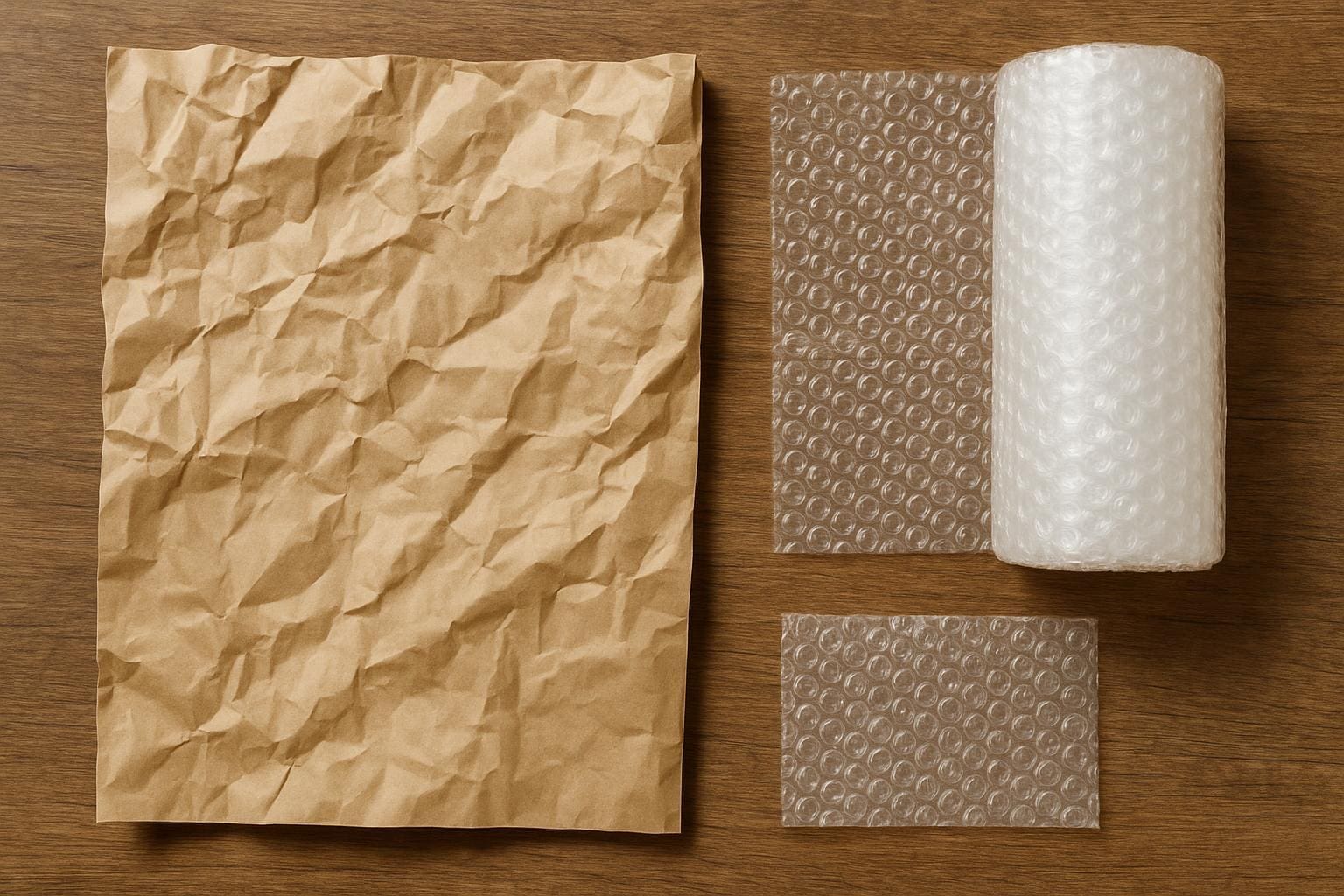
You don’t need a fancy checklist to figure out whether to use paper or plastic cushioning. Look at the item, the box, and what it will face between pickup and the recipient’s porch. Then pick the wrap that actually protects what matters.
## Packing Paper Vs Bubble Wrap: When To Use Each
If you type “packing paper vs bubble wrap” into a search bar, you’ll get opinions, hands-on tests, and marketing blurbs. The useful part is simple: you need protection from impact, abrasion, moisture, and movement. Packing paper handles movement and fills voids. Bubble wrap cushions sharp shocks. That’s the starting point.
### What Packing Paper Does Best
Packing paper is flat, flexible, and cheap. Crumple a few sheets and they collapse into an affordable, odorless cushion that prevents items from knocking together. I use it for dishes, picture frames, and books. Wrap a stack of plates in two or three layers, then nest them in a box with more crumpled paper between each plate. The paper soaks up small shocks and keeps surfaces from scratching.
Paper’s other big plus is breathability. Cardboard and paper won’t trap moisture the way sealed air pockets can, soitems that are vulnerable to condensation or humidity do better with paper. Paper also packs efficiently; a roll takes little storage space and you can tear off exactly what you need.
### What Bubble Wrap Does Better
Bubble wrap, on the other hand, is an air cushion. Small bubbles absorb point impacts. That’s why I reach for it with electronics, glassware that’s unusually thin, and anything with delicate corners. Wrap a frame in a single layer of bubble wrap, then use paper to fill gaps so the item can’t shift. When you’re shipping something that could crack from a drop or get pressure marks, bubble wrap is the insurance you want.
Bubble wrap also conforms to complex shapes better than rigid foam. A few wraps around a ceramic lamp’s base will smooth uneven edges and protect protruding parts.
#### Caution On Pressure And Compression
Bubble wrap performs poorly if the box gets crushed flat. If cartons will be stacked tightly, the air in the bubbles can burst and lose all their cushioning value. Combine bubble wrap with internal reinforcements or use boxes rated for stacking.
## How Shock Absorption And Movement Differ
Understanding how shock absorption and internal movement differ is the key difference between packing paper vs bubble wrap.
### Shock Absorption: Bubble Wrap Wins On Direct Impacts
For a direct jolt—think a corner hitting pavement—bubble wrap dissipates energy across the air pockets. The larger the bubbles, the more energy they can absorb, but large bubbles also compress easier and are less effective for light, fragile items. Small-bubble wrap is better for tiny electronics and jewelry; large bubbles suit heavier ceramics.
### Movement And Friction: Paper Is Better For Preventing Rattling
If an item rattles inside its box, the repeated friction causes scratches and chips. Packing paper grips surfaces and prevents items from sliding. It’s also ideal for filling voids: crumpled paper locks into odd angles and holds heavier items steady.
#### Layering For The Best Results
You don’t have to pick one. A combination is often smarter: one layer of bubble wrap around the item for impact resistance, then pack the box tightly with crumpled paper so it can’t move. That hybrid approach balances shock absorption with anti-shift protection.
## Cost, Storage, And Environmental Trade-Offs
Money matters in shipping, especially if you ship frequently.
### Upfront Cost Versus Long-Term Waste
Bubble wrap costs more per cubic foot than recycled newsprint or kraft paper, and it takes up more storage volume when stored flat. Paper is cheap and lightweight. But bubble wrap can reduce damage claims on very delicate items, which offsets cost.
On the environmental side, paper is easier to recycle in many municipal programs. Some bubble wrap is recyclable where plastic film is accepted, but that’s not universal. If you’re trying to shrink waste, consider the lifecycle: multiple layers of paper may be heavier and increase postage, while single-use plastic adds to landfill if not recycled.
### Storage And Handling
A roll of paper fits neatly on a shelf. Bubble wrap takes more space and can cling to other items, collecting dust. In a busy warehouse, paper is less likely to get crushed and is easier for quick wrapping.
## When To Reach For Packing Paper Alternatives
There are times when neither standard paper nor bubble wrap is ideal. That’s when packing paper alternatives come in.
### Corrugated Inserts And Molded Pulp
Corrugated inserts and molded pulp are rigid but shaped to hold items in place. They’re great for bottles and electronics shipped in bulk. These inserts keep items suspended in the box and eliminate the need for loose fill.
### Foam And Air Pillows
Foam sheets and air pillows fill space without adding much weight. Air pillows can reduce waste over time if you purchase recyclable versions. They’re convenient, but they function more like bubble wrap and less like paper—so use them for impact, not for preventing scratches.
### Biodegradable And Recycled Options
Biodegradable packing peanuts and recycled paper pads give you protective properties with less long-term waste. For sellers hypersensitive to greenwashing, these packing paper alternatives can be a genuine improvement.
Use the phrase packing paper alternatives when you’re looking for something that balances cost, protection, and sustainability.
## Real-World Examples That Clarify The Choice
Here are short, practical examples from actual packing scenarios.
### Shipping Kitchenware
I shipped twenty ceramic plates to a customer once. Using only bubble wrap would have been overkill and expensive. I wrapped each plate in two sheets of packing paper, nested them with paper crumpled between, and put a corrugated insert on the top and bottom. Result: zero breaks, and postage stayed reasonable.
### Sending A Glass Sculpture
A glass sculpture with fine edges went out with three layers of bubble wrap and then a box within a box. The inner box had paper padding to stop movement. That combo protected against both impact and compression from stacking.
### Sending Books Or Clothes
Books and textiles rarely need bubble wrap. Tight packing with paper prevents rubbing and saves space. For soft goods, paper reduces creases more than plastic does.
## Shipping Cost, Weight, And Dimensional Considerations
Postage calculators use weight and dimensions. Paper is light; bubble wrap adds bulk and sometimes weight depending on how tightly you pack the box.
### Dimensional Weight Versus Actual Weight
If an item is light but bulky, carriers might charge dimensional weight. Bubble wrap increases box size, so for low-value, large items, choose paper or more compact cushioning. If you use bubble wrap, compress the package carefully without crushing fragile items.
### Avoiding Oversize Fees
A well-packed box with paper that fills voids can often be a smaller size than a bulky, bubble-wrapped package that leaves empty space. Think size optimization: tightly packed boxes cost less.
## Handling And Presentation
Presentation matters for customer experience. Bubble-wrapped items scream “fragile” but can feel plasticky. Paper gives a cleaner, premium impression when done right.
### Wrapping For Unboxing
Retailers who sell fragile items often use bubble wrap for safety, then layer tissue paper on top for presentation. That way the customer gets both protection and a nicer unboxing moment.
#### Labeling And Fragile Stickers
Labels don’t fix poor packing, but they help handlers take care. Combine labeling with proper cushioning and you reduce the chance of damage.
## Quick Decision Guide
If you want a fast rule of thumb: use paper for rigidity, anti-scratch, and filling; use bubble wrap for direct-impact protection. If you’re shipping something valuable and fragile, use both.
Here’s a final practical thought: test your packing method. Drop the packed box from waist height and feel whether the item moves or registers a jolt. If it does, add more bubble wrap or redesign internal supports. If it’s still shifting, use more paper or a molded insert. That simple test saves returns and the headache of a bad customer review—trust me, I’ve been there and had to explain why a vase arrived in pieces after I thought I was being careful. I now always test random packages before sending in bulk to avoid having to recieve returns and complaints.