Cheapest Way To Ship Books: Smart & Affordable Tips

cheapest way to ship books

## Why Smart Shippers Choose The Cheapest Way To Ship Books
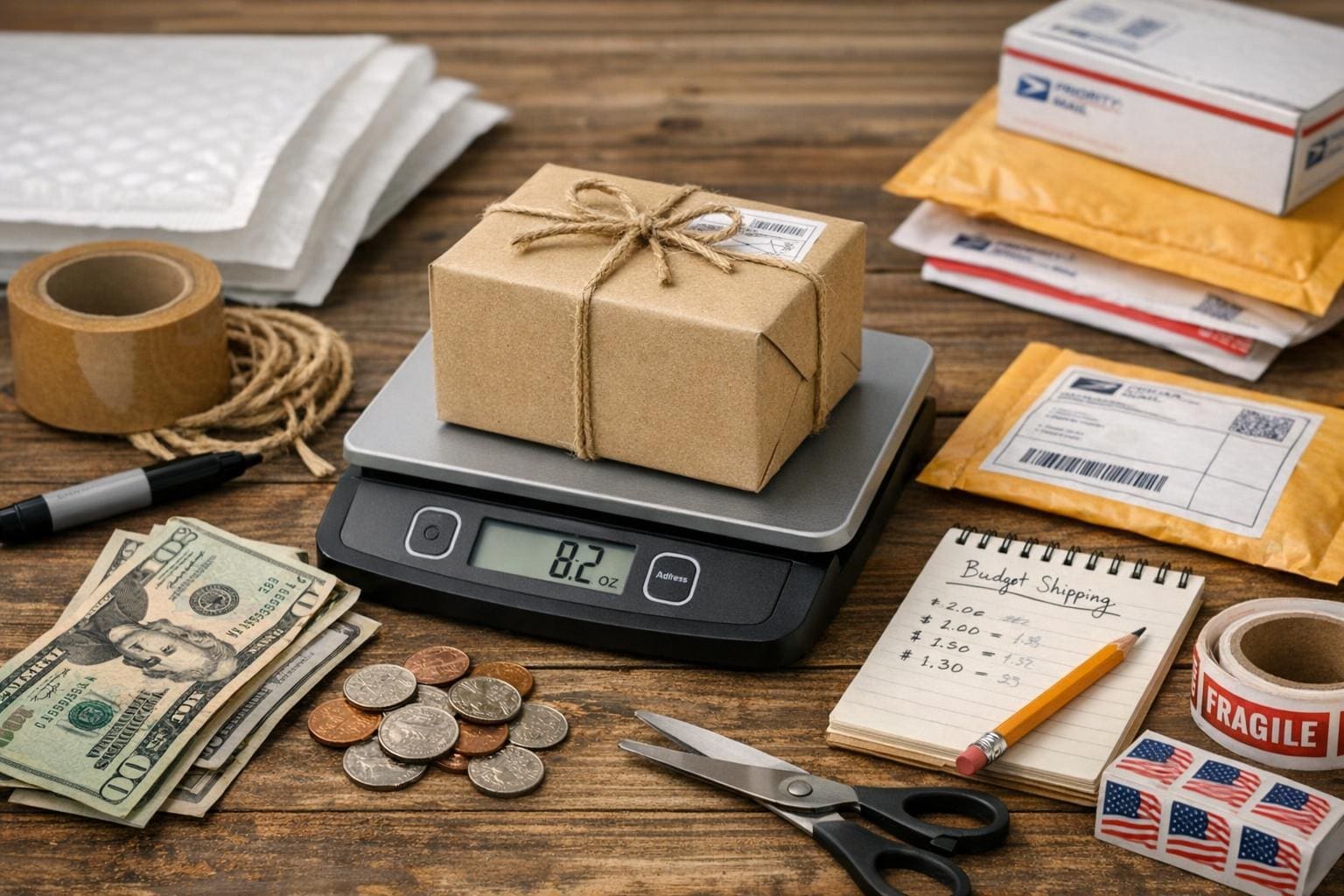
Whether you’re decluttering a shelf, running a micro bookshop from a garage, or sending a thoughtful gift, finding the cheapest way to ship books saves time and money. The creative part is thinking beyond the obvious: how you pack, what carrier you pick, and when you ship can shave dollars off every order. Below are practical tactics and a DIY remedy to protect books without blowing your budget.

### Compare Carrier Options And Services
Start by surveying the landscape. USPS, UPS, FedEx, and regional carriers each have sweet spots. For single paperback or small hardcover shipments within the same country, USPS tends to dominate on price. When volume is low, USPS Media Mail is almost always the cheapest way to ship books for domestic shipments. Media Mail enforces content rules, so use it only for qualifying printed material.

### Weighing, Measuring, And Avoiding Surprise Fees
Accurate book shipping begins before you choose a box. A home scale and a tape measure are your best friends. Know the weight and dimensions to avoid size-based or overweight surcharges. Round up to the next ounce or inch for postage calculations, and check for additional fees like residential delivery, signature requirements, or special handling. These add-ons can turn an economical shipment into an expensive one.

#### Media Mail: The Budget Champion
Media Mail is slow and purpose-built for printed matter. It’s inexpensive because it doesn’t include expedited processing or certain ancillary services. Keep it compliant: include only eligible items (books, printed music, recorded media) and avoid mixing in non-media items. Properly declared Media Mail can undercut other options by a wide margin; many sellers consider it the backbone of cheap book shipping strategies.

### Use Flat Rate And Regional Options When Appropriate
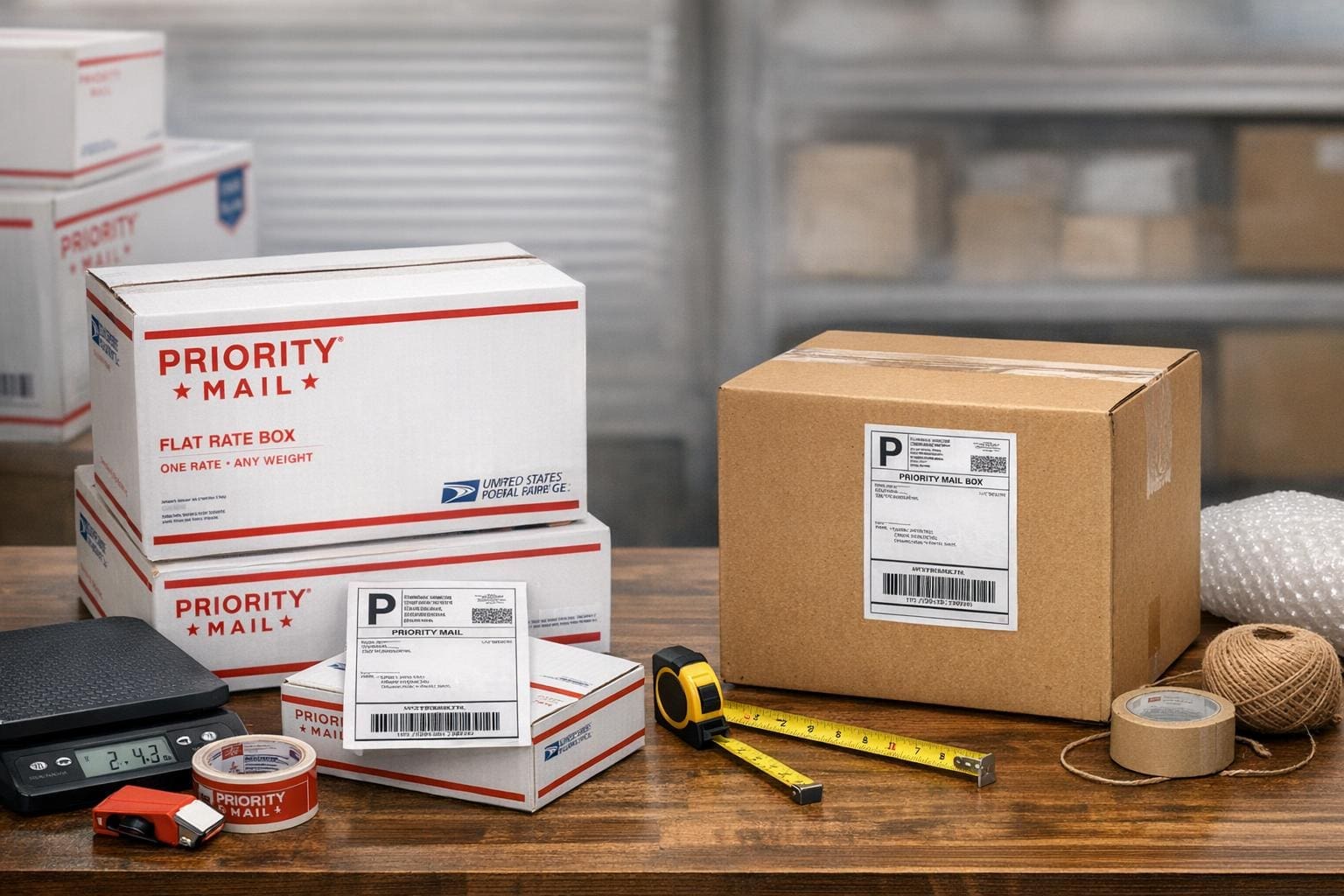
Flat rate boxes and envelopes are useful when weight is high but item size is modest. Flat rate is rarely the cheapest for a single paperback, but if you’re sending several books together, it often beats weight-based rates. Regional carriers and regional rate boxes sometimes offer a lower price-over-distance than national carriers, so test a few shipment types for your typical orders. Flat rate options can also be simpler for pricing and customer communication.

### Save With Online Postage And Discounted Labels
Buying postage online usually gives you commercial rates not available at the counter. Print labels at home to save time and money: discounted postage, fewer trips to the post office, and batch processing all reduce per-package cost. Buying postage online, printing labels at home, and batching shipments is often the cheapest way to ship books because of commercial discounts. Many marketplaces and shipping platforms integrate discounts directly into the sale workflow.

### Protective Packaging Without Breaking The Bank
Books don’t need luxury packing to arrive intact; they need smart packing. Use snug, low-void packaging to avoid shifting that causes spine damage. If you want the absolute cheapest way to ship books, packing snugly with recycled materials reduces both weight and the need for oversized boxes. Avoid heavy fillers like dense bubble wrap if they add weight; instead, use crumpled paper, clean corrugated cuts, or eco-friendly pouches for light cushioning.

## DIY Reinforced Book Mailer: A Practical Remedy For Damage Control
When shipping valuable or fragile books, a modest up-front investment in a reinforced mailer reduces returns and unhappy customers. This remedy is written in a formal, stepwise manner so you can reproduce it reliably.

### Materials Required
– Sturdy corrugated mailer box or rigid Mailer Board (one per book)
– Acid-free tissue or thin cardboard to separate covers (optional for delicate books)
– Heavy-duty packing tape (2-inch wide)
– Corner protectors (cardboard or foam)
– Scissors or a box cutter
– Ruler and permanent marker
– Recycled kraft paper or puffy mailer for void fill

### Step-By-Step Assembly And Application
1. Inspect The Book: Ensure the spine is intact and covers lie flat. If the book is collectible, wear cotton gloves to avoid oils on the cover.
2. Wrap The Book: Place acid-free tissue between the cover and the first page for very old books; otherwise wrap the exterior in a single sheet of kraft paper to prevent scuffs.
3. Add Corner Protection: Position cardboard corner protectors on all four corners. This reduces impact stress during transit.
4. Insert Into Rigid Mailer: Slide the wrapped book into a snug corrugated mailer or between two pieces of mailer board sealed on three sides to form a sleeve.
5. Seal And Reinforce: Close the mailer and apply heavy-duty packing tape across all seams. Reinforce the long edges with an additional strip of tape for increased rigidity.
6. Fill Voids If Shipping Multiple Items: Use recycled paper to remove any movement if additional items are included. Movement is the chief cause of damage claims.
7. Label Clearly: Write or affix the printed label to the flattest surface. Avoid placing labels over seams or tape that can later peel.
8. Weigh And Measure For Postage: Measure the final package dimensions and weight for accurate postage. Record these for your records and customer notifications.
Following these steps protects the spine and makes the cheapest way to ship books more reliable by reducing damaged-return incidents and associated costs.

### When To Use This Mailer
Use this reinforced mailer for first editions, signed copies, or when a buyer pays for tracked shipping. For mass-market paperbacks or high-volume low-cost items, a standard padded envelope may suffice; reserve the reinforced mailer for items where the replacement cost and customer satisfaction justify the extra time and materials. This remedy is ideal for careful book shipping.

### Tips For Sellers And Libraries
– Combine Orders: Ship multiple books together to amortize the base cost across items.
– Batch Processing: Print labels and drop off in bulk to save time and access discounts.
– Offer Multiple Service Levels: Let buyers choose economy (cheapest) or expedited (faster) options.
– Prepare Clear Policies: Communicate handling times and insurance options on listings to set expectations and reduce disputes.
Offer combined shipping, use couponed carriers, and allow pickup to enable cheap book shipping for recurring customers.

### More Advanced Cost-Saving Strategies
Negotiate discounted rates if your monthly parcel numbers grow; for high volume, partnering with a fulfillment center can be the cheapest way to ship books at scale. Use analytics to identify your best-selling sizes and weights so you can standardize packaging and reduce variability. Alternatively, bundling shipments, using slower services, and consolidating orders are simple behaviors that lock in the cheapest way to ship books over time.

### International Considerations And Insurance
If you ship outside your country, customs forms, duties, and international rates change the math. International small parcel services and economy options can be affordable, but always disclose expected delivery windows and potential customs fees. For irreplaceable items, purchasing additional insurance is a cost-benefit decision—compare the price of coverage against potential loss value.

### Final Practical Exercises To Start Saving Today
– Weigh and measure five recent shipments and run them through three carrier calculators to compare real costs.
– Test a reinforced mailer versus a padded envelope on similar items and track return/damage rates.
– Set up an online postage account and print labels for five sample orders to experience the time and cost savings firsthand.

Adopt these tips, run small experiments, and scale what works. The right mix of packaging, carrier choice, and operational habits will make cheaper, safer deliveries a dependable part of your shipping routine.
Cheapest Way To Ship Clothes: Methods, Tips, And Savings

cheapest way to ship clothes

Shipping apparel effectively requires careful selection of service, packaging, and timing to minimize expense without compromising garment condition. The procedures and strategies described below explain how to evaluate carriers, calculate costs, and implement low-cost packaging and shipping remedies that reliably reduce the final freight price for both occasional sellers and small businesses.

## Cheapest Way To Ship Clothes: Methods, Tips, And Savings
Selecting the cheapest way to ship clothes depends on three controllable variables: parcel weight and dimensions, declared value and insurance, and choice of carrier or service level. For most shipments, carriers invoice by actual weight or dimensional weight—whichever is greater—so reducing package size and weight can reduce the clothes shipping rate significantly. Accurate comparison of the carriers’ zone-based pricing structures yields a clear view of which option will produce the lowest clothes shipping charges for each parcel type.

### Compare Carrier Pricing And Services
Most major carriers publish online rate calculators and offer discounted account rates for frequent shippers. Always obtain estimates from at least three providers—national postal service, regional carriers, and courier networks—because the cheapest way to ship clothes varies by parcel size and destination. For domestic shipments, the postal service often offers the most economical ground option for light apparel; for heavier or bulk shipments, regional freight or small-parcel consolidators can provide better clothes shipping rates.

#### Consider Cubic Pricing And Dimensional Weight
Dimensional weight calculation often increases the effective weight for bulky, lightweight apparel (for example, a box filled with sweaters). Compressing items or selecting flatter packaging can lower dimensional weight, thereby reducing the clothes shipping rate. When using carrier calculators, enter accurate dimensions and weight to avoid surprise fees.

### Optimize Packaging For Minimum Cost
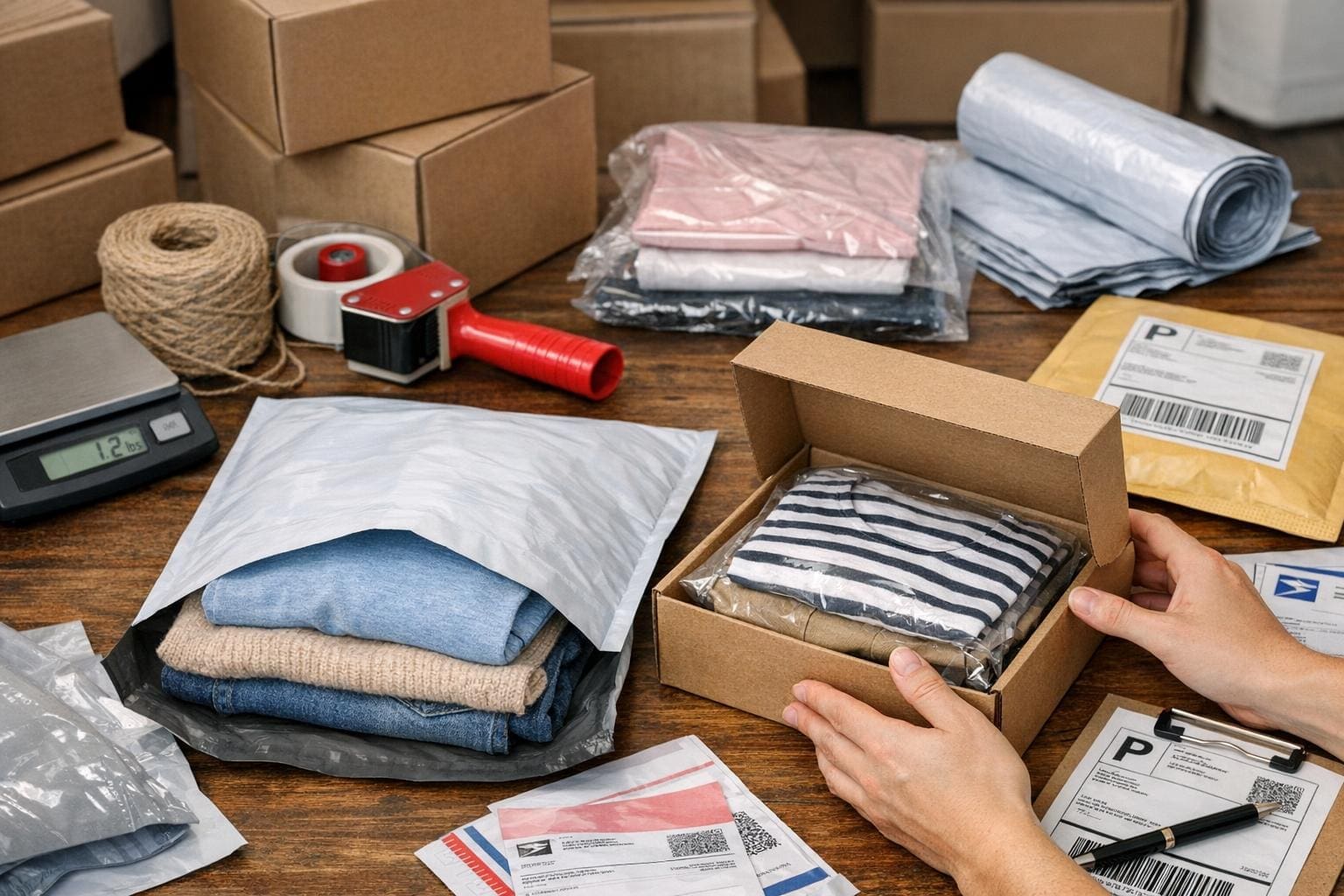
Reducing package volume and weight is the most direct method to lower cost. Lightweight poly mailers, compression bags, and carefully folding garments can reduce both actual weight and dimensional weight. Be mindful of carrier packaging rules: some services require rigid packaging for certain items, and fragile or high-value garments may warrant protective packaging and insurance, which will affect the cheapest way to ship clothes calculation.

#### Use Carrier-Provided Packaging When Appropriate
Some carriers provide free boxes and envelopes for specific services. If the provided dimensions suit the shipment and do not inflate dimensional weight, using carrier-supplied packaging can be an inexpensive option that simplifies label printing and drop-off.

### Leverage Discounts, Presets, And Third-Party Platforms
Third-party shipping aggregators and marketplaces frequently offer discounted clothes shipping rates due to volume contracts. Small businesses or individuals can often save by printing labels through these platforms and selecting ground or economy service levels. Additionally, negotiate or inquire about commercial base rates if shipping regularly; small per-parcel savings compound quickly.

### Remedy 1: Vacuum-Compression Packing For Bulk Savings
Required Materials:
– Commercial vacuum storage bags sized to garment dimensions
– Hand-held vacuum or central vacuum with appropriate adapter
– Sturdy poly mailers or corrugated boxes
– Packing tape and a marker

Preparation And Application Steps:
1. Fold garments uniformly to minimize trapped air; place items inside a vacuum bag without overfilling.
2. Seal the bag according to manufacturer instructions, ensuring the zipper is fully closed.
3. Attach the vacuum hose to the valve and extract air until the bag is visibly compacted; close the valve.
4. Place the compressed bag into an appropriately sized poly mailer or small box, selecting the smallest packaging that accommodates the compressed contents while meeting carrier rules.
5. Apply packing tape and label the parcel; measure and weigh the final package accurately to obtain an exact clothes shipping rate before finalizing payment.

This method is formal and methodical: vacuum-compression reduces dimensional weight and actual weight incrementally, making it one of the most reliable ways to lower fees for bulky textiles such as sweaters, coats, or linens when the garment tolerates compression.

### Remedy 2: Roll And Layer Packing For Individual Garments
Required Materials:
– Lightweight tissue paper or thin plastic wrap
– Bubble wrap only if protection is required
– Lightweight poly mailers (express or standard)
– Flexible scale and tape measure

Preparation And Application Steps:
1. Lay the garment flat and smooth out wrinkles; place a sheet of tissue paper to preserve finish if needed.
2. Roll the garment tightly from one end to the other to produce a cylindrical bundle that occupies less volume than folding.
3. Wrap the roll in tissue or thin plastic to maintain shape; avoid bulky protective materials unless necessary.
4. Insert the roll into a poly mailer sized to the roll’s dimensions, choosing a mailer that minimizes excess empty space.
5. Record the parcel’s weight and dimensions and compare available services to select the most economical clothes shipping rate for the resulting size class.

This packing remedy is particularly effective for shirts, thin trousers, and lightweight dresses and is presented with precise steps to ensure consistency and reproducible savings.

### Utilize Regional And Hybrid Services For Cost Efficiency
Regional carriers and hybrid services (where a private carrier picks up and the national postal service completes last-mile delivery) frequently provide unusual savings for specified routes. For cross-town and intrastate deliveries, regional carriers may offer the lowest clothes shipping rate. Hybrid options often present the cheapest way to ship clothes for e-commerce sellers because they combine low pickup costs with affordable final delivery.

#### Assess Delivery Speed Versus Cost
Cheapest does not always mean fastest. When time permits, choose economy or ground services and select slower transit times. Adjusting expectations for delivery speed remains the simplest way to obtain the most favorable clothes shipping rate across carriers.

### Accurate Labeling And Documentation To Avoid Fees
Incorrect labeling, under-declared weight, or missing documentation can lead to surcharges and returns that negate initial savings. Use a calibrated scale, verify addresses with a standardized format, and select the correct customs categories for international clothes shipping. Where applicable, include a clear packing list. These administrative steps are essential to maintaining the projected clothes shipping rate and ensuring the chosen cheapest way to ship clothes remains the actual final cost.

### Timing, Bulk Consolidation, And Seasonal Considerations
Shipping rates fluctuate with demand. Plan shipments during off-peak periods if possible, and consolidate multiple items into single shipments when weight-based pricing yields net savings. Seasonal spikes—holiday periods and end-of-season clearances—often increase base rates; scheduling shipments outside these windows will frequently identify the cheapest way to ship clothes.

#### Consider Insurance And Liability When Valuing Savings
When pursuing the cheapest way to ship clothes, do not omit cost components tied to insurance and liability. Low-cost services may limit indemnity for lost or damaged goods. For high-value clothing, consider purchasing additional coverage or using a higher-tier service whose base clothes shipping rate is higher but which reduces financial exposure.

### Packaging Materials And Tools Checklist
Required Materials:
– Lightweight poly mailers in several sizes
– Vacuum storage bags and adapter
– Packing tape, label printer or clear labels
– Flexible postal scale and tape measure
– Protective tissue or thin plastic for delicate fabrics

Step-By-Step Use:
1. Select packaging sized to the compressed or rolled garment.
2. Use vacuum or rolling techniques to reduce volume.
3. Weigh and measure accurately; account for dimensional weight.
4. Compare carrier rates using updated calculators.
5. Choose the service and print the label through a discount platform if available.

Adherence to these steps formalizes the operational process and helps ensure consistent attainment of the cheapest way to ship clothes for repeated shipments.

### Practical Example: Calculating A Low-Cost Shipment
To illustrate, compress three sweaters using vacuum bags into a single poly mailer and weigh the final package. If dimensional calculations place the shipment in a lower weight tier, the clothes shipping rate can drop substantially compared with shipping the same garments in an inadequately sized box. Document the dimensions and cost per parcel, then iterate with alternate packaging strategies to find the optimal balance between protection and minimal clothes shipping expense.

Follow these recommendations and systematic remedies to identify and implement the cheapest way to ship clothes for a variety of garment types and shipping scenarios.

Budget Alert: Economical Shipping Options For Heavy Packages

economical shipping options for heavy packages

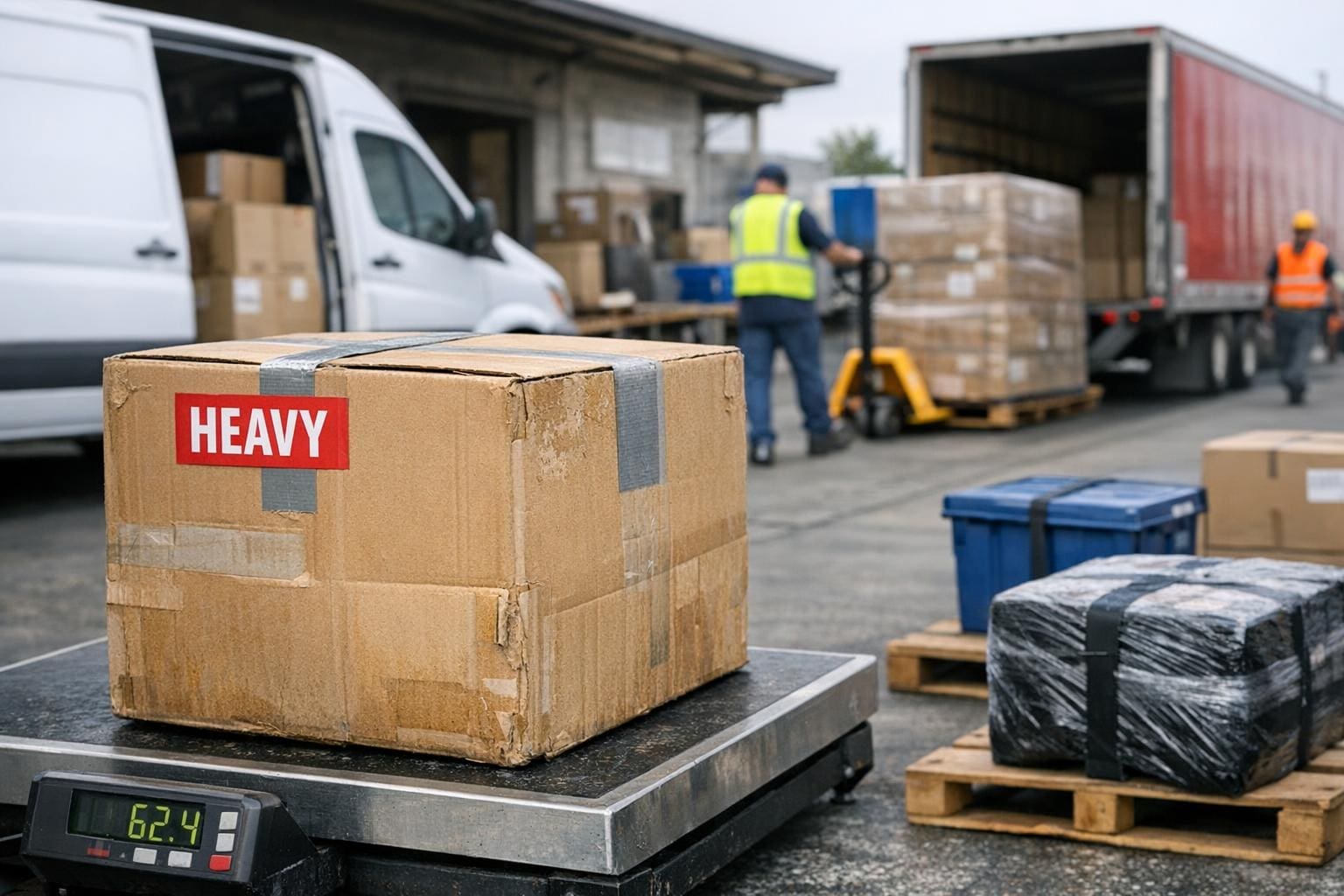
The freight bill just landed and your jaw dropped—those sky-high charges for that one bulky crate feel like a ransom demand. The good news? You don’t have to surrender your budget. The secret is choosing the right carriers, packing smarter, and exploiting lesser-known channels that slash costs without sacrificing safety. Read on if you want to transform sticker shock into savings and discover economical shipping options that actually make sense.

## Economical Shipping Options For Heavy Packages: 7 Shockingly Cheap Ways
Freight is not fate. Here are seven high-impact economical shipping options for heavy packages that can cut costs dramatically.

1) LTL (Less-Than-Truckload) Consolidation
– Why It Works: Your freight shares trailer space with other shippers, so you pay only for the portion you use.
– Best For: Medium-weight pallets and multi-piece loads that don’t need an entire truck.
– Note: Dimensional weight rules still apply. Accurate measurements and palletization are crucial to avoid surprise charges.

2) Freight Brokers And Online Marketplaces
– Why It Works: Brokers aggregate multiple carriers and negotiate bulk discounts. Marketplaces let you compare dozens of bids in minutes.
– Best For: Irregular routes, spot quotes, and one-off heavy shipments.
– Caution: Screen brokers for credentials and read guarantees about claims handling.

3) Regional Carriers And Shorthaul Specialists
– Why It Works: Regional carriers dominate local lanes and often undercut national players on price and delivery times.
– Best For: Routes within a specific region where density allows competitive pricing.
– Extra: Ask for regional LTL or guaranteed economy options.

4) Pallet Rate And Density Pricing Strategies
– Why It Works: Standardizing on pallets and maximizing density reduces per-unit handling and dimensional penalties.
– Best For: Repeated shipments with predictable dimensions.
– Tip: Use standardized pallet sizes to fit carrier rules and reduce manual handling fees.

5) Freight Forwarders And Ocean/LTL Intermodal Moves
– Why It Works: For cross-border or international heavy shipments, combining ocean plus inland trucking reduces air freight costs dramatically.
– Best For: International heavy package shipping where transit time is flexible.

6) Postal And Parcel Hybrids
– Why It Works: National postal services sometimes offer competitive large-parcel programs for heavy weight bands.
– Best For: Non-urgent domestic heavy package shipping that fits postal weight/dimension tiers.

7) Contracted Volume Discounts And Annual Agreements
– Why It Works: If you ship regularly, carriers will negotiate tariffs and surcharges under contract.
– Best For: Businesses with predictable monthly heavy shipments.

### What Drives Wild Price Swings In Heavy Shipments
Carriers aren’t just greedy—there are systematic reasons rates balloon:
– Dimensional Weight Rules: Large but lighter-than-expected packages are priced on volume, not mass.
– Origin/Destination Accessorials: Residential pickups, liftgate service, and limited access delivery add fees.
– Fuel Surcharges And Seasonal Demand: Rates spike with fuel price surges and holiday season capacity crunches.
Knowing these levers lets you target the cost drivers directly.

### How To Calculate The Real Cost Before You Book
To compare options, calculate a standardized landed rate:
– Step 1: Weigh and Measure Accurately (use calibrated scales and measure length×width×height).
– Step 2: Calculate Dimensional Weight: Carrier-specific formula—be sure to use the prospective carrier’s divisor.
– Step 3: Add Accessorial Estimates: Liftgate, residential, reconsignment, and handling fees.
– Step 4: Factor Transit Times And Insurance: Faster isn’t always worth the premium; insure appropriately for value.
When you compare apples to apples, the cheapest headline rate often isn’t the cheapest final bill.

## 2 DIY Remedies To Slash Costs On Heavy Shipments
These two remedies give practical, repeatable ways to lower your bills. Presented formally: materials lists and step-by-step application for each remedy follow.

### Remedy 1: Optimize Packaging And Palletization
#### Materials And Tools
– Standard-sized pallets (48″×40″ or regionally standard)
– Quality shrink wrap and pallet banding/strapping
– Edge protectors and corner boards
– Void-fill (recyclable foam or paper)
– Measuring tape and calibrated floor scale
– Heavy-duty cartons sized to product grouping
– Pallet jack or forklift access for staging

#### Step-By-Step Application
1. Group Products By Size And Weight: Consolidate items that fit together into uniform pallet loads to reduce irregular dimensions.
2. Choose Standard Pallet Size: Use the carrier’s standard pallet to minimize special handling and fit into standard trailer racking.
3. Stack For Density: Place heavier items on the bottom and pack tightly to reduce airspace; fill voids with recyclable fillers.
4. Protect Corners And Faces: Apply corner boards and edge protectors before strapping to prevent damage and reduce claims.
5. Secure With Strapping And Stretch Wrap: Use cross-strapping patterns; fully wrap top and bottom to lock the unit together.
6. Label Clearly And Include Handling Notes: Note “Do Not Double-Stack” or “Center Of Gravity” if needed to avoid rehandling fees.
7. Measure And Weigh Post-Palletization: Record final dimensions and actual weight—use these figures when requesting quotes.

This remedy reduces dimensional weight penalties, minimizes damage claims, and often qualifies shipments for pallet-rate discounts. The approach is formal, repeatable, and measurable.

### Remedy 2: Consolidate And Time Your Heavy Shipments
#### Materials And Tools
– Shipping manifest template and product SKU list
Inventory report and demand forecast
– Access to freight marketplace or broker contacts
– Calendar for scheduling and cut-off dates

#### Step-By-Step Application
1. Audit Your Shipping Frequency: Identify shipments that can be delayed a few days without disrupting operations.
2. Consolidate Multiple Orders Into One Move: Combine single heavy shipments going to the same region into a single consolidated load.
3. Use Scheduled Weekly Loads: Set a recurring pickup cadence with a carrier or broker for predictable lanes to unlock lower rates.
4. Coordinate With Partners: Ask suppliers and customers if delivery windows are flexible to enable consolidation.
5. Solicit Multiple Quotes For The Same Consolidated Load: Provide the same standardized manifest to brokers and carriers for direct comparison.
6. Negotiate Volume Commitments: Offer predictable monthly volume in exchange for lower base rates and reduced accessorials.

Consolidation lowers per-unit costs, improves trailer utilization, and gives negotiating leverage—particularly for businesses with recurring heavy shipments.

### When To Use Each Remedy
– Use Packaging Optimization when dimensional weight or damage claims are eating your margins.
– Use Consolidation and Timing when you can accept slightly longer transit times for substantially lower per-shipment rates.

### Tools And Platforms That Let You Price-Shop Like A Pro
Shocking discovery: you no longer have to trust a single carrier’s quote. Use multi-carrier platforms and freight marketplaces to compare real-time offers. Look for tools that integrate:
– Dimensional weight calculators
– Instant LTL and FTL quoting
– Carrier scorecards and tracking integrations
These tools are essential for anyone trying to discover economical shipping options for heavy packages without manual phone calls and email chains.

### The Hidden Fees That Devour Savings
Most shippers forget accessorials and reweigh policies. Common traps:
– Reweigh And Re-measurement Claims: If your package differs from shipper-provided dimensions, you’ll be billed the higher measured rate.
– Address Correction And Residential Delivery Fees: Many warehouses are commercial; mislabeling costs money.
– Pallet/Packaging Reuse Fees: Some carriers charge for non-standard pallet types.

#### Pro Tips To Avoid These Traps
– Pre-measure using carrier divisors to pre-calculate dimensional weight.
– Use commercial pickup addresses where possible.
– Standardize pallet and packaging types to carrier-accepted specifications.

### Negotiation Tactics That Actually Work
Carriers respond to volume, predictability, and clarity. Present them:
– A documented shipping profile (weights, dims, lanes)
– Forecasted monthly volume and seasonal peaks
– A willingness to commit to quarterly reviews and performance metrics
These formalized data points give you leverage to secure contract rates and limit surcharge volatility.

### Real-World Case Study: Slash Costs By Combining Two Strategies
A mid-sized retailer reduced annual freight costs by 28% after:
– Standardizing pallet sizes and palletizing 90% of outbound loads.
– Switching 40% of lanes from national LTL to regional carriers.
– Setting up weekly consolidation pickups for three distribution corridors.
This demonstrates how packaging and carrier selection compound savings—precisely the advantage of pursuing economical shipping options for heavy packages.

### What To Ask Before You Book
– Will this carrier reweigh or re-measure at origin or destination?
– What accessorials are likely for my pickup and delivery locations?
– Are liftgate services included or extra?
– Is insurance or released value included, and what’s the rate?

Knowing the answers prevents post-shipment sticker shock and keeps your accounting predictable.

### Final Notes On Cost Versus Time Tradeoffs
Speed costs money. If your operation can tolerate slower transit, you can often choose slower economy lanes or intermodal moves that are a fraction of expedited truckload pricing. Balance customer expectations against the clear financial benefits of alternative economical shipping options for heavy packages.

How To Ship Small Packages Cheaply: A Budget Guide

how to ship small packages cheaply

Shipping small items for less requires planning, carrier knowledge and a few practical tricks. This guide explains how to ship small packages cheaply, compares carrier options, and provides formal, step-by-step remedies you can implement today to lower per-item costs without sacrificing safety or delivery speed.

## How To Ship Small Packages Cheaply: Practical Strategies
Shipping costs are influenced by weight, dimensions, declared value, service level and how you purchase postage. Whether you sell online, send gifts, or manage occasional parcels, learning how to ship small packages cheaply saves money and reduces customer complaints. This section outlines the core strategies that consistently cut costs.

### Understand Pricing Rules And Weight Breaks
Carriers price parcels by actual weight and dimensional (DIM) weight. DIM weight becomes important when boxes are large but light. For very small parcels, staying under key weight thresholds (for example, 13 ounces for some USPS services or one pound for others) can unlock lower rate classes. Learn each carrier’s breaks and design packaging to match them.

### Choose The Right Service For Parcel Size And Speed
Different services exist for small package shipping: USPS First-Class Package, USPS Priority Mail Flat Rate (sometimes economical for heavier small items), regional rate boxes, UPS Ground, and various consolidators. For light items under a certain weight, First-Class Package Service (USPS) is often the cheapest option. Compare transit time versus price when selecting a service.

### Use Carrier Rate Calculators And Comparison Tools
Always price-check using carrier calculators and third-party tools. ShipStation, Pirate Ship, Easyship, and others display multiple options and discounts, letting you compare small package shipping costs side by side. Using online postage vendors can reveal the lowest available negotiated rates for the same parcel.

### Leverage Commercial And Discounted Postage
Buying postage online unlocks commercial rates that are typically lower than retail counter prices. If you ship multiple small packages, opening accounts or using marketplaces (eBay, Etsy) often gives automatic discounted rates. For occasional shippers, services like Pirate Ship provide free access to USPS Commercial Plus pricing.

### Optimize Packaging To Reduce Billable Size
Small package shipping costs rise with package dimensions. Use appropriately sized padded envelopes, poly mailers or small boxes instead of oversized boxes padded with excess filler. Eliminating empty space minimizes dimensional weight and can move a parcel into a cheaper pricing bracket.

### Negotiate Or Use Consolidators For Volume
If you ship frequently, request a rate review with carriers or use consolidators that pool shipments to obtain retailer-grade discounts. Consolidators can be especially useful for international small package shipping where individual rates would otherwise be high.

### Timing And Drop-Off Choices Matter
Drop off at carrier facilities or schedule pickups strategically. Some carriers waive pickup fees for certain accounts; others offer lower rates if you print postage and drop at authorized locations rather than using counter service. Avoid last-minute rushes that result in expedited and costly upgrades.

## Compare Carriers And Services For Small Item Savings
### USPS Options For Lightweight Parcels
USPS First-Class Package Service is often the best choice for small, light packages under 16 ounces (verify current limits), delivering low per-item costs. Priority Mail Flat Rate can be cheaper when an item is dense and close to or above typical First-Class weight limits. Regional Rate Boxes are another cost-effective option for short-distance, heavier small packages.

### UPS And FedEx Alternatives
UPS Ground and FedEx Ground can be cost-effective for heavier small packages or business accounts with negotiated pricing. For time-sensitive deliveries, compare ground transit times with USPS first-class or regional services to avoid overpaying for speed you don’t need.

### Marketplace And Third-Party Rates
Third-party shippers and marketplaces often provide lower small package shipping rates than retail counters. Use their label-printing tools to access commercial rates and built-in tracking without setting up large accounts.

## Remedy 1: DIY Lightweight Packaging (Formal Procedure)
When your primary goal is cheap shipping for small items, creating lightweight, secure packaging is a fundamental remedy. Follow this formal, step-by-step method to reduce dimensional weight and raw weight while protecting contents.

#### Materials Required
– Padded mailers or lightweight corrugated boxes sized to the item
– Bubble wrap or thin foam sheets
– Packing tape (strong, lightweight)
– Scissors or utility knife
– Ruler or measuring tape
– Scale accurate to ounces
– Poly bags for moisture protection (optional)

#### Step-By-Step Creation And Application
1. Select a container that closely matches the item dimensions; avoid surplus internal voids.
2. Place the item in a thin poly bag if needed for moisture protection.
3. Wrap the item in minimal cushioning (bubble wrap or foam) ensuring protection at corners without adding bulk.
4. Insert the wrapped item into the selected mailer or box. If the item still moves significantly, add small, lightweight padding to stabilize—avoid dense void fill.
5. Seal seams with packing tape, reinforcing stress points and corners.
6. Measure length, width, and height precisely; record and weigh the package on your scale.
7. Compare weight and dimensional measurements against carrier thresholds to choose the cheapest eligible service.
8. Print postage online using a commercial-rate tool if available, and drop off or schedule carrier pickup.

## Remedy 2: Dimension Optimization And Labeling Workflow (Formal Procedure)
Small package shipping costs often hinge on billing dimension calculation and administrative mistakes. This remedy focuses on standardizing measurement and labeling processes to consistently achieve the lowest lawful rates.

#### Materials Required
– Durable scale (for accuracy to the ounce or gram)
– Tape measure or box gauge
– Preprinted address labels or label printer
– Computer with carrier rate tool access or third-party shipping software
– Permanent marker and barcode-friendly labels (if required)

#### Step-By-Step Creation And Application
1. Establish a measurement station with a flat surface, scale and tape measure.
2. Train staff or adopt a consistent routine: measure length, width and height in the largest orientation and round up to carrier guidelines only where required (avoid unnecessary rounding up).
3. Weigh each parcel after sealing to capture true billable weight.
4. Enter exact dimensions and weight into your chosen rate tool. Use commercial rate accounts to reveal discounted options.
5. Choose the lowest-cost service that meets delivery requirements; prioritize services intended for small package shipping.
6. Print clear address and return labels using a label printer; ensure barcodes are unobstructed and that fragile labels are placed appropriately.
7. Maintain a log of shipments and costs to identify trends and further optimization opportunities.

### International Considerations For Small Parcels
For cross-border small items, customs forms and declared value affect price and processing. Use simplified customs forms where applicable and ensure accurate descriptions to prevent delays. Compare international small packet options (e.g., USPS First-Class Package International) against courier economy services for the best balance of price and tracking.

### Packaging Materials That Save Money
Choose materials that are both protective and low-weight: padded poly mailers, bubble wrap sheets instead of bulky pillows, and appropriately sized rigid mailers for flat items. Buying materials in bulk reduces per-unit costs and improves packaging consistency.

### Tracking, Insurance, And Declared Value Decisions
If an item’s replacement cost is minimal, consider forgoing optional insurance for cheaper shipping, but weigh customer expectations. Tracking is often included with low-cost services; where it isn’t, inexpensive tracked options increase buyer confidence with modest incremental cost.

### Final Operational Tips For Lowering Per-Item Costs
– Batch label printing to capture volume discounts.
– Analyze returns and packaging waste to identify further savings.
– Monitor carrier network changes and seasonal surcharges that affect small package shipping.
– Educate customers on delivery time expectations to reduce expedited service requests.

Use the principles and formal remedies above to consistently learn how to ship small packages cheaply while keeping packages secure and customers satisfied.

Flat Rate Vs Your Own Box USPS: A Savvy Shipping Guide

flat rate vs your own box usps

A parcel sits on the threshold like a small, impatient animal — eager, valuable, and forever asking: how will you get it there affordably? The choice between a predictable flat-fee shelter and the flexible but calculating world of bespoke boxes is a little like choosing between a trusty leash and free-roaming time at the park. Understanding flat rate vs your own box usps isn’t just arithmetic; it’s strategy.

## The Shipping Dilemma: Flat Rate Vs Your Own Box USPS
Choosing between flat rate vs your own box usps often comes down to a few core realities: weight, dimensions, fragility, and predictability. The USPS flat rate option promises a set price regardless of weight (within box limits), while your own box invites measurement, weighing, and a bit of shipping math. For small businesses, artisans, and anyone who ships regularly, this decision can shave months off postage budgets or add hundreds in unexpected costs.

### How USPS Flat Rate Works
The usps flat rate system is simple in principle. You select a USPS-branded flat rate box or envelope, pack up to the allowed capacity, and pay the published flat fee. Size categories (small, medium, large, legal flat rate, padded envelope, etc.) determine the price. Distance doesn’t change the cost for Priority Mail Flat Rate items, which makes this a compelling option when shipping heavy but compact goods.

### When Your Own Box Makes Sense
Using your own box becomes advantageous when items are light but bulky, or when exact dimensions push the shipment outside of flat rate size/value parity. If a customized box allows you to avoid paying for unused volume or to use a lighter package material, your per-shipment savings can add up quickly. Assessing when to use your own box requires precise measurement, a reliable scale, and an eye for negotiation between dimensional weight and actual weight.

### Cost Factors To Consider
Not every shipment is created equal. Consider these cost drivers before deciding:
– Actual Weight Versus Dimensional Weight: Dimensional pricing can turn a seemingly light package into a costly one.
– Zone And Distance: Outside flat rate, zone-based pricing scales with distance.
– Frequency: High-volume shippers can leverage discounts and carrier relationships; single shipments might favor flat predictability.
– Insurance And Tracking Needs: Flat rate typically includes basic tracking; higher declared values require additional fees.
Evaluating flat rate alternatives alongside these factors helps reveal the true bottom-line choice.

## 2 Remedies: How To Decide And Execute (Flat Rate Vs Your Own Box USPS)
When the shipping question becomes pressing, apply one of two remedies below. Each remedy lists required materials and steps to implement the solution with clarity and compliance. These remedies are written in a formal, practical tone to guide accurate execution.

### Remedy 1: Use USPS Flat Rate Boxes
Use this remedy when your item is dense, heavy relative to size, or when you prioritize predictable shipping costs.

#### Materials
– USPS Flat Rate Box/Envelope (appropriate size)
– Packing materials (bubble wrap, paper, void-fill)
– Permanent tape and a tape dispenser
– Shipping label (printed or printed at post office)
– Scale (for internal verification)
– Marker for labeling (if necessary)

#### Steps
1. Select The Correct Flat Rate Product: Choose the flat rate box or envelope that suits the item’s dimensions and fragility.
2. Inspect And Pack: Cushion the item with adequate packing materials to prevent movement. Ensure weight is distributed evenly inside the flat rate container.
3. Verify Fit And Seal: Confirm the item fits without forcing the box closed. Seal securely with tape, covering all seams.
4. Weigh Internally (Optional): Although flat rate ignores weight within limits, weighing verifies compliance with box integrity and prepares you for exceptions if the box is replaced at the counter.
5. Print Or Obtain Label: Purchase postage online for slightly reduced rates or bring the boxed item to a USPS location for drop-off and labeling.
6. Retain Documentation: Save receipts and tracking numbers; flat rate shipments have predictable claims and refund procedures if needed.

This remedy minimizes decision fatigue and is often the right choice for merchants sending jewelry, canned goods, small electronics, or dense books.

### Remedy 2: Ship In Your Own Box With Smart Pricing
Choose this remedy when items are voluminous but light, oddly shaped, or when tailored packaging reduces wasted material.

#### Materials
– Appropriate self-supplied box or mailer
– Accurate postal scale
– Tape and reinforcement materials
– Measuring tape or ruler
– Packing materials (e.g., paper, foam, air pillows)
– Access to USPS online price calculators or a retail counter for rate quotes

#### Steps
1. Measure Precisely: Measure length, width, and height of the packed box. Dimensional weight may apply; use the larger of actual weight and dimensional weight to estimate postage.
2. Weigh Accurately: Place the package on a postal scale and record the exact weight to the nearest ounce or decimal pound.
3. Calculate Rates: Use the USPS online calculator or a third-party rate tool to compare Priority Mail, Retail Ground, and any other services. Consider flat rate alternatives and regional carriers if they provide lower costs for your size/weight.
4. Choose Service Based On Value: Factor in expected transit time, insurance, and tracking. If speed and insurance are priorities, Priority services may be worth the cost; otherwise, lower-cost alternatives can be more economical.
5. Purchase Postage: Buy postage online to access lower commercial prices or obtain it at a retail counter. Affix the label securely, ensuring barcodes are flat and unobstructed.
6. Maintain Records: Keep a log of shipping costs, package dimensions, and destinations to inform future decisions and to spot patterns where flat rate might beat or lose to your own box.

Using your own box requires diligence but often unlocks savings for large, lightweight shipments where flat rate pricing would overcharge for unused volume.

### When To Reevaluate And Use Flat Rate Alternatives
Shipping ecosystems shift with fuels, policies, and seasonal surcharges. Regular reassessment of flat rate vs your own box usps is essential. Track a sampling of shipments monthly, compare actual spend against theoretical flat rate pricing, and explore flat rate alternatives such as regional carriers, USPS Retail Ground, or negotiated commercial rates if volume justifies it. Automated tools can streamline comparisons and flag when one method consistently outperforms the other.

### Practical Tips To Optimize Either Choice
– Consolidate items where possible to use one flat rate box rather than multiple shipments.
– Standardize packaging sizes to reduce costly dimension variability.
– Use protective inserts to reduce damage and insurance claims, which indirectly lower overall shipping costs.
– Keep an eye on promotional or seasonal flat rate pricing; periodic changes can temporarily tip the balance.
– For small businesses, consider a shipping audit every quarter to reassess whether flat rate alternatives or your own-box strategy yields better margins.

Shipping is part logistics, part psychology. Flat rate vs your own box usps will remain a repeated decision on your to-do list; with measurement, record keeping, and the right remedy applied to the right package, you can ship smart and confidently without losing sleep over postage.