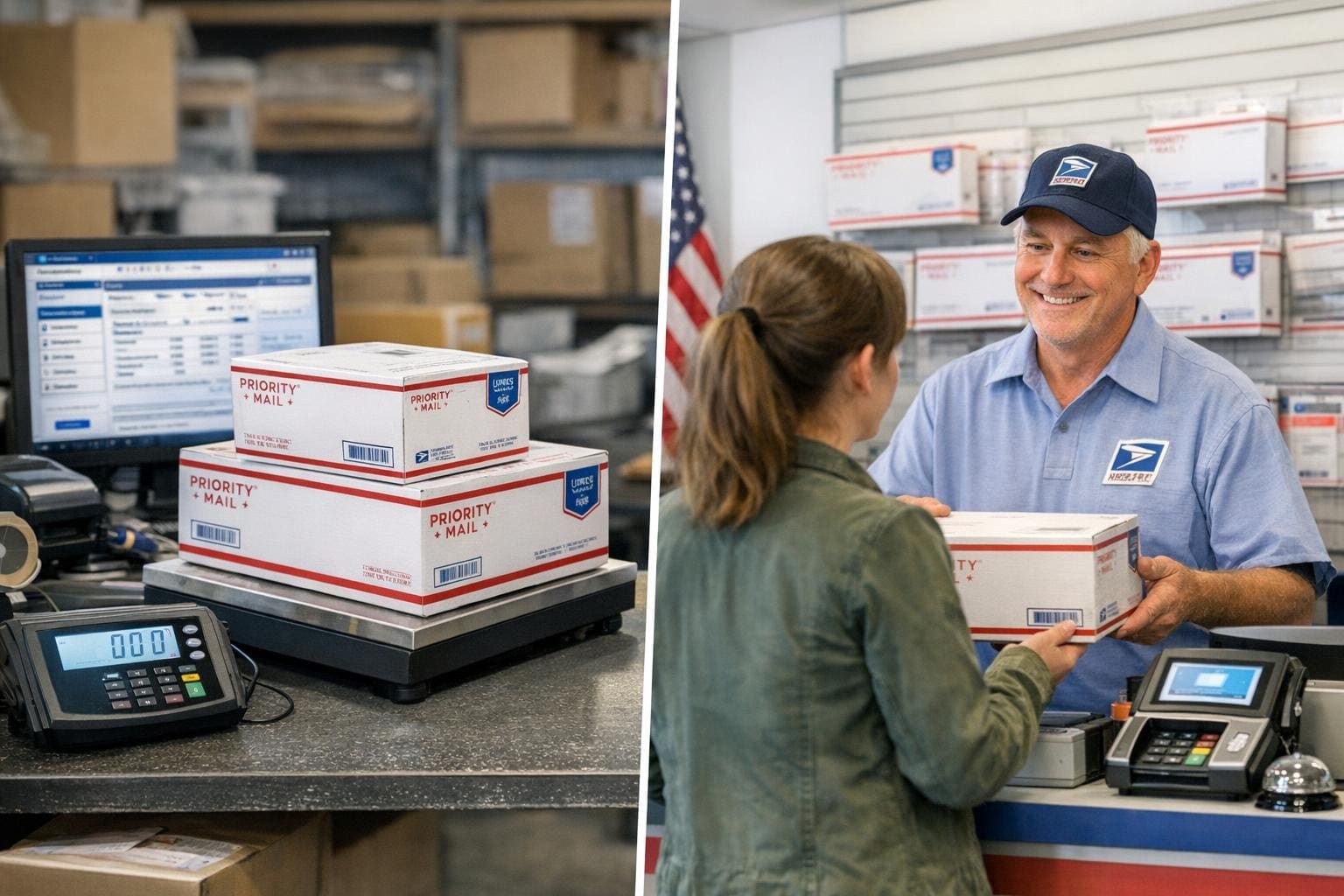
USPS Commercial Rates Vs Retail Rates: The Insider Edge

usps commercial rates vs retail rates

The secret is out: small businesses and savvy sellers have been quietly siphoning off massive savings from a giant most people think of as “just the post office.” Once you hear the numbers, you’ll feel cheated — unless you learn the insider tricks that turn postage from a profit-sink into an advantage that feeds your bottom line.

## USPS Commercial Rates Vs Retail Rates: The Insider Edge
The showdown you didn’t know you needed: usps commercial rates vs retail rates. This isn’t just a few pennies here and there. It’s a multi-billion-dollar gap carved into the way postage is sold. Retail vs commercial battles daily over how much you pay for the exact same Priority Mail box or First-Class envelope. When the scales tip in favor of commercial methods, businesses pocket discounts so dramatic they can undercut competition or absorb shipping with no margins lost. For anyone who ships more than a couple of packages a month, ignorance here is expensive.

### Why The Difference Feels Like Theft
Hear this and shudder: the Postal Service charges different prices for identical services based entirely on how you buy them. Walk into a Post Office and pay at the counter? That’s retail pricing. Print your label online through a USPS-approved vendor, or use a permit imprint or postage meter? That’s where usps commercial rates live, sometimes offering discounts of 20% or more on popular services. This isn’t a complex tax — it’s a distribution of convenience and volume discounts, and the Postal Service has structured its rates to reward electronic acceptance, automation, and volume.

### The Mechanics Behind The Discounts
The logic is straightforward and coldly efficient. Commercial rates exist because online shipping and permit systems reduce labor costs and speed handling. Those efficiencies translate into reduced fees. So when you compare usps commercial rates vs retail rates, you’re really comparing the cost of manual handling and counter-service overhead versus streamlined, automated fulfillment. Add in high-volume bargains like Commercial Plus and the gap widens even more.

#### How Big Is The Gap?
An illustrative example: a 2 lb Priority Mail parcel could cost $8.50 via commercial base pricing but $11.25 at retail — numbers that vary with zone but demonstrate the magnitude. Multiply that by dozens or thousands of shipments each month and you get the astronomical real-world impact.

## The Hidden Triggers That Move You Into Commercial Pricing
Some sellers assume that only Fortune 500 companies can access discounts. Not true. Several triggers can move an account into commercial pricing territory:
– Using Click-N-Ship, PC Postage, or permit imprint
– Paying via online postage vendors and printing barcoded labels
– Meeting minimum monthly volumes for Commercial Plus tiers
These are the operational keys — not political connections or secret handshakes.

### Retail Vs Commercial: Common Pitfalls
The retail vs commercial conflict often boils down to three avoidable mistakes:
1. Paying at the counter instead of printing labels ahead of time.
2. Using non-integrated solutions that force manual processing.
3. Ignoring third-party postage options where valid.
Avoid those and you neutralize the most common traps that keep businesses paying retail when commercial would save them.

## How To Claim Commercial Rates (The Remedy)
This section describes a practical, formal set of steps to obtain commercial pricing. Follow precisely to transition from retail to commercial rates efficiently and compliantly.

#### Required Materials And Information
– Legal business name and address
– Employer Identification Number (EIN) or Social Security Number (for sole proprietors)
– USPS business account registration (e.g., Business Customer Gateway)
– Scale capable of weighing packages accurately
– Computer with internet access
– Thermal label printer or standard printer and label stock
– Optional: Permit imprint or postage meter (for permit-based postage)
– Optional: Account with a PC Postage provider or approved reseller (Stamps.com, Endicia, ShipStation, etc.)

#### Step-By-Step Enrollment And Application
1. Register Your Business Account
– Create an account on the USPS Business Customer Gateway. Use your business name and EIN to ensure your shipping profile is recognized as commercial.

2. Choose A Commercial Method
– Decide whether to use Click-N-Ship Business, a PC Postage provider, a permit imprint, or an approved shipping platform. Each grants access to commercial base rates; high-volume users should investigate Commercial Plus eligibility.

3. Acquire Necessary Hardware
– Obtain a certified scale and a reliable label printer. Accurate weights and machine-printed labels are prerequisites for online postage and help avoid reweigh charges.

4. Integrate Software Or Vendor Services
– Set up your chosen provider. Enter package dimensions, weight, and service preferences. Configure account billing and ensure USPS-acceptable manifesting.

5. Test And Validate
– Print several labels and process them through your normal shipping flow. Verify that the postage printed reflects commercial pricing and that tracking numbers scan correctly at drop-off or pickup.

6. Implement Best Practices
– Always pre-print labels when possible. Use address validation tools to reduce returns. Schedule pickups or use permit-based drop-offs to maximize automation.

7. Monitor Volume And Apply For Deeper Discounts
– Track monthly shipments. As volume grows, contact USPS regarding Commercial Plus or other negotiated rates. Provide shipping manifests and historical data when requested.

8. Maintain Compliance
– Keep records of postage usage and manifests per USPS requirements. Ensure non-compliance does not trigger retroactive charges.

Follow these steps to systematically migrate your operation from retail pricing to the efficiencies of commercial rates.

### When Commercial Plus Matters
If your monthly volume climbs, Commercial Plus pricing can deliver even larger savings but requires more negotiation, data sharing, and sometimes contractual arrangements. Prepare shipment data and projected volumes in advance; transparency helps secure superior tiers. This part of switching to commercial can be technical — enlist your shipping platform or a consultant if necessary.

## Real-World Examples That Feel Like Insider Trading
Imagine an Etsy shop selling 500 small sculptures monthly. By printing labels online through a PC Postage provider, the owner moves from retail to usps commercial rates and reduces shipping cost by an average of $2.75 per package. That’s $1,375 monthly in reclaimed margin — enough to hire help, advertise, or simply expand SKU variety. This is not hypothetical; it’s the everyday outcome for sellers who move method rather than mind.

### Beware Of The Myths
Don’t be fooled by three persistent myths:
– Myth 1: You need massive volume to access commercial pricing. False — small businesses can access commercial base rates today through online tools.
– Myth 2: Commercial rates are a trap with hidden fees. Not inherently; transparency is the key. Use reputable vendors and monitor invoices.
– Myth 3: Switching costs outweigh savings. Often the opposite; initial setup is minor and savings recur.

## Tactical Tips For Maximizing The Insider Edge
– Consolidate shipments where feasible to reduce per-package zone pricing.
– Use regional rate boxes or flat-rate where the math supports it — sometimes retail flat-rate is still better for heavy but short-distance shipments, so know when to choose.
– Audit postage monthly. Even small misconfigurations add up.
– Leverage address validation and automation to cut return and reweigh fees.

### The Final Accounting: Numbers That Bite
When you look at your P&L, shipping is rarely inert. It either drains margin or feeds growth. Transitioning to usps commercial rates is one of the simplest operational changes with measurable impact. The battle of usps commercial rates vs retail rates is not academic — it’s monetary, recurring, and winnable.

#### Quick Checklist Before You Change
– Do you have a business account? If not, create one.
– Are you printing labels electronically? If not, start immediately.
– Is your volume tracked? Prepare data to ask for Commercial Plus if you qualify.
– Are your packaging and scale accurate? Invest here if not.

The gap between retail vs commercial is not a mystery reserved for corporate shipping managers; it’s a lever any informed shipper can pull to gain a decisive edge.


Understanding Why Does Shipping Cost More: Fees & Rates

why does shipping cost more

Rising parcel bills are a fact of modern commerce, and understanding cost drivers helps you control them. Below I explain the main reasons carriers and sellers charge more, how pricing structures work, and two formal, actionable remedies you can implement to lower costs and avoid surprises.

## Why Does Shipping Cost More: The Primary Drivers

Carriers raise prices for predictable and interconnected reasons. Asking why does shipping cost more often leads to a few recurring themes: fuel and energy prices, labor and capacity constraints, and pricing models that favor dimensional weight over actual mass. When you look beyond a single invoice, the combination of these dynamics explains rapid increases in shipping charges.

### Fuel, Labor And Capacity

– Fuel Costs: Transport depends on diesel, jet fuel, and electricity. When fuel markets rise, carriers tack on surcharges or increase base shipping rates.
– Labor Costs: Higher wages, overtime, and training expenses for drivers, sorters and customer support push carriers to adjust shipping rates.
– Capacity Constraints: During high demand periods or supply chain bottlenecks, carriers have fewer trucks and fleets available, which increases marginal cost.

### Pricing Methodologies And Dimensional Weight

Dimensional weight pricing turns bulky but light packages into expensive shipments. Carriers calculate a volumetric weight using package dimensions and charge the greater of actual weight or dimensional weight. Because e-commerce tends to use lightweight packing that still occupies space, carriers capture more revenue this way.

### Service Complexity And Last-Mile Costs

Last-mile delivery is often the most expensive leg. Urban congestion, failed deliveries, and unstructured stops inflate operational time. Carriers may raise shipping rates or add targeted surcharges for residential, rural, or liftgate delivery to reflect that cost.

## Common Line Items That Make Costs Spike

### Fuel Surcharges, Accessorials, And Tariffs

Line items labeled as fuel surcharges, peak season adjustments, or customs duties all contribute. These are often separate from base shipping rates and can be adjusted frequently.

### Dimensional Weight And Packaging Inefficiencies

Packages that are large relative to weight trigger dimensional weight charges. Using oversized boxes or inefficient packing materials increases your bill even when the product itself is light.

### Insurance, Handling, And Extra Services

Add-ons such as declared value insurance, signature confirmation, and special handling count as extra fees. These are optional but often enabled by default on marketplaces or carrier portals.

## How Carriers Set Shipping Rates And Extra Fees

### Contracted Rates Versus Retail Prices

Businesses with volume often negotiate lower, contracted shipping rates. Small shippers frequently see retail or list rates, which are higher. Contract terms, guaranteed volumes, and route consistency influence negotiated pricing.

### Market And Regulatory Influences

Geopolitical events, regulatory changes, and currency fluctuations affect cross-border shipments. Tariffs and customs clearance can appear as sudden jumps in cost that answer the question why does shipping cost more for international orders.

## Remedy 1: Optimize Packaging And Dimensional Weight (Formal Steps)

This remedy targets dimensional weight and packaging inefficiencies that directly cause higher charges. Follow the materials list and steps below formally to reduce volume-based costs.

#### Materials Required

– Accurate tape measure and scale
– Right-sized mailers, boxes, and void-fill materials
– A box calibration chart or dimensional weight calculator (spreadsheet or tool)
– Standard operating procedure (SOP) template for packing

#### Step-By-Step Creation And Application

1. Audit Current Packaging: Measure sample SKUs and record package dimensions and weights for at least 50 shipments across various product types.
2. Calculate Dimensional Weight: For each sample, apply carrier dimensional formula (for example, length × width × height / carrier divisor) to determine which shipments are penalized by dimensional weight.
3. Standardize Box Sizes: Design a set of standardized box sizes that minimize empty space while fitting most SKUs. Implement right-sizing policies so packers choose the smallest approved box that fits.
4. Implement Packing SOPs: Create a formal SOP that includes measurement verification, acceptable void-fill materials (e.g., recyclable paper, air pillows), and instructions to avoid unnecessary packing layers.
5. Train Packing Staff: Conduct formal training sessions and monthly audits. Ensure each packer uses the scale and measures packages before sealing.
6. Reprice Or Repackage Bulky SKUs: For items that remain volumetrically heavy, consider re-engineering product packaging or offering flat-rate shipping for those items to internalize cost.
7. Monitor Results: Track shipment costs per parcel, dimensional weight occurrences, and volume of extra fees. Adjust box sizes and SOPs quarterly.

By following these structured steps, you reduce the frequency of dimensional-weight charges and lower base shipping rates on many shipments.

## Remedy 2: Negotiate Carrier Contracts And Use Multi-Carrier Tools (Formal Steps)

This remedy focuses on reducing base shipping rates and extra fees by leveraging volume, comparison, and automation.

#### Materials Required

– Historical shipping data (6–12 months), including zones, weights, and carrier invoices
– Multi-carrier shipping software or rate-shopping API
– List of target carriers (national, regional, and courier alternatives)
– A negotiation worksheet that outlines current volumes and target terms

#### Step-By-Step Creation And Application

1. Consolidate Shipping Data: Export orders and invoice-level details for the past 6–12 months. Include destination zones, weights, dimensions, declared values, and all line items for extra fees.
2. Analyze Spend And Patterns: Identify high-cost routes, frequent surcharges, and parcel profiles that dominate spend. Quantify monthly parcel counts and trends.
3. Engage Multiple Carriers: Solicit proposals from a mix of national and regional carriers. Present aggregated volume and ask for line-item pricing for base rates, fuel surcharges, and accessorials.
4. Use Rate-Shopping Tools: Implement a multi-carrier shipping solution that performs automated rate comparisons at checkout and for fulfillment selection. Configure rules to select the best combination of price, transit time, and service.
5. Negotiate Contract Terms: With data in hand, negotiate not only lower base shipping rates but also caps on specific extra fees and more favorable dimensional weight divisors where possible.
6. Test And Implement: Pilot contracted rates with a subset of SKUs or regions. Validate invoice accuracy and the functionality of rate-shopping rules.
7. Review Quarterly: Reassess carrier performance and costs quarterly. Ensure contracted guarantees are met and renegotiate as volume changes.

This formal, data-driven approach reduces reliance on a single carrier and lowers average shipping rates while reducing exposure to unpredictable extra fees.

### Using Consolidation And Fulfillment To Reduce Costs

Consolidation services, regional carriers, and distributed fulfillment centers can reduce last-mile distance and avoid peak-season surcharges. When asking why does shipping cost more for long-haul last-mile deliveries, consider whether a network redesign could move inventory closer to customers and thereby reduce average shipping rates.

### When Extra Fees Make Sense

Some extra fees are defensible: declared value for high-cost items or specialized handling for fragile goods can be cheaper than the expected loss via claims. Evaluate fee tradeoffs formally against historic losses to make rational decisions instead of blanket removals.

## Monitoring, Reporting And Continuous Improvement

Track unit shipping cost, average transit time, and frequency of extra fees. Set KPIs and use dashboards that alert when a particular route or SKU crosses a cost threshold. Regular review cycles let you answer why does shipping cost more for specific segments and correct course quickly.

## Practical Consumer Tips To Avoid Surprises

For end customers and small sellers: choose consolidated retailers, plan purchases outside peak seasons, combine items into a single shipment, and verify that any free-shipping offer isn’t offset by inflated product prices. Check carrier policies for dimensional weight and declared value so there are no surprises at checkout.

(End of article — no concluding paragraph provided.)

How Package Dimensions Affect Shipping Weight: A Quick Guide

how package dimensions affect shipping weight

Imagine your box as a small cloud drifting across the postal sky. Two parcels that look the same on a scale can trigger wildly different invoices simply because one is puffier, taller, or oddly shaped. In shipping, space and mass share the spotlight, and a few smart moves can keep your costs grounded.

## How Package Dimensions Affect Shipping Weight: What To Know

When carriers talk about weight, they mean more than the number you read on the bathroom scale. This quick guide explains how package dimensions affect shipping weight in real-world terms and why carriers switch between actual weight and a calculated billed weight. Understanding that switch helps you design packaging that protects your product without padding your bill.

### The Two Weights That Decide Your Bill

Carriers compare actual weight (what you see on the scale) with a billed weight that comes from dimensional formulas. That billed figure is often referred to as dim weight or volumetric weight depending on the carrier and region. The higher of the two becomes the billable weight, so a light but bulky box can cost more than a dense, compact package.

### How Dimensional Calculations Work

Dimensional calculations convert cubic space into a theoretical weight. Carriers measure length × width × height, then divide by a DIM factor (also called a divisor) to get the dimensional number. Common DIM factors vary: domestic couriers often use 139 or 166 for inches-to-pounds; international shippers may use 5000 or 6000 for centimeters-to-kilograms. Because carriers must manage space on trucks and planes, they lean on dim weight logic to charge fairly for bulky items.

#### Dim Weight Versus Volumetric Weight

Terminology can look different across carriers, but the math and intent are consistent. Some carriers label the calculation dim weight; others use volumetric weight. Either way, multiply the three dimensions, divide by the carrier’s divisor, and follow the carrier’s rounding rules. Then compare that number to your actual scale reading. The larger becomes the billable weight.

### Real Examples To Make It Click

A 10×10×10-inch box weighing 8 pounds with a DIM divisor of 139: 10×10×10 = 1000 cubic inches. 1000 ÷ 139 ≈ 7.19 pounds, so billed weight = max(8, 7.19) = 8 pounds. Change shape: a 24×12×8-inch box still at 8 pounds becomes 24×12×8 = 2304 cubic inches. 2304 ÷ 139 ≈ 16.58 pounds; billed weight jumps to 17 pounds after carrier rounding. This demonstrates how package dimensions affect shipping weight even when actual mass stays constant.

### Common DIM Factors And Why They Differ

Carriers set DIM factors to manage available cargo volume relative to routing and pricing structures. Low divisors make dimensional weight more likely to exceed actual scale weight, which pushes bills higher on lighter but voluminous shipments. High divisors suppress dimensional impacts. E-commerce platforms may apply proprietary multipliers, so always confirm the divisor before you add a new packaging format.

#### Measurement Methods And Packaging Considerations

Measure from the longest points, include protective layers that can’t be removed in transit, and round per carrier rules. Excess void space or oddly shaped padding can nudge your package into dim weight territory. Right-sizing is not just about aesthetics: it materially influences your final freight cost.

## How Package Dimensions Affect Shipping Weight In Practice

Sellers who optimize packaging can lower their effective shipping spend substantially. By choosing boxes that fit the product, swapping bulky fills for compact alternatives, and consolidating orders, you reduce the likelihood that the dimensional calculation (often described as dim weight or volumetric weight) will outplace the actual weight. For high-volume shippers, even small millimeter trims across many shipments compound into meaningful savings.

### Creative Packing Strategies

Think like a sculptor—shape matters. Use air pillows only where they stop movement, replace oversized cartons with snug mailers when appropriate, and bundle multiple items into a single properly sized box rather than several half-empty ones. Consider custom inserts that secure product in a smaller footprint. Those creative shifts keep materials functional and bills predictable.

#### When Weight Still Wins

Dense goods like metal components, liquid products, and bulk food are dominated by actual weight. In these cases, dimensional optimizations have limited effect. Always balance protection and space efficiency: underpacking risks damage and returns, which can cost more than a slightly higher shipping fee.

## Calculating Dimensional Weight And Volumetric Weight

Formally, measure length, width, and height in the units required by your carrier. Multiply the three measurements, divide by the carrier’s DIM factor, and apply the carrier’s rounding rules. Compare that figure to your actual scale weight. Whichever number is greater becomes the billable weight. Use carrier-provided calculators or certified scales to avoid disputes. When you know the divisor your carrier uses—whether for dim weight or volumetric weight—you can model scenarios and pick packaging that minimizes the billed weight for the product mix you ship.

### A Practical Remedy To Reduce Billable Weight

Required Materials:
– Accurate tape measure or laser distance tool
– Calibrated shipping scale
– A set of box templates or a cable tie box sizer
– Selection of box sizes and right-sized mailers
– Compact void-fill options (air pillows, foam inserts, tissue)
– Marker and inventory log or simple spreadsheet/app

Procedure:
1. Measure the product in its final packed state: include any fixed protective layers and the box thickness. Record length × width × height, following the carrier’s measurement rules (e.g., round up to whole inches).
2. Compute dimensional weight using your carrier’s DIM factor: (L × W × H) ÷ DIM factor. Round per carrier rules.
3. Weigh the package on a calibrated scale. Compare the scale reading to the computed dimensional weight.
4. If dimensional weight is higher, trial alternate packaging: move to a smaller box, compress or replace bulky fill with low-profile protection, or combine multiple items into a single optimized carton.
5. Repack and remeasure. Document the new L × W × H and scale weight. Repeat steps 2–4 until the billed weight is minimized without compromising product safety.
6. Maintain a small catalog of best-fit box sizes for each SKU or SKU group and update your shipping settings in your e-commerce platform to reflect the optimized dimensions and weights.

This formal, repeatable method directly addresses how package dimensions affect shipping weight by converting packing decisions into measurable outcomes that reduce the billed dim weight or volumetric weight where possible.

### Tools And Apps That Help

Modern shipping tools scan dimensions with smartphone cameras, integrate carrier DIM rules, and suggest box sizes. Many third-party platforms let you set conditional packaging rules—if a parcel fits in Box A use Box A; otherwise use Box B—and automatically pull the correct billed weight at checkout. Automation reduces human error in measuring and ensures your checkout estimates reflect the same computations carriers apply.

### Common Pitfalls And How To Avoid Them

– Using oversize boxes “just in case”: Right-sizing instead of guessing saves repeated cost.
– Forgetting to include permanent packaging layers: If the carrier can’t remove a layer, it counts toward your dimensions.
– Not tracking divisor changes: Carriers can adjust DIM factors; set a reminder to verify periodically.
– Relying on rough scale estimates: Always use a calibrated shipping scale for billing disputes.

Keep records of your optimized boxes, DIM factor assumptions, and a history of carrier invoices so you can spot when dimensions, rather than weight, are driving cost increases. The art of minimizing bills blends practical measurement, the right materials, and a disciplined process that shows exactly how package dimensions affect shipping weight.

How To Calculate Shipping Costs By Weight And Size

how to calculate shipping costs by weight and size

## Understanding Shipping Cost Fundamentals

Shipping cost is the composite of several measurable elements: billed weight, package size, service level, carrier fees, surcharges, and any additional services such as insurance or signature confirmation. For businesses and individuals alike, precision in these components reduces unexpected charges and improves pricing transparency. This article explains in detail how to calculate shipping costs by weight and size, clarifies the role of dimensional weight in carrier pricing, and presents formal procedures for deriving accurate quotes whether you estimate manually or use a shipping rate calculator.

### Key Components That Affect Shipping Cost

Carriers price shipments according to multiple factors:
– Actual weight: the measured mass of the parcel using calibrated scales.
– Dimensional considerations: the volume of the package expressed as cubic inches or centimeters, converted to a billable weight via the dimensional weight formula.
– Distance and zone: carrier-defined zones or distance matrices.
– Service type: ground, expedited, overnight, or freight options.
– Additional services and surcharges: fuel, residential delivery, remote area fees, and peak-season adjustments.

### Why Both Weight And Size Matter

Historically, carriers charged strictly by actual weight. However, modern logistics must account for low-density packages that occupy substantial cargo space relative to mass. To balance space utilization, carriers employ dimensional weight calculations. Understanding both actual weight and dimensional weight is essential to determine the billed weight, which is the higher of the two.

## How To Calculate Shipping Costs By Weight And Size

### Step 1: Measure And Weigh The Package

Accurate measurement begins with a calibrated scale and a reliable tape measure. Record:
– Actual weight (in kilograms or pounds, per carrier requirements).
– Length, width, and height, always measuring at the package’s widest points and rounding up to the nearest whole unit if the carrier requires it.

### Step 2: Compute Dimensional Weight

Apply the dimensional weight formula used by the carrier. The basic formula is:

Dimensional Weight = (Length × Width × Height) / Dimensional Factor

Common dimensional factors:
– Domestic carriers often use 139 (inches) for domestic shipments in the United States.
– International shipments and freight may use different factors, such as 5000 (centimeters).

This section introduces the concept of dimensional weight and why it is applied. When you calculate dimensional weight, round up to the next whole pound or kilogram per the carrier’s rules. The billed weight is the greater of actual weight and dimensional weight.

### Step 3: Determine Billed Weight And Applicable Rate

Once you have actual and dimensional weights, determine billed weight:

Billed Weight = Max(Actual Weight, Dimensional Weight)

Use the billed weight in the carrier’s published rate tables or a digital tool. A shipping rate calculator simplifies this step: enter billed weight, origin and destination, and service level to obtain a precise fee. Many businesses integrate a shipping rate calculator into their checkout process to ensure real-time accuracy.

#### Example Calculation — Domestic Parcel

Assume a parcel measures 18 × 14 × 10 inches and weighs 8 lb.

Calculate dimensional weight:
Dimensional Weight = (18 × 14 × 10) / 139 ≈ 18.1 → Round to 19 lb

Billed Weight = Max(8 lb, 19 lb) = 19 lb

Use the billed weight in the carrier’s rate chart or a shipping rate calculator to obtain the final price, adding applicable surcharges.

### Example Calculation — International Parcel

For a parcel measured in centimeters (50 × 40 × 30 cm) and weighing 12 kg, using a dimensional factor of 5000:

Dimensional Weight = (50 × 40 × 30) / 5000 = 12 kg

Billed Weight = Max(12 kg actual, 12 kg dimensional) = 12 kg

If the dimensional weight exceeded actual weight, the billed weight would be the higher figure.

## Using A Shipping Rate Calculator Efficiently

A shipping rate calculator consolidates carrier rules, rate tables, and zone mappings. When using such a tool:
1. Input accurate measurements and weight.
2. Select origin and destination postal codes.
3. Choose service level (economy, standard, expedited).
4. Add declared value or insurance if required.

Advanced shipping rate calculators also factor volumetric weight automatically, present multiple carrier options, and estimate delivery times. Relying on a shipping rate calculator reduces human error and ensures you apply the correct rate tables and surcharges.

### Integrating Calculator Results Into Pricing

For merchants, embed calculator outputs into order totals and shipper labels. Ensure that the calculator’s dimensional factor matches the carrier you plan to use. Differences between carriers in how they compute dimensional weight can materially change billed weights and therefore cost.

## Packaging And Preparation To Control Costs

Proper packaging reduces the likelihood that dimensional weight will inflate billed weight. Employ these formal recommendations:
– Use appropriately sized boxes to minimize empty volume.
– Choose packaging materials that protect goods without excessive bulk.
– If products are light but large (e.g., textiles), consider folding or vacuum-packing to reduce size.
– Consolidate items when feasible to reduce per-item dimensional overhead.

### Required Tools And Materials For Accurate Measurement

– Calibrated digital scale capable of the maximum expected package weight.
– Rigid tape measure or measuring board to reduce measurement variance.
– Packing calculator or spreadsheet to log dimensions, weight, and computed dimensional weight.
– Access to carrier dimensional factors and rate tables, either via carrier documentation or an online shipping rate calculator.

## Practical Calculation Procedures And Examples

### Procedure: Manual Calculation For One Package

1. Measure length (L), width (W), and height (H) in carrier-preferred units.
2. Weigh the package (Actual Weight).
3. Calculate Dimensional Weight = (L × W × H) / Dimensional Factor, then round per carrier policy.
4. Determine Billed Weight = Greater of Actual Weight and Dimensional Weight.
5. Retrieve the rate for billed weight from the carrier’s rate table or input values into a shipping rate calculator.
6. Add surcharges (fuel, residential, oversized, etc.) and any optional services.

### Procedure: Batch Processing For Multiple Packages

1. Collect measurements and weights for all items.
2. Use a spreadsheet to compute dimensional weight via the carrier’s factor.
3. Flag items where dimensional weight exceeds actual weight.
4. Aggregate costs using a shipping rate calculator API or batch rate tool to produce consolidated invoices.

## Reducing Costs When Dimensional Weight Applies

Dimensional weight frequently increases billed weight for low-density items. To mitigate:
– Repackage to smaller dimensions where product safety permits.
– Use multi-piece consolidation to optimize truck or container space.
– Compare carriers and service levels; lighter-tier services may have different dimensional factors or pricing structures.
– Negotiate terms with carriers if shipment volumes justify bespoke dimensional factors or discounts.

## Compliance And Documentation Requirements

Carriers require accurate declarations of weight and dimensions. Misdeclared dimensions can result in reweighing, re-measuring, and assessed fees. Maintain documentation of measurements and dated photographs when shipment audits are possible. Applying a consistent measurement protocol reduces disputes and supports claims processes when charges appear inconsistent with expectations.

### Audit Best Practices

– Retain records of scale calibration certificates.
– Log measurement steps and personnel responsible for measurement.
– Use a shipping rate calculator with exportable logs to reconcile billed amounts with quoted estimates.

## Final Remarks On Methodology

This formal method for how to calculate shipping costs by weight and size emphasizes measurement accuracy, the correct application of dimensional weight, and the prudent use of a shipping rate calculator. Implementing standard operating procedures for packaging, measuring, and documenting shipments will reduce cost volatility and improve invoice reconciliation for both individual shippers and commercial operations.

Signature Confirmation Vs Certified Mail: The Verdict

signature confirmation vs certified mail

The postal battlefield is heating up, and somewhere between a trembling mailbox and a trembling signature line, destiny hangs in the balance. Are you doomed to postal purgatory or will you clutch the undeniable proof you crave? The clash of the century unfolds: signature confirmation vs certified mail — a duel of accountability, proof, and prestige!

## Signature Confirmation Vs Certified Mail: The Ultimate Showdown
The moment your shipment leaves your hands, the question becomes electrifying: will you choose signature confirmation vs certified mail? Both scream credibility, both promise verification, but they march to different drumbeats. One insists on a scribble at delivery; the other etches your transaction into the annals of postal law. For anyone who’s ever needed proof that a critical document or package arrived, this is not merely trivia — it’s high stakes.

### Dramatic Differences That Could Decide Your Fate
Imagine two envelopes: the first arrives with a signature scrawled across a digital pad. The second comes with a certified record, a stamped timeline, and a return receipt that can be locked in a file cabinet and brandished in legal settings. That is the difference in a nutshell — yet the details explode into consequences.

– Signature confirmation delivers exactly that: proof someone signed for the item. It’s the handshake after delivery.
– Certified mail creates a trail: acceptance by the postal service, a chain-of-custody, and often the option for a return receipt — the signed paper returned to you.

### Tracking, Liability, And Legal Weight
If you need to know where a delivery was and when it was accepted, both services give you tracking, but their legal gravity differs. Certified mail often carries more formal weight in court or official proceedings because it’s structured as a mailing class with documentation at the post office level. Signature confirmation proves a signatory accepted a parcel or letter, but alone it may not satisfy all legal scenarios.

When people argue over signature confirmation vs certified mail, they’re really arguing over nuance: do you need the ceremonial signature, or do you need a legally fortified paper trail?

#### Costs, Speed, And Practicality—What You Pay For
Money and time always enter the ring. Signature confirmation typically costs less than certified mail, but every added service — return receipt, restricted delivery, insurance — adds to the total. Certified mail, on the other hand, bundles status and proof into a more formal package that can be essential when sending legal notices, tax documents, or anything where proof of delivery must survive scrutiny.

Signature confirmation is fast and simple; certified mail is deliberate and heavy-duty. That’s the core of the spectacle.

### Real-World Scenarios: When Each Option Turns From Ordinary To Heroic
Small business owners, landlords, and individuals with legal obligations live or die by these choices. A landlord serving eviction notices may prefer certified mail to ensure a verifiable documented delivery. An online seller sending a high-value parcel might opt for signature confirmation to make sure it’s handed to a human and not left on the porch.

The cinematic difference is clear: signature confirmation vs certified mail is not just a question of postage, it’s a question of narrative. Which story do you need to be able to tell under pressure?

## Anatomy Of Proof: What Each Service Actually Provides
Understanding the mechanics defangs the drama — and gives you the power to choose.

### What Signature Confirmation Gives You
– Evidence that an item was delivered and signed for.
– Digital images of the signature may be available.
– Tracking updates indicating delivery date and location.
– Optional additions (insurance) purchased separately.

Signature confirmation is surgical: it tells you who signed and when, but it doesn’t always provide the full bureaucratic dossier.

### What Certified Mail Gives You
– A mailed record with a unique tracking number.
– A post office-verified chain-of-custody from mailing to acceptance.
– Option for a return receipt (green card) — a signed document returned to the sender.
– Often used for legal notices because the postal service maintains records.

Certified mail is the heavyweight champion for formal proof.

#### When Signature Confirmation Alone Is Not Enough
There are moments when the signature on a screen won’t satisfy a court or regulator. If you’re filing legal papers, responding to statutory notice requirements, or need proof that is acknowledged in formal proceedings, certified mail often wins.

### The Costs Of Being Wrong
Choosing the wrong service can be devastating: missed deadlines, invalidated notices, lost claims. For example, a late mortgage notice due to insufficient proof can cost thousands. The spectacle is real; the stakes are financial and legal.

### Remedy: One Practical Protocol To Ensure Proof Of Delivery
When the city lights dim and the legal clock ticks, you need a reliable protocol — a remedy — to ensure proof of delivery that will hold up. This section presents a formal, step-by-step method to combine the strengths of both options to maximize your protection.

#### Materials Required
– Postage funds to purchase certified mail service and signature confirmation.
– Certified Mail Form (PS Form 3800) available at USPS offices.
– Return Receipt (PS Form 3811) if you want a physical signed card.
– Tracking-enabled shipping label or receipt.
– Clear documentation of what is being mailed (photos/scans of contents).
– A secure file for storing mailing receipts and digital tracking records.
– Optional: insurance for high-value items.

#### Step-By-Step Protocol
1. Determine Legal Requirements
– Verify whether the recipient or governing body requires certified mail for your specific purpose. Consult an attorney if uncertain.

2. Prepare the Package or Document
– Photograph or scan the contents for your records. Label the envelope clearly and include sender and recipient addresses.

3. Purchase Certified Mail With Return Receipt
– At the post office, request certified mail (PS Form 3800) and purchase the return receipt (PS Form 3811). The post office will affix a green card to be returned to you with the recipient’s signature.

4. Add Signature Confirmation
– Add signature confirmation on top of the certified mail. Doing both creates a dual layer: certified mail provides the legal trail, signature confirmation ensures delivery to an individual.

5. Obtain and Store Receipts
– Keep the mailing receipt and postage receipt. Record the tracking number in your secure file and note the date and time of mailing.

6. Monitor Tracking
– Regularly check the tracking number online. When delivery occurs, download and save any signature images or delivery confirmations.

7. Receive and Verify Return Receipt
– When the postal service returns the signed green card, scan it and save it with the other documentation. If you purchased an electronic return receipt, download the digital signature and archival copy.

8. Create a Final Case File
– Compile photographs/scans of contents, tracking records, postal receipts, and the return receipt. If this is for a legal matter, prepare a time-stamped index and consider sending a copy to your attorney.

9. Act Promptly On Delivery Confirmation
– If the tracking indicates refusal or non-delivery, follow up immediately. Use the postal inquiry system or file a claim if necessary.

This protocol formalizes the remedy: combining certified mail with signature confirmation gives you legal substance and human verification, and the step-by-step process ensures your proof is preserved.

### Myths, Misconceptions, And Postal Folklore Exploded!
People whisper that signature confirmation means the recipient cannot deny delivery, or that certified mail is always slower. Both are exaggerations. Signature confirmation can be forged in some contexts; certified mail can be contested but has stronger records. Don’t be seduced by urban legend—choose based on facts and the remedy above.

#### Choosing When Money Is Tight
If budget constraints bite, prioritize based on risk. For time-sensitive but non-legal shipments, signature confirmation may suffice. For anything that could require legal proof, certified mail (with return receipt) is worth the cost. This is where the drama gives way to cold arithmetic: the cost of certainty vs the cost of uncertainty.

### Pick Your Weapon Wisely: Practical Decision Guide
Are you sending a contract, a court notice, or a statutory document? Then certified mail should be your headline act. Are you shipping goods that must be handed to a person to avoid porch theft? Then signature confirmation is your bodyguard. But when you absolutely cannot afford ambiguity, employ both and follow the formal protocol above.

## Final Acts: Evidence You Can Hold Onto
In the end, when the dust settles and the records are laid bare, you’ll look back and see that the choice between signature confirmation vs certified mail was less about drama and more about documentation. Use the proven methods outlined to secure your interests, and let the postal records speak for themselves.