Unraveling USPS Large Envelope Vs Letter Size Guidelines

usps large envelope vs letter size guidelines

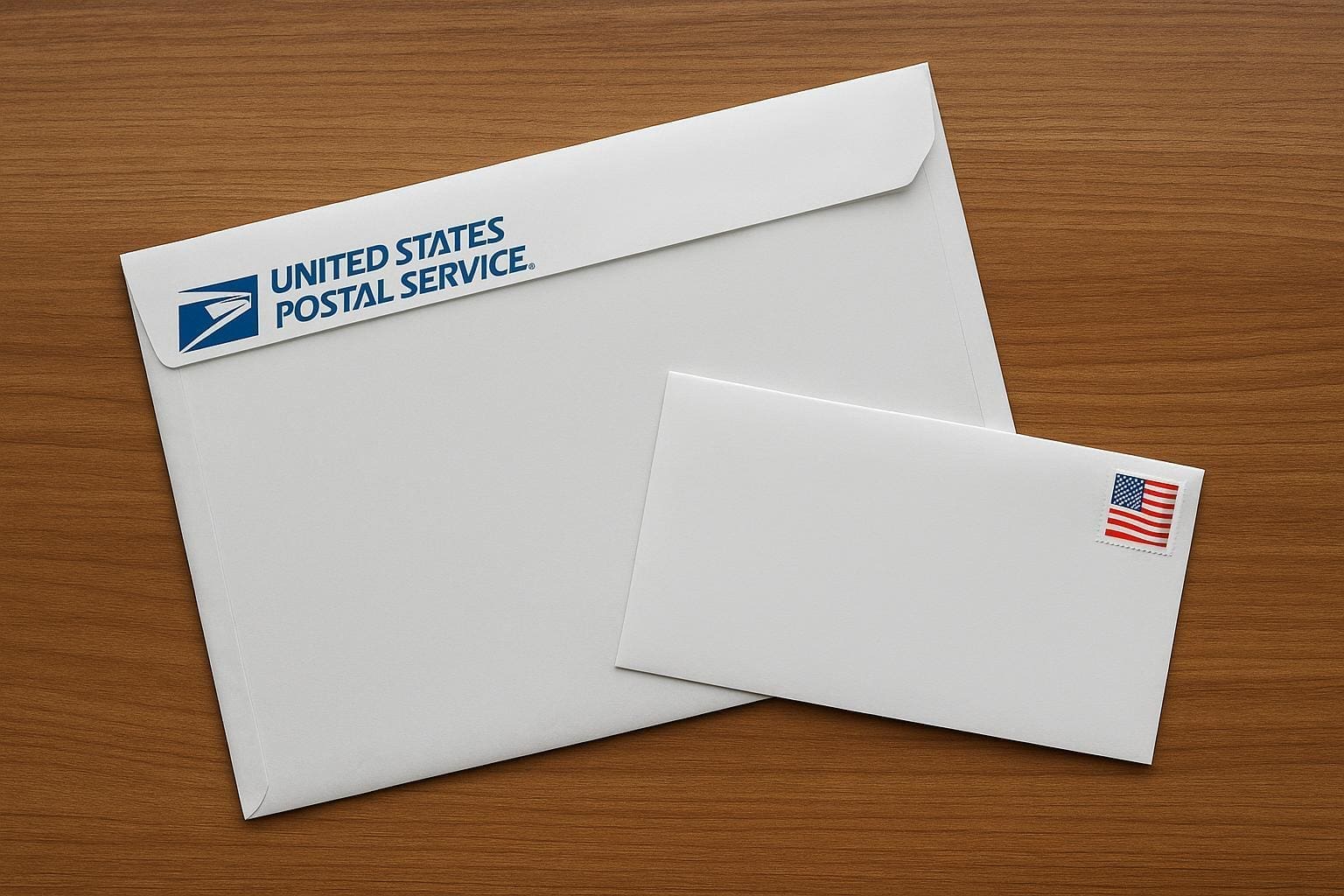
You’ll save time and money when you know exactly how the USPS treats a piece of mail. The line between a letter and a large envelope (flat) is small, but it matters. Rates change. Sorting paths change. So does whether your item needs extra handling.

## USPS Large Envelope Vs Letter Size Guidelines: The Basics
The difference comes down to three simple things: dimensions, thickness, and flexibility. The USPS calls smaller, flexible pieces “letters.” When a piece gets wider, thicker, or less flexible it becomes a “large envelope” or “flat.” Those shifts trigger different postage and different processing. If you ship often, learn the rules once. Then you won’t get surprised by higher postage or returned mail.

### How The USPS Defines A Letter
A letter is compact and predictable. Officially, a letter must be rectangular, flexible, and single-piece. The maximum dimensions are 11-1/2 inches long by 6-1/8 inches high and 1/4 inch thick. Weight matters too: if it’s under 3.5 ounces and meets those size limits, it’s normally treated as a letter.

Beyond raw sizes, the USPS looks at how a piece behaves in a sorting machine. If the mail is too rigid or has uneven thickness it may snarl the machinery. Those items get bumped up to a different category.

Use these letter size guidelines when you print bulk mail, stuff invoices, or send contracts that fold neatly into a standard envelope. If you’re mailing with inserts that create bulk, measure carefully.

#### Common Letter Dimensions You’ll See
– Standard business envelope (No. 10): 4-1/8 x 9-1/2 inches.
– Greeting card envelopes: vary, but many fit within letter requirements if thin.

### How The USPS Defines A Large Envelope (Flat)
A large envelope, often called a flat, is a flexible mailpiece that exceeds at least one of those letter limits. The maximum flat dimensions are 15 inches long by 12 inches high and 3/4 inch thick. Weight limit for flats is higher, typically up to 13 ounces for First-Class Mail when properly priced.

A flat still needs to be reasonably flexible. If you mail a stiff board inside an envelope, the item may instead be classified as a package. That reclassification usually costs more.

#### When A Flat Becomes A Package
If the piece is rigid, uneven, or thicker than 3/4 inch, postal clerks may mark it as a package. Booklets bound with stiff covers, or items with cardboard inserts that do not bend, risk that change. It’s better to expect scrutiny when sending anything bulky.

## Where People Slip Up With Sizes
Ships that barely cross the thresholds are the usual troublemakers. Envelopes stuffed with multiple documents can easily exceed 1/4 inch thickness. A glossy mailer might be less flexible despite the same thickness as regular paper. Some habits cause repeated headaches:

– Folding and stuffing multiple sheets without checking thickness.
– Assuming all envelopes fit the No. 10 size rule when inserts change the shape.
– Mailing brochures with staples or clips that create unevenness.

Measure before you seal. I keep a small ruler and a thickness gauge in my office. It’s not glamourous, but it cuts down on re-stamping and customer complaints.

### The Cost Impact Of Misclassification
Postage jumps when items are reclassified. On top of the per-piece rate, flats often require higher postage than letters. For businesses that ship hundreds of items monthly, reclassification can eat a surprising slice of the budget.

If you use automated postage meters or online shipping tools, set templates for both letters and flats. That reduces human error at the counter. Also, document your common envelope configurations so staff can check quickly.

## Practical Steps To Stay Within Letter Or Flat Rules
You don’t need a postal service degree. A few habits make it simple to comply with large envelope guidelines and letter size guidelines.

### Measure Twice, Mail Once
Get precise. Measure length, height, and thickness at the thickest point. If thickness is right on the edge, assume the thicker category. Machines and clerks won’t give the benefit of the doubt.

### Check Flexibility
Bend the piece gently. If it snaps back rigid, treat it as a potential package. If it flexes uniformly, you’re safer calling it a flat or letter depending on size.

### Mind Your Inserts
Avoid metal clips, staples, and heavy cardboard unless you’re ready to pay package rates. If you must include stiff inserts, consider using a small flat-rate box instead. It can be cheaper and reduces handling issues.

### Labeling And Address Placement
Proper address placement doesn’t change size rules, but it speeds processing. Keep the delivery address on the front and the return address on the top left. Use clear, dark ink and avoid clutter around the barcode area.

## Pricing And Postage Implications
Understanding rates will save you from sticker shock at the post office counter. Small changes in thickness or weight change the category and the price.

### First-Class Mail Differences
First-Class Mail treats letters and flats differently. Letters are priced lower and work well for light documents. Flats are more expensive but still cheaper than many parcel services for thin, large pieces. If your mail is under 1 ounce and within letter dimensions, choose letter postage. If you’re close to 3.5 ounces or thicker than 1/4 inch, compare the flat rate.

### Commercial vs Retail Rates
Businesses that qualify for commercial pricing via presorting or online postage providers often pay less per piece. But they must meet strict compliance. If your mail gets reclassified due to size or flexibility problems, you may owe additional fees. Follow large envelope guidelines closely when preparing batches to avoid penalties.

### Tracking And Extras
Letters typically don’t include tracking by default. Flats may have limited tracking depending on service. If tracking matters, consider using a service that includes it, or upgrade to a small package. The extra fee buys peace of mind.

## How To Prepare Mail For Bulk Runs
If you handle large runs, process control is your best friend. A short checklist prevents expensive mistakes.

### Sorting And Sampling
Set up a routine: measure every 50th piece, and sample items that look borderline. Train staff to recognize typical problem pieces. A quick inspection catches unexpected items like brochures with plastic windows.

### Use Templates And Tools
Create weight and size templates in your postage system. Keep a scale and a small caliper at the packing station. Those tools cost little and return value fast.

### Communicate With Your Printer
If a third-party prints your mailers, specify acceptable stock weight and folds. Ask for sample runs so you can verify the finished mailpiece meets your letter size guidelines or large envelope guidelines before a full press run.

#### Example: Invoice Mailing
We had a client who moved from single-sheet invoices to a three-piece pack. Postage doubled because the new pack tipped over the 1/4 inch limit. A quick redesign — removing a promotional insert and sending it separately — saved thousands in annual postage.

## When To Ask The Post Office
If your pieces are unusual, or you plan a large campaign with nonstandard envelopes, get a postal determination. The USPS offers shape and size reviews. That formal determination prevents headaches and unexpected fees.

Bring samples. Bring specifications. If they provide a ruling, keep that paperwork with your mailing records.

### When Automation Helps
Automation-compatible flats get discounted rates if they meet barcode and placement rules. That’s a separate set of requirements from the physical size, but it’s worth knowing. If you plan commercial mailings, learn those automation specs early so your mail design accommodates both physical and barcode rules.

## Myths And Shortcuts To Ignore
A few false beliefs keep floating around and cause trouble. Ignore them.

– “If it fits in the mailbox it’s a letter.” Not true. Shape and flexibility still count, and curbside delivery won’t change classification.
– “Thicker paper always means a package.” Not always. Thickness and rigidity together matter. A single sheet of heavy stock might still qualify as a flat if it bends enough.
– “You can just mark it ‘Letter’ and save money.” Postal clerks and machines decide classification, not handwritten labels.

If someone tells you they can always beat the system, they’re probably guessing. Test and measure instead.

## Quick Reference For Common Items
Keep this mental cheat sheet handy when deciding what to buy or how to design mail:

### Typical Letter
– Single or double sheets folded.
– No staples or heavy inserts.
– Under 1/4 inch thick.
– Flexible and rectangular.

### Typical Large Envelope (Flat)
– Brochures, catalogs, or multiple pages in a large envelope.
– Up to 3/4 inch thick.
– Flexible but larger than standard letter dimensions.

### Consider As Package
– Rigid items, odd shapes, bubble mailers with stiff inserts.
– Anything thicker than 3/4 inch or extremely inflexible.

I once mailed a batch of printed manuals thinking they would qualify as flats. They were stiff, and the post office charged package rates. An honest mistake, but avoidable with a quick bend test. Recieve the lesson and move on.

Now that you know where the lines fall, you can plan layouts, choose stock, and set postage accurately. Follow letter size guidelines and large envelope guidelines, and you’ll cut unexpected costs. Keep measuring. Keep simple tools nearby. And when in doubt, ask your local post office for a formal determination.

First Class Package International Vs Priority Mail International Price Comparison

first class package international vs priority mail international price comparison

## How These Two Services Differ

When you ship overseas with USPS, the decision usually comes down to cost versus certainty. First Class Package International Service and Priority Mail International are both common choices, but they behave very differently once your package leaves the U.S. First Class is designed for light, inexpensive parcels; Priority is meant for heavier goods and people who want faster transit, better tracking, and built-in protections.

First Class Package International is limited by weight (under 4 pounds) and size, and it’s priced to compete with economy options offered by other carriers. Priority Mail International accepts heavier packages, offers flat-rate boxes, and includes more comprehensive tracking and a baseline amount of indemnity for loss or damage. Those distinctions explain most of the gap you’ll see in any first class package international vs priority mail international price comparison.

### Weight, Size Limits And Eligibility

Weight is the first gatekeeper. First Class caps at 4 lbs; Priority has no strict low-end limit and is suitable for anything above that. Many small online sellers choose First Class for lightweight items such as jewelry, small clothing items, or parts, because the price per shipment can be notably lower. If your parcel weighs 2.5–3.5 lbs, you’ll be near the top of the First Class limit and might pay nearly as much as the cheapest Priority option, so you should run both numbers.

Size rules matter too. A bulky 3-lb box can suddenly cost more in dimensional terms, nudging Priority into the better value despite its higher headline rate.

### Tracking, Insurance, And Delivery Standards

First Class often includes very limited tracking — sometimes only to the destination country’s border, not to the recipient’s door. That lack of end-to-end visibility is a trade-off for lower cost. Priority Mail International gives more consistent tracking milestones, delivery confirmation in many countries, and a modest indemnity for loss or damage. If you expect claims or need proof of delivery, that matters.

You’ll also see a difference in delivery windows. First Class can take a long time depending on customs hold-ups and the receiving postal network. Priority aims for a faster average (commonly a few days quicker), although specific timing depends heavily on destination and local postal efficiency.

## First Class Package International Vs Priority Mail International Price Comparison: Real-World Examples

A practical look at sample shipments makes the gap clearer. Prices fluctuate, so these are illustrative margins, not guarantees. Still, they show the pattern you’ll see in an international price comparison.

### Example: 8-Ounce Parcel To Canada

– First Class Package International: Typically your cheapest option. For a small padded envelope with an 8-ounce item bound for Canada, First Class often costs substantially less than Priority — sometimes a third to half the price of Priority. That can mean savings of $10–$30 depending on promotional rates and exact zone.
– Priority Mail International: You get faster transit and better tracking. For that same 8-ounce parcel, Priority might be three times the First Class cost because you’re paying for speed and protections. If the item is low-cost or easily replaced, the added cost might not be worth it.

### Example: 2-Pound Package To The United Kingdom

– First Class Package International: Still possible, since it’s under 4 lbs, but prices creep up with weight. A 2-lb package will cost more and may start to approach Priority territory.
– Priority Mail International: The bump in price buys you more reliable delivery and included indemnity. If the package has a higher value or you need a predictable delivery window, Priority often justifies the cost here.

#### Flat Rate Box Uses And When They Matter

Priority shines with flat-rate boxes when you can pack a heavy but compact item into the flat-rate container. If you have a dense 10-lb product that fits in the medium flat-rate box, Priority can be the bargain. First Class has no flat-rate boxes, so bulkier heavy items will quickly make Priority the smarter option.

These examples help frame the first class package international vs priority mail international price comparison: where weight and packing strategy meet declared value and delivery needs.

## Factors That Drive International Price Differences

Pricing isn’t arbitrary. Three practical factors push First Class and Priority apart.

### Destination Zone And Local Postal Systems

The farther and less efficient the destination, the more you’ll see price variance. Shipping to a major urban center with a good postal system will be cheaper and faster in practice than sending to remote areas. Priority’s premium buys better upstream handling and occasionally faster clearance through customs processes, which is why its price differential widens for distant or logistically tricky countries.

Include an international price comparison that’s zone-specific and you’ll get a clearer picture than a single blanket rate. For example, to Western Europe the difference might be modest; to certain parts of Asia or Africa, the gap can widen.

### Customs, Duties, And Forms

Customs paperwork can add time and cost. Priority packages often include a more standardized set of handling and documentation services when bought online — that can smooth customs entry and reduce delays or inspections. First Class is more bare-bones; if customs agents open a lightweight parcel and hold it, the savings you expected can evaporate.

Make sure you understand who pays duties and how they’ll be billed. That’s part of any sensible international shipping rates comparison.

### Delivery Speed And Reliability

If your business depends on predictable timing (subscription boxes, replacement parts, perishable items), the higher price of Priority is a cost of doing business. If you’re shipping cheap, non-urgent goods, prioritizing the lowest international shipping rates is fine. The first class package international vs priority mail international price comparison here becomes a question of tolerance for risk versus willingness to pay for reliability.

## Making The Right Choice For Your Shipment

Decide by answering three simple questions: How heavy is it? How valuable is it? How soon must it arrive?

### When To Choose First Class

Pick First Class when the package is light, the value is low, and you can accept slow or partial tracking. It’s popular for economy-driven sellers, samples, and items that would cost more to replace than to reship. If you’re trying to keep postage costs under a certain threshold, First Class often wins on price per shipment.

### When To Choose Priority Mail

Choose Priority when the item is heavier, valuable, or time-sensitive. If you need stronger tracking for customer service or want a better chance of indemnity if something goes wrong, Priority reduces stress. It’s also better when your item fits a flat-rate box and you can pack efficiently — that’s where the higher headline price turns into actual savings.

#### Practical Tips To Save On International Shipping

– Weigh and measure carefully. Small weight differences can move you into a different pricing band.
– Use the USPS price calculator before you commit. Rates change and there are occasional promotions.
– Consider declaring a value strategically. Adding minimal declared value without necessity can bump price; over-declaring costs more.
– Try packaging that reduces dimensional weight and avoids unnecessary bulk. Flat-rate boxes can beat per-pound pricing for dense items.
– Buy postage online. Many online labels give small discounts and include better customs forms exportability.

If your workflow includes frequent international shipments, keep a short spreadsheet of typical weights, destinations, and the price you actually paid. Over time that log will be more useful than a single first class package international vs priority mail international price comparison you made once. And remember: you often save more by optimizing packaging and choosing the right service than by hunting for a marginally better carrier rate.

A final practical note: check whether your recipient’s country has problems with slow postal delivery or complex customs. Even the best-priced Priority option can be slowed to a crawl by a country’s internal postal problems. Conversely, in countries with efficient postal networks, First Class can behave surprisingly well and keep your costs down without causing customer complaints. Keep that in mind as you weigh international shipping rates and build your shipping policy — and don’t forget to double-check addresses so the parcel gets to the right place; if you mistype the adress, no amount of careful carrier choice will help.

Packing Paper Vs Bubble Wrap Compared For Shipping

packing paper vs bubble wrap

You don’t need a fancy checklist to figure out whether to use paper or plastic cushioning. Look at the item, the box, and what it will face between pickup and the recipient’s porch. Then pick the wrap that actually protects what matters.

## Packing Paper Vs Bubble Wrap: When To Use Each
If you type “packing paper vs bubble wrap” into a search bar, you’ll get opinions, hands-on tests, and marketing blurbs. The useful part is simple: you need protection from impact, abrasion, moisture, and movement. Packing paper handles movement and fills voids. Bubble wrap cushions sharp shocks. That’s the starting point.

### What Packing Paper Does Best
Packing paper is flat, flexible, and cheap. Crumple a few sheets and they collapse into an affordable, odorless cushion that prevents items from knocking together. I use it for dishes, picture frames, and books. Wrap a stack of plates in two or three layers, then nest them in a box with more crumpled paper between each plate. The paper soaks up small shocks and keeps surfaces from scratching.

Paper’s other big plus is breathability. Cardboard and paper won’t trap moisture the way sealed air pockets can, soitems that are vulnerable to condensation or humidity do better with paper. Paper also packs efficiently; a roll takes little storage space and you can tear off exactly what you need.

### What Bubble Wrap Does Better
Bubble wrap, on the other hand, is an air cushion. Small bubbles absorb point impacts. That’s why I reach for it with electronics, glassware that’s unusually thin, and anything with delicate corners. Wrap a frame in a single layer of bubble wrap, then use paper to fill gaps so the item can’t shift. When you’re shipping something that could crack from a drop or get pressure marks, bubble wrap is the insurance you want.

Bubble wrap also conforms to complex shapes better than rigid foam. A few wraps around a ceramic lamp’s base will smooth uneven edges and protect protruding parts.

#### Caution On Pressure And Compression
Bubble wrap performs poorly if the box gets crushed flat. If cartons will be stacked tightly, the air in the bubbles can burst and lose all their cushioning value. Combine bubble wrap with internal reinforcements or use boxes rated for stacking.

## How Shock Absorption And Movement Differ
Understanding how shock absorption and internal movement differ is the key difference between packing paper vs bubble wrap.

### Shock Absorption: Bubble Wrap Wins On Direct Impacts
For a direct jolt—think a corner hitting pavement—bubble wrap dissipates energy across the air pockets. The larger the bubbles, the more energy they can absorb, but large bubbles also compress easier and are less effective for light, fragile items. Small-bubble wrap is better for tiny electronics and jewelry; large bubbles suit heavier ceramics.

### Movement And Friction: Paper Is Better For Preventing Rattling
If an item rattles inside its box, the repeated friction causes scratches and chips. Packing paper grips surfaces and prevents items from sliding. It’s also ideal for filling voids: crumpled paper locks into odd angles and holds heavier items steady.

#### Layering For The Best Results
You don’t have to pick one. A combination is often smarter: one layer of bubble wrap around the item for impact resistance, then pack the box tightly with crumpled paper so it can’t move. That hybrid approach balances shock absorption with anti-shift protection.

## Cost, Storage, And Environmental Trade-Offs
Money matters in shipping, especially if you ship frequently.

### Upfront Cost Versus Long-Term Waste
Bubble wrap costs more per cubic foot than recycled newsprint or kraft paper, and it takes up more storage volume when stored flat. Paper is cheap and lightweight. But bubble wrap can reduce damage claims on very delicate items, which offsets cost.

On the environmental side, paper is easier to recycle in many municipal programs. Some bubble wrap is recyclable where plastic film is accepted, but that’s not universal. If you’re trying to shrink waste, consider the lifecycle: multiple layers of paper may be heavier and increase postage, while single-use plastic adds to landfill if not recycled.

### Storage And Handling
A roll of paper fits neatly on a shelf. Bubble wrap takes more space and can cling to other items, collecting dust. In a busy warehouse, paper is less likely to get crushed and is easier for quick wrapping.

## When To Reach For Packing Paper Alternatives
There are times when neither standard paper nor bubble wrap is ideal. That’s when packing paper alternatives come in.

### Corrugated Inserts And Molded Pulp
Corrugated inserts and molded pulp are rigid but shaped to hold items in place. They’re great for bottles and electronics shipped in bulk. These inserts keep items suspended in the box and eliminate the need for loose fill.

### Foam And Air Pillows
Foam sheets and air pillows fill space without adding much weight. Air pillows can reduce waste over time if you purchase recyclable versions. They’re convenient, but they function more like bubble wrap and less like paper—so use them for impact, not for preventing scratches.

### Biodegradable And Recycled Options
Biodegradable packing peanuts and recycled paper pads give you protective properties with less long-term waste. For sellers hypersensitive to greenwashing, these packing paper alternatives can be a genuine improvement.

Use the phrase packing paper alternatives when you’re looking for something that balances cost, protection, and sustainability.

## Real-World Examples That Clarify The Choice
Here are short, practical examples from actual packing scenarios.

### Shipping Kitchenware
I shipped twenty ceramic plates to a customer once. Using only bubble wrap would have been overkill and expensive. I wrapped each plate in two sheets of packing paper, nested them with paper crumpled between, and put a corrugated insert on the top and bottom. Result: zero breaks, and postage stayed reasonable.

### Sending A Glass Sculpture
A glass sculpture with fine edges went out with three layers of bubble wrap and then a box within a box. The inner box had paper padding to stop movement. That combo protected against both impact and compression from stacking.

### Sending Books Or Clothes
Books and textiles rarely need bubble wrap. Tight packing with paper prevents rubbing and saves space. For soft goods, paper reduces creases more than plastic does.

## Shipping Cost, Weight, And Dimensional Considerations
Postage calculators use weight and dimensions. Paper is light; bubble wrap adds bulk and sometimes weight depending on how tightly you pack the box.

### Dimensional Weight Versus Actual Weight
If an item is light but bulky, carriers might charge dimensional weight. Bubble wrap increases box size, so for low-value, large items, choose paper or more compact cushioning. If you use bubble wrap, compress the package carefully without crushing fragile items.

### Avoiding Oversize Fees
A well-packed box with paper that fills voids can often be a smaller size than a bulky, bubble-wrapped package that leaves empty space. Think size optimization: tightly packed boxes cost less.

## Handling And Presentation
Presentation matters for customer experience. Bubble-wrapped items scream “fragile” but can feel plasticky. Paper gives a cleaner, premium impression when done right.

### Wrapping For Unboxing
Retailers who sell fragile items often use bubble wrap for safety, then layer tissue paper on top for presentation. That way the customer gets both protection and a nicer unboxing moment.

#### Labeling And Fragile Stickers
Labels don’t fix poor packing, but they help handlers take care. Combine labeling with proper cushioning and you reduce the chance of damage.

## Quick Decision Guide
If you want a fast rule of thumb: use paper for rigidity, anti-scratch, and filling; use bubble wrap for direct-impact protection. If you’re shipping something valuable and fragile, use both.

Here’s a final practical thought: test your packing method. Drop the packed box from waist height and feel whether the item moves or registers a jolt. If it does, add more bubble wrap or redesign internal supports. If it’s still shifting, use more paper or a molded insert. That simple test saves returns and the headache of a bad customer review—trust me, I’ve been there and had to explain why a vase arrived in pieces after I thought I was being careful. I now always test random packages before sending in bulk to avoid having to recieve returns and complaints.

Mail Forwarding Vs Change Of Address A Critical Showdown

mail forwarding vs change of address

You’ll notice the difference the first time a bill arrives late or a package sits in limbo. This isn’t a cosmetic choice. It’s one of the small, practical moves that can make a move smooth or messy. Pick the wrong route and you’ll spend days chasing paper. Pick the right one and you barely think about it.

## Mail Forwarding Vs Change Of Address: Which One Does What
When people debate mail forwarding vs change of address they often mean two different systems that overlap in purpose but not in function. One is a formal postal service action you file with the post office to reroute mail to a new physical address. The other is a commercial or specialized service that can act as your mail hub, scanning and holding items, providing a street address, and handling packages in ways the post office won’t. Knowing those differences will save time and headaches.

### USPS Change Of Address: The Practical Basics
Filing a change of address with the post office is the blunt instrument of moving. You tell the postal service where you’re going and they forward most of your incoming mail for a period. It’s simple, usually inexpensive, and designed to catch mail from businesses that don’t proactively update their records.

Here’s what it does well:
– Redirects letters and many types of classed mail automatically from your old address to your new one.
– Is often fast to set up online or at a post office window.
– Provides a temporary cushion so you can update banks, subscriptions, and utilities without losing important items.

But don’t treat it like a catch-all. A change of address won’t change your billing address with companies; you still have to update accounts yourself. It also won’t turn into a legal address change for DMV, voting, or banks unless those agencies are explicitly updated.

#### What You Should Expect From A Post Office Change
Timeframe, verification, and types of mail forwarded vary, and that’s important. Some items aren’t forwarded at all, some are forwarded for limited windows, and the post office may require identity checks online to complete a request. Expect to follow up with a handful of senders anyway. If you’re moving two blocks away temporarily, a change of address is the low-friction option.

### Commercial Mail Forwarding: More Than Just Re-Route
Commercial mail forwarding services are businesses that do what the post office sometimes won’t: they give you a usable street address, accept packages from private carriers, scan contents on request, forward selectively, shred junk, and even consolidate shipments for international moves. If you need a professional presence, frequent travel, or a business-facing address in another city, commercial services offer features a simple change of address can’t.

They’re not free. You’ll pay for convenience, privacy, and flexibility. But for digital nomads, small businesses, or anyone who needs to manage mail from afar, that fee can be worth it.

#### When Commercial Mail Forwarding Beats A Simple Change
– You need a recognized street address for online forms that reject P.O. Boxes.
– You want someone to scan and email letters so you can act without receiving physical mail.
– You expect frequent packages from different carriers, including couriers the post office doesn’t forward reliably.
– You want long-term storage and consolidation to save on international shipping.

## What The Post Office Forwards And What It Doesn’t
This is where people get surprised. Most routine letters are sent on. But periodicals, large parcels, and special services from commercial shippers sometimes don’t follow the same rules. Federal notices, some court documents, and time-sensitive legal mail can have different routing rules as well.

If a creditor, a government agency, or your insurance company sends something important, don’t assume forwarding will make it arrive intact and on time. Update those senders directly. Think of the post office change as a backup layer, not the primary update. This is one of the core practical differences in the mail forwarding vs change of address decision.

### Packages, Subscriptions, And Business Mail
Mail forwarding services will often handle packages from UPS, FedEx, DHL, and similar carriers. A change of address with the post office primarily covers mail handled by the postal service itself. If you rely on multiple carriers, check each one’s policies and consider a commercial solution if losing a package would be a big problem.

## Costs, Verification, And Identity Issues
A change of address through the postal service is low-cost. There may be an identity verification step online that requires a small payment by card. That’s designed to stop fraud and reduce unwanted redirects.

Commercial mail forwarding costs vary widely. Expect monthly fees for an account, plus per-item charges for scanning, forwarding, and storage. Extra services like a virtual receptionist or notarization cost more.

If privacy is a concern, commercial services offer options that a change of address won’t. They can accept mail under your name at a neutral business address and separate your residential adress from your postal footprint.

### Fraud Risk And Security Tradeoffs
Using the postal change of address is straightforward but can be abused if someone files a change fraudulently. That’s why identity verification exists. Commercial providers, on their side, may require notarized documentation before accepting some kinds of mail, which can be reassuring for businesses that deal with sensitive documents.

## Timing: Temporary Moves, Short-Term Storage, And Long-Term Solutions
Temporary moves and short assignments are a key place the two options diverge. A change of address with the post office can usually be set as temporary. Commercial services offer month-to-month plans, scanning on demand, and long-term storage, which is helpful if you’re in a temporary overseas assignment or living out of a suitcase.

If your move is temporary and you want minimal fuss, change your address with the postal service and update your critical accounts. If your stay will be longer or you need a professional mailing presence, consider a commercial mail forwarding service.

#### Practical Timeline Tips
Set your post office change of address at least a week before your move. Start notifying banks, insurers, and subscription services earlier. If you pick commercial forwarding, allow time for acceptance procedures; some services require ID and proof of residency or business registration.

## Updating People And Organizations: Who Needs To Know Right Away
The post office will forward most mail, but sending a split-second list of updates will reduce friction. Prioritize: banks, credit card companies, payroll, tax agencies, insurers, and healthcare providers. Add online retailers where you have recurring deliveries. For businesses, update customers and vendors immediately.

If you use mail forwarding services, automate what you can. Many commercial providers let you scan and confirm changes before physically re-routing mail. That’s handy for stopping spam and confirming the right documents are being sent.

### A Short Checklist To Start With
– Banks and credit cards.
– Employer and payroll.
– Utilities and cable.
– Insurance companies.
– Health providers and pharmacies.
– Subscriptions that bill or send physical issues.

## Business Uses And Legal Implications
Small businesses often confuse the two. Filing a change of address with the post office changes where mail is delivered, but it doesn’t change registered business addresses with state agencies or tax authorities. A mail forwarding service can provide a professional face and acceptance of packages, but it won’t change how a court or regulatory agency views your official business domicile unless you complete formal legal filings.

If you are forming an LLC, need a registered agent, or must maintain an official business address, handle those processes separately. Think in terms of three layers: legal address, mailing address, and operational address. They can be the same, but they don’t have to be.

## Costs Versus Convenience: Which Is Right For You
If you want cheap and quick, file a post office change of address. If you need flexibility, privacy, or package handling from multiple carriers, a commercial mail forwarding service is worth the price. For many people the right move is a hybrid: send a post office change for basic letters, and use a commercial service for business mail or international forwarding.

When you weigh expenses, factor in time saved, missed bills avoided, and how critical packages are. That math changes if you move often, operate a small business, or travel frequently.

### Real-World Example
A freelance consultant who travels often found that a simple post office change meant some contracts still slipped through the cracks because clients used courier services the post office didn’t forward. Switching to a commercial mail forwarding provider that accepted multi-carrier deliveries and scanned contract pages solved it. The monthly fee paid for itself the first time a time-sensitive contract arrived and was scanned and signed within hours. On the flip side, a young family who moved across town used the postal change to keep things simple and saved money by updating critical utilities themselves.

## How To Decide Today
Ask three questions: How long will you need mail redirected? Which carriers send your important items? Do you need scanning, storage, or a street address for forms that refuse P.O. Boxes? Those answers usually make the choice obvious.

People often blur the line between mail forwarding vs change of address because both move letters. But the nuance matters. Treat the post office change as a safety net. Use commercial forwarding if you need control. You’ll avoid the most common headaches that way and not have to chase a missed invoice two weeks into a new place. And remember to follow up with the big agencies directly—you don’t want to recieve a surprise notice because someone else assumed the post office would handle it.

How To Schedule USPS Package Pickup From Home Step By Step

how to schedule usps package pickup from home

## How To Schedule USPS Package Pickup From Home: What You Need First

Scheduling pickups online saves time, but it won’t work if you skip the basics. Before you try to schedule usps package pickup from home, make sure you have the package ready, the correct postage applied, and an account set up on USPS.com if you plan to use the web form. Those three things are the common reasons a carrier will leave without taking your shipment.

A quick checklist to run through in your head:
– Package sealed and labelled.
– Postage purchased or a printed label attached.
– Clear pickup location (front porch, lobby, mailroom).
If any of those are missing, you’ll get a visit and no pickup. Simple, but easy to forget.

## Why Schedule Pickup Instead Of Dropping Off

Using a pickup avoids a trip and fits into tight schedules. It also helps when you have multiple packages or awkwardly sized boxes. For small businesses, routine pickups reduce the overhead of shipping. For individuals, it’s convenience: you don’t have to wrestle a parcel into a car.

A few real-world advantages:
### Time Savings For Real Tasks
Some people think pickups are only for busy professionals. I once had a neighbor who ran a weekend Etsy shop. Having a scheduled usps pickup saved her an extra hour every Saturday morning. That hour went to making more products instead of standing in line.

### Better For Bulky Or Heavy Items
If you’re handling heavier items, a pickup avoids the risk of dropping something while loading it into a vehicle. USPS carriers are used to handling packages and have carts and tools at their disposal.

## Create Or Sign In To Your USPS Account

You’ll need an account to schedule online. Go to USPS.com and sign up or sign in. Account creation asks for your name, email, and address. Verify the email and you’re set.

#### Why The Account Matters
Without an account, your pickup options are limited. The system keeps track of your address, preferred pickup spots, and any scheduled pickups so you don’t have to re-enter information every time.

#### Security Tip
Use a strong password and enable two-factor authentication if available. You’re basically storing delivery preferences and addresses here; treat them like any other secure account.

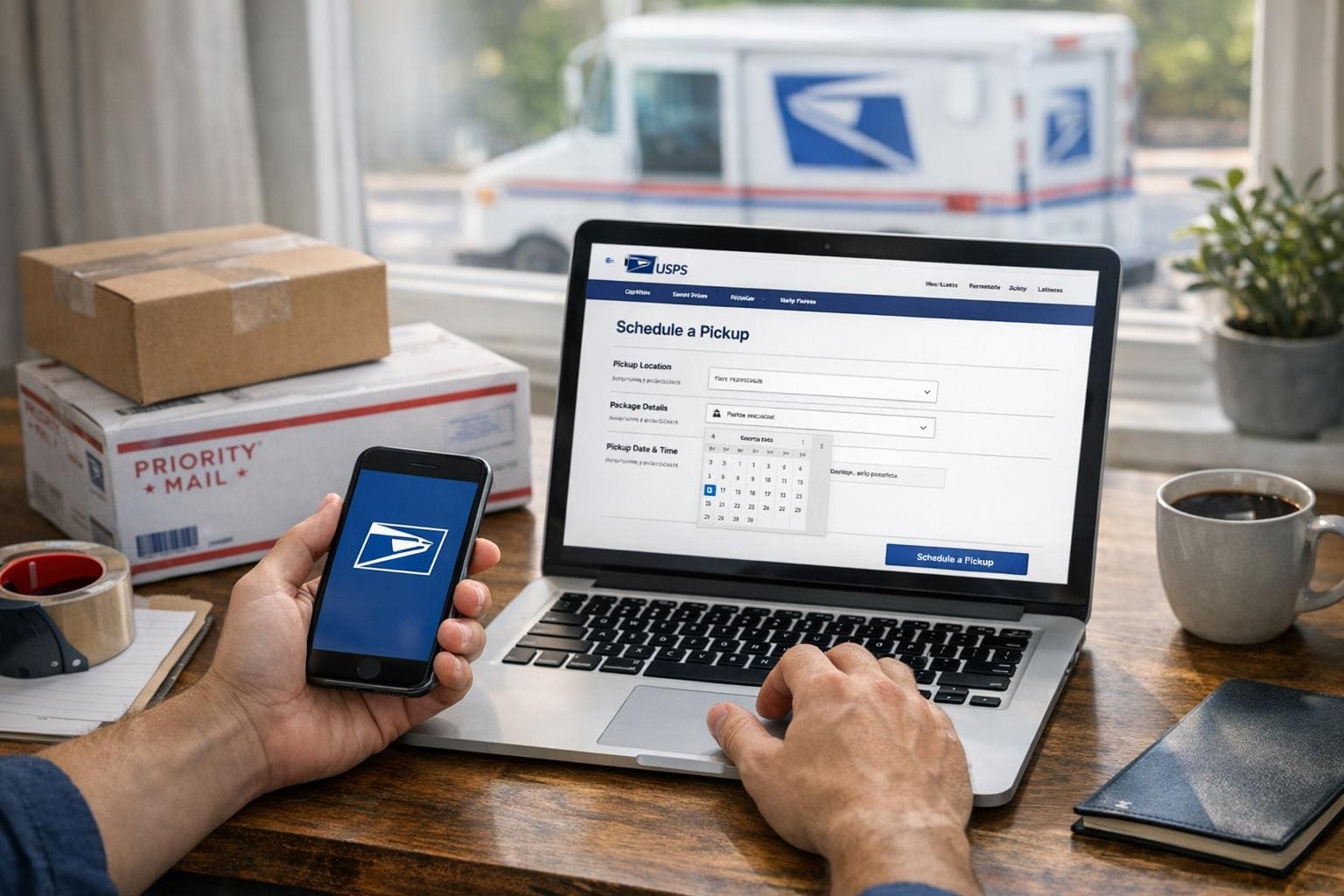
## Step-By-Step: How To Schedule USPS Package Pickup From Home

Below are the practical steps I use every time I schedule a usps package pickup. This is the method that actually works, not the cluttered version with extra clicks.

1. Sign in at USPS.com.
2. Go to the “Schedule a Pickup” page under Quick Tools.
3. Enter your pickup address and package details.
4. Choose whether the carrier should collect from your door or the front of the building.
5. Confirm and print any required label or Pickup ID page if requested.

### Entering Package Details Correctly
Describe the number of packages and the size class honestly. If you expect multiple boxes, put that in. Some carriers won’t take additional boxes if the number differs from what you scheduled.

### Free Versus Paid Options
Most domestic pickups from your carrier during a normal delivery day are free when you already have postage paid. If you need a special appointment outside of normal delivery, there may be a fee. We’ll cover the fee scenarios next.

## When Pickup Is Free And When It Costs

The free option is surprisingly flexible. If you purchase postage online and schedule a pickup for the same day or the next regular delivery day, USPS normally doesn’t charge. But there are exceptions.

#### Common Fee Triggers
– Choosing a specific time window outside normal delivery hours.
– Requesting a pickup from a commercial address where additional service charges apply.
– Scheduling more than a certain number of packages for non-business accounts.

If you’re unsure, the site will show any fees before you confirm. That prevents billing surprises.

## Placement And Labeling: Small Details That Matter

Putting the box in the right place and labeling it clearly reduces the chance of missed pickups. Carriers have little time to hunt for parcels.

### Where To Put Packages
If you live in a single-family home, leave the package at your front door or on the porch where mail usually goes. For apartments, leave it at the lobby or the designated location you noted in the pickup instructions. If you have a gate, include access instructions.

### Label Tips
Attach the printed label flat on the largest surface. If you’re not printing a label, write the recipient and return address legibly. Use a plastic sleeve or tape the label so it doesn’t get wet. I once had a package soaked in rain and the label ran; the carrier left because they couldn’t confirm postage. Avoid that.

## How To Handle Missed Pickups

If the carrier didn’t pick up your package, don’t panic. Start by checking the pickup confirmation email or account page. It usually says whether the request was fulfilled or canceled.

#### Common Reasons For Misses
– Postage missing or not printed.
– Package not at the exact location you specified.
– Carrier had an unexpected issue like route changes or a heavy load.

If the pickup is marked incomplete, reschedule quickly. If the pickup shows as complete but the carrier didn’t take your box, contact USPS customer service and have the Pickup Reference Number ready.

## USPS Pickup For Businesses Versus Individuals

If you ship often, consider setting a recurring pickup. Businesses can schedule daily pickups if they meet minimum volume or have a carrier stop assigned. Individuals might not qualify for daily service, but you can still schedule occasional pickups as needed.

### Setting Up Recurring Service
Call your local post office to request recurring pickups for business use. They’ll set up a routine pickup time according to the carrier’s route.

#### Cost Consideration For Regular Service
Some recurring pickups for businesses are free if minimum package volume is met. If not, expect a small monthly fee. Ask the local postmaster for details.

## Tracking And Proof Of Pickup

Once the pickup is scheduled, you’ll get a confirmation email. Keep that email until the package is scanned. If you paid for postage online, you usually get a tracking number that shows scans after the carrier picks it up.

### What To Do If No Scan Appears
If tracking doesn’t show a pickup scan within 24 hours of the scheduled time, call or use the website to open an inquiry. Be ready with addresses, tracking numbers, and the pickup confirmation number.

## Alternatives If Pickup Doesn’t Work

Sometimes pickup isn’t an option. Maybe your building has no common area access or you missed the carrier. In that case, use one of these alternatives:
– Drop at a USPS Collection Box if the package fits.
– Use self-service kiosks at larger Post Offices.
– Schedule a drop-off at an Authorized Shipping Center.

Each option has trade-offs. Collection boxes are quick but size-limited. Kiosks are good for printed labels; they accept package drop-offs and will give a receipt.

## Common Mistakes To Avoid

People make the same small mistakes over and over. They think a carrier will take any box left outside, with or without postage. They assume scheduling is automatic once they print a label. Both are false.

### Don’t Forget To Print Or Pay
If you schedule a pickup expecting the carrier to accept payment or to apply postage, you’ll be disappointed. Prepay online and attach the label, or buy postage at your front counter. The carrier typically won’t accept cash for postage at pickup.

### Don’t Overlook Access Instructions
If your building has a code or specific entry point, put it in the pickup instructions. Carriers won’t guess where to find your package.

## Quick Troubleshooting Steps

If something goes wrong, here’s what I do:
1. Check the confirmation email or Pickup Reference Number.
2. Verify the package was at the designated location.
3. Confirm postage or label was attached.
4. If all else fails, call your local Post Office and provide the ref number.

These steps clear up most issues in one call.

#### When To Escalate
If customer service can’t resolve it, file an online help request. Keep photos of the package and label. Those images often speed up investigations.

## Extra Tips For Busy Shippers

Batch your shipments and schedule pickups on days you typically ship. Keep a small supply of printed labels and packaging supplies handy. I keep a box labeled “Ship” by my door; when it’s full, I schedule a pickup and move on with other tasks.

Also, keep a calendar reminder for any recurring pickups so you’re not surprised by missed days. It’s an easy habit that removes friction.

If you follow these steps, scheduling how to schedule usps package pickup from home becomes routine rather than a chore. Do it right once and future pickups are frictionless. This process works whether you ship one parcel a month or dozens a week.

Finally, remember to check local Post Office policies; rules can vary. And yes, sometimes you’ll need to call in person — especially for large or unusual items. Mistakes happen. Just be ready to explain the situation and provide the pickup ID. And don’t forget to double-check the label so you don’t have to reschedule because of a simple typo or a reciept left unread by the carrier.