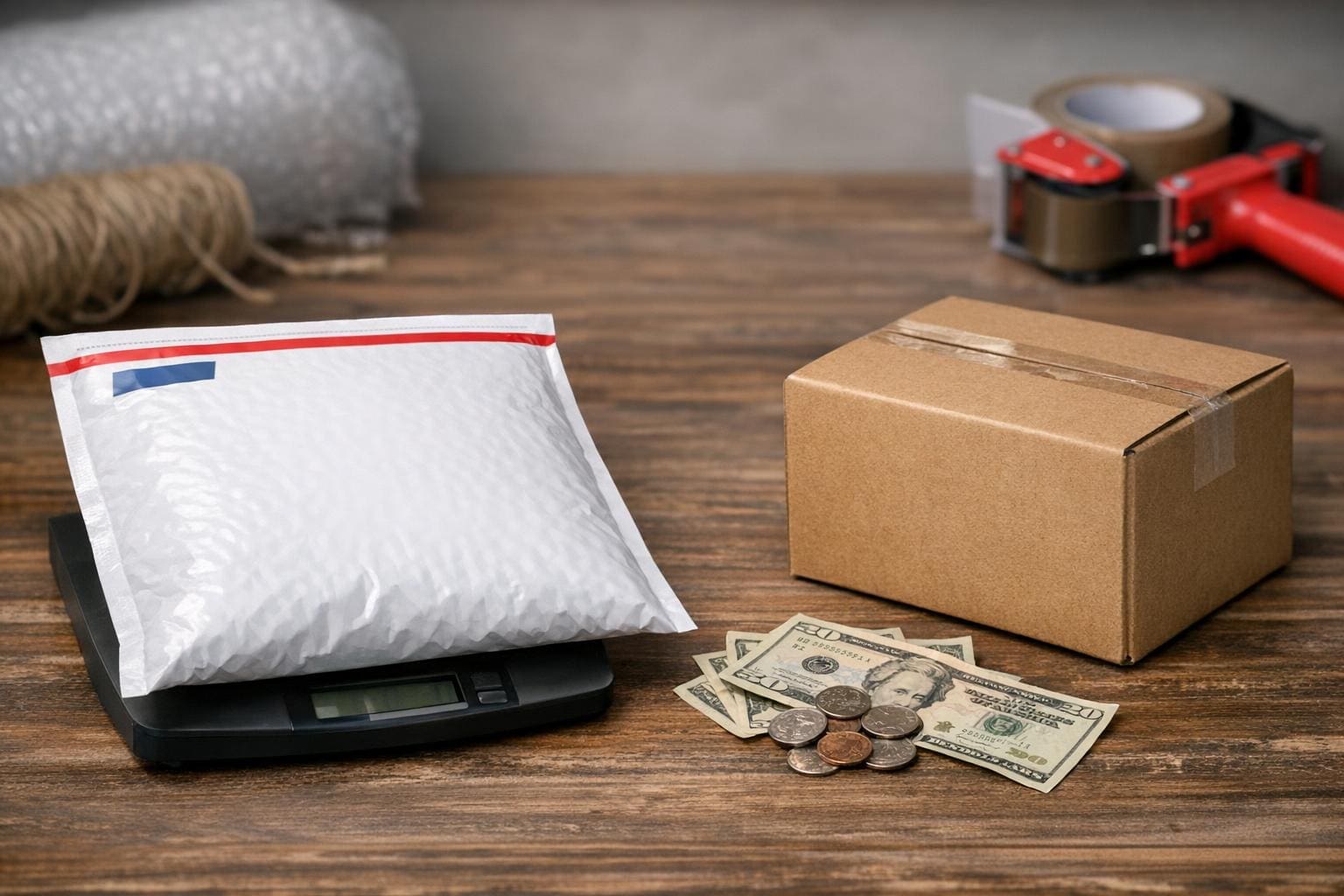
Comparing the cost of shipping small items can feel deceptively simple — but when you add fragile pet supplies, weight limits and retailer expectations, the choice between a padded envelope and a box affects both your wallet and the safety of the item. This article walks through the economics and practicalities so you can decide when a padded flat rate envelope vs box makes the most sense.
## Padded Flat Rate Envelope Vs Box: Which Is Cheaper
The simple answer: it depends on size, weight and the item’s fragility. A padded flat rate envelope often undercuts the price of boxes for lightweight, non-bulky items because flat rate shipping sets a single price per container regardless of weight (up to the service limit). But a box can become cheaper or necessary when items are bulky, require rigid protection, or push the weight limit. When weighing padded flat rate envelope vs box, consider both the flat fee and the risk of damage that can lead to replacement costs.
### How Flat Rate Pricing Works And Why It Matters
Flat rate shipping allows the shipper to pay one fixed rate based on the container type rather than weight or distance. That means a heavy item inside a properly sized flat rate box or envelope costs the same to ship as a light one — up to USPS weight restrictions. A flat rate envelope is typically cheaper than the larger flat rate boxes, but envelopes limit what you can safely send.
### Cost Scenarios: When Envelope Beats Box
– Small pet supplies such as non-glass pill bottles, small bags of supplements, folded fabric items, or soft toys often fit the padded flat rate envelope and benefit from the lower envelope price.
– If your package is dense and heavy but small, flat rate shipping in an envelope can be a clear win because the price ignores weight.
– If you ship frequently and your products consistently fit the envelope dimensions, the envelope reduces per-package variability in cost.
### Cost Scenarios: When Box Is Cheaper Or Necessary
– Bulky items or awkward shapes that can’t be compressed into an envelope will force you to use a box; standard or regional rates may be cheaper than forcing a large or awkward object into a flat rate envelope.
– Fragile pet supplies (glass feeders, ceramic bowls, breakable thermometers) often need rigid protection — a box with internal cushioning is safer and avoids replacement or return costs.
– If items exceed the allowed weight for a flat rate envelope service, a box or a different shipping option is required.
### Rules And Limitations To Watch
USPS size and weight rules can change. A flat rate envelope has fixed outer dimensions and a weight limit tied to the service; always verify current dimensions before choosing flat rate shipping. Some flat rate items have stricter item restrictions (hazardous materials, batteries, live animals). For pet supplies, check rules on liquids, aerosols or battery-powered devices.
#### Practical Packing Guidelines For Pet Products
– For soft, non-breakable pet items, use a padded flat rate envelope to minimize cost and protect against abrasion.
– For breakables, use a box with at least 1–2 inches of cushioning on all sides.
– Use void-fill to prevent movement — movement causes most in-transit damage.
### 1. Remedy: DIY Cushioning To Safely Use A Padded Flat Rate Envelope (Formal Instructions)
When you want to take advantage of lower envelope rates for a fragile, small pet item (for example: a ceramic salt lick, small glass medicine vial, or a delicate grooming tool), use this formal remedy to create sufficient protection so the package fits the padded flat rate envelope yet preserves the item.
Materials Required:
– Padded flat rate envelope (official or equivalent)
– Bubble wrap (small-bubble preferred)
– Corrugated cardboard piece or stiff paperboard
– Packing tape (strong, weather-resistant)
– Scissors
– Soft tissue or thin foam sheets
– Optional: small desiccant packet if shipping moisture-sensitive items
Step-by-Step Creation And Application:
1. Inspect Item: Confirm dimensions and fragility. Measure the item to ensure it fits comfortably within the envelope’s interior dimensions with at least 1/2 inch clearance for protective layers.
2. Base Layer: Cut a piece of corrugated cardboard to match the largest flat face of the item. This creates a rigid barrier and helps distribute pressure.
3. Wrap Item: Wrap the item in a layer of tissue or thin foam. This prevents direct contact with bubble wrap and reduces abrasion.
4. Bubble Wrap: Wrap the protected item in at least two full layers of bubble wrap, with bubbles facing outward. Secure with tape so the wrap cannot unravel.
5. Sandwich Assembly: Tape the bubble-wrapped item to the center of the cardboard base. If the item is particularly fragile, add a second cardboard layer on top, forming a cardboard sandwich.
6. Test Fit: Slide the sandwich assembly into the padded flat rate envelope. There should be snug fit without forcing; if it slides too freely, add a thin foam spacer or extra tissue to fill voids.
7. Seal And Reinforce: Seal the padded envelope per manufacturer instructions. Reinforce the closure with packing tape along the seam to protect against accidental opening.
8. Label And Markings: Clearly affix shipping label. If the item is fragile, add a “Fragile” sticker or write “Fragile” on the envelope where visible — while not a guarantee, handlers often exercise extra care.
9. Optional Desiccant: For moisture-sensitive items (e.g., certain supplements), include a small desiccant packet within the bubble wrap, ensuring it won’t contact the product directly if that’s a concern.
Adhering to these steps formalizes the remedy: it minimizes risk while preserving the cost advantages of a padded flat rate envelope. Do not attempt this remedy for items that are too large, too heavy, or inherently risky to ship in an envelope.
### Comparing Real-World Examples
– Example A: A 1.2 lb bag of premium soft treats (foldable) — Fits in a padded flat rate envelope. Padded envelope fee beats a small box in most cases due to flat rate pricing and low dimensional footprint.
– Example B: A 4 lb ceramic bowl — Requires a small box. Even if it could be squeezed into an envelope, the risk of breakage and potential replacement costs make the box the wiser, often cheaper choice when you factor in loss risk.
– Example C: Dense small items (metal grooming clippers) — If weight approaches service limits and dimensions fit, flat rate shipping via envelope may save money; however, include sufficient internal protection as outlined.
### Tips To Maximize Savings With Flat Rate Options
– Match container to product: Choose the smallest container that offers adequate protection.
– Consolidate shipments: Ship multiple small items in one appropriately sized flat rate box when possible.
– Track product dimensions: Maintain a quick reference of your most-sold items’ dimensions and weights so you can quickly choose between flat rate envelope vs box.
– Know carrier promotions: Carriers occasionally run promotional flat rate fees; staying informed can tip the balance.
#### Avoiding Common Mistakes
– Do not overstuff an envelope to save on cost. Overstuffing can cause seam failure or damage to the product.
– Don’t assume flat rate always saves money; oversized yet light packages may be cheaper via regional or zoned rates in a box.
– Never ship prohibited items in flat rate services; penalties and returns add cost.
### When To Use Flat Rate Shipping Versus Variable Pricing
Use flat rate shipping when your items consistently fit a flat rate container and when weight would otherwise increase cost dramatically. Use variable or zoned rates when items are large but light, or when a custom-sized box reduces unused space and thus overall cost.
Throughout the decision process—whether you compare padded flat rate envelope vs box, choose flat rate envelope or opt for another form of flat rate shipping—consider both the apparent postage cost and the hidden costs of damage, returns and customer dissatisfaction. Planning and simple DIY remedies like the one above let you legitimately leverage envelope pricing without elevating risk.