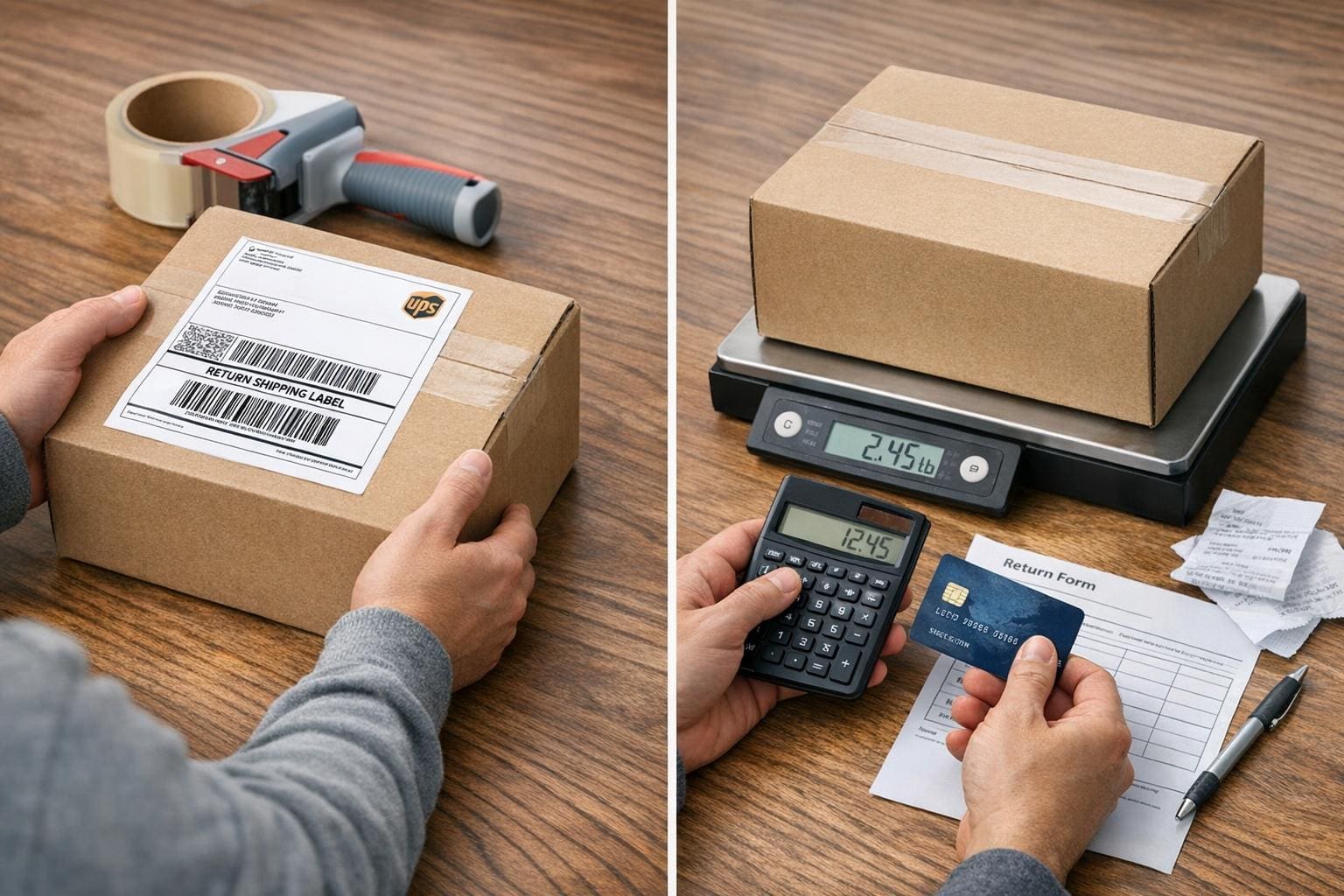
## Prepaid Return Label Vs Customer Paid Return Explained
The moment a package heads back down the conveyor belt, a quiet tug-of-war begins between convenience, cost, and customer sentiment. In the e-commerce symphony, the decision between a prepaid return label vs customer paid return is a conductor’s baton: subtle, powerful, and capable of changing the whole performance. This article explores both options like a storyteller with a spreadsheet — imaginative in framing, precise in the remedies.
### The Two Paths: How They Differ
Imagine two travelers returning home. One carries a ticket already paid for; the other must buy a fare at the station. A prepaid return label is that prepaid ticket—no stop at checkout required. A customer paid return is the traveler who pays upfront at drop-off or through the carrier portal.
Prepaid return label vs customer paid return therefore boils down to who shoulders the return costs and who controls the experience. Sellers pick prepaid labels to streamline returns and boost conversion; customers sometimes prefer the flexibility of paying only when necessary. Each path has trade-offs that ripple through logistics, brand perception, and accounting.
### Who Pays, Who Wins, And Who Loses
– Merchants offering a prepaid return label often see higher repeat purchases and improved net promoter score because returns feel frictionless. They also absorb the return costs and must manage label procurement and reconciliation.
– When customers pay returns, the seller saves on return costs but may endure higher friction, lower conversion, or negative reviews. Customers may feel penalized unless the policy is clearly stated or offsets are provided (discounts, store credit).
These dynamics influence everything from cart abandonment to inventory velocity. Consider the psychology: a prepaid return label removes the perceived risk of buying. A customer paid return transfers that tiny bit of risk back to the shopper.
### Operational Differences That Matter
#### Logistics And Processing
A prepaid return label standardizes the return path: specific carriers, return depots, and preapproved shipping dimensions. This predictability reduces processing time, lowers misrouted packages, and helps front-line staff process refunds or exchanges faster. On the flip side, customer paid return flows are more variable — different carriers, label formats, and variable transit times — which can increase labor and processing errors.
#### Accounting And Refund Flow
With a prepaid return label, the seller orders and pays for postage in advance, which shows up as shipping expense and requires tracking reconciliation. With customer paid return, refunds can be processed faster in some systems because the merchant doesn’t need to wait for postage reconciliation, but disputes can be common if the customer uses an unauthorized carrier.
#### Customer Experience And Brand Perception
The presence of a prepaid return label often signals confidence in product quality. The merchant is effectively saying, “Try it — returns are easy.” A customer paid return can be fine in markets where consumers expect to pay returns or for categories with low return rates, but it can deter purchases for high-return items like apparel.
### When To Offer Each Option
Offer a prepaid return label when:
– Item category has high return intent (apparel, footwear).
– You’re pursuing lifetime value and repeat purchase.
– You want to reduce customer support friction.
Consider customer paid return when:
– Items are low value and returns are rare.
– Margins are thin and return costs would erode profitability.
– You’re selling to a price-sensitive audience that expects lower initial prices.
## 1. Remedy: How To Implement A Balanced Prepaid Return Strategy
When the remedy is to make returns easier without blowing margins, you need a disciplined approach. Below are required materials and a step-by-step implementation plan to create a sustainable prepaid return policy.
#### Required Materials
– Return Management Software (RMS) or an integrated e-commerce returns module
– Negotiated carrier contracts or multi-carrier postage API access
– Analytics dashboard for returns and reverse logistics
– Clear written return policy and customer-facing templates
– Budget allocation for return costs and contingency
#### Step-By-Step Implementation
1. Audit historic returns data to identify high-return SKUs, return rates, and root causes.
2. Negotiate carrier rates or integrate a postage API to obtain discounted prepaid return label pricing.
3. Configure your RMS to auto-generate prepaid return labels for eligible orders (set thresholds by SKU, price, or customer segment).
4. Design the customer touchpoints: email, packing slip, and an easy self-service portal where the prepaid return label is instantly available.
5. Create guardrails to prevent abuse: limit the number of free returns per year, require return reason selection, or offer store credit instead of refunds for frequent returners.
6. Monitor return costs and customer satisfaction KPIs weekly for the first quarter, then monthly.
This formal, stepwise remedy aligns cost control with customer experience and ensures return costs are tracked and optimized.
### The Cost Equations: Simple Models
Calculating the break-even point for offering prepaid return labels requires modeling average order value, return rate, and refund processing costs. A simplified formula:
Expected Annual Return Cost = Average Return Cost Per Order × Number of Orders × Return Rate
If offering a prepaid return label raises conversion or repeat purchase sufficiently to increase revenue per customer above the incremental expected annual return cost, it’s often justified.
Return costs are not only postage. Factor in restocking, inspection, repackaging, and potential resale discount. When you include these, the economics of prepaid return label vs customer paid return shift.
### Addressing Abuse Without Alienating Customers
Prepaid labels can be abused (wardrobing, frequent returns). A humane and legal way to curb misuse includes:
– Clear return limits in policy language.
– Time-bound eligibility (e.g., return within 30 days).
– Incentivizing exchanges or store credit.
– Implementing lightweight fraud detection: flagging repeated returns or pattern behavior.
Be formal in enforcement: communicate policy changes, give warnings, and escalate only when necessary to preserve goodwill.
### UI And Messaging Best Practices
How you present the option matters. Labels that say “Free Returns” should be accurate. If you subsidize postage partially, be explicit: “Free Returns On Orders Over $50” or “Prepaid Return Label Provided For First Return.”
A simple design for the returns portal that offers a few clicks to print the prepaid return label reduces friction. If you adopt customer paid returns, embed a shipping cost estimator so customers can see return costs upfront — this honesty reduces surprise and returns-related disputes.
## 2. Remedy: Implementing A Customer Paid Return Workflow That Keeps Customers
If you must shift to a customer paid return model to protect margins, treat it as a service design exercise rather than a cost-pass. Below are required materials and a formal rollout plan.
#### Required Materials
– Shipping rate calculator embedded in product pages and returns portal
– Clear policy language posted and added to checkout
– Optional subsidized partial-credit vouchers for first-time returns
– Customer service scripts and training for explaining return costs
– Analytics to track conversion impact and complaints
#### Step-By-Step Implementation
1. Test messaging variations: “Customer Paid Returns” vs “Customer Covers Return Shipping” vs “Affordable Return Rates.”
2. Add a return costs estimator on product pages and in checkout to set expectations pre-purchase.
3. Roll out the customer paid option in a limited geography or product category to test impact on sales and returns.
4. Offer a hybrid option: paid returns for low-margin items, prepaid for high-margin or high-return categories.
5. Provide one-time vouchers or discounts to customers affected by higher return costs to maintain long-term loyalty.
6. Review KPIs (conversion, return rate, complaints) and iterate messaging and mechanics.
Be formal in tracking the financial impact; a small negative change in conversion due to customer paid returns can swamp short-term savings in postage.
### Measuring Success: Metrics To Watch
– Return Rate (by SKU and cohort)
– Net Promoter Score or CSAT related to returns
– Cost Per Return (postage + handling + restocking)
– Repeat Purchase Rate for customers who used prepaid labels vs customer paid returns
– Abuse Rate or high-frequency return accounts
When you combine these metrics, you’ll see whether prepaid return label vs customer paid return drives lifetime value or merely shifts costs.
### Legal And Regulatory Considerations
Some jurisdictions have rules about return windows and obligations. Maintain transparent documentation and ensure your practice aligns with consumer protection laws. Include clear instructions on who bears the return costs in the terms of sale.
### The Emotional Equation
Beyond spreadsheets, returns are emotional touchpoints. A prepaid return label can transform a frustrating experience into a moment of reassurance; a customer paid return can create friction that lingers. By aligning the chosen approach with brand values and cost realities, merchants can strike a balance between fairness and fiscal prudence.
(End of article — no summary provided.)