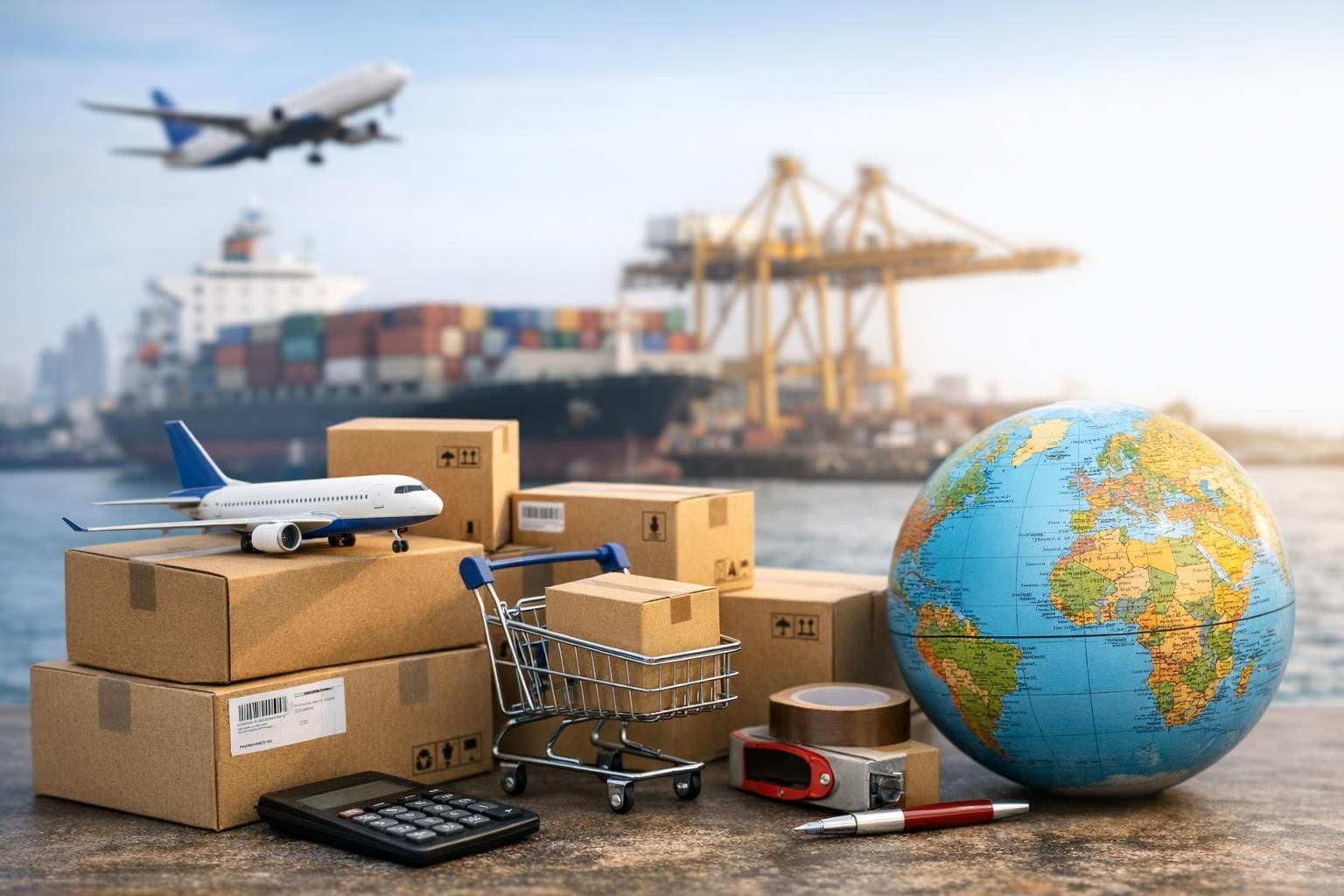
Effective international parcel movement demands a disciplined approach to carrier selection, packaging, documentation and timing. This article examines practical, cost-conscious strategies for exporters, small businesses and individuals seeking the cheapest way to ship internationally without compromising compliance or parcel integrity.
## Cheapest Way To Ship Internationally: Cost-Effective Options
### Factors That Determine Final Shipping Price
Several variables influence shipping costs. Understanding them allows shippers to select the most economical method.
#### Weight, Dimensional Weight And Volume
Carriers apply dimensional weight (DIM) pricing when package volume exceeds its actual weight. Accurately measuring and minimizing package size reduces the billed weight and lowers shipping costs.
#### Destination And Transit Speed
Transit zones and delivery speed heavily affect rate schedules. Slower economy services are almost always less expensive than express options, particularly for non-urgent consignments.
#### Nature Of Contents And Customs Requirements
Restricted or high-declaration-value items may attract higher fees, special handling and additional customs charges. Proper classification and documentation help avoid unexpected fees at the border.
#### Seasonal Demand And Fuel Surcharges
Rates fluctuate with seasonal demand and periodic fuel surcharges. Booking early and avoiding peak seasons can produce measurable savings.
### Common Low-Cost International Shipping Methods
#### Postal Services And Economy International Parcels
National postal services often provide the baseline cheapest way to ship internationally for small, lightweight items. Services labeled “economy” or “surface” are slower but cost-effective.
#### Consolidated Air Freight And Freight Forwarders
For shipments that are too large for regular couriers but not large enough to justify full-container loads, consolidation through a freight forwarder reduces per-unit rates by combining multiple consignments.
#### Sea Freight For Heavy Or Bulky Cargo
When time is not critical, sea freight or less-than-container-load (LCL) services represent the cheapest way to ship internationally for heavy or voluminous goods.
#### Hybrid Door-To-Door Solutions
Some platforms combine postal last-mile delivery with consolidated international carriage to deliver lower shipping costs while preserving convenience.
## Remedy 1: Consolidation And Optimized Packaging For Reduced Rates
### Purpose And Applicability
This remedy explains how to combine small shipments and optimize packaging to achieve the cheapest way to ship internationally for multiple parcels destined to the same region.
#### Required Materials
1. Rigid tape and tape dispenser
2. Approved cushioning materials (bubble wrap, corrugated inserts)
3. Right-sized corrugated boxes or poly mailers
4. Accurate scale and tape measure
5. Permanent marker and address labels
6. Access to a consolidation service or freight forwarder
#### Step-By-Step Process
1. Inventory And Grouping: Audit outgoing items and group those destined to the same country or region. Consolidation is most effective when combining several parcels into a single consignment.
2. Select Appropriate Container: Choose a box whose internal volume closely matches the combined items’ volume to avoid excess DIM pricing.
3. Internal Protection: Arrange cushioning to prevent shifting while minimizing unnecessary void space.
4. Weigh And Measure Accurately: Obtain precise weight and three-dimensional measurements to calculate the correct DIM weight.
5. Engage A Consolidator: Contact a reputable consolidation service or freight forwarder; provide manifest details and request a transporter quote that compares sea and air consolidation options.
6. Documentation: Prepare a single commercial invoice and packing list for the consolidated shipment, ensuring correct HS codes and values to minimize customs delays and avoid extra charges.
7. Insure Selectively: Acquire insurance only when necessary; evaluate declared value against insurance premium to determine cost-effectiveness.
8. Track And Confirm Delivery: Monitor the consolidated shipment to ensure onward distribution aligns with customer expectations.
### Benefits And Considerations
Consolidation reduces per-unit shipping costs, simplifies customs clearance for batch consignments, and often provides improved negotiation leverage with carriers. However, it requires coordination, slightly longer lead times and accurate inventory control.
## Remedy 2: Utilizing Freight Forwarders And Economy Carrier Services
### Purpose And Applicability
This remedy details how to leverage freight forwarders and economy carrier contracts to secure the cheapest way to ship internationally for small businesses and occasional exporters.
#### Required Materials
1. Detailed product list with weights and values
2. HS codes for tariff classification
3. Electronic copies of invoices and credentials
4. Access to forwarder portals or federated marketplaces
5. Basic understanding of Incoterms relevant to your sales model
#### Step-By-Step Process
1. Rate Solicitation: Obtain quotes from multiple freight forwarders and economy carriers. Request comparative quotes for both air consolidation and LCL sea options.
2. Compare Total Landed Cost: Evaluate quotes based on door-to-door total costs including duties, taxes, brokerage fees and last-mile surcharges. Do not rely solely on headline carrier rates.
3. Negotiate Minimum Guarantees: When consistent volumes exist, negotiate volume-based discounts or minimum guarantee rates for a set period to reduce volatility in shipping costs.
4. Select Appropriate Service Level: Opt for economy air or LCL sea for non-urgent shipments and express only when time-sensitive, as express surcharges drive up shipping costs.
5. Provide Accurate Documentation: Forwarders require complete and accurate documentation to avoid detention fees and customs penalties.
6. Schedule Regular Pickup Windows: Establish fixed pickup days to allow consolidators to plan manifesting optimally and retain lower rates.
7. Review Post-Shipment Invoices: Audit the forwarder’s invoices against the proforma quote and shipment records to ensure accuracy and reclaim overcharges when applicable.
### Advantages And Risks
Forwarders and economy carriers can reduce per-shipment charges and provide expertise in customs clearance, which reduces hidden costs. The trade-off is longer transit times and the need for reliable documentation to avoid delays.
### Tactical Tips To Minimize Shipping Costs
#### Use Zone-Based Strategy
Ship from the facility closest to the destination’s economic zone when possible. Multi-warehouse strategies reduce transit zones and therefore lower carrier zone-based pricing.
#### Explore Regional Postal Partnerships
Some postal services maintain bilateral agreements that result in discounted cross-border rates for small parcels. These can offer the cheapest way to ship internationally for B2C e-commerce at low weight brackets.
#### Reevaluate Packaging Regularly
Standardize to packaging that aligns with carrier palletization practices when shipping in volume. Avoid over-packaging that increases DIM weight and shipping costs.
#### Leverage Technology For Rate Management
Use rate management tools or marketplaces that display live comparative pricing across carriers. Automated shipping platforms can identify the cheapest way to ship internationally for each parcel based on size, weight and destination.
### Documentation And Customs Best Practices
#### Accurate Harmonized System (HS) Codes
Correct HS classification prevents mis-declared shipments that can lead to fines and unexpected customs duties, which inflate effective shipping costs.
#### Pre-Clearance Programs And Trusted Trader Status
Enroll in pre-clearance and trusted trader programs where available. These programs reduce customs delays and sometimes attract reduced inspection fees, lowering total landed costs.
#### Broker Selection
Select a customs broker with transparent fee structures. Low initial rates can be offset by high release or amendment fees if the broker lacks experience.
## Cost Comparison Examples And When To Choose Each Option
### Small, Lightweight Parcels
For parcels under 2 kg, standard postal economy services are typically the cheapest way to ship internationally. Compare rates from national post and major couriers’ economy tiers.
### Medium Volume, Non-Urgent Shipments
For repeated medium-volume shipments, consolidation via freight forwarders or LCL sea is often the most cost-effective approach. Negotiate volume discounts and fixed pickup schedules.
### Large, Heavy Or Oversized Cargo
When weight or oversize makes air freight economically prohibitive, sea freight LCL or full container load (FCL) solutions present the cheapest way to ship internationally despite longer transit times.
### Time-Sensitive Parcels
Express courier services are appropriate when speed outweighs cost; however, for routine shipments where time is flexible, economy services and consolidation will minimize shipping costs.
Ensure your operational choices align with customer expectations and the product’s commercial value. The cheapest way to ship internationally is ultimately the option that minimizes total landed cost while meeting service-level requirements and regulatory obligations.