Does Priority Mail Include Insurance? Quick Guide To Rates

does priority mail include insurance

Shipping an item for a pet supply business, a replacement part for an aquarium filter, or a gift to a friend raises the same essential question: will my shipment be protected if something goes wrong? This article explains how coverage works and how to buy extra protection so you can decide whether priority mail is the right option for your valuable or fragile items.

## Does Priority Mail Include Insurance? Quick Guide To Rates

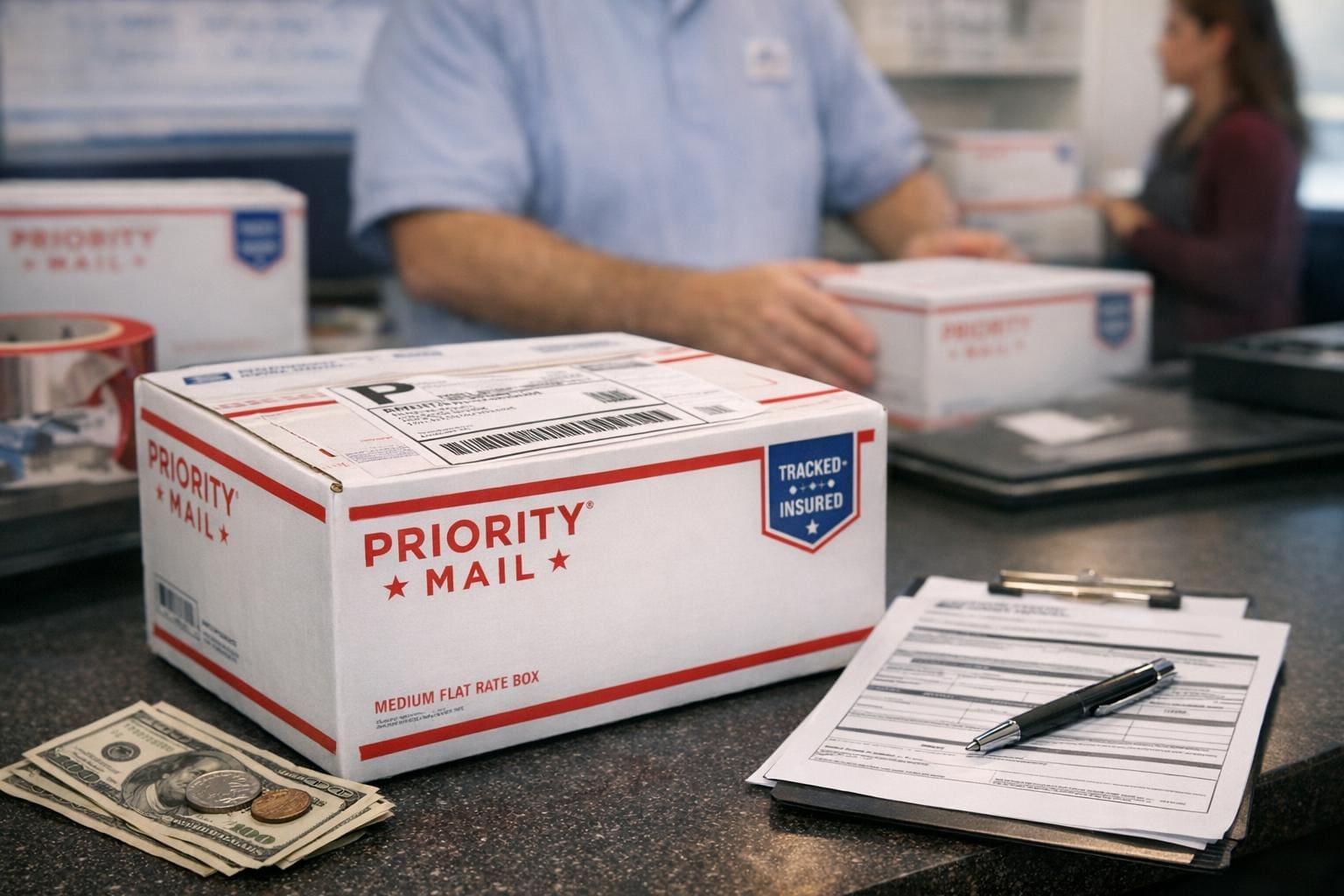
Does priority mail include insurance by default? In plain terms: yes, most Priority Mail services include limited coverage for loss or damage, but the amount included and the process for additional coverage vary. Understanding what is included, how to purchase extra protection (priority mail insurance), and how to file a claim will help you avoid unpleasant surprises.

### Who Receives Included Coverage

When asking does priority mail include insurance, remember coverage depends on how and where you bought postage:
– Retail purchases at a post office, online labels, and some specialized services may come with different default protections.
– Some types of Priority Mail shipments include a basic amount of coverage automatically; if you need more protection (for electronics, expensive pet medical supplies, or collectibles), you should add priority mail insurance manually.

### What The Default Coverage Usually Covers

Does priority mail include insurance for accidental loss and damage? Generally, the included coverage applies to loss, damage, or missing contents sustained in transit. Coverage typically requires:
– Proof of value (receipt or invoice),
– A record of the tracking number,
– Evidence of damage (photographs and packaging).

Keep in mind that coverage does not automatically protect against customs delays, normal wear and tear, or damage caused by improper packing.

### How Priority Mail Insurance Works

Priority mail insurance allows you to declare a monetary value for the item and purchase protection up to the maximum allowed by the carrier. Important points when you consider whether does priority mail include insurance for your shipment:
– If the included coverage is less than the item’s value, you can add priority mail insurance to cover the shortfall.
– Additional coverage is sold in specified increments and has a tiered pricing structure. The price you pay depends on the declared value you select.

#### Coverage Limits And Exclusions

When determining whether does priority mail include insurance enough for your needs, check these common limits and exclusions:
– High-value items (e.g., expensive electronics, jewelry, large cash amounts) may require special handling or a different service (Registered Mail or a private insurer).
– Certain items may be excluded from coverage unless special arrangements are made.
– Improper packaging can void a claim; always use appropriate packing materials for delicate pet products (glass bowls, aquarium components).

### How To Purchase Additional Insurance (Formal Procedure)

If you need more protection than the service includes, here is a formal, step-by-step method to buy priority mail insurance and document the shipment.

Required Materials:
– Purchase receipt or proof of value
– Tracking number and shipping receipt
– Photos of the item and packaging
– Completed insurance form (available online or at the post office)
– Payment method for the insurance fee

Step-by-Step Purchase And Documentation:
1. Prepare the package using sturdy materials and inner cushioning appropriate for the item’s fragility.
2. Determine the declared value you wish to insure (full replacement value is recommended).
3. At the post office or on the carrier’s online shipping portal, select the option to add insurance and enter the declared value.
4. Pay the insurance fee; keep the receipt that lists the declared value and insurance purchase.
5. Photograph the packed item from multiple angles and keep photos until the claim period expires.
6. Retain all transaction documentation, including tracking and sales invoices, in case you need to file a claim.

### Typical Rate Considerations (How To Estimate Costs)

A quick guide to rates focuses on tiers and practical estimation rather than fixed numbers, since carrier pricing changes periodically. To estimate whether priority mail insurance makes financial sense:
– Compare the value of your item to the included coverage. If the included amount is less than the item’s value, purchase additional insurance.
– Use the carrier’s online calculator or the post office counter to get the precise cost for the declared value.
– Consider the cost of alternative shipping services (Priority Mail Express, Registered Mail, or private carriers) if you need higher guaranteed coverage.

### When To Choose Additional Insurance For Pet Supplies

Does priority mail include insurance sufficient for pet supplies? For low-cost consumables (dry food, non-fragile toys), default coverage may be adequate. For higher-value items—expensive collars, specialized medical devices, or glass aquarium parts—buy priority mail insurance. Documenting value and packing carefully improves the likelihood of a successful claim if something goes wrong.

### Filing A Claim: Formal Steps And Required Evidence

If an insured Priority Mail shipment is lost or damaged, follow this formal claim process:

Required Materials For A Claim:
– Original sales receipt or proof of value
– Shipping receipt with tracking number
– Proof of insurance purchase (receipt showing declared value)
– Photos of damaged item and packaging
– A completed claim form (available online or at the post office)

Step-by-Step Filing Procedure:
1. Confirm the tracking shows loss or irreparable damage; allow reasonable transit time if tracking is delayed.
2. Gather all required documentation and photographs.
3. Complete the carrier’s claim form accurately; include itemized values and original purchase proof.
4. Submit the claim online (preferred) or at your local post office. Include digital copies of photos and receipts.
5. Retain copies of everything you submit and note any claim confirmation numbers.
6. Respond promptly to requests for additional information from the carrier. Processing timelines vary, and missing documentation will delay a resolution.

### Practical Tips For Protecting Shipping Value

To reduce the need for a claim even if the initial question — does priority mail include insurance — suggests partial coverage:
– Package fragile items with double-boxing and dense protective fill.
– Mark fragile items clearly; while not guaranteed to prevent damage, clear labeling supports a damage claim.
– Insure items to at least the amount you paid to replace them, not just their resale value.
– For international shipments, verify whether included coverage applies across borders and whether additional customs documentation is needed.

### Alternatives And When To Use Them

If you determine that default coverage is insufficient after asking does priority mail include insurance, consider:
– Purchasing a higher-tier service with higher default protections,
– Using Registered Mail or a private courier with higher insurance limits and tracked handling,
– Buying a third-party insurance policy that covers specific types of risk (especially for very high-value items).

### Monitoring Changes And Verifying Current Terms

Carrier policies and rate structures change. Before you finalize any shipment or purchase of priority mail insurance, check the carrier’s official site or ask a postal representative to confirm current included coverage, the maximum insurable value, and the exact rate schedule. This step ensures your planning is aligned with the most current rules and avoids unexpected coverage gaps.

### Practical Example: Estimating Whether To Buy Insurance

Consider an aquarium heater worth $120. Ask: does priority mail include insurance that covers the heater’s full value? If the included coverage is less than $120, add priority mail insurance for the difference. Document value with a receipt, photograph the packaged heater, and buy insurance for the full $120 declared value. Keep proof of purchase and tracking to speed any claim.

### Common Mistakes To Avoid

– Assuming included coverage equals full replacement value.
– Failing to purchase additional priority mail insurance when sending high-value or fragile items.
– Not keeping proper documentation and photos, which are critical for a successful claim.

After reading this guide, you should be able to answer “does priority mail include insurance” for your specific shipment and decide whether to add extra protection. Follow the formal purchasing and claims steps above and verify current rates at the time of shipping to ensure accurate coverage for your items.

Explore Priority Mail Delivery Time Map For Fast Shipping

priority mail delivery time map

A map can be more than colors on a grid; it’s a storyteller of movement, pace, and possibility. When packages seem to drift in a postal fog, a good map becomes a compass. In this article you’ll roam through interactive maps, decode transit color bands, and learn a formal remedy to shave days off shipments by leveraging the map like a logistics-savvy navigator.

## Explore Priority Mail Delivery Time Map For Fast Shipping
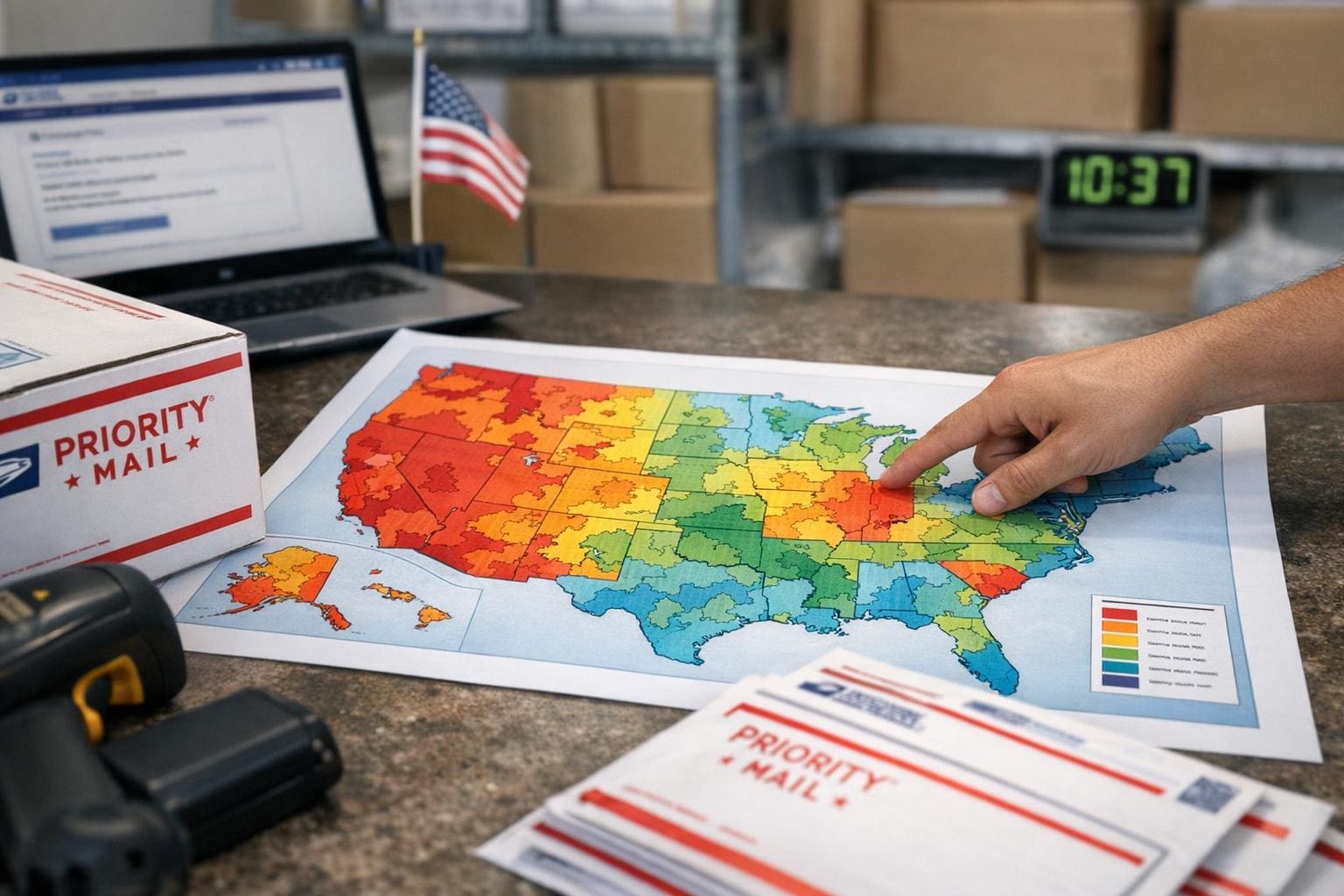
The priority mail delivery time map is the postal industry’s visual shorthand for speed. Whether you’re sending a birthday box across state lines or running a small e-commerce shop, the priority mail delivery time map explains where time is gained and where it can be lost. It layers geography, facility hubs, and service guarantees to display expected transit windows that help set realistic customer expectations and shape smarter routing decisions.

### What The Delivery Time Map Communicates
At a glance, the delivery time map translates complex routing into simple transit bands. It highlights:

– Typical ground transit days between origin and destination.
– Major processing centers that act as chokepoints.
– Regions where same-day or next-day service is likely versus areas that commonly require additional days.

This visual tool is not a promise but a predictive model based on historical performance and scheduled service paths. Understanding the delivery time map reduces guesswork and improves planning, especially for businesses that live and breathe timelines.

### How To Read The Priority Mail Delivery Time Map
Learning to interpret the priority mail delivery time map helps you make actionable choices. Start with these formal reading steps:

1. Identify Your Origin And Destination: Enter postal codes or click on the map to locate both points.
2. Note The Transit Band: Maps typically show 1–3+ day bands for Priority Mail. The color or label indicates expected days in transit.
3. Observe Intermediate Hubs: If the route passes through major processing centers, factor in handling time and peak-period slowdowns.
4. Check Service Notifications: Special advisories, like weather events or holidays, are often annotated and can alter the expected window.
5. Translate To ETA: Combine the transit band with the pickup date to estimate the priority mail eta for each package.

A careful read of the map and its annotations gives you a working ETA rather than a blind assumption.

#### Color Coding And Transit Bands
Most maps use progressive colors to denote day ranges—lighter shades for 1-day, mid-tones for 2–3 days, and darker shades for longer transit. Because these bands are statistical aggregates, local variations can apply. Always cross-check the map’s legend and any overlay tools that allow you to simulate departure dates to refine your priority mail eta.

#### Regional Nuances And Exceptions
Rural areas, islands, and locations serviced by air transport can have exceptions not obvious from continental map views. The priority mail delivery time map will often show an average transit window for these regions, but specific schedules and carrier partners may change the actual outcome.

### Priority Mail ETA: Factors That Shape It
Priority mail eta is influenced by a blend of operational and external variables. Some of the primary considerations include:

– Dispatch Cutoff Times: Late drop-offs may not enter the earliest processing cycle.
– Facility Load: High-volume post offices or distribution centers can introduce delays.
– Carrier Partnerships: Last-mile carriers and contract partners in remote regions can affect an ETA.
– External Disruptions: Weather, strikes, or regulatory disruptions may shift the timeframe.

The priority mail delivery time map incorporates many of these factors into an averaged projection, but prudent shippers treat the map as a planning tool, not an immutable timetable.

### Using The Delivery Time Map For Business Advantage
Creative fulfillment strategies draw directly from map insights. Examples include:

– Staggering shipments from different origins to smooth workload across hubs.
– Storing inventory in multiple regional fulfillment centers aligned with map transit advantages.
– Setting customer expectations by showing a map-derived ETA during checkout.

The delivery time map becomes a conversion and loyalty tool when communicated transparently—customers appreciate realistic timelines far more than optimistic promises that are later missed.

## Remedy 1: Optimize Shipments Using The Map
When delays threaten customer satisfaction, apply this formal remedy to optimize shipping cadence and improve priority mail eta. Materials and steps below are precise and actionable.

Materials / Required Items:
– Computer or smartphone with internet access
– Access to the official priority mail delivery time map or carrier portal
– List of origin and destination ZIP/Postal codes
– Shipping labels and packaging materials (boxes, tape, cushioning)
– Carrier account access or postage printing capability
– Calendar and pickup/drop-off schedule information

Creation And Application Steps:
1. Gather Shipping Data: Create a list of outgoing packages with their origin/destination postal codes and desired delivery date windows.
2. Consult The Map: Open the priority mail delivery time map and input each origin-destination pair to retrieve the transit band and any annotations affecting service.
3. Calculate Working ETA: For each package, translate the transit band into calendar days. Add handling buffer (typically 1 business day) to account for drop-off timing and local processing.
4. Choose Pickup Or Drop-Off Points Strategically: If the map indicates a facility near the origin with faster outbound routing, select that drop-off location rather than the closest branch. This can reduce the priority mail eta by re-routing through a faster hub.
5. Prioritize Labeling And Cutoff Compliance: Print postage and labels in advance and confirm daily dispatch cutoffs. Ensuring packages enter the earliest processing cycle helps meet the map-projected ETA.
6. Use Regional Inventory When Possible: If recurrent destinations fall into slower transit bands, consider prepositioning stock in closer fulfillment nodes to compress transit windows shown on the delivery time map.
7. Communicate ETA To Recipients: Provide the calculated priority mail eta to recipients and include a brief note about potential variances. Transparency reduces customer inquiries and raises trust.
8. Monitor And Adjust: Track actual delivery times against map projections for a rolling 30–60 day sample. Use discrepancies to adjust buffers and refine future ETA calculations.

This methodical approach treats the map as a predictive instrument and combines it with operational discipline to improve outcomes.

### Advanced Tactics To Shrink Transit Time
For those seeking marginal gains beyond the remedy above, consider:

– Consolidated Drop-Offs: Schedule pickups at high-throughput facilities during non-peak hours to minimize queue delays.
– Service Escalation: When the map shows marginal transit bands that threaten deadlines, upgrade to a guaranteed service or use overnight alternatives.
– Data Logging: Maintain a spreadsheet of actual transit times by ZIP pair to identify persistent variances from the map and to decide on permanent routing changes.

Each tactical change should be validated against cost considerations and customer expectations.

### Frequently Asked Questions About The Priority Mail Delivery Time Map
Q: How accurate is the delivery time map?
A: The delivery time map provides statistically-derived transit ranges. Accuracy is high for common routes but can vary due to seasonal loads and external disruptions. Use the map as a planning baseline and add a buffer when necessary.

Q: Can the priority mail eta change after shipment?
A: Yes. Events such as rerouting, weather delays, and processing exceptions can change the ETA. Tracking updates and carrier notifications will reflect any changes in real time.

Q: Should small businesses rely solely on the map for promises to customers?
A: No. Small businesses should use the map to form conservative ETAs and include operational buffers. Combining the map with real-world tracking and historical delivery data yields the best customer experience.

#### When To Re-check The Map
Always consult the map before major shipping waves—holiday seasons, product launches, or when dispatching to less common ZIP codes. Updated overlays and advisories appear regularly and can materially affect the priority mail eta.

### Practical Communication Tips Using Map Insights
Share map-based ETAs in customer-facing communications. Phrases like “Based on transit projections from the delivery time map, expected arrival is…” set a professional tone and prepare recipients for variability. Visual snippets or links to the relevant map region can also reassure recipients that the timeframe is data-driven.

A thoughtful blend of creative presentation and formal logistics planning transforms the priority mail delivery time map from a decorative image into a tactical asset you consult before every major shipment.

USPS Delivery Times By Service: Speed & Insurance Options

usps delivery times by service

The United States Postal Service offers a range of products intended to balance cost, speed and indemnity. Understanding how each product performs in real-world conditions helps shippers and recipients set expectations and select appropriate coverage. This article explains the major options, typical delivery performance, and how insurance and claims function across services.

## USPS Delivery Times By Service

USPS delivery times by service vary significantly depending on the product chosen. Priority Mail Express promises the fastest domestic transit, often overnight to most U.S. locations, while First-Class Package Service and Priority Mail cover different weight and cost trade-offs. When evaluating usps delivery times by service, consider both the published commitments and typical exceptions caused by weather, origin-destination distance and seasonal volume.

### Domestic Service Tiers And Typical Delivery Times

– Priority Mail Express: Guaranteed 1–2 business days for most U.S. destinations with money-back guarantee when service standards are missed. This service includes limited insurance and optional additional coverage.
– Priority Mail: Typically 1–3 business days depending on distance from origin to destination. Priority Mail balances cost and speed and includes some tracking and up to a defined insurance value for certain scenarios.
– First-Class Mail (Letters And Small Packages): Usually 1–5 business days for letters and small parcels under weight and size thresholds. First-Class is cost-effective but lacks the speed guarantees of premium services.
– USPS Retail Ground: Designed for less time-sensitive, oversized or heavy parcels; delivery times commonly range from 2–8 business days domestically.
– Media Mail: Economical for books and media; delivery times typically span 2–10 business days and are subject to content eligibility and occasional inspection delays.

When assessing usps delivery times by service, review the service standards published by USPS and use these as guidance rather than absolute guarantees (except where money-back guarantees apply).

### International Services And Their Commitments

International services carry a wide array of delivery expectations. Global Express Guaranteed (GXG) offers the fastest international option with 1–3 business days to major global markets. Priority Mail International and First-Class Package International Service are slower and subject to customs delays. Estimating international delivery times requires factoring in destination country processing and potential customs holds.

### How Insurance And Indemnity Work Across Services

Most premium services include some coverage or permit the purchase of insurance:

– Priority Mail Express includes limited insurance and offers higher indemnity options for declared value.
– Priority Mail includes some compensation for loss or damage in many cases, but shippers should buy additional insurance for higher-value items.
– First-Class and Retail Ground allow insurance purchases at the retail counter or online for items above default coverage levels.
– For international shipments, consider commercial value documentation and appropriate customs declarations to facilitate claims.

Choosing a service with appropriate insurance is as important as choosing usps delivery times by service. For valuable items, combine a faster service with purchased insurance to reduce transit risk.

### Tracking, Signatures And Added Protections

Tracking availability and signature options vary by product. Express and Priority services generally include tracking and can include signature confirmation or restricted delivery for higher security. Retail Ground and First-Class often include basic tracking for parcels but may not provide advanced signature services without add-ons.

In addition to physical security options, retaining proof of postage and photographs of packaging and contents are critical when filing claims. These materials substantiate loss or damage claims and expedite resolution.

### Estimating Delivery Performance And Service Speeds

USPS publishes service standards that express typical transit windows; however, actual usps service speeds are influenced by processing times, network congestion and local delivery conditions. For accurate planning, use the USPS online tools and historical performance metrics when shipping on tight deadlines. When comparing alternatives, weigh the differential in cost against the probability of meeting the required timeline.

### 1. What To Do If Delivery Is Delayed (Remedy)

If a shipment does not arrive within the expected timeframe, follow this formal, procedural remedy to document and pursue resolution.

Ingredients / Required Materials:
1. Tracking number for the shipment.
2. Proof of postage or receipt (Digital or physical).
3. Photographs of the item and packaging (if available).
4. Purchase receipts or proof of declared value.
5. Valid identification for claim submission.
6. Contact information for sender and recipient.

Step-by-Step Procedure:
1. Verify the tracking status using the USPS tracking portal and note the last scanned location and timestamp.
2. Allow an appropriate buffer period beyond the published delivery window (overnight or 1–2 business days for domestic Priority shipments; longer for other services).
3. If the tracking has not updated after the buffer, initiate an online inquiry via USPS’s “Missing Mail” or “Help” forms. Provide the tracking number and any supporting documentation.
4. If online inquiry does not resolve the issue within the timeframe specified by USPS support, file a formal claim for loss or damage using the USPS claims portal. Attach proof of postage, purchase receipts, photographs, and any communication logs.
5. Maintain copies of all submitted materials and note claim numbers and agent names. Respond promptly to any requests for additional information from USPS claims examiners.
6. If coverage was purchased at the time of mailing, include the insurance declaration in the claim. For insured Priority Mail Express shipments with guarantees, request the expedited review option where applicable.
7. If the claim is denied and the item’s value justifies further escalation, consider small-claims court or mediatory options consistent with USPS policy and local law. Retain legal counsel if the claim value is significant.

This structured remedy is designed to maximize the likelihood of successful recovery when delays occur. It emphasizes documentation, use of available online tools, and escalation when warranted.

#### Pricing Considerations And How They Affect Delivery Choices

Price is often the decisive factor when selecting a service. Higher usps service speeds command premium rates and sometimes include insurance or guarantees that offset additional cost. Evaluate not only sticker price but also the value of guaranteed delivery windows, included indemnity, and risk tolerance of the shipment.

#### Practical Tips For Choosing The Right Service

– For time-critical, high-value items: Use Priority Mail Express with declared value and signature options.
– For routine parcels under weight limits: Priority Mail typically offers the best balance of speed and price.
– For lightweight correspondence: First-Class Mail is cost-effective for non-urgent items.
– For bulky or weighty items not time-sensitive: Retail Ground or Regional Rate Boxes may reduce cost while accepting longer delivery windows.

Keep sender and recipient addresses standardized, include legible contact numbers, and avoid ambiguous packaging to reduce delays and misroutes that can extend published delivery times.

### Claims And Money-Back Guarantees

Some services, like Priority Mail Express, include a money-back guarantee when delivery commitments are missed. Filing a guarantee claim requires adherence to USPS’s rules on timing and documentation. For other services, claims for loss or damage are resolved based on provided evidence and declared value. When filing a claim, present clear proof of value and maintain transparent records of all communications.

### Frequently Asked Questions About Delivery Times And Speeds

– How do I compare service speeds? Consult published service standards and complement them with recent performance data when available. Real-world usps service speeds can vary from published standards due to operational factors.
– Is insurance included automatically? Certain services include limited compensation; for higher values or specific requirements, purchase additional insurance or declared value.
– What influences delivery times the most? Weather, local delivery density, origin-destination distance and seasonal volume spikes are primary factors altering expected delivery times.

Throughout the decision-making process, reference updated USPS resources and use tracking proactively to manage expectations. Accurate planning and appropriate insurance selection reduce the impact of delays and ensure that service choices align with shipment priorities.

### How To Estimate Transit Times For Planning

Use the USPS online postage calculators and service standard maps, then add contingency time based on current seasonality and known local factors. For international shipments, add typical customs processing windows. For time-sensitive items, choose services with money-back guarantees and document all steps taken to reduce risk.

Remember that evaluating usps delivery times by service is an ongoing exercise; monitoring performance over time and adapting shipping strategies yields better outcomes for both senders and recipients.