CN22 Vs CN23 Customs Forms Clash Shakes Global Shippers

cn22 vs cn23 customs forms

Customs paperwork is the truth nobody wants to argue about until a parcel goes missing or a shipment stalls at the border. That’s where the cn22 vs cn23 customs forms fight gets real: small sellers learn fast that the wrong label or an incomplete description can cost days, fines, or worse, a lost customer.

## CN22 Vs CN23 Customs Forms: What’s Different?

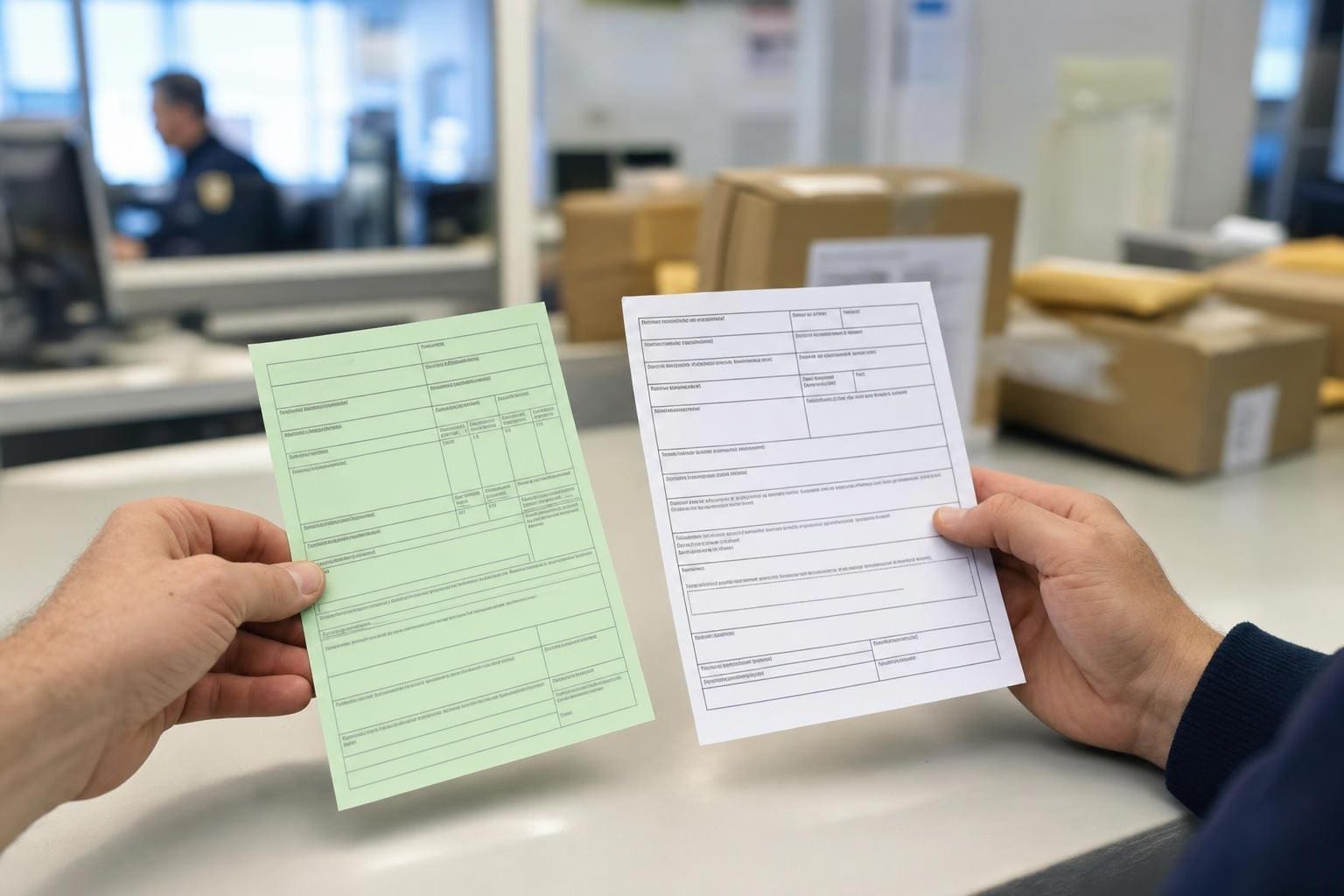
People toss the names around like they mean the same thing, but they don’t. The CN22 is the sticker you stick on small, low-value parcels — think samples, gifts, or small retail items under a certain value. The CN23 is the heavier hitter: used for more valuable or commercial shipments, and it needs a fuller set of declarations. The choice between them matters because customs officers use the form to decide duties, inspections, and whether the parcel needs extra paperwork.

When someone starts googling cn22 vs cn23 customs forms, they’re usually reacting to a problem: a returned parcel, a hold notice, or an unexpected VAT bill. The forms aren’t just administrative tedium; they’re the map customs uses to understand what’s in a box and why it’s crossing a border.

### Why The Forms Look Similar But Act Differently

Both forms ask for a description of contents, value, and sender details. But the CN23 demands more precision: harmonized system (HS) codes, the reason for export (sale, return, gift), and often an invoice or commercial declaration attached. CN22 can be hand-written on many postal labels and is meant for low-risk, low-value shipments. CN23 usually travels with a customs declaration form or a pro forma invoice. That extra paperwork changes how customs treats the parcel.

Because of that, small differences in how someone fills either form can change the whole outcome. A vague description like “clothes” on a CN23 can trigger an inspection; “t-shirt” with the right HS code may sail through. The devil is in the detail.

## Who Should Use Which Form

Businesses that ship regularly need rules rather than hunches. Use the CN22 when the package is within the postal service’s value threshold for small parcels and you’re not exporting goods commercially. Examples: a $10 sample sent to a buyer, a birthday gift under the value limit, or a low-cost accessory mailed to a friend. For larger transactions or whenever the carrier’s system flags the shipment as commercial, the CN23 is the correct choice.

If you’re a small e-commerce seller selling overseas, you’ll quickly learn to ask: Is this a commercial sale? Does the value exceed the small-parcel threshold? If yes to either, use CN23. If no, CN22 is usually fine. Practical rule: when in doubt, err on CN23 if you can attach more documentation; it reduces the chance customs will reclassify the shipment and hold it.

### Common Missteps Sellers Make

A lot of problems come from treating the forms as an afterthought. A seller writes “accessories” and the border agent sees “electronics” or “components” and seizes the package for inspection. Another common error is misdeclaring value to avoid duties; that’s rarely worth the risk. Customs databases talk to each other now; undervaluing a shipment invites penalties. Also, sellers who don’t include an invoice with a CN23 are asking for trouble. Customs wants to know the chain of transaction.

You’ll also see repeated mistakes with addresses. A slightly wrong postcode or incomplete customs details can send a parcel back across borders. I’ve seen dozens of parcels delayed because the sender forgot to write the recipient’s phone number — some countries require it for delivery. Small, avoidable things create large delays.

## How Carriers Influence The Choice

Different carriers treat the forms differently. National postal services often have one set of thresholds and will accept a CN22 for a wide range of small parcels. Express couriers like DHL, FedEx, and UPS often require a commercial invoice for commercial shipments and will push shippers toward CN23-equivalent documents. The carrier’s online export system may generate a CN23-like declaration automatically when you buy postage through them.

Here’s the practical takeaway: learn your carrier’s workflow. If your carrier auto-generates a CN23 for regular e-commerce shipments, follow that. If you use the post office for occasional gifts and samples, CN22 is often fine — just make sure the description and value are accurate. Don’t assume the label fell into a black box; carriers forward customs forms to the destination country’s customs authority.

### Cross-Border Marketplaces And Platform Requirements

Platforms like Etsy, eBay, and Amazon have built-in export workflows that will prompt for the right customs info. Still, sellers who bypass the platform and print their own labels can mess things up. Marketplaces typically prefer CN23-equivalent documentation for commercial sales; they may require HS codes. If you list an item as a gift but it’s sold through the marketplace, customs will not be fooled. That mismatch causes packages to be held while authorities verify the transaction.

If you sell through multiple channels, keep a cheat-sheet for each platform and carrier. Note the required form, the documentation, and how they expect HS codes to be entered. Over time, this saves you hours of follow-up and keeps customers happier.

## Real Costs Of Getting It Wrong

A delayed parcel is one thing. A returned parcel or a fine is another. But there are less obvious costs: a customer who loses trust, time spent answering inquiries, and the administrative headache of filing claims. For businesses operating on thin margins, a handful of misdeclared parcels can wipe out profit from a week’s sales.

Worse: if customs suspects fraud — undervaluing, false descriptions, or undeclared commercial intent — they can seize goods and penalize the shipper. For some items, like regulated tech or certain chemicals, the wrong form can mean a seizure and an investigation. That’s why the cn22 vs cn23 customs forms matter beyond paperwork.

### VAT, Duties, And The Growing Administrative Burden

Many countries have lowered or eliminated thresholds for VAT collection; that increases scrutiny on parcels. The CN23 is designed to feed customs systems with details they need to calculate duties and VAT. Shippers who use CN22 long past its intended scope end up in customs backlogs. The end result is higher compliance costs for everyone.

Cross-border VAT regimes are shifting fast. If you ship into the EU, the UK, or large emerging markets, expect new rules or stricter enforcement. That means more shipments will require the CN23 or equivalent declaration — and more sellers will need to learn to produce accurate invoices and HS codes.

## Filling The Forms: Practical Tips

Start with plain, specific descriptions. Instead of “merchandise,” write “cotton t-shirt, men’s size L.” Add quantity, weight, and unit value. If the item is handmade, say so. If it’s a sample, mark it clearly and attach any required pro forma invoice.

Learn basic HS codes for your most-shipped items. You don’t need perfect mastery, but being within the right chapter saves inspections. Many national postal services and trade associations publish lookup tools. Don’t rely solely on automated suggestions from marketplaces; double-check.

Keep copies of invoices and proof of export. If customs asks, you want documentation to hand over. For shipped returns, use return paperwork to show the item’s origin and value. Also, be realistic about packaging weights: an empty box with heavy padding can change carrier thresholds.

### When To Hire A Customs Broker

If you’re shipping regulated goods, high-value items, or large volumes, a broker pays for themselves. Brokers understand the nuances between CN22 and CN23 usage and can manage classification, duties, and special permits. For one-off sellers, a broker may not make sense. For any company with repeated issues or frequent international shipments, a broker reduces risk and often saves money in the long run.

Brokers also help for shipments that cross multiple jurisdictions or need special licenses. They deal with the paperwork customs officers ask for, and they keep up with rule changes you don’t have time to track.

## Cases Where CN22 Led To A Mess

I once worked with a designer who shipped 30 scarves to a buyer in another country. She used CN22 because each scarf was low cost. Customs flagged the whole lot as a commercial shipment. The carrier returned them because the paperwork didn’t match the shipment’s scale. The result: extra fees, returned goods, and a lost buyer. A single correct CN23 and invoice would have avoided all of that.

Another example: a seller marked earbuds as “accessories” on a CN22 to save time. The parcel was held because the target country required electrical goods to have safety compliance documents. The seller had to track down certificates and pay a review fee. Simple specificity in the description could have prevented it.

## Digital Tools And Automation

Shipping platforms are getting better at generating proper customs paperwork. Some will auto-fill HS codes, attach invoices, and choose the right form based on declared values. But automation is only as good as the input. If product listings are sloppy, the generated CN23 will also be sloppy.

Invest in clean product data: consistent titles, SKU-based descriptions, and accurate values. That makes any automated CN23 more reliable. Integrate your e-commerce platform with a shipping tool that supports customs documents. It reduces errors and keeps records organized.

### Data Hygiene: A Small Investment, Big Returns

Data hygiene is the dull part that pays. Use consistent naming (no odd symbols), keep dimensions and weights updated, and verify values regularly. When an item’s weight changes because of new packaging, update the record. Small mismatches between what your system says and what customs sees invite scrutiny.

Also, keep a library of common HS codes and descriptions for your team. Make one person responsible for customs training. That avoids the “someone said it was fine” problem that pops up when teams scale.

## Policy Shifts To Watch

Customs policy evolves. More countries are tightening inspection thresholds and demanding digital records. Watch for two trends: lowered de minimis thresholds and increased data-sharing between carriers and customs. Both trends push more shipments into the CN23 territory.

If your business relies on low-value shipments to multiple countries, track regulatory updates for your top markets. Trade associations and carrier alerts are useful here. Governments publish changes, too, but the notices are not always easy to parse unless you’re looking for them.

### Preparing For Rapid Change

Build flexibility into your shipping operations. Make your fulfillment team comfortable with both CN22 and CN23 workflows. Test changes in a controlled way: send sample shipments, monitor what customs requests, and refine your documentation. That small, iterative approach beats frantic fixes after a shipment has already been held.

## The Human Factor: Training And Accountability

Forms don’t fill themselves. Most mistakes come from rushed workers or unclear processes. Train staff to treat customs details as a front-line responsibility. Make a checklist for outbound shipments that includes verifying the form type, checking HS codes, and attaching invoices when needed.

Assign accountability. When something goes wrong, trace it back to the process failure. Fix the process. Don’t just re-issue the form and hope.

### Practical Training Exercises

Run simple drills: give a handler five sample orders and ask them to pick CN22 or CN23 and fill the fields. Compare answers and discuss discrepancies. Use real-life problem cases to teach nuance: returns, gifts, samples, and bulk sales all need different handling. Real examples stick better than abstract rules.

## When Customs Asks For More

If customs contacts you, respond fast and clearly. Provide invoices, proof of export, or regulatory permits as requested. Slow responses increase storage fees and can escalate penalties. Keep a template response ready with common attachments to speed things up.

Also, get your customer involved if their import rules require it. Sometimes the recipient needs to provide import permits or pay VAT. That’s part of the cost-of-sale conversation for cross-border transactions.

## International Nuances That Matter

Each country treats forms and thresholds differently. Some are lenient; others are strict. For instance, one destination may accept a CN22 for low-value cosmetics, while another demands the CN23 plus safety paperwork. Know your destination. Learn the specific requirements for high-volume markets because a one-size-fits-all approach will fail.

If you ship into several countries, compile a short country-guide: thresholds, required contact info, and any banned items. Keep it simple: bullet points for the team to follow when packing and labelling.

## How Tech Platforms Decide The Form

Many shipping platforms use value thresholds and product categories to decide whether to create a CN22 or a CN23. But they rely on the data you feed them. If a product is miscategorized as a “sample” when it is sold, the system will choose CN22. That’s why accurate product metadata and integration between listing platform and shipping tool is crucial.

If your systems aren’t integrated, build a manual checkpoint. A human verifies the form before the label prints. It sounds low-tech, but for many small operators, that checkpoint prevents the worst kinds of errors.

## Pricing Decisions And Customer Communication

Shipping costs, duties, and customs forms should be part of pricing strategy. Decide whether you will deliver duty-paid or duty-unpaid. Communicate that clearly at checkout. Surprises at delivery are the fastest way to lose customers. If you list items as “inclusive” but you underdeclare, you’ve made a business decision that could backfire.

Also, train customer support to handle customs queries. A scripted but honest answer saves trust. If a parcel is delayed due to customs, explain what information you need and how long the clearance usually takes. Don’t promise overnight fixes if the delay is on the customs side.

## Case Studies In Small-Scale Compliance

An artisan who pre-packaged and shipped jewelry stopped labeling packages as “jewelry” and started listing metals and weight precisely. Inspections stopped. Another seller of electronics moved to CN23 with full compliance documents and reduced returns from blocked shipments. Small changes, big impact.

It’s not about spending a fortune. It’s about being intentional and accurate. That beats guessing and hoping customs will be lenient.

## The Role Of Accurate Invoicing

Invoices are the single most important attachment to a CN23. The invoice should match the declared goods exactly, including value, currency, and HS codes if possible. Discrepancies between the invoice and the form are red flags. Keep copies on file. If customs queries an item, you’ll want proof of the sale price and terms.

Also, if you send free samples, still include a pro forma invoice that states value and reason for export. That clarity reduces the chance of a misclassification or a fee.

## Making The Decision: CN22 Or CN23

There’s no magic rule beyond the carrier and market thresholds and the nature of the shipment. Use CN22 for small, low-value, non-commercial shipments within the allowed limits. Use CN23 for everything else. If you can attach supporting documents and the carrier accepts them, CN23 is often the safer bet for commercial shipments.

Remember that the conversation is shifting. What used to be a CN22 parcel may now require CN23-level detail in many countries. Keep your processes flexible and your product data tidy. Small changes now will save headaches later.

Recieve a hold notice? Respond fast. Keep records. And when in doubt, check with your carrier or a broker — cheap advice beats an expensive customs problem. Adress the paperwork early and avoid the scramble at the end.

#### Quick Checklist For Each Outbound Parcel

– Correct form chosen (CN22 or CN23)
– Accurate, specific description
– Item value and currency consistent with invoice
– HS codes included when possible
– Recipient contact info complete
– Attach invoices or pro forma documents for CN23

#### When You’ll Definitely Need A CN23

– Commercial sale above the local de minimis threshold
– Items requiring permits or compliance documents
– High-value shipments or bulk orders
– Shipments going through express couriers that demand detailed declarations

Seperate your packing and documentation steps. That small discipline prevents a lot of errors that look trivial until they aren’t.

What To Put On Customs Declaration Reveals Hidden Risks

what to put on customs declaration

Start with this: if you lie or obscure details on the paperwork at the border, you’re not just risking a fine. You’re exposing your shipment, your reputation, and possibly your freedom. That’s the blunt truth people soften when they advise travelers or shippers about paperwork. But customs paperwork isn’t just about ticking boxes. It forces choices—what to declare, how much detail to provide, and when to be vague. Those choices have consequences.

## What To Put On Customs Declaration: Common Mistakes

People treat the question what to put on customs declaration like it’s a trivial formality. It isn’t. The top mistakes I see repeatedly are under-declaring value, describing items vaguely, and failing to list restricted or controlled goods. A mislabelled antique vase becomes a problem when a customs officer suspects commercial intent. A cheap watch declared as “accessory” can turn into a seizure if the paperwork and receipt don’t back it up.

If you’re shipping goods, you can’t rely on “gifts” as a catch-all label to dodge duties. If customs finds a commercial volume, they’ll reclassify items, levy duties, and charge penalties. For travelers, leaving your camera battery out of the list because you assume it’s spare can be a big oversight—lithium batteries have special rules. Know the categories. Write them down correctly.

### How Detail Changes Risk

When filling out customs forms, detail matters in three ways: legal clarity, logistical processing, and risk assessment. Legal clarity means that officials can quickly match your declarations to regulations. If you write “electronics” instead of “smartphone, model X,” they may open a deeper inspection. Logistical processing: accurate HS codes and values speed things up; wrong ones slow you down. Risk assessment: vague descriptions flag your package for a closer look.

Being precise isn’t about trying to outsmart the system. It’s about reducing friction. A detailed description plus a reciept or invoice that matches reduces the chance someone else will interpret your item as suspicious.

## Why Honesty Often Saves Money

Customs can impose fines that dwarf the duties you tried to avoid. For example, a shipment understated by 30% might face penalties of 20% or more on the unpaid duties, plus storage fees while it’s held. If you declare items honestly, you avoid recalculation and penalties.

There’s another angle people forget: insurance. Insurers often require the customs declaration to match the value on your shipping paperwork. Under-declare and you may find your claim rejected after damage or theft. Declare properly and your claim stands a better chance.

### Practical Steps To Fill Out Customs Forms Correctly

– Use specific item descriptions: “men’s leather shoes, size 10” rather than “clothing.”
– List the correct quantity and unit value. Don’t batch five items as one if they’re separate for resale.
– Include HS codes when possible. If you don’t know them, ask your carrier or a customs broker.
– Attach invoices and receipts that match declared values.
– Note restricted components like batteries, plant material, or animal products.

A few carriers and countries allow digital attachments. If you can upload a purchase invoice, do it. That single file can prevent a customs hold.

#### When To Hire A Customs Broker

If you ship frequently, handle bulk shipments, or import regulated goods (pharma, food, tech with dual-use components), a customs broker pays for themselves. They know tariff schedules, can advise on correct HS codes, and catch mistakes before your shipment is stopped. Brokers also negotiate or contest duty assessments, which is useful when valuations are subjective.

You don’t need a broker for a single personal item, but if you regularly answer the question what to put on customs declaration with guesses, get professional help.

## The Gray Areas That Cause Real Trouble

Some items live in legal gray zones or depend on the destination country’s rules. Examples: secondhand electronics, repaired goods, or items with mixed materials (animal skins plus synthetic fabrics). For instance, declaring an old leather jacket without noting the animal origin can trigger wildlife trade regulations in some countries.

Another common gray area: samples and prototypes. Marking something as “sample—no commercial value” won’t always be accepted. Customs looks for intent: if there’s a commercial label, multiple units, or accompanying price lists, they’ll treat it as commercial. Be ready to prove otherwise with supporting documents.

### Travel-Specific Pitfalls

Travelers often wind up in trouble by not separating commercial items from personal effects. Bringing back a box of gifts? Don’t assume “personal use” covers it. If you exceed duty-free allowances or bring in items intended for sale, declare them properly. Also, remember that unrestricted personal items like prescription medication may still need documentation. A doctor’s note, original packaging, and a prescription can save a lot of trouble.

Subtle items trip travelers up too. Declare large amounts of cash or monetary instruments. Many countries require you to report sums above a threshold—failure to declare can lead to seizure.

## How Enforcement And Technology Change The Game

Customs agencies increasingly use data analytics and risk profiling. They cross-check shipment data with other databases: invoices, carrier manifests, trade histories. That means inconsistencies that used to slip through are likelier to get flagged. A mismatch between the declared value and the market price of an item can trigger an audit.

Mobile lounges and e-gates make declarations faster at airports, but digital declarations also create an audit trail. You can’t claim you scribbled something hastily when everything is timestamped. That accountability is good if you were honest; it’s a problem if you tried to shade facts.

### Red Flags Customs Officers Watch

Customs officers look for patterns more than single errors. Red flags include:
– Repeated low values for high-ticket goods.
– Vague descriptions that differ across documents.
– Frequent shipments from the same sender marked “gift.”
– Missing invoices or purchase proofs.

If your shipments have any of these flags, expect delays and inquiries. The fix is simple: stop repeating the same behavior and provide clear documentation.

## Common Misconceptions About Declaring Gifts And Samples

Many people believe labels like “gift,” “sample,” or “personal use” automatically exempt them from duties. They don’t. Exemptions depend on value, quantity, and country rules. Small gifts may be duty-free; a box with five identical branded items probably isn’t.

Another misconception: that declaring an item as “used” avoids taxes. Customs cares about value and intent, not an item’s age. A “used” designer handbag could still be dutiable based on its assessed value. If you want to lower duties legitimately, provide proof of purchase date and prior use; be prepared to show that the current value is reduced accordingly.

### Paper Trail Best Practices

Keep a folder—physical or digital—of receipts, invoices, and correspondence for every shipment or valuable travel purchase. If customs asks for proof, you want to present it quickly. This is especially true for items that have subjective values like art or antiques. A recent appraisal or a purchase invoice can prevent a revaluation that hikes your duty.

Don’t throw away import papers after transit. They can help resolve disputes months later.

There’s no magic wording that fits every situation when people search for what to put on customs declaration. The right answer is simple: accurate descriptions, consistent values, and supporting documents. Be clear, not clever. Be specific, not vague. The small extra effort up front avoids headaches later and keeps your goods moving.

Step By Step Guide To Filling Out USPS Customs Forms?

step-by-step guide to filling out usps customs forms

## Step-By-Step Guide To Filling Out USPS Customs Forms For International Shipments

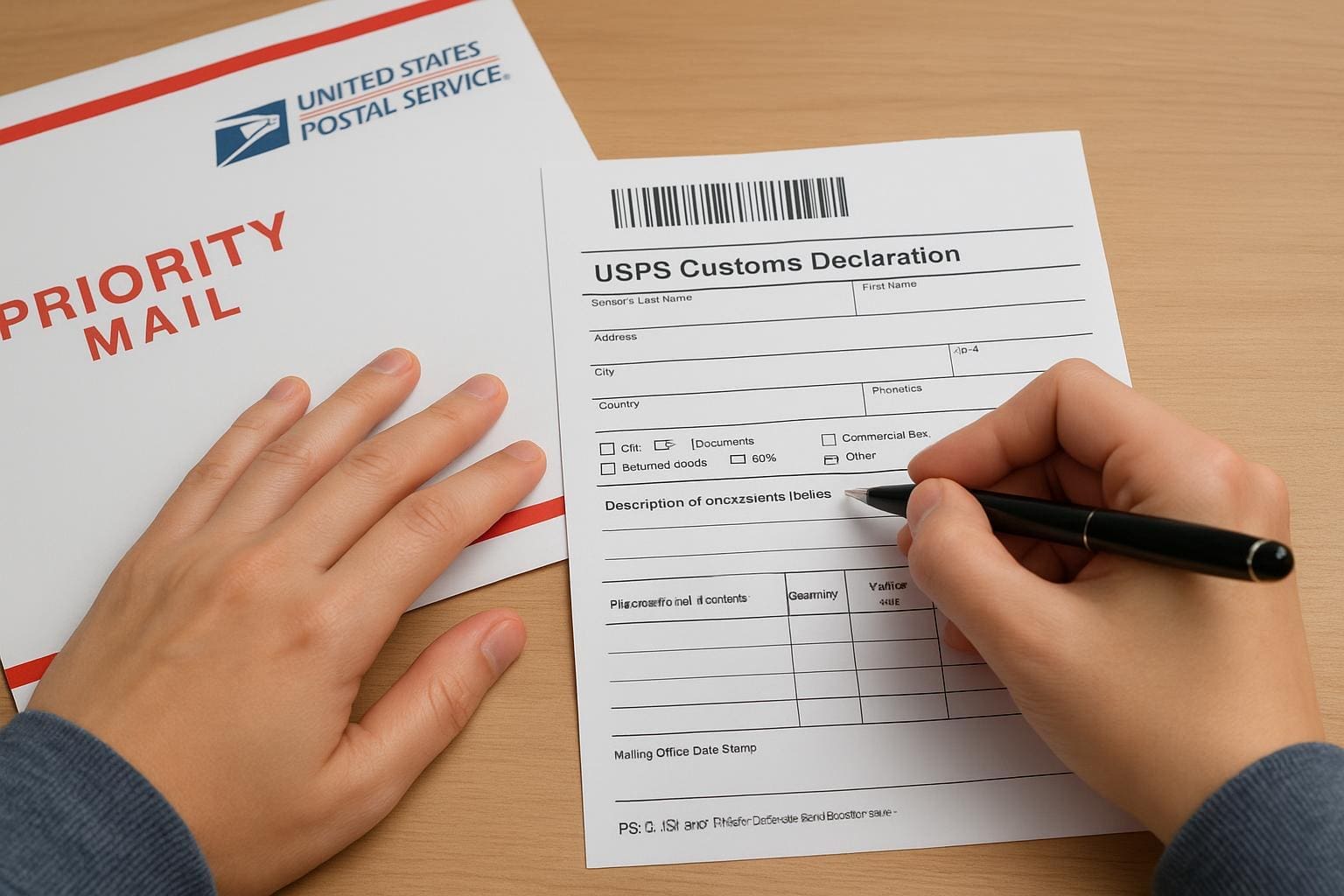
If you’ve shipped abroad even once, you know the paperwork can feel like the worst part. This step-by-step guide to filling out usps customs forms strips the guesswork away and walks you through what to write, where to sign, and what to avoid so your package doesn’t get stuck at customs.

### Which Form Do You Need And Why It Matters

There are a few different usps customs forms, and using the wrong one is the quickest way to create a delay. For small parcels and envelopes that weigh less than 4 pounds and are being mailed to most countries, you’ll typically use CN 22 (often printed with labels or as PS Form 2976). For heavier or higher-value packages, CN 23 (PS Form 2976-A) is required. CN 23 has more fields for detailed descriptions and value breakdowns.

Pick the right form before you start. If you try to squeeze detailed information onto a CN 22 when the destination requires CN 23, customs will likely hold the item for clarification. That’s a waste of time and money.

### The Exact Phrase To Remember (And Use Often)

This article is a step-by-step guide to filling out usps customs forms, not a theory class. Expect hands-on tips, sample entries, and the common mistakes people make when they rush.

### Gather What You Need First

Before filling anything out, put these items on the table:

– The package and its contents
– Sales receipts or invoices for declared value
– Full sender and recipient addresses (including postal code)
– Harmonized System (HS) codes, if you can find them for your items
– A printer, if you’ll use online forms
– Pen and ruler, if filling out paper forms

If you’re mailing a gift, write “GIFT” in the description field. If it’s merchandise, mark “SOLD” and include the total value. Don’t guess the value. Customs officers can and will ask for proof. I once saw a seller declare a watch as “accessory” with no value — the package was held for weeks.

### How To Complete The Sender And Recipient Sections

These are straightforward, but sloppy handwriting or missing details causes returns. Use block letters if you’re writing by hand.

– Sender: Full name, street address, city, state, ZIP, and country. Include a phone number and email if possible.
– Recipient: Full name exactly as used at the destination. Some countries require ID matching the name on the package. Add phone number and accurate postal code.

Double-check country names. Use the official country spelling — not abbreviations. If the recipient’s address has an apartment or suite number, don’t skip it.

### Describe The Contents Clearly

This is the place where people get creative and vague. “Clothing” is okay. “Electronics” is not detailed enough. Customs wants a clear idea of what’s inside without opening the box.

– Use short, specific phrases: “Men’s cotton T-shirt,” “Stainless-steel kitchen knife,” “Lithium-ion battery (contained in equipment).”
– For multipacks, list each item and quantity. “3 × ceramic mugs.”
– Avoid vague terms like “samples,” “parts,” or “accessories” unless you immediately clarify.

This step is central to a step-by-step guide to filling out usps customs forms because a clear description speeds customs clearance.

### Declared Value And Why It Matters

Declared value is what customs uses to assess duties and taxes. You’re required to use a truthful value — not a lower number to dodge fees. For commercial items put the sale price. For gifts, estimate fair market value.

State currency clearly. If the form asks for USD, convert other currencies. If you send an item worth $1,200 and write $200, expect trouble. Customs will ask for receipts, order confirmations, or invoices.

### HS Tariff Codes: Do You Need Them?

HS codes identify the type of goods for duty calculation. Not every sender can find the right code, and many small senders skip it. If you can supply the HS code, include it — it helps customs, especially for bulk or regulated items. For common items like clothing or books, an HS code saves time.

If you don’t have one, the postal agent or an online lookup can help. It’s not mandatory on every usps customs form, but it’s a good habit for regular shippers.

### Declaring Restricted Or Prohibited Items

Don’t try to be clever. Certain items need permits or are outright prohibited. These include, but aren’t limited to: weapons, hazardous materials, some foodstuffs, plants, and certain batteries. Lithium batteries are a major headache — they need special handling and declarations.

If you misdeclare a restricted item, the package may be returned or destroyed. Save yourself the trouble and check the destination country’s import rules first.

### Weight And Quantity — Be Accurate

Customs officers use weight to verify contents. If you understate weight by a lot, they’ll flag it. Weigh the package on a reliable scale and enter gross weight (including packaging). Write quantity next to each described item.

### Signature And Certification

Near the end of the form you’ll find a declaration that the information is true and that you’re signing under penalty of perjury in some cases. Sign and date it. Without a signature the form is invalid and the package can be held.

If you’re using an online label, the signature will be electronic. Keep a copy of the supporting documents you used to prepare the form — receipts, invoices, or photos.

### How To Attach The Form To The Package

For CN 22, there is usually a space on the printed postage label or a small sticker to attach. CN 23 often comes in a clear plastic pouch (CP 72) that sticks to the outside of the package. If you print a customs form online, attach firmly in the pouch or tape around the edges to prevent water damage. Don’t tape over barcodes or important fields.

Include copies of invoices or packing lists inside the package for larger shipments. That way, if customs opens the package, they still have the paperwork.

### Filling Out Forms Online Versus By Hand

Using USPS.com or approved postage vendors to fill out forms is faster and reduces errors. Online systems often validate addresses, calculate postage, and guide you through fields. But they won’t choose the right HS code for you. If you’re filling things out by hand, use a ballpoint pen and write legibly. Print in BLOCK LETTERS.

For frequent shippers, set up templates with common item descriptions and HS codes to speed future shipments.

### Common Mistakes And How To Avoid Them

These are the recurring issues I see:

– Vague descriptions: “gift” without detail.
– Missing recipient phone number: some countries won’t accept without it.
– Wrong currency or omitted value fields.
– No signature or incorrect date.
– Incorrect form type: using CN 22 for items that need CN 23.
– Mislabelling commercial goods as gifts to avoid duties.

This step-by-step guide to filling out usps customs forms stresses clarity. Don’t be tempted to skip details to “simplify” the form.

### If Customs Contacts You

If customs reaches out, respond quickly. Provide invoices, proof of shipment, or other requested documents. Slow replies mean longer holds and potentially returned items.

Keep digital copies of everything. I once had to resend an invoice three months after shipping because customs changed their request. Being organized saved the shipment.

#### How Duties And Taxes Are Calculated

Duties are set by the destination country, not USPS. Customs uses declared value and HS codes to calculate taxes. Some countries have duty-free thresholds (e.g., items under a certain value). If your recipient is responsible for duties, note that clearly on the shipping label or tell them ahead of time.

If you choose to pay duties on behalf of the recipient using cash on delivery or a brokerage service, check if your postal product supports it. Not every usps customs form option includes prepaid duties.

#### Tips For Specific Shipping Methods

– First-Class International: Cheaper, but limits on weight and tracking. CN 22 is common here.
– Priority Mail International: Includes better tracking and faster delivery. CN 23 may be required for higher-value items.
– Priority Mail Express International/Global Express Guaranteed: Premium options, often have detailed customs support.

Choose the mail class based on value, tracking needs, and budget. Cheaper isn’t always better when customs is involved.

### Real Example Entries (Practical Samples)

Here are concise examples to show what “good” looks like:

– Item: “Women’s cotton blouse, 1 pc” — Quantity: 1 — Value: 25.00 USD — HS Code: 6206.40 — Weight: 0.2 kg — Purpose: SOLD
– Item: “Handmade ceramic vase” — Quantity: 1 — Value: 45.00 USD — HS Code: 6913.10 — Weight: 1.1 kg — Purpose: GIFT

Put the currency, value, and purpose next to each line item if the form allows. If there’s limited space, include the most important details: full description, value, and purpose.

### Where To Find Help And Official Resources

USPS provides support pages and videos, and your local post office can usually advise on form choice. For tricky items like electronics with batteries or restricted goods, contact the destination country’s customs website or a customs broker.

Using the official USPS online form generator reduces mistakes because it formats the CN 22 or CN 23 correctly and prints the barcodes needed.

### Handling Returns And Undeliverable Packages

If a package is returned, inspect the returned form for reasons: insufficient address, unpaid duties, or prohibited item. Learn from it and correct the error before reshipping. If customs destroyed the contents, you might need to file insurance or claim forms depending on the reason. Keep records. I once had a returned package because “color mismatch” was marked — turns out the recipient hadn’t confirmed color choices. A quick call could have avoided the return.

This second step-by-step guide to filling out usps customs forms point: document everything and communicate with recipients in advance.

### Final Practical Notes Before You Ship

Always retain copies of the form and associated receipts for at least six months. Customs questions can arise late. Be honest about contents and value. If the package contains multiple items, list them individually if possible. If you’re shipping something delicate, note “Fragile” separately but remember that “Fragile” doesn’t affect customs; it’s for carriers.

Remember, this is a step-by-step guide to filling out usps customs forms designed to get your parcel moving, not stuck. Small details matter. A misplaced decimal, a missing phone number, or a vague description can add days or weeks to delivery time.

If you want, I can walk you through a sample form for a specific item you plan to send and show exactly what to write. Just tell me the contents, value, weight, and destination country and I’ll help fill it out step by step — and make sure you don’t accidentally mislabel anything before you go to the counter.