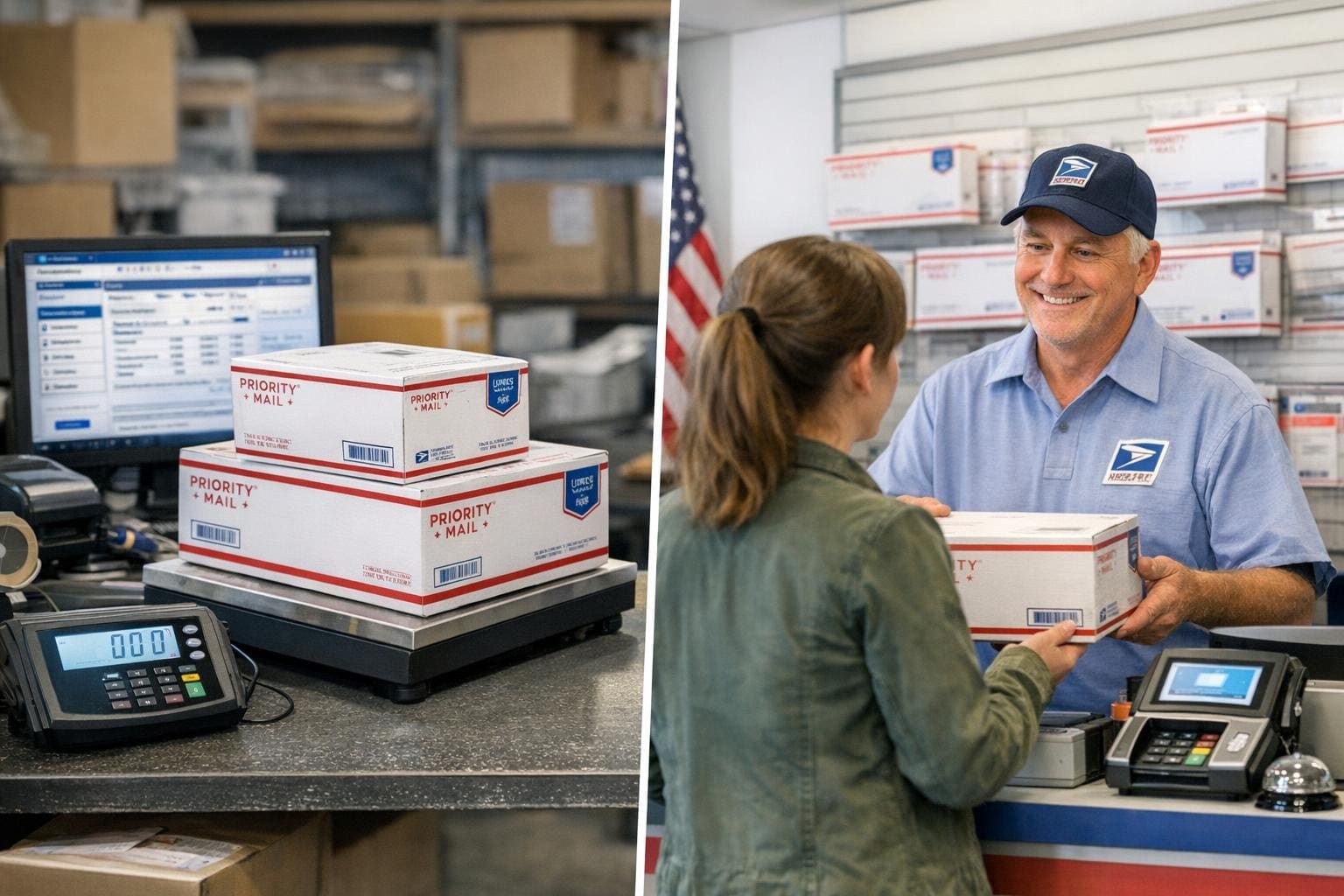
The secret is out: small businesses and savvy sellers have been quietly siphoning off massive savings from a giant most people think of as “just the post office.” Once you hear the numbers, you’ll feel cheated — unless you learn the insider tricks that turn postage from a profit-sink into an advantage that feeds your bottom line.
## USPS Commercial Rates Vs Retail Rates: The Insider Edge
The showdown you didn’t know you needed: usps commercial rates vs retail rates. This isn’t just a few pennies here and there. It’s a multi-billion-dollar gap carved into the way postage is sold. Retail vs commercial battles daily over how much you pay for the exact same Priority Mail box or First-Class envelope. When the scales tip in favor of commercial methods, businesses pocket discounts so dramatic they can undercut competition or absorb shipping with no margins lost. For anyone who ships more than a couple of packages a month, ignorance here is expensive.
### Why The Difference Feels Like Theft
Hear this and shudder: the Postal Service charges different prices for identical services based entirely on how you buy them. Walk into a Post Office and pay at the counter? That’s retail pricing. Print your label online through a USPS-approved vendor, or use a permit imprint or postage meter? That’s where usps commercial rates live, sometimes offering discounts of 20% or more on popular services. This isn’t a complex tax — it’s a distribution of convenience and volume discounts, and the Postal Service has structured its rates to reward electronic acceptance, automation, and volume.
### The Mechanics Behind The Discounts
The logic is straightforward and coldly efficient. Commercial rates exist because online shipping and permit systems reduce labor costs and speed handling. Those efficiencies translate into reduced fees. So when you compare usps commercial rates vs retail rates, you’re really comparing the cost of manual handling and counter-service overhead versus streamlined, automated fulfillment. Add in high-volume bargains like Commercial Plus and the gap widens even more.
#### How Big Is The Gap?
An illustrative example: a 2 lb Priority Mail parcel could cost $8.50 via commercial base pricing but $11.25 at retail — numbers that vary with zone but demonstrate the magnitude. Multiply that by dozens or thousands of shipments each month and you get the astronomical real-world impact.
## The Hidden Triggers That Move You Into Commercial Pricing
Some sellers assume that only Fortune 500 companies can access discounts. Not true. Several triggers can move an account into commercial pricing territory:
– Using Click-N-Ship, PC Postage, or permit imprint
– Paying via online postage vendors and printing barcoded labels
– Meeting minimum monthly volumes for Commercial Plus tiers
These are the operational keys — not political connections or secret handshakes.
### Retail Vs Commercial: Common Pitfalls
The retail vs commercial conflict often boils down to three avoidable mistakes:
1. Paying at the counter instead of printing labels ahead of time.
2. Using non-integrated solutions that force manual processing.
3. Ignoring third-party postage options where valid.
Avoid those and you neutralize the most common traps that keep businesses paying retail when commercial would save them.
## How To Claim Commercial Rates (The Remedy)
This section describes a practical, formal set of steps to obtain commercial pricing. Follow precisely to transition from retail to commercial rates efficiently and compliantly.
#### Required Materials And Information
– Legal business name and address
– Employer Identification Number (EIN) or Social Security Number (for sole proprietors)
– USPS business account registration (e.g., Business Customer Gateway)
– Scale capable of weighing packages accurately
– Computer with internet access
– Thermal label printer or standard printer and label stock
– Optional: Permit imprint or postage meter (for permit-based postage)
– Optional: Account with a PC Postage provider or approved reseller (Stamps.com, Endicia, ShipStation, etc.)
#### Step-By-Step Enrollment And Application
1. Register Your Business Account
– Create an account on the USPS Business Customer Gateway. Use your business name and EIN to ensure your shipping profile is recognized as commercial.
2. Choose A Commercial Method
– Decide whether to use Click-N-Ship Business, a PC Postage provider, a permit imprint, or an approved shipping platform. Each grants access to commercial base rates; high-volume users should investigate Commercial Plus eligibility.
3. Acquire Necessary Hardware
– Obtain a certified scale and a reliable label printer. Accurate weights and machine-printed labels are prerequisites for online postage and help avoid reweigh charges.
4. Integrate Software Or Vendor Services
– Set up your chosen provider. Enter package dimensions, weight, and service preferences. Configure account billing and ensure USPS-acceptable manifesting.
5. Test And Validate
– Print several labels and process them through your normal shipping flow. Verify that the postage printed reflects commercial pricing and that tracking numbers scan correctly at drop-off or pickup.
6. Implement Best Practices
– Always pre-print labels when possible. Use address validation tools to reduce returns. Schedule pickups or use permit-based drop-offs to maximize automation.
7. Monitor Volume And Apply For Deeper Discounts
– Track monthly shipments. As volume grows, contact USPS regarding Commercial Plus or other negotiated rates. Provide shipping manifests and historical data when requested.
8. Maintain Compliance
– Keep records of postage usage and manifests per USPS requirements. Ensure non-compliance does not trigger retroactive charges.
Follow these steps to systematically migrate your operation from retail pricing to the efficiencies of commercial rates.
### When Commercial Plus Matters
If your monthly volume climbs, Commercial Plus pricing can deliver even larger savings but requires more negotiation, data sharing, and sometimes contractual arrangements. Prepare shipment data and projected volumes in advance; transparency helps secure superior tiers. This part of switching to commercial can be technical — enlist your shipping platform or a consultant if necessary.
## Real-World Examples That Feel Like Insider Trading
Imagine an Etsy shop selling 500 small sculptures monthly. By printing labels online through a PC Postage provider, the owner moves from retail to usps commercial rates and reduces shipping cost by an average of $2.75 per package. That’s $1,375 monthly in reclaimed margin — enough to hire help, advertise, or simply expand SKU variety. This is not hypothetical; it’s the everyday outcome for sellers who move method rather than mind.
### Beware Of The Myths
Don’t be fooled by three persistent myths:
– Myth 1: You need massive volume to access commercial pricing. False — small businesses can access commercial base rates today through online tools.
– Myth 2: Commercial rates are a trap with hidden fees. Not inherently; transparency is the key. Use reputable vendors and monitor invoices.
– Myth 3: Switching costs outweigh savings. Often the opposite; initial setup is minor and savings recur.
## Tactical Tips For Maximizing The Insider Edge
– Consolidate shipments where feasible to reduce per-package zone pricing.
– Use regional rate boxes or flat-rate where the math supports it — sometimes retail flat-rate is still better for heavy but short-distance shipments, so know when to choose.
– Audit postage monthly. Even small misconfigurations add up.
– Leverage address validation and automation to cut return and reweigh fees.
### The Final Accounting: Numbers That Bite
When you look at your P&L, shipping is rarely inert. It either drains margin or feeds growth. Transitioning to usps commercial rates is one of the simplest operational changes with measurable impact. The battle of usps commercial rates vs retail rates is not academic — it’s monetary, recurring, and winnable.
#### Quick Checklist Before You Change
– Do you have a business account? If not, create one.
– Are you printing labels electronically? If not, start immediately.
– Is your volume tracked? Prepare data to ask for Commercial Plus if you qualify.
– Are your packaging and scale accurate? Invest here if not.
The gap between retail vs commercial is not a mystery reserved for corporate shipping managers; it’s a lever any informed shipper can pull to gain a decisive edge.