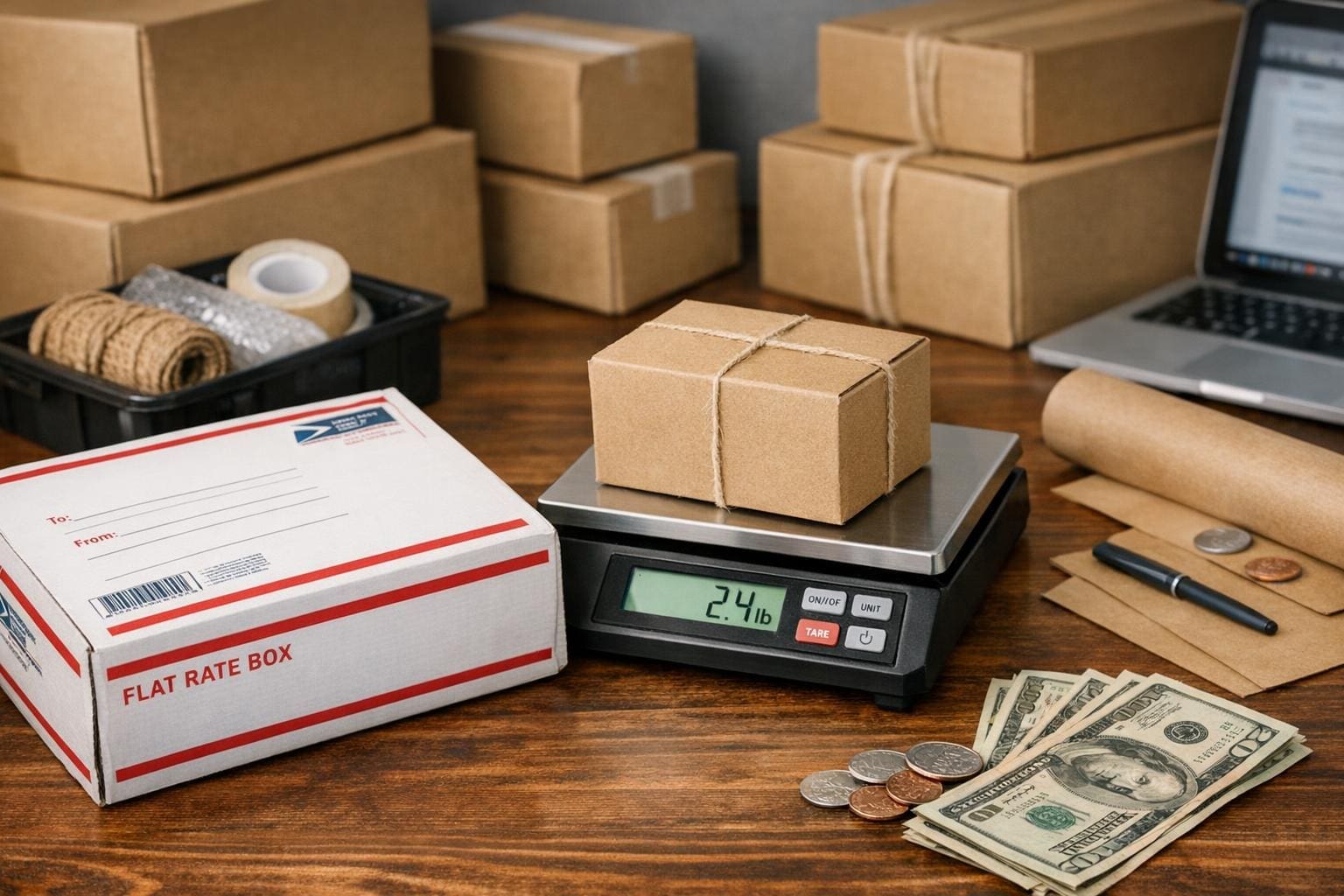
Shipping cost can surprise small businesses and individual sellers alike. Choosing between carrier-calculated pricing and a flat fee option takes more than instinct: it requires quick math, an understanding of weight and dimensional pricing, and a sense of how often you ship. This guide shows the practical calculations and decision steps so you can answer clearly: when is flat-rate shipping worth it.
## When Is Flat-Rate Shipping Worth It: A Quick Cost Guide
Flat-rate options are attractive because they simplify pricing: one fee for a box or envelope up to the carrier’s stated limits. But flat-rate choices aren’t automatically the cheapest. Understanding carrier rules, package dimensions, and your typical shipment profile determines the flat-rate value for you. Below are patterns, calculations, and decision steps that help clarify when flat-rate shipping is worth it.
### How Flat-Rate Shipping Works And Why It Appeals
Carriers that offer flat-rate pricing set fixed fees for particular boxes, envelopes, or service tiers. The primary value proposition is predictability: you know the cost before you pack. That predictability is the flat-rate value in practical terms—reliable budgeting, easier listing prices, and reduced time handling individual rate quotes. For many sellers, these conveniences can translate into flat rate savings on operations even if per-package postage isn’t always minimum.
Key trade-offs:
– Weight Limits: Flat-rate prices usually apply up to a generous weight cap, so heavy-but-compact items benefit most.
– Size Constraints: If an item doesn’t fit the carrier’s flat-rate container, the option is not available.
– Distance and Zone Pricing: Some carriers’ zone-based pricing makes flat rates more attractive for long-distance shipments.
### When Flat-Rate Shipping Typically Wins
Flat-rate shipping is usually worth it in these scenarios:
– You ship dense, heavy items that fit standard flat-rate boxes. Heavy goods under the carrier’s weight cap often cost less to ship via flat rate than by weight-based charges.
– Your shipments travel far across zones where variable rates would be higher. For long-distance and cross-country shipments, flat-rate pricing often represents strong flat rate savings.
– You need predictable costs for pricing bundles, promotions, or free-shipping offers. The flat-rate value for customer transparency and accounting can be significant.
### When Flat-Rate Shipping Usually Loses
Avoid flat-rate if:
– Items are light but voluminous; dimensional (DIM) pricing favors calculated rates for low density packages.
– You consistently ship light, small items that fall well below the flat-rate fee. The flat-rate value disappears when calculated postage would be lower.
– You need specialized packaging or oversized shipping that doesn’t match flat-rate containers.
### How To Calculate Real Costs: A Formal Step-By-Step Method
To determine whether flat-rate shipping is worth it for a specific shipment, follow this formal decision procedure.
1. Gather Package Data
– Measure the item and any packing materials to get final dimensions.
– Weigh the packaged item on a reliable scale.
– Determine whether the item fits in the carrier’s flat-rate container.
2. Check Flat-Rate Pricing
– Identify the relevant flat-rate product (envelope, small box, medium box, large box).
– Record the flat-rate fee for your service level (ground vs. expedited).
3. Calculate Carrier-Calculated Price
– Use carrier tools or your account to calculate postage based on weight, dimensions (DIM), and zonal distance.
– Include any fuel surcharges, residential delivery fees, and insurance costs you normally purchase.
4. Compare Totals
– Subtract the calculated price from the flat-rate fee. If the flat-rate fee is lower, flat-rate shipping is directly cheaper.
– Consider indirect savings: time saved in quoting, simpler packaging workflows, and fewer shipping errors. Add an estimated hourly labor cost saved to your comparison to reflect flat rate savings accurately.
5. Make The Decision
– If flat-rate is cheaper or the time/labor savings offset the difference, then flat-rate shipping is worth it for this shipment.
– Track outcomes to inform future threshold settings (e.g., always use flat rate for items over X lb and under Y dimensions).
### Example Comparison To Illustrate Flat-Rate Value
Imagine a 10 lb item that fits a medium flat-rate box. Calculated postage for its weight and zone might be $20. The medium flat-rate fee is $15. That $5 direct saving is the flat-rate value. Also factor labor: if using flat-rate reduces 5 minutes of order processing per package, multiply the hourly rate of your labor to include operational flat rate savings. When repeated weekly, those savings compound and can change the break-even point for many sellers.
### Three Practical Rules Of Thumb
1. Use Flat Rate For Dense Items Under The Weight Cap
– Items with high weight-to-size ratios get the most direct flat-rate value.
2. Bypass Flat Rate For Bulky, Lightweight Items
– Calculated rates and DIM pricing reward low-density items.
3. Consider Frequency And Distance
– High-volume sellers and long-distance shippers should model monthly totals to see flat rate savings beyond single-package comparisons.
#### Tip: Account For Insurance And Add-Ons
Flat-rate often includes limited insurance; if you add insurance or signature confirmation, include those fees in both scenarios. Doing so prevents overstating the flat-rate value.
### How To Build A Simple Decision Matrix
Create a one-page spreadsheet with columns: Item ID, Weight, Fits Flat-Rate Container (Yes/No), Flat-Rate Fee, Calculated Fee, Labor Time Saved (min), Labor Cost Saved, Net Savings. Populate with typical SKUs and run a pivot by weight bands and dimensions. This matrix will reveal thresholds where flat-rate shipping is worth it repeatedly.
### Optimizing For Flat Rate Savings In Your Workflow
Operational changes can increase flat rate savings:
– Standardize packing to maximize use of flat-rate containers.
– Bundle multiple small items into one flat-rate box when possible.
– Train staff to quickly assess whether an item fits a flat-rate container to avoid second-guessing.
### When To Re-Evaluate Your Strategy
Revisit your flat-rate assessment when:
– Carrier rates or flat-rate fees change.
– Your product mix shifts toward lighter or bulkier items.
– You reach new volume tiers that unlock negotiated rates or discounts.
### Common Mistakes That Erode Flat-Rate Value
– Assuming flat-rate is always cheaper without calculation.
– Ignoring DIM pricing rules and surcharges.
– Failing to account for labor and administrative time when comparing options.
### Tools And Data Sources To Help Decide
– Carrier rate calculators (use official carrier tools to get accurate calculated fees).
– E-commerce platform shipping reports to analyze historical shipment dimensions, weights, and zones.
– Simple spreadsheets or shipping calculators that let you batch-compare many SKUs at once.
### Final Practical Checklist For Each Shipment
– Measure and weigh the packed item.
– Confirm fit in flat-rate container.
– Get the calculated postage for the same package if shipped by weight/DIM pricing.
– Add optional service fees to both scenarios.
– Compare total costs and include estimated labor savings.
– Choose the lower total cost path or the option with better operational benefits.
When you use this structured approach, you’ll answer “when is flat-rate shipping worth it” with data rather than guesswork, ensuring that your selected method maximizes both direct postage savings and the operational flat-rate value that keeps fulfillment efficient and predictable.