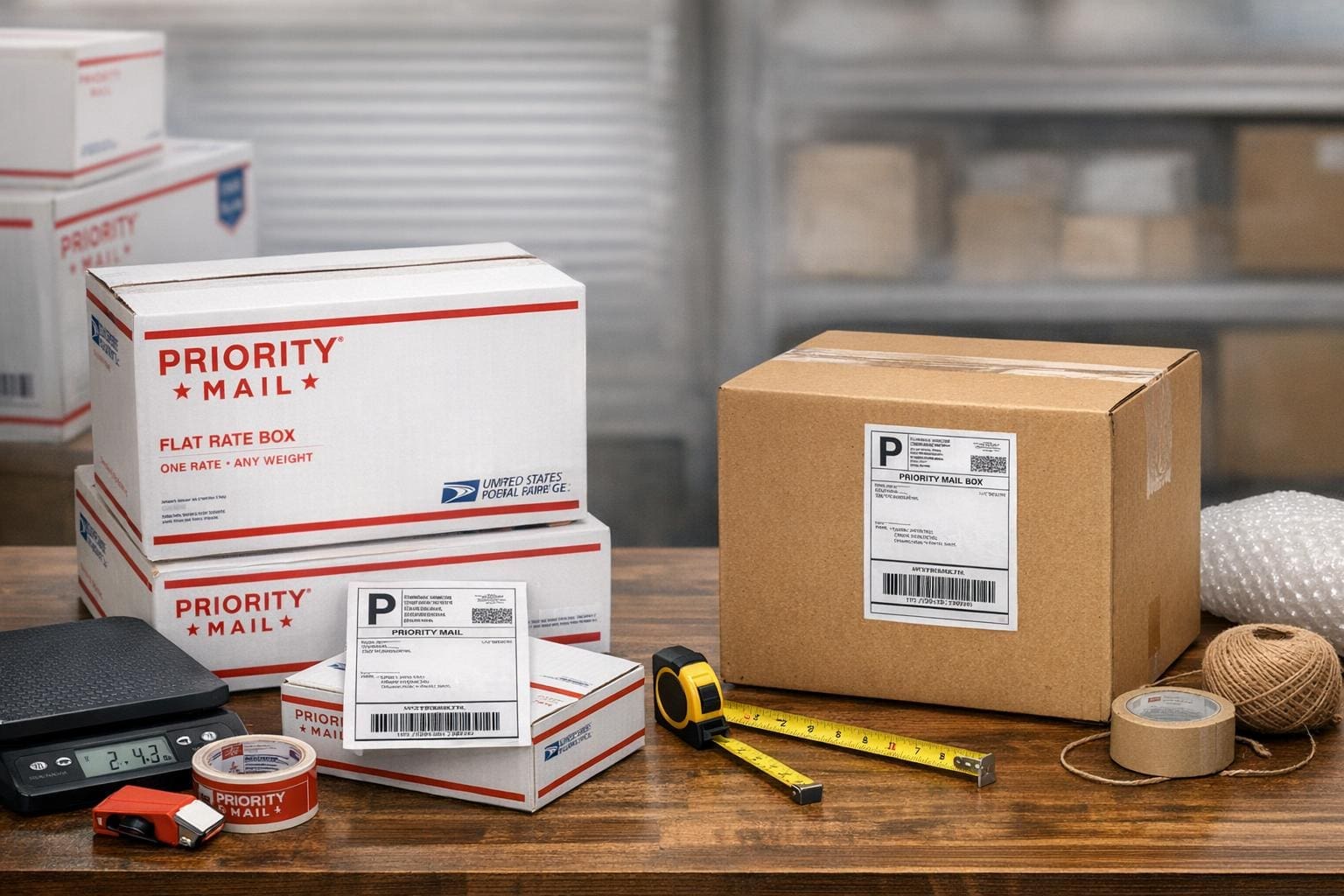
A parcel sits on the threshold like a small, impatient animal — eager, valuable, and forever asking: how will you get it there affordably? The choice between a predictable flat-fee shelter and the flexible but calculating world of bespoke boxes is a little like choosing between a trusty leash and free-roaming time at the park. Understanding flat rate vs your own box usps isn’t just arithmetic; it’s strategy.
## The Shipping Dilemma: Flat Rate Vs Your Own Box USPS
Choosing between flat rate vs your own box usps often comes down to a few core realities: weight, dimensions, fragility, and predictability. The USPS flat rate option promises a set price regardless of weight (within box limits), while your own box invites measurement, weighing, and a bit of shipping math. For small businesses, artisans, and anyone who ships regularly, this decision can shave months off postage budgets or add hundreds in unexpected costs.
### How USPS Flat Rate Works
The usps flat rate system is simple in principle. You select a USPS-branded flat rate box or envelope, pack up to the allowed capacity, and pay the published flat fee. Size categories (small, medium, large, legal flat rate, padded envelope, etc.) determine the price. Distance doesn’t change the cost for Priority Mail Flat Rate items, which makes this a compelling option when shipping heavy but compact goods.
### When Your Own Box Makes Sense
Using your own box becomes advantageous when items are light but bulky, or when exact dimensions push the shipment outside of flat rate size/value parity. If a customized box allows you to avoid paying for unused volume or to use a lighter package material, your per-shipment savings can add up quickly. Assessing when to use your own box requires precise measurement, a reliable scale, and an eye for negotiation between dimensional weight and actual weight.
### Cost Factors To Consider
Not every shipment is created equal. Consider these cost drivers before deciding:
– Actual Weight Versus Dimensional Weight: Dimensional pricing can turn a seemingly light package into a costly one.
– Zone And Distance: Outside flat rate, zone-based pricing scales with distance.
– Frequency: High-volume shippers can leverage discounts and carrier relationships; single shipments might favor flat predictability.
– Insurance And Tracking Needs: Flat rate typically includes basic tracking; higher declared values require additional fees.
Evaluating flat rate alternatives alongside these factors helps reveal the true bottom-line choice.
## 2 Remedies: How To Decide And Execute (Flat Rate Vs Your Own Box USPS)
When the shipping question becomes pressing, apply one of two remedies below. Each remedy lists required materials and steps to implement the solution with clarity and compliance. These remedies are written in a formal, practical tone to guide accurate execution.
### Remedy 1: Use USPS Flat Rate Boxes
Use this remedy when your item is dense, heavy relative to size, or when you prioritize predictable shipping costs.
#### Materials
– USPS Flat Rate Box/Envelope (appropriate size)
– Packing materials (bubble wrap, paper, void-fill)
– Permanent tape and a tape dispenser
– Shipping label (printed or printed at post office)
– Scale (for internal verification)
– Marker for labeling (if necessary)
#### Steps
1. Select The Correct Flat Rate Product: Choose the flat rate box or envelope that suits the item’s dimensions and fragility.
2. Inspect And Pack: Cushion the item with adequate packing materials to prevent movement. Ensure weight is distributed evenly inside the flat rate container.
3. Verify Fit And Seal: Confirm the item fits without forcing the box closed. Seal securely with tape, covering all seams.
4. Weigh Internally (Optional): Although flat rate ignores weight within limits, weighing verifies compliance with box integrity and prepares you for exceptions if the box is replaced at the counter.
5. Print Or Obtain Label: Purchase postage online for slightly reduced rates or bring the boxed item to a USPS location for drop-off and labeling.
6. Retain Documentation: Save receipts and tracking numbers; flat rate shipments have predictable claims and refund procedures if needed.
This remedy minimizes decision fatigue and is often the right choice for merchants sending jewelry, canned goods, small electronics, or dense books.
### Remedy 2: Ship In Your Own Box With Smart Pricing
Choose this remedy when items are voluminous but light, oddly shaped, or when tailored packaging reduces wasted material.
#### Materials
– Appropriate self-supplied box or mailer
– Accurate postal scale
– Tape and reinforcement materials
– Measuring tape or ruler
– Packing materials (e.g., paper, foam, air pillows)
– Access to USPS online price calculators or a retail counter for rate quotes
#### Steps
1. Measure Precisely: Measure length, width, and height of the packed box. Dimensional weight may apply; use the larger of actual weight and dimensional weight to estimate postage.
2. Weigh Accurately: Place the package on a postal scale and record the exact weight to the nearest ounce or decimal pound.
3. Calculate Rates: Use the USPS online calculator or a third-party rate tool to compare Priority Mail, Retail Ground, and any other services. Consider flat rate alternatives and regional carriers if they provide lower costs for your size/weight.
4. Choose Service Based On Value: Factor in expected transit time, insurance, and tracking. If speed and insurance are priorities, Priority services may be worth the cost; otherwise, lower-cost alternatives can be more economical.
5. Purchase Postage: Buy postage online to access lower commercial prices or obtain it at a retail counter. Affix the label securely, ensuring barcodes are flat and unobstructed.
6. Maintain Records: Keep a log of shipping costs, package dimensions, and destinations to inform future decisions and to spot patterns where flat rate might beat or lose to your own box.
Using your own box requires diligence but often unlocks savings for large, lightweight shipments where flat rate pricing would overcharge for unused volume.
### When To Reevaluate And Use Flat Rate Alternatives
Shipping ecosystems shift with fuels, policies, and seasonal surcharges. Regular reassessment of flat rate vs your own box usps is essential. Track a sampling of shipments monthly, compare actual spend against theoretical flat rate pricing, and explore flat rate alternatives such as regional carriers, USPS Retail Ground, or negotiated commercial rates if volume justifies it. Automated tools can streamline comparisons and flag when one method consistently outperforms the other.
### Practical Tips To Optimize Either Choice
– Consolidate items where possible to use one flat rate box rather than multiple shipments.
– Standardize packaging sizes to reduce costly dimension variability.
– Use protective inserts to reduce damage and insurance claims, which indirectly lower overall shipping costs.
– Keep an eye on promotional or seasonal flat rate pricing; periodic changes can temporarily tip the balance.
– For small businesses, consider a shipping audit every quarter to reassess whether flat rate alternatives or your own-box strategy yields better margins.
Shipping is part logistics, part psychology. Flat rate vs your own box usps will remain a repeated decision on your to-do list; with measurement, record keeping, and the right remedy applied to the right package, you can ship smart and confidently without losing sleep over postage.