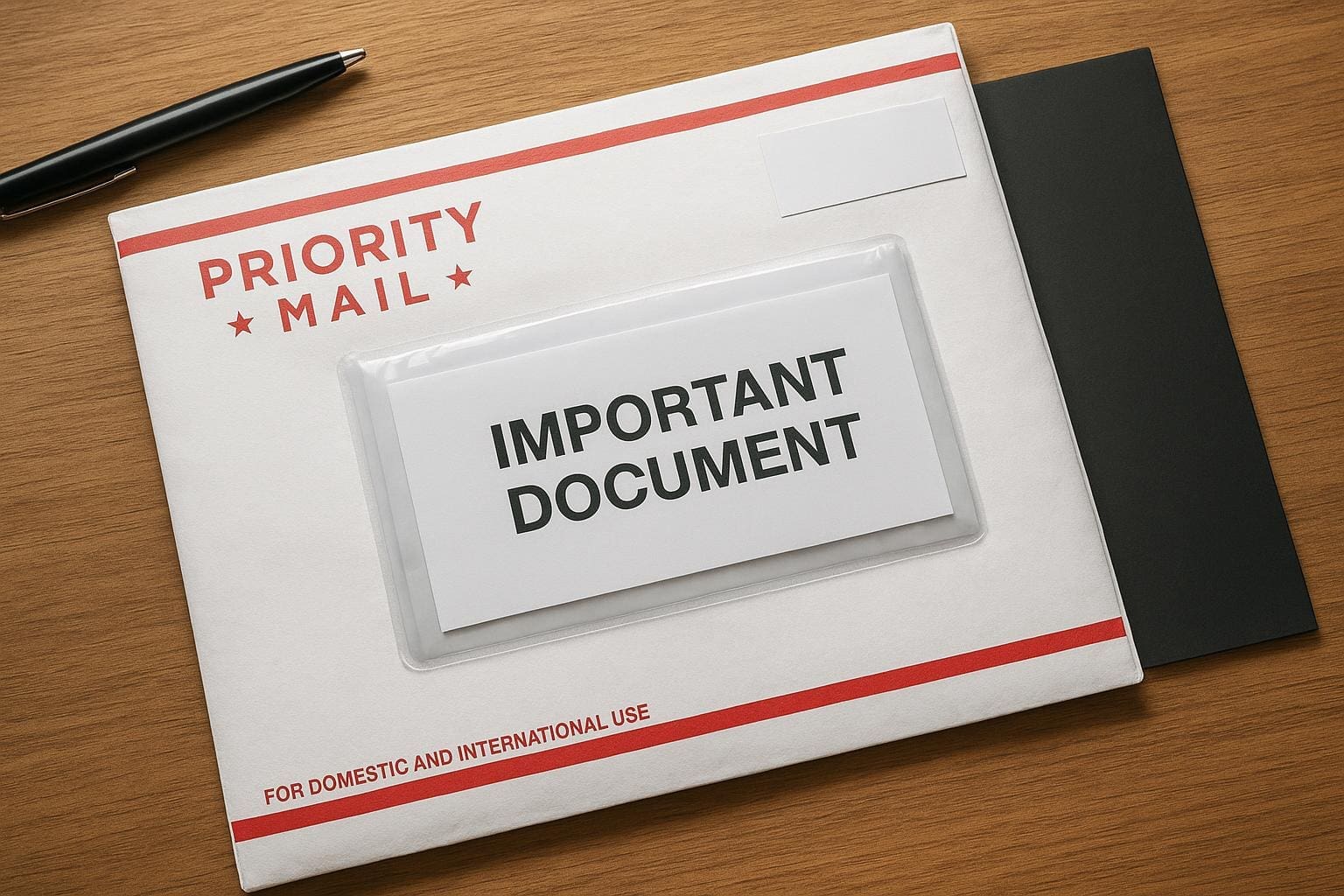
## Best Way To Mail Important Documents: Practical Guide
If you need to send a birth certificate, a signed contract, a passport, or any irreplaceable paper, the best way to mail important documents is to treat the shipment like a small, valuable package. That sounds obvious, but most mistakes come from treating documents like ordinary letters. Use tracking, require a signature, insure for value, and control the packaging. Do that and you dodge most of the common headaches.
### Choose The Right Carrier And Service
Different carriers handle risk differently. For domestic U.S. shipments, Priority Mail Express and Registered Mail from USPS offer strong tracking and legal proof of delivery. For high-value or time-sensitive items, FedEx Overnight or UPS Next Day Air with signature required is a better bet. Internationally, major couriers are faster and better at customs clearance than postal services.
Which to pick comes down to two things: liability and traceability. If the carrier’s standard liability won’t cover the value of what’s inside, buy additional insurance. If you need evidence the recipient actually got it, require a direct signature. These choices determine the level of protection you’re buying.
### Secure Packaging Beats Fancy Labels
Don’t rely on an ordinary office envelope. Use a document mailer with some rigidity so pages don’t bend, and slip the papers into a smaller inner envelope first. That adds privacy and creates a layer that discourages casual tampering.
Packing checklist:
– A rigid mailer or cardboard-backed envelope
– Inner plain envelope or sleeve
– Tamper-evident tape or security seal
– Clear, legible address label
Wrap the inner envelope so the contents aren’t visible. Don’t write “Important Documents” or list contents on the outside; that attracts attention. Seal the package with tamper-evident tape and, if possible, cover all seams with clear packing tape so anyone opening it will leave obvious signs.
#### Use Tamper-Evident Seals And Labels
Tamper-evident seals aren’t a guarantee, but they make unauthorized access obvious. Use a numbered security label and take a photo of the label before drop-off. That gives you proof if someone claims the package arrived intact when it didn’t.
### Tracking, Signatures, And Proof Of Delivery
The core of the best way to mail important documents is traceability. Tracking lets you see where a package is at every step. Signature requirements force the carrier to hand the package to someone rather than leaving it at a door.
Ask for one of these delivery options:
– Adult or direct signature required
– Return receipt or electronic delivery confirmation
– Delivery exceptions emailed to you
Hold onto the tracking number and the reciept you get at drop-off. Monitor the tracking feed daily and be ready to call the carrier at the first sign of an exception. If a package is delayed or misrouted, early escalation frequently leads to recovery.
### Insure For The True Value And Know Carrier Limits
Standard liability is often small. If the documents have monetary value or are hard to replace, purchase additional insurance. Read the fine print: some carriers exclude certain documents or require a specific declaration to cover them.
For legal documents, the value isn’t just money; it’s time and hassle. Insure accordingly. Keep scans or color photos stored in multiple locations before mailing; that speeds up claims if something goes wrong.
### When To Use Registered Or Certified Mail
Certified mail gives you a record that your mail was accepted and shows who signed for it. Registered mail adds a chain-of-custody process and is handled separately in transit. For items like original wills, deeds, or passport returns, registered mail is often the safest postal choice.
If you need a legal paper trail—proof you mailed something and who received it—use certified or registered services where available. They provide documentary evidence you can use in court or disputes.
### Consider A Courier Or Personal Hand-Delivery For Extremely Sensitive Items
Some documents should never be entrusted to the post. If you’re transferring highly sensitive originals—like certain legal instruments or negotiable assets—hire a professional courier who offers door-to-door service and full chain-of-custody documentation. For local transfers, personal hand-delivery is often fastest and safest.
If cost matters, balance it against risk. Overnight courier fees are high but cheaper than the cost of replacing a lost original or the liability that follows.
#### International Shipments Need Extra Care
When you mail important documents across borders, customs are the wildcard. Declare contents honestly but succinctly. Use courier services experienced with documents; they can prepare paperwork and avoid customs delays. Always check import requirements for the destination country—some governments require notarized translations or extra documentation.
If the documents are time-sensitive, choose a shipping option that guarantees transit times and provides full tracking to the final consignee.
### Minimize Exposure Before And After Mailing
Keep the number of people who touch the documents to a minimum. If you have to mail multiple copies or originals, log who handled each copy and when. Create and keep a short manifest listing what you mailed, serial numbers if applicable, and images of the contents.
Once the recipient confirms delivery, follow up to validate that the documents are intact. If the recipient refuses to sign or accepts but later reports missing pages, having scans, photos, and tracking entries will speed resolution.
### Use Digital Alternatives Where Possible
Sometimes the best way to mail important documents is not to mail them at all. Many institutions accept digitally notarized documents or uploads to secure portals. If the other party accepts electronically signed or certified copies, use encrypted email or a reputable e-signing service. That eliminates transit risk entirely.
But don’t assume a scan replaces an original. For legal or archival needs, the original may still be required. When originals must move, combine digital and physical precautions: send a scanned copy first, then ship the original with the security measures described.
### Practical Habits That Cut Risk
A few small habits save time and trouble:
– Ship early in the week to avoid weekend holds.
– Drop off at a staffed counter rather than an unmonitored box.
– Use discreet packaging with no logos or markings that identify contents.
– Request delivery notifications to multiple email addresses or phone numbers.
Do not leave packages in carrier lockers unless you can retrieve them immediately. Those lockers are convenient but can be targeted by thieves.
### How To Handle A Missing Or Compromised Shipment
If tracking shows a delivery but the recipient denies it, file a claim immediately. Have your scans, receipts, photos of seals, and tracking logs ready. For registered mail, the carrier has extra accountability, which helps. If you purchased insurance, follow the carrier’s claim process and keep records of every communication.
If you suspect fraud or theft, report it to the carrier and local law enforcement. A police report can strengthen an insurance claim and is sometimes required.
### Final Practical Example
Imagine you need to send an original college diploma to an employer across the country. The best way to mail important documents in that case:
1. Make a high-quality scanned copy and save it on cloud storage.
2. Place the diploma in a plain inner sleeve.
3. Put that sleeve inside a rigid mailer and seal with tamper-evident tape.
4. Choose overnight courier with signature required and added insurance.
5. Drop off at a staffed counter, take photo of the receipt, and watch tracking until delivered.
The diploma arrives intact, someone signs for it, and you’ve got scans and photos if anything goes wrong.
Follow these steps and you’ll cut the odds of loss, tampering, or long, expensive fights to get things resolved. Mailing important papers doesn’t have to be nerve-wracking if you pick reliable services, secure the packaging, and keep proof at every step.