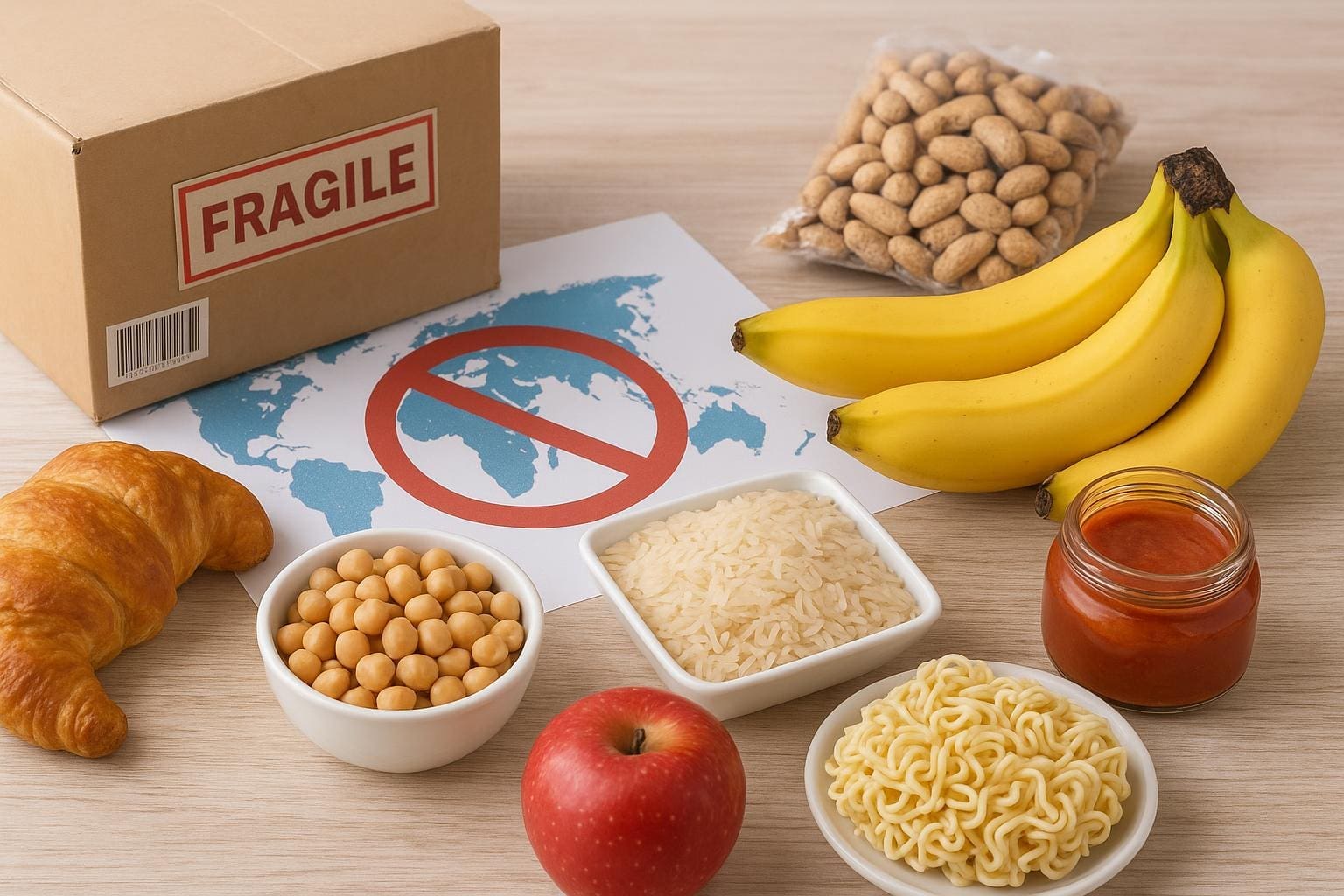
Shipping food across borders feels simple until customs opens the box. Then you learn about plant quarantines, temperature rules, and paperwork that has to match the jar label exactly. If you plan to send edible goods overseas, treat regulation as part of the product.
## International Food Shipping Restrictions: Practical Moves
The first step is to treat “international food shipping restrictions” like a checklist you consult before you even pack. Rules are not negotiable. A country may allow baked goods but ban fresh fruit. Another might let you import shelf-stable jams but require a health certificate for any product containing dairy. Find that out early.
### Check Destination Rules First
Every country maintains a list of prohibited items and required certificates. Look at the destination country’s customs website and their agricultural or plant protection agency. For example, many places ban seeds, soil, and raw fruit to prevent pests. Meat, poultry, and many dairy products are commonly restricted. These are classic international food restrictions—you can’t assume because something ships domestically it will clear customs abroad.
Also check carrier policies. USPS, FedEx, and DHL each have their own lists and packaging rules. A carrier might accept a package in theory but refuse it if the paperwork is incomplete.
### Paperwork And Permits You Actually Need
Don’t rely on “standard” paperwork. You may need:
– Commercial invoice with exact ingredient list and origin
– Phytosanitary certificate for plant-based goods
– Veterinary or health certificate for animal products
– Export declaration if value meets a threshold
If you are sending gifts, some countries still expect a declaration showing the package’s contents. If you mislabel something as “gift” to avoid duties, expect trouble. Also, remember to register correctly if you export commercially — taxes and excise can apply. And yes, make sure the importer’s name is spelled correctly; customs rejects forms for small errors and you will recieve delays.
#### Phytosanitary Certificates And Health Certificates
These are issued by your national authority (USDA, for instance) and confirm your product meets the destination’s safety and pest-free standards. Getting these can take days to arrange and often requires inspection. Don’t book overnight shipping and then wait a week for a certificate — the timing matters.
### Packaging, Cold Chain, And Carrier Limits
Packaging is legal protection as much as physical protection. Use tamper-evident seals and include a clear ingredients list in the language of the destination when required. For perishable goods, a reliable cold chain is crucial. Talk to carriers about transit times and temperature guarantees. If you promise “keep frozen” but the package spends two days at room temperature, customs may seize it for safety.
Dry ice is often the go-to for frozen goods, but it’s treated as a hazardous material on planes. There are limits on quantity, packaging standards, and mandatory labeling. If you ship frozen seafood or ice cream internationally, the dry ice rules can change which carriers you can use. Those are specific food shipping restrictions you need to plan for.
#### Dry Ice, Batteries, And Dangerous Goods
Dry ice sublimates to CO2. It can cause pressure build-up in sealed containers and requires venting and special documentation. Combining dry ice with other restricted items (like certain aerosols) complicates approval. Carriers will ask for a dangerous-goods declaration when dry ice is present.
### Common Pitfalls Sellers Miss
People underestimate small details:
– Ingredient translations. Customs officers want to see what’s inside.
– Origin labeling. Many countries restrict products from regions with outbreaks.
– Value mismatches. Under-declaring value to avoid duties often triggers inspections and fines.
– Nonfood items in the same package. A souvenir spoon can ruin an otherwise compliant food shipment.
For direct-to-consumer sellers, consider local fulfillment instead of cross-border shipping. Print-on-demand and local co-packers avoid the headache of customs entirely for repeat customers.
### When To Use A Customs Broker Or Freight Forwarder
If you’re shipping complex items or large volumes, hire help. A broker knows which forms matter in a specific trade lane and can speed clearance. Freight forwarders help with temperature-controlled container bookings and consolidate smaller shipments into compliant loads. The fee pays for itself when they avoid a seizure or costly return.
Use the right paperwork, pack to destination expectations, and pick the right carrier. International food shipping restrictions are a mix of science and paperwork; respecting both keeps goods moving and customers happy.